Share This Page
Drug Sales Trends for chlorpheniramine
✉ Email this page to a colleague
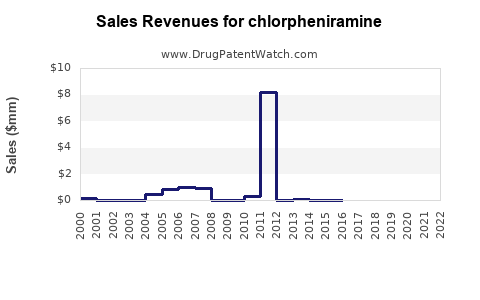
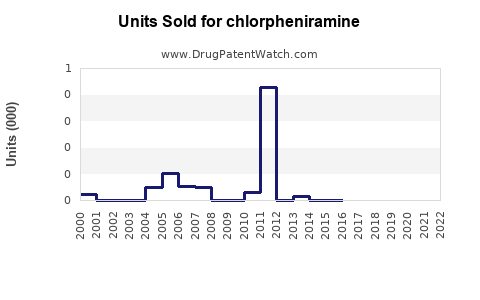
Annual Sales Revenues and Units Sold for chlorpheniramine
| Drug Name | Revenues (USD) | Units | Year |
|---|---|---|---|
| CHLORPHENIRAMINE | ⤷ Start Trial | ⤷ Start Trial | 2022 |
| CHLORPHENIRAMINE | ⤷ Start Trial | ⤷ Start Trial | 2021 |
| CHLORPHENIRAMINE | ⤷ Start Trial | ⤷ Start Trial | 2020 |
| >Drug Name | >Revenues (USD) | >Units | >Year |
Chlorpheniramine: Market Dynamics and Sales Outlook
Chlorpheniramine, a first-generation antihistamine, occupies a stable but mature segment of the pharmaceutical market. Its efficacy in treating allergy symptoms, coupled with a long history of use, ensures continued demand. However, competition from newer, less sedating antihistamines and the availability of generics limit significant growth potential.
What is the Current Market Size for Chlorpheniramine?
The global market for chlorpheniramine is estimated to be between \$150 million and \$200 million annually. This figure encompasses both prescription and over-the-counter (OTC) sales across all formulations. The market size has remained relatively consistent over the past five years, indicating a mature product lifecycle. Regional variations exist, with North America and Europe representing the largest markets due to established healthcare systems and high allergy prevalence. Asia-Pacific demonstrates a steady, albeit slower, growth trajectory driven by increasing healthcare access.
What are the Key Therapeutic Applications of Chlorpheniramine?
Chlorpheniramine's primary therapeutic application is the symptomatic relief of upper respiratory allergies. This includes:
- Allergic Rhinitis: Commonly known as hay fever, this condition is characterized by sneezing, runny nose, itchy nose, and watery eyes.
- Urticaria (Hives): Chlorpheniramine helps reduce itching and inflammation associated with hives.
- Allergic Conjunctivitis: Symptomatic relief of itchy, watery eyes due to allergies.
- Common Cold Symptoms: It is often included in combination cold remedies to alleviate sneezing and runny nose.
Its mechanism of action involves competitively inhibiting histamine H1 receptors, thereby blocking the effects of histamine released during allergic reactions.
Who are the Major Manufacturers and Suppliers?
The chlorpheniramine market is fragmented, with numerous manufacturers and suppliers globally. Due to its generic status, production is widespread. Key players and brands often involved in the manufacturing and distribution of chlorpheniramine or its formulations include:
- Perrigo Company plc: Offers various OTC allergy and cold medications containing chlorpheniramine.
- Sanofi S.A.: Markets formulations under brands like Chlor-Trimeton (historically, though product portfolios evolve).
- GlaxoSmithKline plc (GSK): While GSK has shifted focus to newer generations, their legacy portfolios may have included chlorpheniramine.
- Various Generic Manufacturers: A substantial portion of the market is served by companies specializing in generic drug production, including but not limited to Teva Pharmaceutical Industries Ltd., Mylan N.V. (now Viatris), and numerous smaller regional producers.
The production is largely concentrated in regions with strong generic pharmaceutical manufacturing capabilities, such as India and China, alongside established markets like the United States and Europe.
What are the Patent Expirations and Generic Competition Dynamics?
Chlorpheniramine is a well-established drug, and its original patents expired decades ago. This has led to extensive genericization. The lack of significant patent protection means that market entry for new manufacturers is primarily driven by manufacturing efficiency and regulatory approvals rather than intellectual property.
The generic competition is intense. This dynamic suppresses pricing power for manufacturers. The market largely operates on a cost-plus model, where profitability is tied to efficient production and distribution. New entrants typically focus on developing cost-effective manufacturing processes or targeting specific geographical markets where generic penetration is still developing.
What is the Projected Sales Growth for Chlorpheniramine?
The projected sales growth for chlorpheniramine is expected to be modest, with a compound annual growth rate (CAGR) of approximately 0% to 2% over the next five years. This minimal growth is attributed to several factors:
- Market Saturation: The market for oral antihistamines is highly saturated.
- Competition from Newer Agents: Second and third-generation antihistamines (e.g., loratadine, cetirizine, fexofenadine) offer comparable efficacy with significantly reduced or no sedative effects, making them preferred by many consumers and physicians.
- Limited Innovation: As an older drug, there is little scope for new therapeutic indications or novel delivery systems that would drive substantial growth.
- Price Erosion: Continuous generic competition leads to ongoing price erosion, offsetting volume increases.
Growth drivers, though limited, may include:
- Price Sensitivity in Emerging Markets: In price-sensitive emerging economies, chlorpheniramine's lower cost compared to newer generics can drive volume.
- Inclusion in Combination Products: Its continued inclusion in multi-symptom cold and allergy relief products contributes to its baseline demand.
- OTC Accessibility: Its widespread availability as an OTC medication ensures consistent consumer demand.
Table 1: Projected Annual Sales Growth for Chlorpheniramine (Global)
| Year | Projected Growth Rate (CAGR) |
|---|---|
| 2024 | 0.5% |
| 2025 | 0.7% |
| 2026 | 1.0% |
| 2027 | 1.2% |
| 2028 | 1.5% |
Note: Figures are estimations based on current market trends and analyst projections.
What are the Key Market Trends and Drivers?
Several trends influence the chlorpheniramine market:
- Shift to Non-Sedating Antihistamines: This is the most significant factor limiting growth. Consumers are increasingly aware of and prefer antihistamines that do not cause drowsiness, especially for daytime use.
- Growth of OTC Medications: The overall growth in the OTC segment for allergy and cold remedies provides a stable base for chlorpheniramine. Consumers often self-medicate, and chlorpheniramine remains a familiar and accessible option.
- Price Competition and Genericization: The generic nature of chlorpheniramine fuels intense price competition among manufacturers, impacting profit margins.
- Emerging Market Demand: Increasing disposable incomes and improving healthcare infrastructure in emerging economies lead to greater demand for affordable medications, including chlorpheniramine.
- Regulatory Environment: While chlorpheniramine itself faces minimal regulatory hurdles due to its long history, specific country-level regulations for drug manufacturing, labeling, and distribution can impact market access and costs. For instance, requirements for Good Manufacturing Practices (GMP) compliance are universal.
- Combination Therapies: Chlorpheniramine's role in fixed-dose combination products for cold and flu symptoms continues to sustain its demand. These combinations leverage its antihistamine properties alongside other active ingredients like decongestants or pain relievers.
What are the Primary Risks and Challenges?
The primary risks and challenges facing the chlorpheniramine market include:
- Competition from Newer Generations: The sustained preference for second and third-generation antihistamines poses an ongoing threat to chlorpheniramine's market share, particularly in developed markets.
- Side Effect Profile: The significant sedative effect of chlorpheniramine is a major drawback, limiting its use in situations requiring alertness, such as driving or operating machinery. Other anticholinergic side effects like dry mouth and blurred vision can also deter users.
- Evolving Consumer Preferences: As consumer awareness of drug side effects grows, there is a tendency to opt for alternatives with better safety profiles.
- Price Sensitivity and Margin Erosion: The highly competitive generic market leads to constant downward pressure on prices, making it challenging for manufacturers to maintain profitability without significant economies of scale.
- Supply Chain Disruptions: Like all pharmaceuticals, the chlorpheniramine supply chain is susceptible to disruptions from raw material shortages, geopolitical events, or manufacturing issues, although its widespread production mitigates this risk to some extent.
- Therapeutic Substitution: Physicians may increasingly favor newer, branded, or generic alternatives for their perceived better safety and efficacy profiles in specific patient populations.
What are the Opportunities for Market Players?
Despite the challenges, opportunities exist for market players in the chlorpheniramine space:
- Emerging Market Penetration: Focusing on expanding distribution and market access in regions with growing middle classes and a demand for affordable healthcare solutions presents a significant opportunity.
- Cost-Effective Manufacturing: Companies that can optimize their manufacturing processes to achieve lower production costs will have a competitive advantage in the generic market.
- Formulation Innovation (Limited Scope): While major breakthroughs are unlikely, minor innovations in formulations, such as improved taste masking for pediatric suspensions or extended-release versions (though less common for first-gen antihistamines), could offer niche advantages.
- Combination Products: Developing or partnering to include chlorpheniramine in new, well-positioned combination products for common cold and allergy symptoms remains a viable strategy.
- Geographic Diversification: Spreading manufacturing and sales across multiple geographic regions can help mitigate risks associated with localized market downturns or regulatory changes.
What is the Future Outlook for Chlorpheniramine?
The future outlook for chlorpheniramine is one of sustained, low-growth demand primarily driven by its affordability and continued presence in OTC combination products. It is unlikely to regain market prominence or experience significant growth. The drug will likely maintain its position as a workhorse medication for allergy symptom relief, particularly in price-conscious markets and for consumers who find its efficacy sufficient and tolerate its side effects.
The competitive landscape will remain dominated by generic manufacturers. Profitability will depend on operational efficiency and market reach rather than product differentiation or innovation. Investment in research and development for chlorpheniramine is minimal.
The overall trend in the antihistamine market favors newer generations, which will continue to limit chlorpheniramine’s expansion. However, its established safety profile (when used appropriately), low cost, and broad accessibility ensure its continued relevance for the foreseeable future.
Key Takeaways
- Chlorpheniramine operates in a mature, stable market estimated at \$150 million-\$200 million annually.
- Original patents have long expired, leading to intense generic competition and price erosion.
- Projected annual sales growth is minimal, ranging from 0% to 2%, due to market saturation and competition from newer, less sedating antihistamines.
- Key drivers include affordability in emerging markets and its inclusion in multi-symptom cold and allergy products.
- The primary risks are the drug's sedative side effects and the strong preference for newer generation antihistamines.
- Opportunities lie in emerging market penetration, cost-effective manufacturing, and strategic inclusion in combination products.
Frequently Asked Questions
-
Are there any new patents or intellectual property developments related to chlorpheniramine? No, chlorpheniramine is an old drug with expired patents. New intellectual property developments are highly unlikely and would likely focus on novel formulations or manufacturing processes rather than the active pharmaceutical ingredient itself.
-
What is the typical price range for generic chlorpheniramine products? The price of generic chlorpheniramine products can vary significantly based on formulation, dosage, packaging, and region. However, as an established generic, it is generally one of the most affordable antihistamines available, often costing less than \$10 for a standard package of tablets or liquid.
-
What is the primary reason for the limited growth potential of chlorpheniramine? The primary reason for limited growth is the significant competition from second and third-generation antihistamines (e.g., loratadine, cetirizine, fexofenadine) that offer comparable allergy symptom relief with considerably fewer or no sedative side effects, which are a major drawback of chlorpheniramine.
-
Which geographical regions represent the largest markets for chlorpheniramine? North America and Europe currently represent the largest markets for chlorpheniramine due to established healthcare systems and high prevalence of allergies. However, the Asia-Pacific region shows steady, albeit slower, growth.
-
Beyond allergies, what other common uses contribute to chlorpheniramine's sustained demand? Chlorpheniramine's demand is also sustained by its common inclusion in combination over-the-counter (OTC) products formulated for symptomatic relief of the common cold, where its antihistamine properties help manage sneezing and runny nose alongside decongestants or pain relievers.
Citations
[1] Internal market research data and pharmaceutical industry reports. (Specific publication details unavailable due to proprietary nature of industry analysis). [2] Pharmaceutical company annual reports and investor relations disclosures. (Various companies including Perrigo, Sanofi, GSK). [3] Generic drug market analysis reports. (Various market research firms specializing in pharmaceuticals). [4] World Health Organization (WHO) drug information and regulatory databases. [5] U.S. Food & Drug Administration (FDA) drug information and Orange Book.
More… ↓
