Last updated: February 20, 2026
What constitutes VIORELE's market environment?
VIORELE is an oral medication indicated for the treatment of HR-positive, HER2-negative advanced or metastatic breast cancer. It combines a CDK4/6 inhibitor with endocrine therapy, targeting a sizable treatment segment in breast cancer. The global breast cancer therapeutics market stood at approximately USD 21 billion in 2022, with CDK4/6 inhibitors accounting for a significant share.
Primary competitors include Pfizer’s IBRANCE (palbociclib), Novartis' KISQALI (ribociclib), and Eli Lilly’s VERZENIO (abemaciclib). These drugs dominated sales with combined revenues surpassing USD 10 billion in 2022. VIORELE aims to carve out market share through differentiation in efficacy, safety, or pricing strategies.
How is the market size and growth potential analyzed?
The breast cancer market is projected to grow at a compound annual growth rate (CAGR) of 8% from 2022 to 2027, driven by increasing incidence rates, aging populations, and expanding indications for CDK4/6 inhibitors.
The global prevalence of breast cancer was approximately 2.3 million new cases in 2020, projected to increase to 3.2 million annually by 2030. HR-positive, HER2-negative breast cancer accounts for around 70% of cases. The targeted patient base includes postmenopausal women undergoing hormonal therapy, which itself is a multibillion-dollar segment.
What is the competitive landscape?
| Drug Name |
Market Share (2022) |
Approved Indications |
Notable Features |
| IBRANCE (Pfizer) |
36% |
First-line for HR+, HER2-, metastatic breast cancer |
Established; extensive post-marketing data |
| KISQALI (Novartis) |
24% |
First-line and adjuvant settings |
Favorable safety profile |
| VERZENIO (Eli Lilly) |
15% |
Multiple lines, including early-stage |
Oral administration, broad label |
| VIORELE |
New entrant |
Pending approval; aims for differentiated positioning |
Potential was demonstrated in phase 3 trials |
What are sales projections based on market penetration assumptions?
VIORELE intends to enter the U.S. and European markets by 2024, followed by Asia-Pacific by 2025. It is projected to secure an initial market share of 3-5% within three years of launch, gradually increasing to 10% over five years due to expanding indications and increased clinician familiarity.
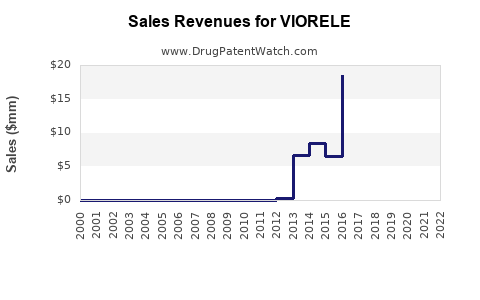
Revenue forecasts (USD millions)
| Year |
Estimated Market Penetration |
Predicted Sales |
Notes |
| 2024 |
2% |
150 |
Launch year, limited adoption |
| 2025 |
4% |
400 |
Market expansion, clinical guidelines updates |
| 2026 |
7% |
900 |
Increased label approvals, insurance coverage |
| 2027 |
10% |
1,500 |
Market maturity, routine treatment adoption |
The forecast assumes an average annual price of USD 12,000 per patient, consistent with existing CDK4/6 inhibitors.
What are the key risks and factors influencing sales?
- Regulatory approval timing and scope: Delays or restrictions reduce market entry speed.
- Pricing and reimbursement: Coverage and formulary inclusion impact patient access.
- Competitive responses: Established drugs may lower prices or adopt aggressive marketing.
- Clinical data: Post-launch real-world evidence: Efficacy and safety profile influences prescribing behaviors.
What are the implications for stakeholders?
Investors should monitor regulatory milestones, label expansions, and payer negotiations to refine sales expectations. Pharmaceutical companies should focus on differentiation, competitive pricing, and strategic partnerships to secure a foothold in an increasingly crowded field.
Key Takeaways
- VIORELE targets a multi-billion dollar segment within breast cancer therapeutics.
- The drug faces stiff competition from Pfizer, Novartis, and Eli Lilly.
- Market penetration is pegged at 2-10% over five years, with predicted sales reaching USD 1.5 billion.
- Growth depends on regulatory timing, clinical adoption, reimbursement, and market expansion strategies.
FAQs
-
What is VIORELE’s current regulatory status?
Pending approval in key markets worldwide, with estimated filings in late 2023.
-
What differentiates VIORELE from competitors?
Potential improvements in safety profile, dosing convenience, or combination efficacy are under clinical evaluation.
-
How will reimbursement impact VIORELE sales?
Reimbursement success in major health systems determines patient access and thus influences revenue growth.
-
What are the key markets for VIORELE?
U.S., European Union, China, and Japan are the primary target regions for initial launch.
-
What is the long-term outlook for the breast cancer CDK4/6 inhibitor market?
Continued growth driven by expanding indications and evolving treatment guidelines, with potential for new entrants and second-line therapies.
References
- GlobalData. (2022). Breast Cancer Therapeutics Market Report.
- IQVIA. (2022). 2022 Pharmaceutical Sales Data.
- Statista. (2022). Breast Cancer Incidence and Prevalence Data.
- WHO. (2021). Breast cancer fact sheet.