Share This Page
Drug Sales Trends for ESTARYLLA
✉ Email this page to a colleague
Payment Methods and Pharmacy Types for ESTARYLLA (2022)
Revenues by Pharmacy Type
Units Sold by Pharmacy Type
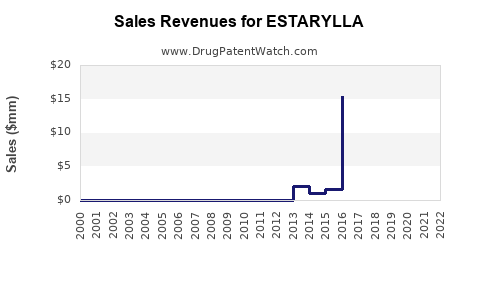
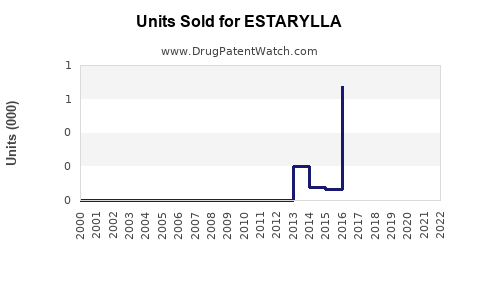
Annual Sales Revenues and Units Sold for ESTARYLLA
| Drug Name | Revenues (USD) | Units | Year |
|---|---|---|---|
| ESTARYLLA | ⤷ Start Trial | ⤷ Start Trial | 2022 |
| ESTARYLLA | ⤷ Start Trial | ⤷ Start Trial | 2021 |
| ESTARYLLA | ⤷ Start Trial | ⤷ Start Trial | 2020 |
| ESTARYLLA | ⤷ Start Trial | ⤷ Start Trial | 2019 |
| >Drug Name | >Revenues (USD) | >Units | >Year |
Estarylla Market Analysis, Sales Forecast, Patent Status, and Generic Competition
Estarylla is a U.S. generic oral contraceptive containing norgestimate 0.25 mg and ethinyl estradiol 0.035 mg. It competes in a mature, price-sensitive market against Sprintec, Mili, Mono-Linyah, Previfem, Tri-Sprintec, and other norgestimate/ethinyl estradiol products. Estarylla has limited differentiation, no meaningful standalone patent moat, and sales potential driven primarily by formulary access, pharmacy distribution, supply reliability, and contracting.
Public sources do not disclose Estarylla-specific revenue. The forecast below therefore uses prescription-volume and net-price scenarios rather than reported product sales.
What is Estarylla and who markets it?
Estarylla is a monophasic combined oral contraceptive. Each active tablet contains:
| Attribute | Estarylla |
|---|---|
| Active ingredients | Norgestimate 0.25 mg; ethinyl estradiol 0.035 mg |
| Dosage form | Oral tablet |
| Pack configuration | 28 tablets, generally 21 active and 7 inactive tablets |
| Therapeutic class | Combined hormonal contraceptive |
| Reference-product class | Norgestimate/ethinyl estradiol oral contraceptives |
| U.S. regulatory route | Abbreviated New Drug Application, or ANDA |
| U.S. marketer | Xiromed, LLC |
| Prescription status | Prescription-only |
| Primary demand channel | Retail pharmacy and managed-care formularies |
Estarylla is therapeutically interchangeable with other approved norgestimate/ethinyl estradiol products when the relevant FDA rating and dispensing requirements are satisfied. The product does not rely on a novel active ingredient, delivery device, extended-release platform, or proprietary formulation.
How large is the U.S. oral contraceptive market?
The U.S. oral contraceptive market is large but structurally commoditized. Demand is supported by contraception, menstrual-cycle management, acne treatment, and access through commercial insurance, Medicaid, employer plans, public clinics, and cash-pay pharmacies.
Oral contraceptives remain one of the most widely used reversible contraceptive methods in the United States. The principal competitive segments are:
| Segment | Competitive characteristics | Implication for Estarylla |
|---|---|---|
| Generic combined oral contraceptives | High substitution and low brand loyalty | Price and availability determine share |
| Branded oral contraceptives | Differentiation through regimen, tolerability claims, or patient support | Limited direct premium opportunity |
| Progestin-only pills | Growing clinical use and broader eligibility for some patients | Creates substitution pressure |
| Long-acting reversible contraception | Higher upfront cost but longer duration | Structural alternative to monthly pills |
| Emergency contraception | Separate episodic market | Minimal direct overlap |
The addressable market for Estarylla is narrower than the total contraceptive market because it excludes progestin-only pills, intrauterine systems, implants, injections, patches, rings, and nonprescription emergency contraceptives.
What drives Estarylla sales?
Estarylla sales depend on commercial execution rather than patent exclusivity.
Formulary positioning
Pharmacy benefit managers and health plans commonly place multiple generic oral contraceptives on low-cost tiers. A product can gain volume when its manufacturer offers competitive acquisition pricing, maintains supply, and secures preferred or co-preferred formulary placement.
Pharmacy availability
Retail pharmacies frequently substitute among equivalent generic oral contraceptives based on wholesaler inventory, payer adjudication, and manufacturer availability. Stockouts can shift prescriptions rapidly to competing labels.
Prescriber familiarity
Norgestimate/ethinyl estradiol is an established combination. Prescribers generally select it based on patient history, prior tolerability, insurer coverage, and pharmacy access. Estarylla has limited ability to command prescriber-driven premium pricing.
Patient and payer cost
Generic oral contraceptive demand is sensitive to copay and cash price. Under the Affordable Care Act, many insured contraceptive products are available without patient cost-sharing when coverage rules apply. Cash-pay patients and plans outside those coverage conditions remain more price-sensitive. [1]
Supply reliability
For a low-margin generic, consistent supply can be a greater commercial advantage than incremental marketing. Manufacturers with stable active pharmaceutical ingredient supply, adequate finished-dose capacity, and broad wholesaler coverage can capture share during competitor shortages.
What are Estarylla’s sales projections?
Because Estarylla-specific revenue and prescription data are not publicly reported, the following is a scenario model. It estimates annual U.S. net sales from treated patients, not audited company revenue.
Assumptions:
- 12 monthly packs per treated patient per year.
- Net revenue after rebates, discounts, wholesaler deductions, and other gross-to-net items of $75 to $125 per patient per year.
- Base annual market growth of approximately 2% to 4% for mature generic oral contraceptive demand.
- No material price premium over competing norgestimate/ethinyl estradiol products.
- No major supply disruption affecting Estarylla or its principal competitors.
Estarylla U.S. annual sales scenarios
| Scenario | Initial treated patients | Annual net revenue per patient | Year 1 sales | Year 5 patients at 3% growth | Year 5 sales |
|---|---|---|---|---|---|
| Low | 50,000 | $75 | $3.8 million | 56,300 | $4.2 million |
| Base | 150,000 | $100 | $15.0 million | 173,900 | $17.4 million |
| High | 300,000 | $125 | $37.5 million | 347,800 | $43.5 million |
The base case indicates a plausible annual U.S. revenue range of approximately $15 million initially and $17 million to $20 million after five years, assuming stable pricing and modest volume growth. The high case requires broad payer access, strong pharmacy availability, and sustained share gains from competing generic labels.
These figures are market scenarios, not reported Estarylla sales. The product’s actual performance could fall below the low case if the marketer loses distribution or if a competing manufacturer offers materially lower net pricing.
When does Estarylla lose exclusivity?
Estarylla is already a generic product and does not have the exclusivity profile of a newly approved branded contraceptive.
| Exclusivity category | Estarylla status |
|---|---|
| New chemical entity exclusivity | Not applicable |
| New clinical investigation exclusivity | Not the principal commercial protection |
| Orphan-drug exclusivity | Not applicable |
| Pediatric exclusivity | No product-specific commercial significance identified |
| Generic first-filer exclusivity | No current commercial basis to treat Estarylla as a protected first generic |
| Patent-based exclusivity | No material Estarylla-specific patent barrier identified |
The practical answer is that Estarylla does not have a meaningful remaining exclusivity period that would block additional generic competition. FDA-approved competitors can enter or expand subject to their own approvals, manufacturing capacity, and commercial agreements.
What patents protect Estarylla?
No material patent estate is associated with Estarylla as a conventional generic norgestimate/ethinyl estradiol tablet.
Relevant patent categories are:
| Patent type | Relevance to Estarylla |
|---|---|
| Active-ingredient patent | Norgestimate and ethinyl estradiol are established generic ingredients |
| Product-by-process patent | No publicly central Estarylla-specific barrier |
| Tablet formulation patent | No known differentiated formulation that supports premium exclusivity |
| Method-of-use patent | Contraceptive use is established and does not provide a practical Estarylla moat |
| Manufacturing patent | Process patents may exist at supplier or manufacturer level, but they do not create broad market exclusivity |
| Packaging or regimen patent | No material commercial protection identified |
The primary intellectual-property risk lies with suppliers or manufacturing processes, not with the marketed Estarylla label. A supplier-level patent dispute could affect cost or availability, but it would not ordinarily prevent other manufacturers from selling equivalent products.
What is the FDA and Orange Book status of Estarylla?
Estarylla is regulated as an FDA-approved generic oral contraceptive. Generic approval generally requires pharmaceutical equivalence, bioequivalence, manufacturing compliance, labeling conformity, and quality-system compliance under the ANDA pathway. [2]
The Orange Book identifies approved drug products and therapeutic-equivalence information. For a product such as Estarylla, the relevant commercial question is whether the product is therapeutically equivalent to the reference product and whether competing ANDA products have approval and market access. Orange Book listing does not create market exclusivity for an ordinary generic product. [3]
Estarylla’s FDA risk profile is governed by the class labeling for combined hormonal contraceptives. Important safety considerations include venous and arterial thromboembolic events, smoking-related cardiovascular risk, hypertension, and contraindications associated with specific patient histories. [4]
Are there Paragraph IV challenges involving Estarylla?
Estarylla is not primarily an innovator product vulnerable to a Paragraph IV challenge. Paragraph IV litigation generally arises when an ANDA applicant asserts that a listed patent is invalid, unenforceable, or not infringed. That framework is more relevant to the reference product or a branded product with Orange Book patents than to an established generic label.
Potential litigation involving norgestimate/ethinyl estradiol products would more likely concern:
- Reference-product patents.
- Manufacturing or supply agreements.
- Drug-quality or cGMP issues.
- Product liability.
- Patent disputes involving a branded competitor’s delivery system or regimen.
- Antitrust or contracting conduct among generic suppliers.
No major, publicly central Estarylla-specific Paragraph IV litigation or settlement agreement is established in the available market record.
What formulation patents protect competing contraceptives?
Formulation protection is more relevant for newer contraceptive products than for Estarylla.
Potentially protected features in the broader oral-contraceptive market include:
- Extended-cycle dosing regimens.
- Low-dose or estrogen-free formulations.
- Solubilized or micronized active ingredients.
- Modified-release tablets.
- Proprietary combinations designed to reduce hormone exposure.
- Alternative delivery systems such as vaginal rings, transdermal patches, implants, and intrauterine systems.
Estarylla is a conventional immediate-release tablet. It does not have a differentiated delivery system that would support a strong formulation patent position.
How strong is the Estarylla patent estate?
The Estarylla patent estate is weak from an exclusivity perspective but adequate for a generic product whose economics depend on scale.
| Patent-strength factor | Assessment |
|---|---|
| Composition-of-matter protection | Very weak or irrelevant |
| Formulation differentiation | Limited |
| Method-of-use protection | Limited |
| Manufacturing barriers | Moderate at the supplier and quality-system level |
| Regulatory barrier to entry | Low for approved ANDA competitors |
| Switching costs | Low |
| Brand loyalty | Low to moderate |
| Pricing power | Low |
| Litigation leverage | Low |
The product’s defensibility is operational. Distribution, contracting, quality compliance, and supply continuity matter more than patents.
Which companies compete with Estarylla?
Estarylla competes with other manufacturers of norgestimate/ethinyl estradiol tablets and with broader contraceptive alternatives.
Direct generic competitors
Direct or near-direct competitors include labels such as:
- Sprintec
- Mili
- Mono-Linyah
- Previfem
- Generic Ortho-Cyclen equivalents
- Other approved norgestimate/ethinyl estradiol products
Availability varies by manufacturer, dosage presentation, pharmacy, payer, and period. Generic labels can enter or exit distribution without changing the underlying therapeutic market.
Branded and differentiated competitors
The broader market includes:
- Yaz and generic drospirenone/ethinyl estradiol products.
- Loestrin and norethindrone acetate/ethinyl estradiol products.
- Slynd, a progestin-only oral contraceptive.
- NuvaRing and generic etonogestrel/ethinyl estradiol rings.
- Xulane and generic transdermal contraceptive patches.
- Nexplanon and intrauterine contraceptive systems.
These products compete for the same contraceptive decision but differ in safety profile, convenience, hormone exposure, administration, and reimbursement.
What generic launch risks exist for Estarylla?
The main generic launch risks are commercial rather than legal.
Price erosion
Multiple equivalent labels can reduce net pricing. A manufacturer may win volume through lower acquisition cost while weakening category economics for all suppliers.
Product substitution
Pharmacies and payers can substitute among equivalent generic products. Estarylla can lose volume without a clinical change if a competing label becomes preferred.
Supply interruption
A manufacturing delay, quality warning, raw-material shortage, or contract-manufacturing issue can cause rapid volume loss.
Regulatory compliance
FDA inspection findings, recalls, labeling deficiencies, and adverse-event reporting failures can affect distribution and payer confidence.
Demand substitution
Patients may shift to long-acting contraceptives, progestin-only pills, rings, patches, or newer branded products. Clinical contraindications to estrogen-containing contraceptives also limit the addressable population.
What licensing deals affect Estarylla?
No major public licensing transaction is central to Estarylla’s commercial profile. The product is a standard generic rather than a licensed innovative technology.
Potential commercial arrangements may include:
- Contract manufacturing.
- Authorized distribution.
- Wholesaler supply agreements.
- Private-label or co-marketing arrangements.
- API procurement contracts.
These agreements can materially affect margin and availability but generally do not create durable market exclusivity. Publicly reported deal value, milestone, and royalty data are not a major component of Estarylla’s market record.
What is the competitive outlook for Estarylla?
Estarylla should be treated as a stable, low-growth generic product with moderate volume potential and limited pricing power.
The base commercial outlook is:
| Metric | Outlook |
|---|---|
| Market growth | Low single digits |
| Price growth | Flat to negative |
| Volume opportunity | Moderate if distribution expands |
| Gross margin | Sensitive to payer and wholesaler discounts |
| Patent risk | Low |
| Regulatory risk | Moderate |
| Supply-chain risk | Moderate to high |
| Biosimilar risk | Not applicable |
| Brand substitution risk | Moderate |
| Revenue concentration risk | High if dependent on a small number of customers |
Biosimilars do not directly affect Estarylla because Estarylla is a small-molecule oral tablet, not a biologic. Its relevant risk is generic-generic competition and substitution into other contraceptive modalities.
Key Takeaways
- Estarylla is a generic norgestimate 0.25 mg/ethinyl estradiol 0.035 mg oral contraceptive marketed by Xiromed.
- The product has limited differentiation and no meaningful standalone patent moat.
- Estarylla-specific revenue is not publicly reported.
- A scenario-based U.S. forecast supports approximately $15 million in base-case annual net sales initially, rising to roughly $17 million to $20 million over five years.
- The high case could exceed $40 million annually if the product achieves broad formulary access and sustained pharmacy distribution.
- Generic competition from Sprintec, Mili, Mono-Linyah, Previfem, and similar labels is the principal commercial threat.
- Paragraph IV litigation, biosimilar risk, and branded-product exclusivity are not central to Estarylla’s market outlook.
- Supply reliability, payer contracts, wholesaler access, and quality compliance are more important than patent protection.
FAQs
Is Estarylla the same as Sprintec?
Estarylla and Sprintec contain the same active ingredients and strengths, norgestimate 0.25 mg and ethinyl estradiol 0.035 mg, but they may be supplied by different manufacturers and may differ in inactive ingredients, packaging, availability, and payer coverage.
Can Estarylla be substituted at the pharmacy?
Substitution depends on FDA therapeutic-equivalence status, state pharmacy law, the prescription, payer requirements, and product availability. Pharmacists commonly substitute among therapeutically equivalent generic oral contraceptives when permitted.
Does Estarylla have a brand premium?
Estarylla generally lacks the clinical or patent differentiation needed to sustain a material brand premium. Its commercial value is tied to generic pricing, access, and supply continuity.
Is Estarylla exposed to biosimilar competition?
No. Estarylla is a small-molecule tablet. Biosimilars compete with biologic medicines and do not directly replace Estarylla.
What would most improve Estarylla sales?
The strongest commercial levers are preferred formulary placement, stable national distribution, reliable manufacturing, competitive net pricing, and reduced pharmacy stockouts.
References
- U.S. Department of Health and Human Services. (2024). Affordable Care Act implementation FAQs: Contraceptive coverage. https://www.hhs.gov
- U.S. Food and Drug Administration. (2024). Abbreviated new drug application (ANDA) process. https://www.fda.gov
- U.S. Food and Drug Administration. (2024). Approved drug products with therapeutic equivalence evaluations: Orange Book. https://www.fda.gov
- U.S. Food and Drug Administration. (2024). Estarylla prescribing information. Xiromed, LLC.
More… ↓
