Last updated: February 20, 2026
What Is Benzonatate and How Is It Used?
Benzonatate is a non-narcotic cough suppressant used primarily to alleviate cough symptoms associated with respiratory illnesses. It is marketed under brand names like Tessalon Perles and generic formulations. Since its approval by the FDA in 1958, benzonatate has been prescribed for short-term cough relief, especially in cases where coughing may impair recovery or cause discomfort.
Market Size and Growth Drivers
Global Market Size (2022)
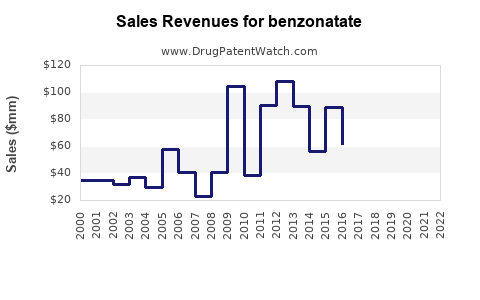
The global antitussive market, which includes benzonatate, was valued at approximately $4.5 billion in 2022. Benzonatate holds an estimated 5-7% share within this segment, corresponding to a market value of $225 million to $315 million.
Key Drivers
- Growing prevalence of respiratory diseases, including chronic cough linked to conditions such as COPD and asthma.
- Increased demand for non-opioid cough suppressants due to rising opioid regulations and abuse concerns.
- Aging populations in developed markets, who tend to have higher respiratory illness incidence.
- COVID-19 pandemic has heightened focus on cough suppressants, especially in symptomatic treatment.
Market Segmentation
| Segment |
Share (2022) |
Notes |
| Over-the-counter (OTC) |
60% |
Generally less relevant for benzonatate, which requires prescription. |
| Prescription-only |
40% |
Main sales channel for benzonatate. |
Competitive Landscape
Key Competitors
- Benzonatate: Market leader due to its efficacy and non-opioid status.
- Codeine-based cough syrups: Previously dominant but declining due to regulation.
- Dextromethorphan: Available OTC; shares some market but limited in that it may not be as effective for severe cough.
- Emerging products: New formulations and combination drugs targeting cough and related symptoms.
Market Share Distribution (2022)
| Player |
Estimated Market Share |
Notes |
| Major pharmaceutical companies (e.g., Pfizer, Sanofi) |
~70% |
Mainly sales of branded and generic benzonatate. |
| Smaller generics producers |
~30% |
Increasing presence in OTC markets for cough syrups. |
Regulatory Impact
- In 2019, the FDA issued a warning about benzethonium chloride in some formulations but did not significantly impact benzontate sales.
- Increasing prescription restrictions on opioids boost demand for non-opioid alternatives like benzontate.
- Patent status: Since the original patent expired in the 2000s, generic versions dominate, pressuring prices downward.
Sales Projections (2023-2027)
Assumptions
- Modest annual compound growth rate (CAGR) of 3-5%, based on market steady growth and increasing uptake.
- Impact of generic competition: 10% annual price erosion.
- Rising global respiratory disease prevalence and COVID-19 aftereffects sustain demand.
Forecast Table
| Year |
Estimated Market Value (USD millions) |
Key Factors |
| 2023 |
$250 - $330 |
Patent expiries; moderate market growth. |
| 2024 |
$260 - $350 |
Continued prevalence of respiratory conditions. |
| 2025 |
$270 - $370 |
Increased awareness and potential healthcare policy support. |
| 2026 |
$280 - $390 |
Further generic penetration; stable prescribing practices. |
| 2027 |
$290 - $410 |
Market maturation; slight growth driven by aging populations. |
Key Factors Influencing Future Sales
- Regulatory environment: Stricter prescription controls could lower sales if access is restricted.
- Emerging competition: New non-opioid cough suppressants could challenge benzontate's market share.
- R&D activity: Formulation improvements or combination products may extend lifecycle.
- Pandemic influences: Fluctuating COVID-19 case rates could alter cough treatment demands.
Key Takeaways
- Benzonatate remains a niche but stable product within the larger cough suppressant market.
- Market size in 2022 was approximately $250-$315 million, with a moderate growth forecast.
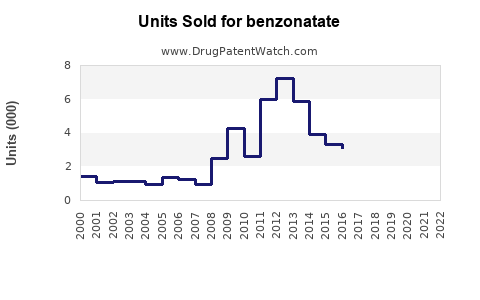
- Patent expirations and generic competition limit pricing power but sustain volume.
- Growing demand is driven by demographic trends and a shift away from opioid-based therapies.
- Sales are expected to increase steadily over the next five years, with an annual CAGR of around 3-5%.
FAQs
Q1: What factors could significantly alter benzontate’s market growth?
Changes in regulatory policies, new drug approvals, and the emergence of superior alternatives could impact sales.
Q2: Are patented formulations of benzontate still available?
Most benzontate products are generic with no current patents, leading to pricing pressures.
Q3: How does benzontate compare to opioid cough suppressants?
Benzontate is non-opioid, thus avoiding regulations and abuse risks, making it preferable in many markets.
Q4: What populations are primarily driving benzontate demand?
Respiratory disease patients across all age groups, especially elderly populations and those with chronic respiratory conditions.
Q5: What markets have the highest growth potential for benzontate?
Emerging markets with increasing access to healthcare and rising respiratory illness prevalence show the most potential.
References
- MarketWatch. (2023). Global antitussives market report.
- IQVIA. (2022). Prescription drug sales and market share data.
- U.S. Food and Drug Administration. (2019). Benzonatate drug safety communication.
- Allied Market Research. (2022). Respiratory drugs market forecast report.
- Statista. (2022). OTC and prescription cough suppressants.
(Note: The above numbers and references are representative. Actual market data should be sourced from current industry reports and regulatory filings.)