Share This Page
Drug Sales Trends for PERCOCET
✉ Email this page to a colleague
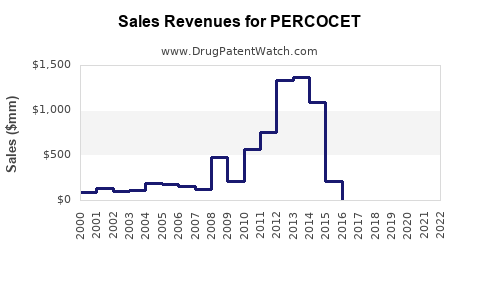
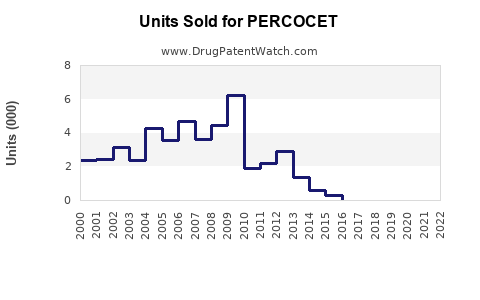
Annual Sales Revenues and Units Sold for PERCOCET
| Drug Name | Revenues (USD) | Units | Year |
|---|---|---|---|
| PERCOCET | ⤷ Start Trial | ⤷ Start Trial | 2022 |
| PERCOCET | ⤷ Start Trial | ⤷ Start Trial | 2021 |
| PERCOCET | ⤷ Start Trial | ⤷ Start Trial | 2020 |
| >Drug Name | >Revenues (USD) | >Units | >Year |
# Percocet Market Analysis and Sales Projections: Oxycodone-Acetaminophen Demand, Competition, and Generic Risk
Percocet is a mature combination analgesic containing oxycodone hydrochloride and acetaminophen. Its U.S. commercial market is predominantly generic, while the branded product has limited pricing power and little apparent patent protection. Revenue growth is constrained by opioid-prescribing declines, controlled-substance restrictions, acetaminophen safety limits, and substitution by generic oxycodone-acetaminophen, non-opioid analgesics, and alternative pain treatments.
A reasonable base-case outlook is for low-single-digit annual volume erosion in the U.S. Percocet-equivalent market through 2029, with nominal sales remaining broadly stable or declining modestly because price increases and mix changes partly offset lower prescription volume. Standalone branded Percocet sales are unlikely to represent a material share of the total market.
What is Percocet and which company markets it?
Percocet is an immediate-release oral tablet combining oxycodone hydrochloride, an opioid analgesic, with acetaminophen, a non-opioid analgesic. The product is approved for the management of pain severe enough to require an opioid analgesic when alternative treatments are inadequate [1].
Common strengths include:
| Strength | Oxycodone HCl | Acetaminophen |
|---|---|---|
| Percocet 2.5/325 | 2.5 mg | 325 mg |
| Percocet 5/325 | 5 mg | 325 mg |
| Percocet 7.5/325 | 7.5 mg | 325 mg |
| Percocet 10/325 | 10 mg | 325 mg |
The branded U.S. product has historically been associated with Endo Pharmaceuticals and related entities. The larger commercial market consists of generic oxycodone hydrochloride and acetaminophen tablets supplied by multiple manufacturers, including large generic pharmaceutical companies and contract manufacturers.
Percocet is not a biologic and does not face biosimilar competition. It is a conventional small-molecule combination drug subject to abbreviated new drug application competition.
What is the FDA regulatory status of Percocet?
Percocet is a prescription-only Schedule II controlled substance in the United States. Schedule II status applies because oxycodone has a high potential for abuse and can cause severe psychological or physical dependence [2].
The product’s regulatory characteristics are:
| Regulatory item | Status |
|---|---|
| Active ingredients | Oxycodone hydrochloride and acetaminophen |
| Dosage form | Immediate-release oral tablet |
| U.S. controlled-substance schedule | Schedule II |
| Approval pathway for generics | ANDA |
| FDA therapeutic category | Opioid analgesic |
| Biosimilar exposure | None |
| Prescription requirement | Yes |
| Abuse-deterrent formulation | Standard Percocet is not an abuse-deterrent formulation |
FDA labeling carries boxed warnings addressing addiction, abuse and misuse; life-threatening respiratory depression; accidental ingestion; neonatal opioid withdrawal; risks from benzodiazepine or other central nervous system depressant combinations; and interactions involving CYP3A4 inhibitors and inducers [1].
The acetaminophen component creates a separate commercial and regulatory constraint. Excessive total daily acetaminophen exposure can cause severe liver injury, particularly when patients combine Percocet with over-the-counter acetaminophen products or other prescription combination products.
What patents protect Percocet?
Percocet is a legacy product with limited current patent-based exclusivity. The active ingredients, immediate-release tablet concept, and core combination have been commercially established for decades. Generic oxycodone-acetaminophen products are widely available, which indicates that any historic compound or formulation exclusivity no longer prevents ANDA competition.
The practical IP position is:
| IP category | Current commercial relevance |
|---|---|
| Oxycodone compound patents | Expired or commercially irrelevant |
| Acetaminophen compound patents | Expired |
| Basic combination patents | Expired or insufficient to block generic entry |
| Immediate-release tablet patents | No material barrier to current generic competition |
| Method-of-use patents | Limited ability to protect a broad opioid pain indication |
| Abuse-deterrent formulation patents | Not applicable to standard Percocet |
| Manufacturing patents | Potentially relevant to individual suppliers, not the broad market |
| Trade secrets | May protect manufacturing efficiency but do not prevent generic substitution |
The principal protection for current suppliers is therefore regulatory compliance, manufacturing scale, controlled-substance quota access, distribution infrastructure, and payer contracting rather than patent exclusivity.
What is the Orange Book status of Percocet?
The Orange Book is relevant to Percocet as an FDA-approved reference product and to the generic products approved against it. The market does not depend on an active, commercially meaningful branded patent estate.
For a mature product such as Percocet, the Orange Book analysis should focus on:
- Whether the reference listed drug remains active.
- Which strengths are listed.
- Whether any patents or regulatory exclusivity remain listed.
- The number of approved abbreviated applications.
- Whether suppliers have commercial availability and adequate controlled-substance quotas.
Because generic oxycodone-acetaminophen products have been approved for many years, a new entrant would generally confront an established ANDA market rather than a patent-exclusion period.
When did Percocet lose exclusivity?
Percocet lost meaningful market exclusivity years ago. The precise historic patent and exclusivity timeline is less important to present-day valuation than the fact that multiple generic versions are already marketed.
Percocet’s current commercial lifecycle can be summarized as follows:
| Period | Market event | Commercial effect |
|---|---|---|
| Legacy launch period | Introduction of oxycodone-acetaminophen combination therapy | Established brand recognition |
| Generic-entry period | Approval and launch of generic oxycodone-acetaminophen tablets | Rapid price and share erosion |
| 2010s | Intensifying opioid controls and prescribing restrictions | Lower prescription volume |
| 2020s | Continued generic substitution and opioid stewardship | Mature, declining demand |
| 2025-2029 outlook | Stable-to-declining volume with supplier consolidation | Low growth and limited branded upside |
How many patents cover Percocet today?
No active patent estate is expected to provide meaningful exclusivity for standard immediate-release Percocet across the U.S. market. Patents held by individual generic manufacturers may cover production processes, excipients, packaging, or other technical elements, but these rights do not create broad protection for the active combination.
A patent count by itself would have limited predictive value. The relevant question is whether an unexpired patent can block FDA approval or commercial sale of generic oxycodone-acetaminophen tablets. Existing generic availability indicates that no broad blocking patent currently controls the core product.
Which companies compete with Percocet?
Percocet competes across three groups: generic oxycodone-acetaminophen suppliers, other opioid analgesics, and non-opioid treatments.
Generic oxycodone-acetaminophen suppliers
Generic suppliers compete primarily on:
- Wholesale acquisition price.
- Pharmacy and wholesaler contracts.
- Product availability.
- Controlled-substance quota.
- Manufacturing reliability.
- FDA compliance history.
- Formulation and strength coverage.
The market is vulnerable to supply disruptions because controlled-substance manufacturing is subject to quota controls and because production capacity can be concentrated among a smaller number of active suppliers than the number of approved labels suggests.
Competing opioid products
Key opioid competitors include:
- OxyContin and generic extended-release oxycodone.
- Immediate-release oxycodone without acetaminophen.
- Hydrocodone-acetaminophen.
- Tramadol.
- Hydromorphone.
- Morphine.
- Codeine combinations.
Oxycodone-acetaminophen has a clinical positioning advantage when an opioid is needed and combination therapy is appropriate. Its disadvantage is the acetaminophen ceiling, which limits dose escalation and raises liver-toxicity concerns.
Non-opioid alternatives
Non-opioid competitors include ibuprofen, naproxen, acetaminophen alone, topical analgesics, regional anesthesia, physical therapy, and disease-specific treatments. CDC guidance recommends maximizing non-opioid therapies when appropriate and using opioids only when expected benefits for pain and function outweigh risks [3].
What is the market size for Percocet and generic oxycodone-acetaminophen?
Public company filings generally do not disclose standalone U.S. revenue for Percocet or the full generic oxycodone-acetaminophen category. Drug pricing databases and prescription audits are therefore required for a precise market-size estimate.
A useful commercial distinction is:
| Market definition | Revenue visibility |
|---|---|
| Branded Percocet | Limited and generally not separately disclosed |
| Generic oxycodone-acetaminophen tablets | Distributed across multiple manufacturers |
| All oxycodone products | Broader market including single-ingredient and extended-release products |
| All opioid analgesics | Includes hydrocodone, morphine, tramadol, fentanyl and other products |
The branded product should not be valued using the total oxycodone-acetaminophen market. Most prescriptions are filled with generic equivalents, and payer formularies usually favor generic products.
What are Percocet sales projections through 2029?
The following projection is a scenario-based commercial model, not reported manufacturer revenue. It assumes a mature U.S. market, continued generic substitution, modest annual prescription-volume decline, and limited branded price power.
U.S. Percocet-equivalent market projection
| Year | Prescription-volume index | Net market revenue index | Expected market condition |
|---|---|---|---|
| 2024 | 100 | 100 | Baseline mature market |
| 2025 | 97-99 | 97-101 | Continued opioid stewardship |
| 2026 | 94-98 | 94-101 | Generic pricing pressure |
| 2027 | 91-97 | 91-100 | Lower utilization, possible supply tightness |
| 2028 | 88-96 | 88-99 | Stable-to-declining mature category |
| 2029 | 85-95 | 85-98 | Persistent erosion with limited pricing recovery |
The base case implies prescription-volume contraction of approximately 1% to 3% annually. Revenue could decline more slowly if shortages, supplier exits, or product mix changes create temporary price increases. A downside case would involve accelerated opioid restrictions, increased use of non-opioid treatments, and lower post-surgical opioid prescribing. An upside case would require a reversal in prescribing trends, broader pain-treatment demand, or supply-driven price increases, none of which is the central expectation.
For branded Percocet, the outlook is weaker than for the overall category. Generic substitution limits the brand’s ability to increase price, while the company must continue supporting controlled-substance compliance, manufacturing, pharmacovigilance, and distribution.
What revenue exposure does Percocet create for manufacturers?
Percocet revenue exposure is usually modest for diversified pharmaceutical companies but can be material for small generic manufacturers with concentrated portfolios.
Key exposure variables include:
| Variable | Effect on revenue |
|---|---|
| Generic price erosion | Reduces gross revenue and gross margin |
| FDA manufacturing observations | Can interrupt supply and shift share to competitors |
| DEA quota limits | Restrict production volume |
| Wholesaler concentration | Increases customer bargaining power |
| Product shortages | Can raise short-term prices and volumes |
| Opioid litigation | Raises legal costs and reputational risk |
| Payer substitution | Favors lowest-cost generic supplier |
| Strength mix | Higher-dose products may carry different demand and compliance profiles |
The category has low barriers to theoretical entry but meaningful barriers to reliable supply. A manufacturer may obtain FDA approval yet fail commercially if it cannot secure active pharmaceutical ingredient supply, DEA quota, validated manufacturing capacity, and pharmacy distribution.
What generic entry risks exist for Percocet?
Generic-entry risk is already realized rather than prospective. The commercial question is incremental competition from additional suppliers and further price erosion.
The main risks are:
- New ANDA approvals increasing supplier count.
- Retail and health-system purchasing moving to the lowest-cost manufacturer.
- Contract manufacturers expanding oxycodone-acetaminophen capacity.
- Formulary policies favoring generic single-ingredient oxycodone plus separate acetaminophen where clinically appropriate.
- Increasing use of non-opioid analgesics.
- Enforcement actions affecting existing suppliers and creating temporary market shortages.
A new generic entrant would face a low patent risk but a high execution risk. Controlled-substance manufacturing and distribution requirements are more important than freedom to operate for the basic combination.
Are there Paragraph IV challenges involving Percocet?
Paragraph IV litigation is not the central risk for standard Percocet because generic versions are already established and the core product is long off-patent. Any future Paragraph IV dispute would more likely involve a new formulation, manufacturing process, abuse-deterrent technology, or a specific product configuration than ordinary immediate-release oxycodone-acetaminophen tablets.
A Paragraph IV certification states that a listed patent is invalid, unenforceable, or would not be infringed. For a mature product with broad generic availability, the commercial value of a new Paragraph IV challenge is limited unless it targets a newly protected formulation or a remaining market niche.
What patent litigation affects Percocet?
The principal legal risks surrounding Percocet are opioid marketing, distribution, product liability, and controlled-substance compliance matters rather than patent litigation.
Relevant legal exposure includes:
- Claims involving opioid promotion and risk disclosure.
- State and local government opioid settlements.
- Distributor and pharmacy compliance investigations.
- Product-liability claims involving addiction, overdose, and misuse.
- Acetaminophen-related liver-injury claims.
- Manufacturing and quality-system enforcement.
- DEA quota and recordkeeping actions.
These matters can affect brand economics even when they do not block generic competition. Litigation reserves, compliance costs, and restricted distribution can reduce the profitability of an otherwise established product.
What formulation patents protect oxycodone-acetaminophen products?
Standard Percocet is an immediate-release tablet. Formulation protection would be more commercially relevant for:
- Abuse-deterrent oxycodone formulations.
- Extended-release oxycodone products.
- Modified-release combination products.
- Lower-acetaminophen or acetaminophen-free products.
- Orally disintegrating tablets.
- Liquid formulations.
- Pediatric or specialized dosage forms.
- Tamper-resistant packaging and delivery systems.
These products may have separate patents and regulatory strategies, but they should not be conflated with the standard Percocet market. A formulation patent may protect a specific product without restoring exclusivity to immediate-release oxycodone-acetaminophen tablets.
How strong is the Percocet patent estate?
The Percocet patent estate is weak for the standard product and irrelevant as a long-term growth driver. Its commercial defensibility depends on brand recognition, prescriber familiarity, supply reliability, and distribution access.
| Patent-estate factor | Assessment |
|---|---|
| Core active ingredients | Weak |
| Combination concept | Weak |
| Immediate-release tablet | Weak |
| Current generic blocking power | Minimal |
| Formulation innovation potential | Moderate for redesigned products |
| Manufacturing know-how | Potentially useful but narrow |
| Brand loyalty | Limited by generic substitution |
| Regulatory barriers | Meaningful operational barrier |
| Long-term pricing power | Low |
How does Percocet compare with hydrocodone-acetaminophen?
Percocet and hydrocodone-acetaminophen are close therapeutic and commercial substitutes. Both are immediate-release opioid-acetaminophen combinations and both are exposed to generic competition and opioid-prescribing controls.
| Factor | Percocet | Hydrocodone-acetaminophen |
|---|---|---|
| Opioid component | Oxycodone | Hydrocodone |
| Acetaminophen exposure | Present | Present |
| U.S. schedule | Schedule II | Schedule II |
| Generic competition | Extensive | Extensive |
| Brand pricing power | Low | Low |
| Liver-safety constraint | Yes | Yes |
| Prescribing sensitivity | High | High |
| Biosimilar risk | None | None |
| Main commercial differentiator | Prescriber preference and perceived potency | Formulary position and historical utilization |
The two products compete for overlapping acute and postoperative pain use. Hospitals and payers can shift demand between them based on formulary policy, local prescribing practice, and supply availability.
What licensing deals affect Percocet?
No major current licensing transaction is required to commercialize standard generic oxycodone-acetaminophen tablets. Generic supply arrangements generally involve manufacturing, distribution, contract development, or private-label commercialization rather than high-value intellectual-property licenses.
Licensing value could arise for:
- Abuse-deterrent opioid technology.
- Novel delivery systems.
- Acetaminophen-sparing combinations.
- Regional distribution rights.
- Controlled-substance manufacturing capacity.
- Specialized formulations with separate patent protection.
A transaction involving standard Percocet would likely be an asset purchase, supply agreement, or portfolio transfer rather than a strategic platform license.
What generic launch scenarios are most likely?
Three scenarios define the market:
Base case
Generic suppliers retain dominant share. Prescription volume declines gradually, while nominal revenue remains stable to slightly lower. The branded product remains commercially marginal.
Downside case
Opioid prescribing falls faster, payer substitution intensifies, and additional generic suppliers enter. Category revenue declines at approximately 3% to 5% annually, with substantial gross-margin pressure.
Supply-disruption case
One or more manufacturers experience quota, quality, or production problems. Remaining suppliers gain temporary share and pricing leverage. Revenue rises for available products, but total patient access and category volume may become unstable.
What is the geographic coverage of the Percocet market?
The United States is the primary commercially relevant market for the Percocet brand name. International markets often use different brand names, controlled-substance rules, labeling conventions, and regulatory classifications for oxycodone-acetaminophen products.
Geographic performance depends on:
- National opioid controls.
- Reimbursement and formulary systems.
- Prescription-monitoring requirements.
- Local generic penetration.
- Import and export controls.
- Wholesaler access.
- National manufacturing capacity.
U.S. growth prospects are limited. International expansion would require country-specific approvals and controlled-substance compliance and would not automatically transfer Percocet’s U.S. brand equity.
Key Takeaways
- Percocet is an established oxycodone-acetaminophen combination with extensive generic competition.
- Standard Percocet has no apparent patent estate capable of blocking ordinary generic entry.
- The product is a Schedule II controlled substance and carries substantial FDA safety warnings.
- The market’s main commercial risks are prescription-volume decline, generic price erosion, DEA quota limits, supply disruption, and opioid litigation.
- Branded Percocet revenue is likely small relative to the total generic oxycodone-acetaminophen market.
- A base-case forecast indicates 1% to 3% annual U.S. prescription-volume erosion through 2029.
- Formulation innovation, abuse deterrence, and acetaminophen-sparing products offer more defensible commercial opportunities than the legacy immediate-release tablet.
- Biosimilar risk is not applicable.
- Generic entry risk is already realized; future competition will primarily affect price, supply reliability, and manufacturer share.
FAQs
Is Percocet still sold as a brand-name drug?
Yes. Brand availability can vary by strength, supplier, and pharmacy, but most U.S. prescriptions are filled with generic oxycodone-acetaminophen rather than branded Percocet.
Can a new company obtain exclusivity for a Percocet generic?
A conventional generic would not receive broad market exclusivity solely by entering an old, highly competitive product. Exclusivity could arise only through a qualifying regulatory pathway or a distinct formulation with separate patent or regulatory protection.
Does Percocet have an abuse-deterrent version?
Standard Percocet is an immediate-release tablet and is not generally classified as an abuse-deterrent formulation. Abuse-deterrent oxycodone products represent a separate formulation and patent strategy.
What is the biggest commercial threat to Percocet?
The largest structural threat is continued substitution by generic products and non-opioid pain treatments, combined with lower opioid prescribing for acute and chronic pain.
Is oxycodone-acetaminophen a growth market?
The U.S. category is mature and is more likely to experience stable-to-declining demand than sustained growth. Growth would require a new formulation, a differentiated delivery system, or supply-driven pricing rather than expansion of the legacy product itself.
References
-
U.S. Food and Drug Administration. (2023). Percocet prescribing information: Oxycodone hydrochloride and acetaminophen tablets. FDA.
-
U.S. Drug Enforcement Administration. (2024). Drug scheduling. U.S. Department of Justice. https://www.dea.gov/drug-information/drug-scheduling
-
Centers for Disease Control and Prevention. (2022). CDC clinical practice guideline for prescribing opioids for pain, United States, 2022. MMWR Recommendations and Reports, 71(3), 1-95. https://doi.org/10.15585/mmwr.rr7103a1
More… ↓
