Share This Page
Drug Sales Trends for NASCOBAL
✉ Email this page to a colleague
Payment Methods and Pharmacy Types for NASCOBAL (2021)
Revenues by Pharmacy Type
Units Sold by Pharmacy Type
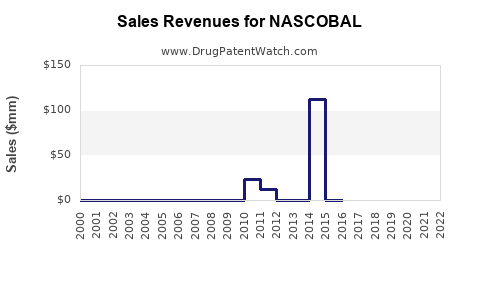
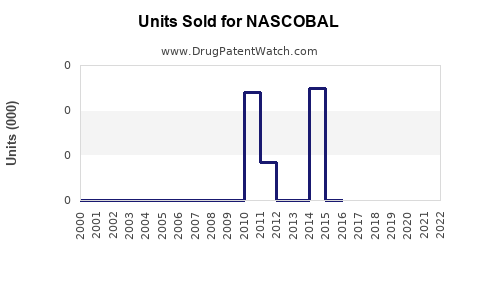
Annual Sales Revenues and Units Sold for NASCOBAL
| Drug Name | Revenues (USD) | Units | Year |
|---|---|---|---|
| NASCOBAL | ⤷ Start Trial | ⤷ Start Trial | 2022 |
| NASCOBAL | ⤷ Start Trial | ⤷ Start Trial | 2021 |
| NASCOBAL | ⤷ Start Trial | ⤷ Start Trial | 2020 |
| NASCOBAL | ⤷ Start Trial | ⤷ Start Trial | 2019 |
| NASCOBAL | ⤷ Start Trial | ⤷ Start Trial | 2018 |
| NASCOBAL | ⤷ Start Trial | ⤷ Start Trial | 2017 |
| NASCOBAL | ⤷ Start Trial | ⤷ Start Trial | 2016 |
| >Drug Name | >Revenues (USD) | >Units | >Year |
NASCOBAL Market Analysis, Sales Projections, Patent Position, and Generic Entry Risk
NASCOBAL is a prescription cyanocobalamin nasal spray for vitamin B12 replacement. Its commercial market is narrow and mature, with demand concentrated among patients who need an alternative to oral supplementation or intramuscular injections. Public filings do not disclose audited NASCOBAL sales, so the projections below are modeled estimates rather than reported company guidance. The base case assumes U.S. net sales of approximately $15 million in 2024, rising to $18 million by 2029.
What is NASCOBAL and which patients use it?
NASCOBAL contains cyanocobalamin, a form of vitamin B12, delivered through a once-weekly nasal spray. The FDA label identifies it for vitamin B12 maintenance therapy in patients with pernicious anemia or other B12 deficiency who have achieved remission following parenteral therapy and who do not have nervous-system involvement or gastrointestinal malabsorption that prevents nasal absorption (FDA, 2023).
| Product attribute | NASCOBAL |
|---|---|
| Active ingredient | Cyanocobalamin |
| Dosage form | Nasal spray |
| Strength | 500 mcg per spray |
| Typical labeled dosing | One spray in one nostril once weekly |
| Primary use | Maintenance treatment of vitamin B12 deficiency |
| Regulatory pathway | Prescription drug, approved NDA |
| Main alternatives | Oral cyanocobalamin, sublingual B12, intramuscular hydroxocobalamin or cyanocobalamin |
| Commercial market | Primarily United States |
| Main manufacturer history | Par Pharmaceutical, later associated with Endo Pharmaceuticals |
NASCOBAL is not a first-line product for most newly diagnosed patients. Physicians commonly use inexpensive oral B12 products or injectable therapy. The nasal product is more relevant when patients prefer to avoid injections, have adherence problems with daily oral treatment, or require a prescription maintenance option.
How large is the NASCOBAL market?
The addressable market is materially smaller than the overall vitamin B12 market. Vitamin B12 deficiency is common in older adults, patients taking metformin or proton-pump inhibitors, people with pernicious anemia, and patients who have undergone gastrointestinal surgery. Most of those patients do not require a branded nasal prescription product.
The commercial funnel is narrowed by four factors:
- Many patients self-treat with over-the-counter oral B12.
- Generic oral cyanocobalamin is substantially cheaper.
- Injectable B12 remains widely used in severe deficiency and malabsorption.
- NASCOBAL has a limited labeled role in patients already stabilized on parenteral treatment.
A reasonable U.S. market framework is:
| Market layer | Estimated U.S. patient or revenue opportunity |
|---|---|
| Adults using B12 supplements or replacement therapy | Tens of millions of users across prescription and nonprescription channels |
| Patients receiving prescription B12 replacement | Several million annually |
| Patients suitable for noninjectable maintenance therapy | Hundreds of thousands to low millions |
| Patients with a realistic branded nasal-spray opportunity | Tens of thousands to low hundreds of thousands |
| Estimated NASCOBAL net sales, 2024 | $12 million-$18 million |
The final category is the relevant commercial market. The product does not compete for every B12-deficient patient.
What are NASCOBAL sales and revenue projections?
No current public filing provides a separate NASCOBAL revenue line. The following forecast uses a bottom-up model based on estimated treated patients, annual prescription volume, gross-to-net discounts, and continuing price increases.
Base-case sales projection
| Year | Estimated U.S. net sales | Growth | Estimated treated patients |
|---|---|---|---|
| 2024E | $15 million | - | 11,000-15,000 |
| 2025E | $15.4 million | 2.7% | 11,000-15,000 |
| 2026E | $15.8 million | 2.6% | 11,000-15,000 |
| 2027E | $16.3 million | 3.2% | 11,000-16,000 |
| 2028E | $17.1 million | 4.9% | 12,000-16,000 |
| 2029E | $18.0 million | 5.3% | 12,000-17,000 |
The base case implies a 2024-2029 compound annual growth rate of approximately 3.7%. Growth is expected to come mainly from price increases, improved prescription retention, and gradual adoption among patients seeking an alternative to injections. Volume growth should remain limited.
Bear, base, and bull cases
| Scenario | 2024E sales | 2029E sales | 2024-2029 CAGR | Key assumptions |
|---|---|---|---|---|
| Bear | $12 million | $10 million | -3.6% | Increased oral substitution, payer restrictions, supply disruption |
| Base | $15 million | $18 million | 3.7% | Stable patient volume and low-single-digit pricing growth |
| Bull | $18 million | $27 million | 8.4% | Improved distribution, stronger adherence positioning, limited competition |
The bull case requires commercial execution rather than a major expansion of the B12 market. It would likely depend on broader pharmacy coverage, patient-support programs, and evidence showing better persistence than injectable treatment or daily oral therapy.
What drives NASCOBAL demand?
Patient convenience
NASCOBAL avoids injections and does not require daily dosing. This can support adherence in patients who dislike injections or have difficulty maintaining daily oral regimens.
Growth in B12 deficiency diagnosis
The aging population and wider testing for B12 deficiency support underlying demand. Metformin use, acid-suppressive therapy, bariatric surgery, and autoimmune pernicious anemia are relevant diagnosis drivers.
Prescription maintenance therapy
NASCOBAL is positioned as a maintenance product after initial treatment. This limits its role in acute or severe deficiency but creates recurring prescription demand among patients who remain on therapy.
Brand familiarity
A long commercial history can support continued prescribing among clinicians familiar with the product. That benefit is limited by the availability of inexpensive alternatives.
Distribution and reimbursement
The product's sales depend heavily on pharmacy availability, formulary placement, prior authorization, and patient out-of-pocket cost. A high copay can quickly shift patients to oral or injectable generic B12.
What competing products affect NASCOBAL sales?
NASCOBAL competes against products with lower cost, broader physician familiarity, or stronger clinical utility in severe deficiency.
| Competitor category | Examples | Commercial impact |
|---|---|---|
| Oral prescription or OTC cyanocobalamin | Tablets, capsules, sublingual products | Primary source of substitution |
| Intramuscular B12 | Generic cyanocobalamin, hydroxocobalamin | Preferred for severe deficiency and malabsorption |
| Compounded nasal B12 | Pharmacy-compounded products | Potential price competitor, subject to quality and regulatory limits |
| Other branded B12 products | Various oral and injectable brands | Limited direct differentiation |
| Nutritional supplements | Retail B12 products | Reduce prescription conversion in mild deficiency |
NASCOBAL versus oral B12
Oral B12 has the strongest cost advantage and is adequate for many patients. NASCOBAL can differentiate through weekly administration and avoidance of injections, but those benefits are not sufficient for broad market penetration without favorable reimbursement.
NASCOBAL versus injectable B12
Injectable therapy remains important for pernicious anemia, severe neurologic symptoms, and clinically significant malabsorption. NASCOBAL has greater relevance after stabilization and when the physician considers noninjectable maintenance clinically appropriate.
NASCOBAL versus sublingual B12
Sublingual products compete on convenience but are often available without a prescription. Their presence limits the price a branded nasal product can command.
What is the FDA regulatory status of NASCOBAL?
NASCOBAL is an FDA-approved prescription product. The product was approved under NDA 020797 and is listed in FDA drug databases and product labeling repositories (FDA, n.d.; DailyMed, 2023).
The label limits use in patients with certain forms of malabsorption and does not position NASCOBAL as a universal replacement for parenteral B12. Clinical monitoring is important because neurologic complications can occur with untreated deficiency.
No biosimilar pathway applies. Cyanocobalamin is a small-molecule drug, not a biologic. Competitive entry would occur through an ANDA or, for a different formulation or route, through another applicable FDA pathway.
What patents protect NASCOBAL?
NASCOBAL's principal market protection does not appear to come from an active, high-value patent estate. The product has been marketed for decades, and any original formulation or nasal-delivery patents associated with its launch would generally be expected to have expired by 2024.
| IP category | Current commercial relevance |
|---|---|
| Original cyanocobalamin composition | No meaningful exclusivity expected |
| Nasal delivery formulation | Historical protection may have expired |
| Weekly dosing regimen | Limited ability to block generic competition |
| Manufacturing know-how | Possible operational barrier, not a substitute for patent exclusivity |
| Trademark | Brand protection may continue, but it does not prevent generic approval |
| Regulatory exclusivity | No current new-drug exclusivity expected from the original approval |
The FDA Orange Book is the relevant source for patents and exclusivity associated with approved small-molecule products. A patent listing that remains on the product record could affect ANDA certification and litigation timing, but the age of NDA 020797 indicates that any remaining protection would need to be evaluated carefully rather than assumed to block entry (FDA, n.d.-b).
When does NASCOBAL lose exclusivity?
The practical loss of exclusivity occurred years ago from a small-molecule lifecycle perspective. NASCOBAL's commercial position is therefore based on brand recognition, manufacturing capability, pharmacy access, and physician familiarity rather than a newly expiring patent cliff.
The key timing issue is not an impending 2025 or 2026 patent expiration. It is whether an approved generic nasal cyanocobalamin product reaches the market and obtains sufficient distribution.
Paragraph IV challenge risk
A generic applicant could pursue an ANDA and certify under Paragraph IV that any listed patents are invalid, unenforceable, or not infringed. If the product has no relevant unexpired listed patents, a Paragraph IV certification would not be necessary.
Potential generic targets include:
- The 500 mcg nasal spray strength.
- The pump and metered-dose delivery system.
- The weekly dosing regimen.
- The formulation's stability and preservative system.
A generic entrant would still need to demonstrate pharmaceutical equivalence, bioequivalence or another FDA-accepted approach, manufacturing consistency, and reliable device performance.
How strong is the NASCOBAL patent estate?
The patent estate is likely weak as a barrier to generic entry. The more defensible assets are commercial and technical rather than exclusivity-based.
Stronger barriers
- Established nasal-spray manufacturing process.
- Device and pump sourcing.
- Stability data and validated packaging.
- Distribution relationships.
- Brand recognition among prescribing physicians.
- Any confidential formulation or process know-how.
Weaker barriers
- Active ingredient protection.
- Broad method-of-use claims.
- Weekly dosing claims.
- Brand-level clinical differentiation.
- Long-term regulatory exclusivity.
The product's risk profile resembles a mature branded generic rather than a protected innovative medicine.
What generic launch risks exist for NASCOBAL?
The largest risk is a single generic entrant that undercuts price while preserving the same nasal delivery format. Because the market is small, the first generic may not attract many competitors, but even one entrant could reduce the branded product's price and volume.
Generic launch scenarios
| Scenario | Expected commercial effect |
|---|---|
| No generic entrant | Stable low-single-digit growth, driven by price and retention |
| One authorized or ANDA generic | 20%-40% volume decline over two to three years |
| Multiple generics | 40%-70% volume decline and significant net-price erosion |
| Compounded alternatives expand | Gradual pressure, particularly in cash-pay channels |
| Supply disruption at generic competitor | Temporary volume recovery for NASCOBAL |
A generic would not necessarily eliminate NASCOBAL. Some patients and physicians would remain loyal to the branded product, and some payers may maintain coverage for the brand if the generic has limited availability.
What manufacturing and intellectual-property barriers affect competition?
Nasal sprays are more complex than conventional oral tablets. A competitor must match the formulation, spray pattern, delivered dose, container-closure system, and device performance. FDA review can identify differences in emitted dose, plume geometry, droplet size, and stability.
Those requirements raise development cost and reduce the number of likely entrants. They do not create durable exclusivity if the reference product has sufficient regulatory and technical documentation for an ANDA pathway.
Manufacturing risk includes:
- Pump and actuator shortages.
- Component qualification delays.
- Batch-to-batch dose variation.
- Container-closure integrity failures.
- Stability problems caused by formulation or packaging.
- Small commercial scale that reduces supplier priority.
What licensing deals and litigation affect NASCOBAL?
No major publicly disclosed licensing transaction is central to the current NASCOBAL commercial thesis. The product has historically been associated with Par Pharmaceutical and Endo's branded-product portfolio.
No major active patent litigation involving NASCOBAL is broadly reported as a current market driver in the public record reviewed for this analysis. The litigation risk would rise if a generic applicant filed an ANDA with a Paragraph IV certification against any unexpired Orange Book-listed patent.
Settlement agreements would be commercially important if they allowed a generic launch before the asserted patent expiration date. No material settlement-driven launch date is incorporated into the base-case forecast.
What is the commercial outlook for NASCOBAL?
NASCOBAL should remain a small, stable prescription product rather than a high-growth asset. Its recurring demand is supported by chronic B12 replacement, but the product faces persistent substitution from inexpensive oral and injectable options.
Revenue exposure
For a portfolio owner, NASCOBAL offers:
- Recurring maintenance revenue.
- Low dependence on new diagnosis growth.
- Limited research and development needs.
- Potential price resilience in a niche market.
It also carries:
- High customer concentration risk.
- Exposure to payer restrictions.
- Low ceiling for volume growth.
- Generic nasal-spray risk.
- Dependence on reliable supply of specialized delivery components.
The product is more valuable as a cash-generating niche brand than as a platform for major therapeutic expansion.
How does NASCOBAL compare with other B12 products?
| Factor | NASCOBAL | Oral generic B12 | Injectable generic B12 |
|---|---|---|---|
| Administration | Weekly nasal spray | Usually daily or periodic oral dosing | Intermittent injection |
| Cost | High relative to generics | Lowest | Low drug cost, higher administration burden |
| Convenience | High for injection-averse patients | High for many patients | Low to moderate |
| Severe deficiency | Limited by label and clinical setting | May be unsuitable in some cases | Commonly preferred |
| Patent strength | Weak or expired | Minimal | Minimal |
| Reimbursement risk | High | Low | Moderate |
| Generic substitution risk | Moderate to high | Already commoditized | Already commoditized |
| Growth potential | Low | High volume, low value | Stable |
Key Takeaways
- NASCOBAL is a mature cyanocobalamin nasal spray with a narrow prescription market.
- Estimated 2024 U.S. net sales are approximately $12 million-$18 million, with a $15 million base case.
- Base-case sales reach about $18 million by 2029, representing roughly 3.7% annual growth.
- The principal commercial threat is substitution by oral or injectable generic B12, not a near-term patent cliff.
- NASCOBAL has no biosimilar risk because cyanocobalamin is a small-molecule drug.
- The patent estate appears weak as a long-term barrier; device, formulation, manufacturing, and distribution assets are more relevant.
- A single approved generic nasal spray could reduce branded volume by approximately 20%-40%.
- The product's investment profile is defensive and cash-generative, with limited upside from market expansion.
FAQs About NASCOBAL Market Size and Exclusivity
Is NASCOBAL still commercially available?
NASCOBAL remains an FDA-listed prescription cyanocobalamin nasal spray. Commercial availability depends on current manufacturer supply, wholesaler inventory, and pharmacy distribution.
Is NASCOBAL covered by Medicare?
Coverage varies by Medicare Part D plan, formulary tier, utilization controls, and the patient's indication. Oral B12 products and injectable alternatives may receive different treatment.
Can pharmacies substitute a generic for NASCOBAL?
Automatic substitution depends on whether an FDA-approved therapeutically equivalent generic is available and rated in the Orange Book. Compounded nasal B12 is not automatically equivalent to an FDA-approved reference product.
Is NASCOBAL more effective than oral vitamin B12?
The product offers a different route and dosing schedule, but its commercial value is convenience rather than a broad efficacy advantage over oral B12 for every patient. Clinical selection depends on deficiency severity, absorption, adherence, and physician judgment.
What would increase NASCOBAL sales most?
The largest potential catalysts are broader insurance coverage, evidence of better treatment persistence, improved pharmacy access, and the absence of a direct generic nasal competitor. A major expansion would require stronger differentiation than the current label provides.
References
-
DailyMed. (2023). Nascobal: Cyanocobalamin nasal spray prescribing information. U.S. National Library of Medicine. https://dailymed.nlm.nih.gov/
-
Endo International plc. (2021). Annual report on Form 10-K for the fiscal year ended December 31, 2021. U.S. Securities and Exchange Commission. https://www.sec.gov/
-
U.S. Food and Drug Administration. (2023). Nascobal prescribing information. FDA. https://www.accessdata.fda.gov/
-
U.S. Food and Drug Administration. (n.d.-a). Drugs@FDA: FDA-approved drugs database. https://www.accessdata.fda.gov/scripts/cder/daf/
-
U.S. Food and Drug Administration. (n.d.-b). Approved drug products with therapeutic equivalence evaluations, Orange Book. https://www.accessdata.fda.gov/scripts/cder/ob/
More… ↓
