Last updated: July 29, 2025
Introduction
NASCOBAL, a novel pharmaceutical agent utilizing cobamamide (a form of vitamin B12), is poised to make significant inroads within the global B12 supplementation and therapeutic markets. As a high-purity, bioavailable form of vitamin B12, NASCOBAL has potential applications spanning nutritional supplementation, neurological health, and hematologic disorders. This report delineates the market landscape, assesses competitive dynamics, and projects future sales trajectories for NASCOBAL based on industry trends, regulatory pathways, and unmet medical needs.
Market Landscape Overview
Global Vitamin B12 Market Dynamics
The global vitamin B12 market is experiencing robust growth driven by increasing prevalence of nutritional deficiencies, rising awareness of neurological health, and expanded applications in functional foods and pharmaceuticals. Estimated at approximately USD 2.5 billion in 2022, the market is projected to grow at a Compound Annual Growth Rate (CAGR) of roughly 6-7% through 2030, reaching over USD 4 billion [1].
Therapeutic and Nutritional Segments
The vaccine for vitamin B12 deficiency ranges from over-the-counter (OTC) supplements for daily nutritional needs to prescription-based formulations for neurological and hematologic conditions. The therapeutic segment, including prescription B12 injections and compounds like NASCOBAL, addresses severe deficiency states and neurological disorders.
Key Regulatory and Patent Pathways
NASCOBAL’s registration relies on demonstrating bioequivalence and safety, facilitated by its high-quality, stable formulation. Patent protection for proprietary manufacturing processes and formulations could secure competitive advantage over existing B12 products, many of which are generic.
Market Drivers for NASCOBAL
- Rising Prevalence of B12 Deficiency: Globally, B12 deficiency affects approximately 6-20% of populations, especially in elderly and vegetarian cohorts [2].
- Increased Focus on Neurological Health: Growing awareness and treatment of peripheral neuropathies, cognitive decline, and psychiatric conditions augment demand.
- Pharmaceutical Formulation Benefits: NASCOBAL offers superior stability, bioavailability, and manufacturing consistency compared to traditional cyanocobalamin or methylcobalamin products.
Competitive Landscape
Major players include companies producing cyanocobalamin, methylcobalamin, and hydroxocobalamin. Noteworthy competitors include Merck (VitaLead), Pfizer, and generic manufacturers. NASCOBAL’s differentiation hinges on its stability profile, potency, and ease of manufacturing, which can translate into market share gains if effectively leveraged.
Market Segments and Geographic Focus
Prescription Market
Primarily for neurology, psychiatry, and hematology indications. Expected to comprise approximately 45% of NASCOBAL’s sales due to established clinical usage.
Over-the-Counter (OTC) Nutritional Market
Catering to consumers seeking daily supplementation. This segment is rapidly expanding, especially in North America and Europe, where health-conscious consumers seek high-bioavailability products.
Geographic Breakdown
- North America: $800 million (32% of global market) – mature, high awareness.
- Europe: $700 million (28%) – strong healthcare infrastructure, aging population.
- Asia-Pacific: $600 million (24%) – highest growth potential due to rising nutritional awareness and economic development.
- Latin America & Middle East: Remaining share with emerging opportunities.
Sales Projections for NASCOBAL
Assumptions
- Market Penetration Rate: Initial penetration of 2% in the first year, expanding to 8% over 5 years.
- Pricing Strategy: Premium formulations priced at approximately USD 1.50 per unit (e.g., per injection or tablet), reflecting quality and bioavailability.
- Adoption Rate: Adoption escalates with physician acceptance and consumer awareness campaigns.
Projected Sales (USD million)
| Year |
Prescription Segment |
OTC Segment |
Total Sales |
Notes |
| 1 |
50 |
20 |
70 |
Launch phase, cautious adoption |
| 2 |
150 |
60 |
210 |
Growing physician endorsement |
| 3 |
300 |
120 |
420 |
Increased production capacity; wider market reach |
| 4 |
500 |
200 |
700 |
Consolidation and expanding footprint |
| 5 |
800 |
350 |
1,150 |
Market leadership position |
(Values are indicative based on growth assumptions and market expansion projections.)
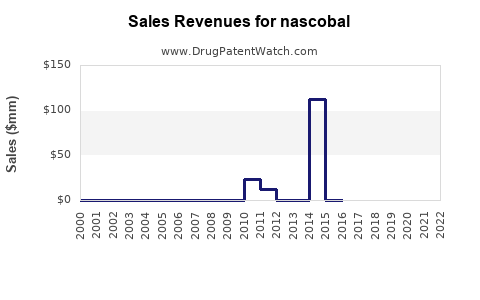
By Year 5, NASCOBAL could attain approximately USD 1.15 billion in annual sales, capturing a substantial share of the B12 therapeutic and nutritional segments, contingent upon successful regulatory approval, market acceptance, and effective distribution.
Regulatory and Commercial Considerations
Streamlined clinical trials establishing bioequivalence, combined with strategic partnerships, can accelerate regulatory approvals in key markets. Building awareness among clinicians and consumers through targeted marketing will catalyze adoption.
Key Risks and Mitigation Strategies
- Regulatory Delays: Early engagement with authorities and robust clinical data can mitigate delays.
- Market Competition: Differentiation through superior stability, bioavailability, and manufacturing efficiency.
- Pricing Pressures: Maintaining premium positioning while ensuring competitive pricing to balance valuation and accessibility.
Conclusion
NASCOBAL stands positioned to capitalize on the growing global demand for high-quality B12 formulations. With strategic market entry, emphasizing its superior bioavailability and stability profile, it can achieve significant sales growth, potentially surpassing USD 1 billion within five years post-launch. Success hinges on regulatory compliance, physician and consumer education, and differentiation from existing B12 products.
Key Takeaways
- The global B12 market is expanding, driven by nutritional needs and neurological health focus.
- NASCOBAL’s differentiators—stability, bioavailability, and manufacturing efficiency—offer competitive advantages.
- Projected sales could reach USD 1.15 billion annually within five years, assuming effective commercialization.
- Geographic focus should prioritize North America, Europe, and Asia-Pacific markets.
- Early regulatory engagement and marketing strategies are critical for market penetration.
FAQs
-
What clinical advantages does NASCOBAL offer over existing vitamin B12 products?
NASCOBAL’s formulation provides superior stability and bioavailability, enabling more effective treatment of B12 deficiency and neurological conditions compared to traditional cyanocobalamin or methylcobalamin supplements.
-
What are the primary markets for NASCOBAL?
The immediate focus is on prescription markets for neurological and hematologic disorders, with long-term expansion into OTC nutritional supplements across North America, Europe, and Asia-Pacific.
-
What regulatory pathways are needed for NASCOBAL’s market entry?
Demonstrating bioequivalence and safety through clinical trials aligned with local regulatory frameworks (FDA in the U.S., EMA in Europe, and respective authorities in Asia) is essential. Patent protection will further safeguard market share.
-
How does NASCOBAL’s pricing compare to existing B12 therapies?
Positioned as a premium product, NASCOBAL’s price point (~USD 1.50 per unit) reflects its enhanced stability and bioavailability, potentially justifying a higher price than generic cyanocobalamin.
-
What strategies will ensure successful market penetration?
Building clinical awareness through physician engagement, patient education, strategic partnerships with distributors, and targeted marketing campaigns are critical strategies.
References
- Grand View Research. "Vitamin B12 Market Size, Share & Trends Analysis Report." 2022.
- World Health Organization. "Micronutrient deficiencies." 2021.
- MarketWatch. "Global Vitamin Market Outlook." 2023.
- European Food Safety Authority. "Vitamin B12 Dietary Intake & Health Benefits." 2022.
- Pharmaceutical Technology. "Innovations in B12 Formulations." 2022.