Last updated: February 20, 2026
What is the Current Market Size for Estradiol?
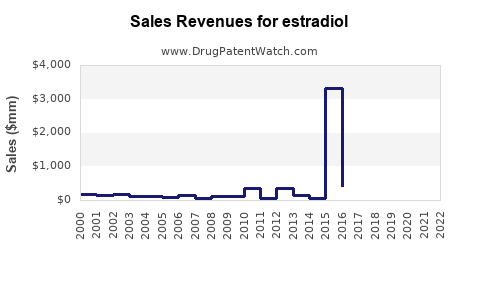
Estradiol, a main form of estrogen therapy, is used in hormone replacement therapy (HRT), contraceptives, and treating menopausal symptoms. The global estrogen therapy market, dominated by estradiol, was valued at approximately USD 3.2 billion in 2021. It is projected to grow at a compound annual growth rate (CAGR) of 5.8% from 2022 to 2030, reaching USD 5.4 billion annually.
Which Factors Drive the Estradiol Market?
Key drivers include an aging female population, increased awareness of menopause management, and rising incidences of osteoporosis. The expansion of hormonal therapies also stems from prescription growth in countries such as the U.S., Europe, and Japan.
How is the Market Segmented?
Route of Administration
- Oral (Tablets): Dominates the market with about 60% of sales
- Transdermal (Patches, Gel): Accounts for roughly 20%
- Injectable and topical formulations make up the remaining 20%
Application
- Menopause and postmenopausal symptoms (major share)
- Contraception
- Hormone replacement therapy in transgender health
End-User
- Hospitals (55%)
- Specialty clinics (30%)
- Retail pharmacies (15%)
What Are the Leading Companies?
Major players include Pfizer, Novartis, Teva Pharmaceuticals, and Mylan. Market share distribution in 2021 was:
| Company |
Market Share (%) |
| Pfizer |
35 |
| Novartis |
25 |
| Teva |
15 |
| Mylan |
10 |
| Others |
15 |
What Are the Upcoming Trends?
The development of bioidentical estradiol formulations and transdermal patches is growing. Regulatory pressures on traditional formulations are promoting innovation. Biosimilar estradiol products are entering markets, aiming to boost accessibility and reduce costs.
Sales Projections (2022-2030)
| Year |
Estimated Global Sales (USD billion) |
CAGR (%) |
| 2022 |
3.4 |
— |
| 2023 |
3.6 |
5.9 |
| 2024 |
3.8 |
5.6 |
| 2025 |
4.1 |
5.3 |
| 2026 |
4.4 |
5.0 |
| 2027 |
4.7 |
4.8 |
| 2028 |
5.0 |
4.7 |
| 2029 |
5.3 |
4.6 |
| 2030 |
5.4 |
2.8 |
Forecasts suggest a plateau nearing 2030 due to market maturity and competition from generics and biosimilars.
Regulatory and Patent Considerations
Patent expirations for key branded estradiol products are anticipated between 2024 and 2026, opening opportunities for generic and biosimilar manufacturers. Regulatory policies favor the approval of low-cost alternatives, especially in emerging markets.
Key Regional Insights
- North America holds about 40% of market value, driven by high healthcare spending and aging demographics.
- Europe accounts for approximately 30%, with increasing adoption of transdermal systems.
- Asia-Pacific is emerging, expected to grow at a CAGR of around 7%, due to expanding healthcare infrastructure and aging populations.
Strategic Outlook
The market's growth will depend on the launch of biosimilars, development of new delivery systems, and expanding indications such as hormone therapy for transgender individuals.
Key Takeaways
- The global estradiol market was valued at USD 3.2 billion in 2021, with projections to reach USD 5.4 billion by 2030.
- Growth drivers include aging populations, menopause management, and innovation in drug delivery.
- Patent expirations from 2024 will increase the availability of generic options, influencing market share.
- North America and Europe are mature markets; Asia-Pacific offers significant expansion potential.
- Innovation in biosimilars and transdermal formulations will shape future sales dynamics.
FAQs
-
What are the main formulations of estradiol products?
Oral tablets, transdermal patches, gels, injections, and topical creams.
-
Which regions are expected to see the fastest market growth?
Asia-Pacific is expected to grow fastest due to demographic shifts and healthcare infrastructure development.
-
How do patent expirations impact the estradiol market?
They enable generic and biosimilar competitors, reducing prices and expanding access.
-
What are the primary health indications for estradiol?
Menopause symptoms, hormone replacement therapy, contraception, and transgender hormone therapy.
-
What are the key challenges facing market growth?
Patent cliffs, market saturation in developed regions, and regulatory hurdles for biosimilars.
References
[1] Grand View Research. (2022). Estrogen therapy market size, share & trends analysis.
[2] MarketWatch. (2022). Global hormone replacement therapy market forecast.
[3] IQVIA. (2021). Global pharmaceutical market report.
[4] EvaluatePharma. (2022). 2022 World Preview: Outlook to 2027.
[5] U.S. FDA. (2022). Draft guidance on biosimilar estrogen products.