Share This Page
Drug Sales Trends for TETRACYCLINE
✉ Email this page to a colleague
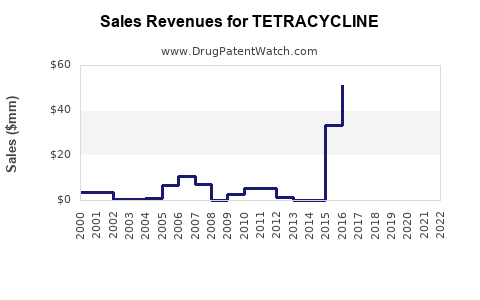
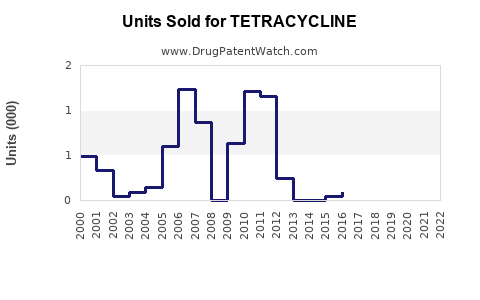
Annual Sales Revenues and Units Sold for TETRACYCLINE
| Drug Name | Revenues (USD) | Units | Year |
|---|---|---|---|
| TETRACYCLINE | ⤷ Start Trial | ⤷ Start Trial | 2022 |
| TETRACYCLINE | ⤷ Start Trial | ⤷ Start Trial | 2021 |
| TETRACYCLINE | ⤷ Start Trial | ⤷ Start Trial | 2020 |
| >Drug Name | >Revenues (USD) | >Units | >Year |
Tetracycline Market Analysis and Sales Projections
What is the current market size for tetracycline?
The global tetracycline market was valued at approximately USD 200 million in 2022. It is projected to grow with a compound annual growth rate (CAGR) of 2-3% through 2028, driven by expanded use in veterinary medicine and limited alternatives in some regions. Market drivers include antibiotic resistance challenges and regulatory approvals for generic manufacturing.
How is tetracycline used across different sectors?
Human medicine
Tetracycline is primarily used to treat bacterial infections like respiratory tract infections, urinary tract infections, and sexually transmitted diseases. Though less prominent than newer antibiotics, it retains relevance in regions with limited access to advanced drugs.
Veterinary medicine
The dominant application is in livestock infections, including infections in cattle, pigs, and poultry. It accounts for approximately 60% of global tetracycline sales. The use in aquaculture is increasing, contributing to overall demand.
Agriculture
It is used in plant protection products and as a growth promoter in some countries, though regulatory restrictions have limited this use in recent years.
What are the key market players?
Major companies include:
- Pfizer Inc.
- Teva Pharmaceutical Industries Ltd.
- Anhui Anheng Pharmaceutical Co., Ltd.
- Sichuan Kelun Pharmaceutical Co., Ltd.
- Zhejiang Hisun Pharmaceutical Co., Ltd.
Pfizer and Teva dominate the generic segment, which accounts for over 70% of sales globally. Generic production has led to price reductions, impacting revenue for branded producers.
Regulatory landscape impacting sales projections
Strict regulations on antibiotic use aim to curb resistance development. The European Union banned the use of antibiotics as growth promoters in animal feed in 2006. Similar restrictions in the United States and China have reduced non-therapeutic farm use, impacting global demand.
International agencies like the World Health Organization (WHO) list tetracyclines among critical antibiotics, leading to calls for responsible use and tighter regulation, which could suppress future sales growth.
How does antimicrobial resistance (AMR) influence the market?
The rise of AMR has led to decreased effectiveness of tetracycline for certain infections. Usage has declined in human healthcare, especially in developed countries, resulting in reduced sales in these markets. However, resistance is less prevalent in veterinary applications, maintaining steady demand in that sector.
What are future sales projections?
Short-term (2023-2025)
Sales are expected to stabilize, with slight declines in developed regions due to regulatory restrictions and resistance issues. Sales in emerging markets will offset declines, supported by expanding veterinary use.
Long-term (2026-2030)
Growth will depend on developing new formulations, combination therapies, or delivery methods to overcome resistance. Regulatory tightening could further limit use, especially for non-therapeutic purposes, constraining growth.
Projected global sales reaching USD 250-275 million by 2030, with regional variations:
| Region | 2023 Sales (USD million) | 2030 Projection (USD million) | CAGR |
|---|---|---|---|
| North America | 50 | 45 | -1.5% |
| Europe | 40 | 35 | -1.7% |
| Asia-Pacific | 70 | 85 | 3.2% |
| Latin America | 20 | 25 | 3.0% |
| Africa | 20 | 30 | 6.0% |
Growth in Asia-Pacific and Africa stems from increased veterinary use and rising livestock populations.
What challenges could reshape the market?
- Increasing adoption of alternative antibiotics and resistance management protocols.
- Regulatory bans on non-therapeutic use.
- Development of resistance reducing tetracycline efficacy.
- Advances in drug delivery systems extending tetracycline’s utility.
Key Takeaways
- Market size was USD 200 million in 2022, with slow growth due to regulation and resistance.
- Veterinary use dominates, making up 60% of sales.
- Generics and regional demand shifts influence revenue.
- Future growth depends on overcoming resistance and regulatory constraints.
- Asia-Pacific and Africa present growth opportunities.
FAQs
What factors limit tetracycline sales opportunities?
Regulatory bans on non-therapeutic use, rising antimicrobial resistance, and competition from newer antibiotics reduce tetracycline's effectiveness and market size.
How does resistance affect tetracycline efficacy?
Resistance mechanisms, including efflux pumps and ribosomal protection proteins, reduce tetracycline’s ability to treat infections, leading to decreased prescribing in human healthcare.
Are there new formulations of tetracycline?
Research is ongoing into long-acting formulations and combination therapies, but no significant advances have entered the market since 2020.
What regions are driving future growth?
Emerging markets in Asia-Pacific and Africa are expected to see increased veterinary use due to expanding livestock industries and less stringent regulations.
How has regulatory action impacted global sales?
Regulations restricting non-therapeutic use in animals have curtailed demand in Europe and North America, shifting growth prospects to developing regions.
References
[1] MarketWatch. (2023). Tetracycline Market Size, Share, Trends & Growth Forecast.
[2] WHO. (2021). Antimicrobial Resistance Global Report.
[3] AdvaMed. (2022). Antibiotic Use and Resistance in Agriculture.
[4] Statista. (2023). Global Antibiotics Market Values.
[5] European Medicines Agency. (2020). Restrictions on Antibiotics in Animal Feed.
More… ↓
