Share This Page
Drug Sales Trends for RITALIN
✉ Email this page to a colleague
Payment Methods and Pharmacy Types for RITALIN (2020)
Revenues by Pharmacy Type
Units Sold by Pharmacy Type
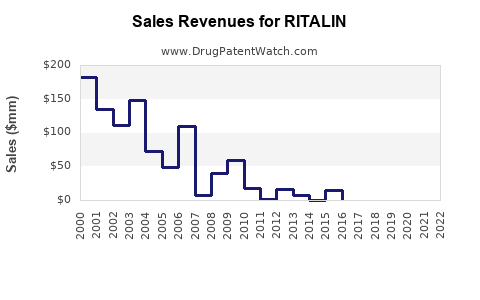
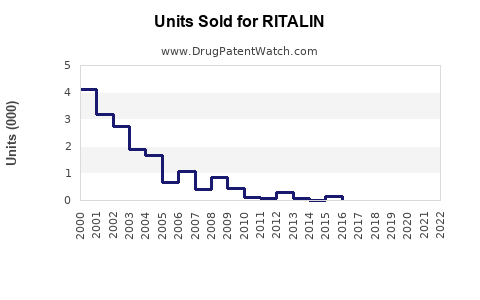
Annual Sales Revenues and Units Sold for RITALIN
| Drug Name | Revenues (USD) | Units | Year |
|---|---|---|---|
| RITALIN | ⤷ Start Trial | ⤷ Start Trial | 2022 |
| RITALIN | ⤷ Start Trial | ⤷ Start Trial | 2021 |
| RITALIN | ⤷ Start Trial | ⤷ Start Trial | 2020 |
| RITALIN | ⤷ Start Trial | ⤷ Start Trial | 2019 |
| RITALIN | ⤷ Start Trial | ⤷ Start Trial | 2018 |
| RITALIN | ⤷ Start Trial | ⤷ Start Trial | 2017 |
| RITALIN | ⤷ Start Trial | ⤷ Start Trial | 2016 |
| >Drug Name | >Revenues (USD) | >Units | >Year |
Ritalin Market Analysis, Sales Forecast, Patent Exclusivity, and Competitive Outlook
Ritalin, the original brand of methylphenidate, has limited commercial value relative to the broader methylphenidate market because immediate-release tablets face extensive generic competition. The principal growth opportunity is in extended-release methylphenidate, but Ritalin LA competes with generic versions of Ritalin LA, Concerta, Cotempla XR-ODT, Quillivant XR, and newer ADHD therapies.
Standalone Ritalin sales are not publicly reported by Novartis. A reasonable 2024 estimate for U.S. Ritalin-branded revenue is approximately $50 million to $100 million, with most commercial value concentrated in Ritalin LA and institutional prescribing. The broader U.S. methylphenidate market is estimated at approximately $1.2 billion to $1.8 billion in annual gross sales, including generic and branded products.
Under a base-case forecast, the global methylphenidate market could expand at approximately 4% to 7% annually through 2030, while Ritalin-branded revenue is likely to remain flat to declining because generic substitution offsets prescription growth.
What is Ritalin and how large is its addressable market?
Ritalin contains methylphenidate hydrochloride, a central nervous system stimulant approved primarily for attention-deficit/hyperactivity disorder and narcolepsy. FDA-approved Ritalin products include immediate-release tablets, chewable tablets, and extended-release formulations marketed as Ritalin LA.[1]
The addressable market includes:
- Pediatric and adult ADHD treatment
- Narcolepsy treatment
- Immediate-release methylphenidate
- Extended-release methylphenidate
- Capsules, tablets, chewable tablets, and liquid formulations
- U.S. and international prescription markets
The market is structurally divided between low-cost generic methylphenidate and premium extended-release products. Immediate-release methylphenidate is highly commoditized. Extended-release products retain higher prices when they provide differentiated dosing, adherence, abuse-deterrence, liquid delivery, or insurance coverage.
Estimated 2024 market structure
| Segment | Estimated U.S. annual sales | Commercial profile |
|---|---|---|
| Generic immediate-release methylphenidate | $250 million-$400 million | High volume, low price |
| Generic extended-release methylphenidate | $400 million-$650 million | Moderate pricing, broad substitution |
| Branded methylphenidate products | $500 million-$750 million | Includes Concerta, Quillivant XR, Cotempla XR-ODT, Jornay PM and others |
| Ritalin brand products | $50 million-$100 million | Mature brand with limited pricing power |
| Total U.S. methylphenidate market | $1.2 billion-$1.8 billion | Includes retail and institutional channels |
These figures are modeled market estimates rather than reported Ritalin revenue. Public company filings generally aggregate methylphenidate or ADHD products without separating Ritalin revenue.
How much are Ritalin sales and what is the revenue trend?
Ritalin sales have declined from their historical position as generic methylphenidate became widely available. Novartis does not identify Ritalin as a material standalone product in recent financial reporting, which indicates that brand revenue is small relative to the company’s major oncology, immunology, and cardiovascular products.[2]
The commercial trend is driven by four factors:
- Generic substitution in immediate-release tablets.
- Loss of historical formulation exclusivity.
- Competition from long-acting amphetamine and methylphenidate products.
- Periodic stimulant supply shortages that shift prescriptions among manufacturers.
Ritalin revenue scenarios
| Year | Bear case | Base case | Upside case |
|---|---|---|---|
| 2024 | $50 million | $75 million | $100 million |
| 2025 | $43 million | $73 million | $103 million |
| 2026 | $37 million | $72 million | $106 million |
| 2027 | $32 million | $71 million | $109 million |
| 2028 | $27 million | $70 million | $112 million |
| 2029 | $23 million | $69 million | $115 million |
| 2030 | $19 million | $68 million | $118 million |
The base case assumes a 2% annual decline in Ritalin volume, offset partly by price increases and intermittent supply-driven demand. The upside case assumes continued physician preference for established methylphenidate products, generic shortages, and stable reimbursement. The bear case assumes further generic substitution, reduced brand availability, and migration to newer long-acting products.
What is the Ritalin market forecast through 2030?
The broader methylphenidate market should grow more slowly than the overall ADHD drug market. ADHD diagnosis and treatment rates are increasing, but methylphenidate is losing share to amphetamine products, lisdexamfetamine, guanfacine, atomoxetine, viloxazine, and newer delivery systems.
Base-case methylphenidate market forecast
| Year | Estimated global market | Annual growth |
|---|---|---|
| 2024 | $3.0 billion | - |
| 2025 | $3.2 billion | 6.0% |
| 2026 | $3.4 billion | 6.0% |
| 2027 | $3.6 billion | 5.9% |
| 2028 | $3.8 billion | 5.8% |
| 2029 | $4.0 billion | 5.7% |
| 2030 | $4.2 billion | 5.6% |
The forecast includes branded and generic methylphenidate products across major markets. It assumes continued growth in adult ADHD treatment, increased diagnosis in emerging markets, and stable use in pediatric populations.
The market could exceed $5 billion by 2030 if adult ADHD treatment expands rapidly and extended-release products gain broader reimbursement. It could remain below $3.8 billion if stimulant shortages persist, payer controls intensify, or nonstimulant therapies gain share.
What patents protect Ritalin and Ritalin LA?
Ritalin immediate-release tablets do not have meaningful remaining U.S. patent protection. The principal patents covering the original product and basic immediate-release methylphenidate technology expired long ago.
Ritalin LA historically relied on modified-release formulation patents. The product uses a bimodal release profile designed to provide an initial release of methylphenidate followed by a second release several hours later. The relevant U.S. formulation patents have expired or reached the end of their enforceable commercial life, allowing generic Ritalin LA products to enter the market.
Patent position by product
| Product | Key protection | Current commercial effect |
|---|---|---|
| Ritalin IR tablets | Historical compound and formulation patents expired | No meaningful patent barrier |
| Ritalin LA | Modified-release formulation patents expired or no longer commercially blocking | Generic competition |
| Ritalin chewable tablets | Product-specific protection is limited | Generic and alternative competition |
| Methylphenidate hydrochloride | Basic active-ingredient protection expired | Broad generic availability |
The FDA Orange Book should be used to confirm current listed patents, exclusivity codes, and approved generic products for each Ritalin dosage form.[3]
When does Ritalin lose exclusivity?
Ritalin’s principal loss of exclusivity occurred decades ago for immediate-release methylphenidate. Ritalin LA also passed its key exclusivity period, and generic extended-release methylphenidate products now compete in the United States.
Because Ritalin is a small-molecule drug, biosimilar exclusivity does not apply. The relevant regulatory pathway is the abbreviated new drug application, or ANDA, rather than a biosimilar application under the Public Health Service Act.
Ritalin has no current regulatory exclusivity comparable to the five-year new chemical entity exclusivity available to a newly approved active ingredient. Any remaining commercial protection would depend on formulation patents, manufacturing know-how, supply reliability, brand recognition, or contractual arrangements rather than core regulatory exclusivity.
What is the FDA and Orange Book status of Ritalin?
Ritalin is FDA-approved and classified as a Schedule II controlled substance because methylphenidate has abuse and diversion risks.[1] Prescribing, dispensing, inventory controls, and manufacturing are subject to Drug Enforcement Administration requirements.
The principal regulatory points are:
- Active FDA-approved Ritalin products remain listed in Drugs@FDA.
- Generic methylphenidate products are approved through ANDAs.
- Orange Book listings determine whether a generic applicant can make a Paragraph IV certification against a listed patent.
- Product-specific labeling, dosage form, and release characteristics determine substitutability.
- Controlled-substance quotas and manufacturing allocations can affect availability independently of patent rights.
Ritalin’s FDA status supports continued clinical use, but approval does not provide pricing protection. Generic products can be therapeutically substitutable where state pharmacy law, payer policy, and product labeling permit.
Which companies compete with Ritalin?
Ritalin competes with both methylphenidate and amphetamine products.
Direct methylphenidate competitors
- Generic methylphenidate immediate-release tablets
- Generic methylphenidate extended-release tablets and capsules
- Concerta and authorized or generic versions
- Quillivant XR oral suspension
- Quillichew ER chewable tablets
- Cotempla XR-ODT orally disintegrating tablets
- Jornay PM delayed-release and extended-release capsules
- Aptensio XR extended-release capsules
- Daytrana transdermal patch
Therapeutic competitors
- Adderall and generic mixed amphetamine salts
- Vyvanse and generic lisdexamfetamine
- Mydayis
- Focalin and dexmethylphenidate products
- Strattera and generic atomoxetine
- Qelbree and viloxazine
- Intuniv and generic guanfacine extended release
Ritalin’s main weakness is its lack of formulation differentiation. Physicians may select longer-acting products to reduce midday dosing, improve adherence, or limit school-time administration.
What generic entry risks exist for Ritalin?
Generic entry risk is high for immediate-release Ritalin and moderate to high for Ritalin LA. Immediate-release methylphenidate is a mature generic market with multiple suppliers. The principal risks are price erosion, formulary substitution, pharmacy-level switching, and supply interruptions that favor whichever manufacturer has inventory.
For extended-release formulations, risk depends on:
- FDA approval of equivalent release profiles
- Product-specific bioequivalence
- Authorized-generic arrangements
- Pharmacy benefit manager formulary placement
- Manufacturing capacity
- Controlled-substance quota availability
- Patent certifications in the Orange Book
A Paragraph IV challenge is most relevant when an ANDA applicant claims that a listed formulation patent is invalid, unenforceable, or not infringed. Given the age of the Ritalin franchise and the expiration of historical formulation rights, Paragraph IV litigation is not a significant current barrier to generic competition.
What patent litigation and settlements affect Ritalin?
Ritalin has no widely reported current patent litigation that materially restricts generic access to immediate-release methylphenidate. Historical disputes involving extended-release methylphenidate products have generally focused on formulation patents, bioequivalence, and release mechanisms rather than the active ingredient itself.
Settlement agreements can delay generic launch where an enforceable patent remains. For Ritalin, the commercial impact of any historical settlement is now limited because the key patent terms have expired or become commercially nonblocking.
The most relevant legal risks have shifted from patent litigation to:
- Product liability claims
- Controlled-substance compliance
- Manufacturing and quality enforcement
- Shortage-related allocation disputes
- False or misleading promotional claims
- Pharmacy substitution and reimbursement disputes
What formulations are protected in the methylphenidate market?
Formulation differentiation remains the main source of value in methylphenidate. Current commercial strategies include:
| Formulation type | Commercial purpose |
|---|---|
| Immediate-release tablet | Low cost and flexible titration |
| Extended-release tablet | Once-daily dosing |
| Biphasic capsule | Initial and delayed methylphenidate release |
| Liquid suspension | Pediatric and swallowing flexibility |
| Chewable tablet | Pediatric administration |
| Orally disintegrating tablet | Administration without water |
| Transdermal patch | Nonoral delivery |
| Delayed-release capsule | Later-day onset and duration |
Ritalin LA’s biphasic delivery profile was commercially differentiated when first introduced. That advantage weakened after generic entry and the launch of products with longer duration, improved tolerability, or alternative administration.
How strong is the Ritalin patent estate?
Ritalin’s current patent estate is weak from a commercial defense perspective.
| Patent-strength factor | Assessment |
|---|---|
| Active-ingredient protection | None of practical significance |
| Immediate-release formulation protection | Expired |
| Extended-release formulation protection | Historical protection largely expired |
| Regulatory exclusivity | None of material current value |
| Manufacturing know-how | Potentially useful but not blocking |
| Brand recognition | Moderate |
| Generic substitution risk | High |
| Litigation leverage | Low |
The brand retains clinical recognition, but brand equity does not prevent generic substitution in a mature stimulant market.
What licensing deals affect Ritalin?
No major current licensing transaction is required to commercialize generic methylphenidate. Novartis historically developed and commercialized Ritalin, while other companies commercialized competing delivery technologies through internal development, licensing, or acquisitions.
Commercial arrangements in this market usually involve:
- Authorized generics
- Contract manufacturing
- Distribution agreements
- Controlled-substance supply arrangements
- Licensing of extended-release delivery technology
- Co-promotion of pediatric formulations
The economic value of a Ritalin license would depend primarily on supply rights, geographic scope, authorized-generic status, and access to formulary channels. A license covering only the expired immediate-release formulation would have limited strategic value.
What is the competitive outlook for Ritalin through 2030?
Ritalin is likely to remain a recognized but declining brand in the United States. Its market position will depend on availability, physician familiarity, and product continuity rather than patent exclusivity.
The strongest growth opportunities are outside the legacy Ritalin brand:
- Long-acting methylphenidate
- Pediatric liquid and chewable products
- Novel release profiles
- Nonoral delivery
- Adult ADHD treatment
- Markets with low generic penetration
The primary threats are generic price competition, amphetamine-class products, nonstimulants, and shortages affecting all controlled-substance manufacturers.
Key Takeaways
- Ritalin is an established methylphenidate brand with limited standalone revenue.
- Estimated U.S. Ritalin revenue is approximately $50 million to $100 million annually.
- The broader global methylphenidate market could grow from about $3.0 billion in 2024 to $4.2 billion by 2030.
- Immediate-release Ritalin has no meaningful remaining patent protection.
- Ritalin LA’s historical formulation protection has expired or no longer provides a significant commercial barrier.
- Generic entry and pharmacy substitution create high revenue risk.
- Ritalin is FDA-approved and remains subject to Schedule II controlled-substance requirements.
- Biosimilar risk does not apply because methylphenidate is a small molecule.
- Formulation innovation, manufacturing reliability, and payer access are more important than patent rights in determining future value.
- Base-case Ritalin-branded revenue is projected to decline modestly through 2030.
FAQs About Ritalin Market Size, Patents, and Sales
Is Ritalin still under patent protection?
The core Ritalin immediate-release product is not protected by meaningful active U.S. patent rights. Historical extended-release formulation patents associated with Ritalin LA have also expired or ceased to provide a material barrier to generic entry.
Does Ritalin have generic competition?
Yes. Generic methylphenidate is widely available in immediate-release and extended-release forms. Generic competition is the principal reason Ritalin has limited pricing power.
Is Ritalin more commercially valuable than Adderall?
No. Adderall and amphetamine-class products generally have a larger U.S. commercial market than the Ritalin brand. Ritalin remains important clinically but has lower brand economics because methylphenidate is widely genericized.
Can a company launch a generic Ritalin product without a Paragraph IV lawsuit?
Yes. If no relevant unexpired patent is listed, an ANDA applicant can use a certification pathway that does not require challenging an active patent. Paragraph IV litigation is primarily relevant when an unexpired Orange Book-listed patent remains.
What would increase Ritalin sales?
Higher sales would require stronger brand retention, supply shortages affecting generic competitors, improved reimbursement, expanded international distribution, or a new formulation with meaningful clinical and commercial differentiation.
References
-
U.S. Food and Drug Administration. (n.d.). Drugs@FDA: Ritalin prescribing information and approval history. https://www.accessdata.fda.gov/scripts/cder/daf/
-
Novartis AG. (2024). Annual report 2023. https://www.novartis.com/investors/financial-data/annual-report
-
U.S. Food and Drug Administration. (2024). Approved drug products with therapeutic equivalence evaluations: Orange Book. https://www.fda.gov/drugs/drug-approvals-and-databases/approved-drug-products-therapeutic-equivalence-evaluations-orange-book
-
U.S. Drug Enforcement Administration. (2024). Drug scheduling and controlled-substance requirements. https://www.dea.gov/drug-information/drug-scheduling
-
U.S. Food and Drug Administration. (2024). Drug shortages: Methylphenidate and stimulant availability information. https://www.fda.gov/drugs/drug-safety-and-availability/drug-shortages
More… ↓
