Last Updated: May 6, 2026

Drug Sales Trends for PEDIATRIC


✉ Email this page to a colleague
« Back to Dashboard


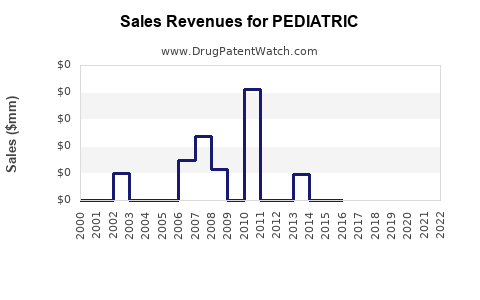
Drug Sales Revenue Trends for PEDIATRIC
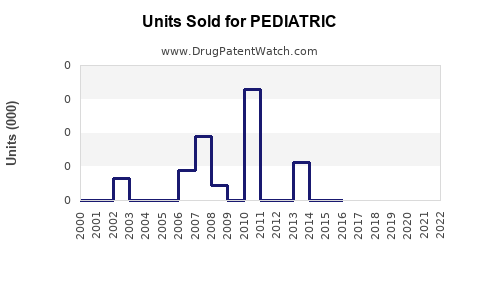
Drug Units Sold Trends for PEDIATRIC

Annual Sales Revenues and Units Sold for PEDIATRIC

These sales figures are drawn from a US national survey of drug expenditures
Drug Name Revenues (USD) Units Year
PEDIATRIC ⤷  Start Trial ⤷  Start Trial 2022
PEDIATRIC ⤷  Start Trial ⤷  Start Trial 2021
PEDIATRIC ⤷  Start Trial ⤷  Start Trial 2020
PEDIATRIC ⤷  Start Trial ⤷  Start Trial 2019
PEDIATRIC ⤷  Start Trial ⤷  Start Trial 2018
>Drug Name >Revenues (USD) >Units >Year

Market Analysis and Sales Projections for Pediatric Drugs

Last updated: March 13, 2026

What is the current market size for pediatric drugs?

The global pediatric pharmaceutical market was valued at approximately $63 billion in 2022. It is projected to grow at compound annual growth rate (CAGR) of 7.5% from 2023 to 2030, reaching roughly $122 billion by 2030. Growth drivers include increased pediatric disease prevalence, rising vaccination rates, and advancements in pediatric drug formulation.

How does the market break down geographically?

Region Market Share (2022) CAGR (2023-2030) Drivers
North America 40% 7.0% Robust R&D, high healthcare expenditure
Europe 25% 7.2% Regulatory support, aging population
Asia-Pacific 20% 9.0% Population size, emerging markets
Latin America 8% 7.5% Increasing healthcare access
Middle East & Africa 7% 7.6% Economic development, vaccination campaigns

What are the leading therapeutic areas?

The primary segments within pediatric drugs include:

  • Antibiotics and antivirals (approx. 30% of sales)
  • Vaccines (25%)
  • Central nervous system drugs (15%)
  • Respiratory drugs (10%)
  • Gastrointestinal drugs (10%)
  • Others (10%)

Vaccines exhibit the fastest growth, driven by immunization programs and development of new vaccines for emerging infectious diseases.

Who are the main market players?

Leading companies include:

  • Pfizer Inc.
  • GlaxoSmithKline plc
  • Sanofi S.A.
  • Merck & Co., Inc.
  • Johnson & Johnson

Small and mid-size biotech firms focus on niche pediatric indications, especially rare conditions.

What are recent regulatory trends impacting the market?

Regulatory agencies such as the FDA and EMA have adopted policies including:

  • Priority review pathways for pediatric drugs
  • Incentives like exclusivity extensions for pediatric indications
  • Requirements for pediatric investigation plans (PIPs)

The Pediatric Research Equity Act (PREA) in the U.S. and the Pediatric Regulation in the EU incentivize pediatric development.

What are sales projections for leading pediatric drugs?

Assuming a compound annual growth rate of 7.5%, the sales volume for top pediatric drugs is expected to increase significantly over the next decade. For example:

Product 2022 Revenue (USD billions) 2030 Projection (USD billions)
Prevnar 13 (pneumococcal vaccine) $5.5 $10.7
Rotarix (rotavirus vaccine) $1.2 $2.3
Pediarix (combination vaccine) $0.5 $1.0

These projections are based on current market trends, growth in vaccination programs, and new product launches.

What challenges affect market growth?

Factors include:

  • Regulatory hurdles
  • High development costs for pediatric formulations
  • Limited supply of pediatric-specific clinical trial data
  • Pricing pressures and reimbursement barriers

What opportunities exist for market expansion?

Opportunities are most prominent in:

  • Emerging markets with expanding healthcare infrastructure
  • Development of pediatric biosimilars
  • Orphan pediatric disease therapeutics
  • Novel delivery systems to improve compliance

Key Takeaways

  • The global pediatric drug market is expected to more than double from $63 billion in 2022 to $122 billion by 2030.
  • Vaccines and antibiotics dominate sales, with growth driven by immunization initiatives and emerging infectious disease responses.
  • Regulatory incentives enhance pediatric R&D investment but pose hurdles with approval complexities.
  • Top vaccines are projected to see nearly 100% sales increase over the next decade.

FAQs

1. What factors are driving growth in pediatric pharmaceuticals?
Increased disease prevalence, vaccination campaigns, regulatory incentives, and innovations in pediatric formulations.

2. Which therapeutic segment exhibits the highest growth potential?
Vaccines, due to ongoing development and global immunization efforts.

3. How are regulatory policies affecting pediatric drug development?
Policies provide incentivization through extended exclusivity, yet increase compliance requirements.

4. What role does geographic expansion play in market growth?
Expanding healthcare infrastructure in Asia-Pacific and Latin America creates new commercial opportunities.

5. What is the outlook for biosimilars in the pediatric market?
Biosimilars present cost-effective alternatives for chronic and rare pediatric diseases, with increasing regulatory support.


References

  1. Grand View Research. (2023). Pediatric pharmaceuticals market size, share & trends analysis report.
  2. EvaluatePharma. (2023). World pediatric drugs forecast and analysis.
  3. U.S. Food and Drug Administration (FDA). (2022). Pediatric drug development policies.
  4. European Medicines Agency (EMA). (2022). Pediatric regulation and incentives.
  5. IQVIA. (2023). Pediatric drug market dynamics and growth projections.

More… ↓

⤷  Start Trial

Make Better Decisions: Try a trial or see plans & pricing

Drugs may be covered by multiple patents or regulatory protections. All trademarks and applicant names are the property of their respective owners or licensors. Although great care is taken in the proper and correct provision of this service, thinkBiotech LLC does not accept any responsibility for possible consequences of errors or omissions in the provided data. The data presented herein is for information purposes only. There is no warranty that the data contained herein is error free. We do not provide individual investment advice. This service is not registered with any financial regulatory agency. The information we publish is educational only and based on our opinions plus our models. By using DrugPatentWatch you acknowledge that we do not provide personalized recommendations or advice. thinkBiotech performs no independent verification of facts as provided by public sources nor are attempts made to provide legal or investing advice. Any reliance on data provided herein is done solely at the discretion of the user. Users of this service are advised to seek professional advice and independent confirmation before considering acting on any of the provided information. thinkBiotech LLC reserves the right to amend, extend or withdraw any part or all of the offered service without notice.