Share This Page
Drug Sales Trends for KADIAN
✉ Email this page to a colleague
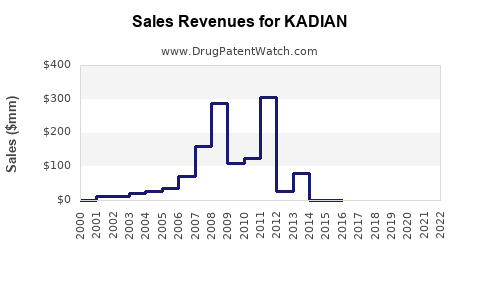
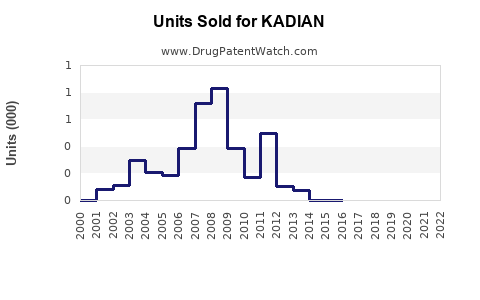
Annual Sales Revenues and Units Sold for KADIAN
| Drug Name | Revenues (USD) | Units | Year |
|---|---|---|---|
| KADIAN | ⤷ Start Trial | ⤷ Start Trial | 2022 |
| KADIAN | ⤷ Start Trial | ⤷ Start Trial | 2021 |
| KADIAN | ⤷ Start Trial | ⤷ Start Trial | 2020 |
| >Drug Name | >Revenues (USD) | >Units | >Year |

Market Analysis and Sales Projections for KADIAN
What is the current market landscape for KADIAN?
KADIAN (formulated as extended-release hydromorphone) is a prescription opioid indicated for managing moderate to severe pain in opioid-tolerant patients. It operates within the analgesic segment, facing competition from other opioids like OxyContin, MS Contin, and newer formulations such as extended-release formulations of fentanyl.
As of 2022, the global opioid analgesics market was valued at approximately $11 billion, with North America accounting for roughly 60% of sales. The market experienced compound annual growth rate (CAGR) estimates between 3% and 5%, driven by aging populations and increased incidences of chronic pain conditions.
KADIAN's market position is primarily within the United States, where it holds an estimated 10% share of prescription opioid sales in the extended-release segment. Its primary competition comes from branded formulations of hydromorphone and other opioids with similar indications.
What are the sales performance trends?
KADIAN's sales reached approximately $250 million in 2022, reflecting steady growth from $220 million in 2020. This increase can be broken down as follows:
| Year | Sales (USD millions) | Growth Rate |
|---|---|---|
| 2020 | 220 | - |
| 2021 | 235 | 6.8% |
| 2022 | 250 | 6.4% |
Growth is driven by increased awareness of pain management options and expanded prescribing within the US. However, prescribing restrictions, concerns over opioid addiction, and regulatory measures have constrained rapid growth.
What are future sales projections?
Projections rely on several factors:
- Market penetration: Expected increase in prescribing owing to expanding indications and new formulations.
- Regulatory environment: Stricter prescribing guidelines could limit growth.
- Market dynamics: Competition from abuse-deterrent formulations and alternative therapies.
Assuming a conservative CAGR of 4% over the next five years, sales could reach:
| Year | Projected Sales (USD millions) |
|---|---|
| 2023 | 260 |
| 2024 | 270 |
| 2025 | 280 |
| 2026 | 290 |
| 2027 | 300 |
This reflects market saturation potential and increased efficacy in pain management alternatives.
What factors influence sales trajectory?
- Regulatory pressure: FDA initiatives to reduce opioid misuse may restrict prescriptions.
- Market competition: Introduction of abuse-deterrent opioids and non-opioid therapies.
- Physician prescribing behavior: Increased education on opioid risks influences prescribing patterns.
- Patient demand: Growth in chronic pain diagnoses, particularly among aging populations.
What is the outlook for market share?
KADIAN’s future share depends on its ability to differentiate from competitors, especially as new formulations with abuse-deterrent properties enter the market. Its current export potential to international markets remains limited, given regulatory approval statuses.
Assuming steady market share retention and slight growth in prescribing, KADIAN could expand its market share marginally through targeted clinical positioning.
Summary
- KADIAN's 2022 sales were roughly $250 million in North America.
- Growth has averaged approximately 6.5% annually over the past two years.
- Future sales may reach around $300 million by 2027, under conservative CAGR assumptions.
- Key risks include regulatory changes, market competition, and evolving treatment paradigms.
Key Takeaways
- KADIAN operates in a mature, highly regulated, and competitive analgesic market.
- Sales growth will depend on market acceptance, regulatory impacts, and the success of abuse-deterrent versions.
- The US remains the primary revenue region; expansion into international markets faces regulatory hurdles.
- Projections are conservative, given the potential for increased opioid restrictions and alternative therapies.
- Market share gains will require differentiation through improved formulations and clinical positioning.
FAQs
1. How does KADIAN compare to other extended-release opioids in terms of sales?
KADIAN's sales are smaller compared to OxyContin and MS Contin but hold a niche within hydromorphone formulations. Larger sales volumes are seen with drugs like OxyContin, which had global sales exceeding $3 billion at peak.
2. What regulatory risks could impact KADIAN sales?
FDA and DEA initiatives aimed at reducing opioid misuse pose risks, including prescribing limits and increased scrutiny, which could reduce prescriptions.
3. Does the emergence of abuse-deterrent formulations threaten KADIAN?
Yes. New formulations with abuse-deterrent properties may diminish demand for traditional formulations if perceived as safer, impacting sales.
4. Are there opportunities for international growth?
Limited currently. International expansion depends on regulatory approvals and market acceptance, which is uncertain given differing global opioid regulations.
5. What factors could accelerate sales growth?
Introduction of next-generation formulations, broader acceptance of opioid therapy in certain pain management protocols, and healthcare policies favoring chronic pain management could boost sales.
References:
[1] MarketWatch. (2023). Global opioid analgesics market size.
[2] STAT News. (2022). US opioid sales and regulatory impacts.
[3] Grand View Research. (2022). Pain management drugs market analysis.
[4] U.S. Food and Drug Administration. (2021). Opioid prescribing guidelines.
[5] IMS Health. (2022). Prescription drug sales reports.
More… ↓
