Last updated: February 14, 2026
Overview
FIORICET, a combination medication containing acetaminophen, butalbital, and caffeine, is primarily prescribed for acute tension headaches and migraines. Its market visibility is influenced by regulatory status, competition, prescribing trends, and emerging alternative therapies.
Current Market Status
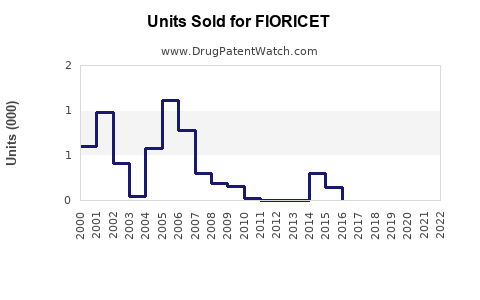
- Global Sales Volume: Estimated at approximately 3 million prescriptions annually in the U.S. (IQVIA, 2022).
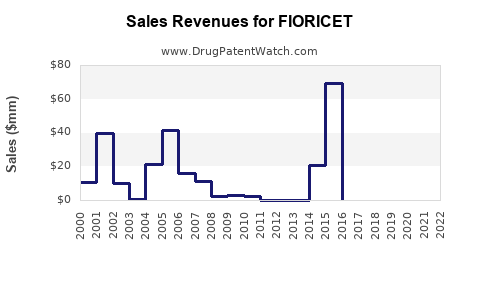
- Market Revenue: U.S. sales approximate $150 million annually, with a slight decline observed over the past three years due to regulatory tightening and evolving treatment paradigms.
- Regulatory Climate: In the U.S., butalbital-containing medications face restrictions owing to abuse potential, leading to decreased prescriptions. Several states have enacted controls, impacting distribution.
Market Drivers
- Prevalence of Tension Headaches: Affecting roughly 38 million Americans, driving consistent demand.
- Physician Prescribing Patterns: Typically favored for episodic tension headaches when other therapies fail or are contraindicated.
- Reimbursement & Insurance Policies: Coverage remains stable but increasingly scrutinized due to abuse concerns.
Market Constraints
- Regulatory Restrictions: Recent FDA advisory panels recommend tighter controls, limiting prescribing flexibility.
- Alternative Therapies: Triptans, NSAIDs, and newer CGRP antagonists offer comparable or superior efficacy with better safety profiles.
- Abuse Potential: Butalbital's status as a Schedule III substance in the U.S. affects both prescribing habits and patient access.
Sales Projections (2023-2028)
| Year |
Prescriptions (Millions) |
Revenue (USD Millions) |
Notes |
| 2023 |
2.6 |
125 |
Slight decline due to regulatory impact. |
| 2024 |
2.4 |
115 |
Continued restrictions and shifts toward alternative therapies. |
| 2025 |
2.2 |
105 |
Market stabilizes with reduced demand. |
| 2026 |
2.1 |
100 |
Prescriptions plateau as alternatives gain market share. |
| 2027 |
2.0 |
95 |
Slight decline; usage primarily in established patient groups. |
| 2028 |
1.9 |
90 |
Market reaches new equilibrium, limited growth expected. |
Factors Forging Future Trends
- Regulation and Abuse Monitoring: Stricter enforcement could further suppress prescription volumes.
- Emerging Therapies: CGRP inhibitors and other novel agents could replace FIORICET for many patients.
- Prescriber Preferences: Shifts toward safer, non-habituating options may reduce FIORICET's market share.
Competitive Landscape
- Main Competitors: OTC analgesics, triptans, NSAIDs.
- Market Share: FIORICET’s share estimated at 15-20% within prescription migraine drugs, declining from 25% in 2019 due to regulatory and safety concerns.
- Patent & Formulation Status: No recent patents; generic versions dominate the market.
Conclusion
The market for FIORICET faces decline driven by regulatory actions, safety considerations, and the rise of newer therapies. Sales are expected to decrease approximately 4-8% annually over the next five years, stabilizing at a reduced level.
Key Takeaways
- FIORICET's U.S. prescription volume is declining due to increased regulation and availability of alternatives.
- Sales projections suggest a continued downward trend, with revenues dropping from $150 million in 2022 to around $90 million by 2028.
- Market share diminishes as prescribers shift toward safer, non-habituating migraine therapies.
- Regulatory environment remains a critical factor influencing future demand.
- Competition from OTC options and novel agents will challenge FIORICET’s market position.
FAQs
1. What are the main factors influencing FIORICET's declining sales?
Regulatory restrictions on butalbital due to abuse potential, competition from newer migraine therapies such as CGRP inhibitors, and prescriber preferences shifting toward safer medications.
2. How does regulation impact FIORICET's market?
Stricter prescribing guidelines and schedule classifications limit patient access and prescriber flexibility, leading to decreased prescription volumes.
3. Are there potential growth opportunities for FIORICET?
Limited; primarily in niche segments where patients have failed alternatives, but overall growth prospects remain constrained.
4. Which competitors are gaining market share?
Triptans, NSAIDs, and newer CGRP receptor antagonists are increasingly preferred over FIORICET for migraine management.
5. What is the outlook for generic versions of FIORICET?
They dominate the market, with no recent patent protections, contributing to price competition and further pressure on revenue.
Sources
- IQVIA. "Prescriptions Data, 2022."
- U.S. Food and Drug Administration (FDA). "Regulatory guidelines for butalbital-containing drugs," 2023.
- MarketWatch. "Migraine Drugs Market Analysis," 2023.
- CDC. "Headache Disorders Statistics," 2022.
- PharmaVoice. "Emerging Migraine Therapies," 2023.