Share This Page
Drug Sales Trends for FARXIGA
✉ Email this page to a colleague
Payment Methods and Pharmacy Types for FARXIGA (2020)
Revenues by Pharmacy Type
Units Sold by Pharmacy Type
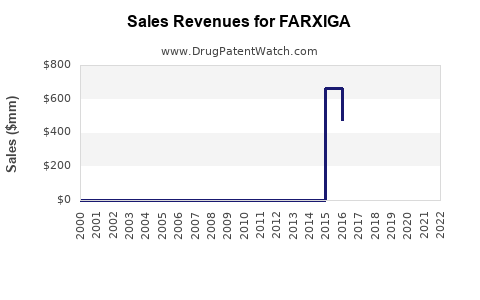
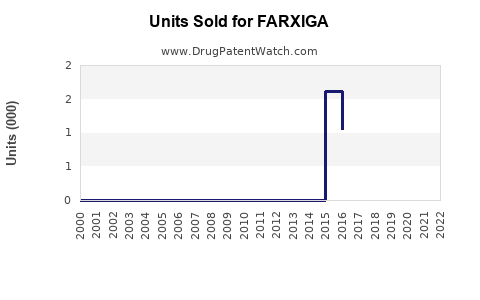
Annual Sales Revenues and Units Sold for FARXIGA
| Drug Name | Revenues (USD) | Units | Year |
|---|---|---|---|
| FARXIGA | ⤷ Start Trial | ⤷ Start Trial | 2022 |
| FARXIGA | ⤷ Start Trial | ⤷ Start Trial | 2021 |
| FARXIGA | ⤷ Start Trial | ⤷ Start Trial | 2020 |
| >Drug Name | >Revenues (USD) | >Units | >Year |
FARXIGA Market Analysis, Sales Projections, Patent Expiry and Generic Risk
Farxiga, AstraZeneca’s dapagliflozin product, is one of the largest global SGLT2 inhibitors and a core growth asset across type 2 diabetes, heart failure and chronic kidney disease. Global sales reached approximately $5.8 billion in 2023 and were on track for roughly $7 billion in 2024 based on AstraZeneca’s reported quarterly performance. Sales should continue growing through the second half of the 2020s, but U.S. generic entry, pricing pressure and competition from Jardiance and GLP-1 therapies will determine the post-2027 trajectory.
The commercial base is stronger than the diabetes indication alone suggests. Heart-failure and chronic-kidney-disease adoption has expanded Farxiga’s prescriber base, while the product’s oral dosing gives it a competitive position against injectable GLP-1 and dual GIP/GLP-1 therapies.
What is Farxiga and how large is its market?
Farxiga is dapagliflozin, an oral sodium-glucose cotransporter 2 inhibitor marketed by AstraZeneca. The FDA-approved uses include:
- Type 2 diabetes mellitus as an adjunct to diet and exercise.
- Reduction of hospitalization for heart failure in adults with type 2 diabetes and established cardiovascular disease or multiple cardiovascular risk factors.
- Reduction of cardiovascular death, hospitalization for heart failure and urgent heart-failure visits in adults with heart failure with reduced or preserved ejection fraction.
- Reduction of sustained estimated glomerular filtration rate decline, end-stage kidney disease, cardiovascular death and hospitalization for heart failure in adults with chronic kidney disease at risk of progression. [1]
Farxiga competes primarily with Jardiance, Invokana and Steglatro in the SGLT2 class. Its broader heart-failure and kidney-disease positioning also places it against Entresto, GLP-1 receptor agonists and emerging oral or injectable metabolic therapies.
Farxiga sales history
| Fiscal year | Approximate Farxiga sales | Commercial interpretation |
|---|---|---|
| 2020 | $2.4 billion | Diabetes-led growth |
| 2021 | $3.0 billion | Wider cardiovascular adoption |
| 2022 | $4.4 billion | Heart-failure and CKD expansion |
| 2023 | $5.8 billion | Strong international and U.S. uptake |
| 2024 | Approximately $7 billion | Continued volume growth, subject to final reported figures |
AstraZeneca reports Farxiga within its Cardiovascular, Renal and Metabolism portfolio. The company’s annual reports identify the product as one of its principal growth drivers. [2,3]
What are the main growth drivers for Farxiga sales?
Farxiga’s growth is being driven by indication expansion rather than by diabetes prescriptions alone.
Heart-failure adoption
SGLT2 inhibitors have become foundational therapies for several heart-failure populations. Farxiga’s positioning across reduced and preserved ejection fraction expands the addressable market beyond traditional diabetic patients.
The product benefits from guideline adoption, cardiology prescribing and treatment initiation during or after hospitalization. These channels can increase persistence because patients often remain on therapy after the acute event.
Chronic kidney disease
CKD is the most important long-term expansion opportunity. The disease affects a large population, but diagnosis and treatment rates remain below the potential addressable pool. Farxiga can be prescribed to some non-diabetic CKD patients, materially increasing the market beyond type 2 diabetes.
The commercial opportunity depends on physician screening, eGFR eligibility, payer coverage and the ability of AstraZeneca to move prescribing from nephrologists into primary care.
Oral administration
Farxiga is taken orally once daily. This supports use in patients who are unwilling or unable to start injectable therapies. Oral dosing is particularly relevant in earlier-line metabolic treatment and in heart-failure or kidney-disease patients who do not require weight-loss therapy.
Cardiovascular and renal guidelines
SGLT2 inhibitors have become part of guideline-based treatment algorithms. Guideline inclusion reduces reliance on individual physician preference and supports reimbursement discussions with payers.
How does Farxiga compare with Jardiance and GLP-1 drugs?
Farxiga has a strong clinical and commercial position, but it does not dominate every segment.
| Product | Company | Primary strength | Key competitive issue |
|---|---|---|---|
| Farxiga | AstraZeneca | Heart failure, CKD, oral SGLT2 therapy | Generic and class competition |
| Jardiance | Eli Lilly and Boehringer Ingelheim | Diabetes, heart failure, cardiovascular outcomes | Similar indication breadth and strong commercial scale |
| Ozempic/Rybelsus/Wegovy | Novo Nordisk | Glycemic control and weight loss | Injectable burden for some products and supply constraints |
| Mounjaro/Zepbound | Eli Lilly | Glycemic control and weight loss | Strong efficacy and rapid market growth |
| Invokana | Johnson & Johnson | Established SGLT2 product | Lower current momentum than Farxiga and Jardiance |
| Entresto | Novartis | Heart-failure standard of care | Different mechanism; combination use is possible |
Farxiga and Jardiance are the closest branded comparators. GLP-1 and GIP/GLP-1 products are not direct substitutes in every patient, but they compete for diabetes budgets and physician attention. In cardiovascular and renal disease, Farxiga can be used alongside incretin therapies, limiting pure substitution risk.
What are Farxiga sales projections through 2030?
A reasonable base-case model places global Farxiga sales near $7.5 billion to $8.5 billion before material generic erosion. Sales growth should slow as the product reaches broader guideline penetration and as Jardiance and generic SGLT2 products increase pressure.
Base-case revenue projection
| Year | Estimated global sales | Growth assumption |
|---|---|---|
| 2024 | $6.8 billion-$7.2 billion | Continued double-digit reported growth |
| 2025 | $7.3 billion-$7.8 billion | CKD and heart-failure expansion |
| 2026 | $7.6 billion-$8.2 billion | Slower volume growth |
| 2027 | $7.5 billion-$8.1 billion | U.S. generic risk begins to affect net sales |
| 2028 | $6.8 billion-$7.6 billion | Mixed branded growth and U.S. erosion |
| 2029 | $5.8 billion-$6.8 billion | More significant generic substitution |
| 2030 | $4.8 billion-$6.0 billion | Mature-market decline, international offset |
These are analytical projections rather than AstraZeneca guidance. The principal variables are U.S. generic launch timing, the number of approved ANDAs, settlement terms, net price, payer restrictions and the speed of CKD adoption.
Bull case
In a bull case, Farxiga reaches $8.5 billion to $9 billion in annual sales before 2028. This would require sustained CKD uptake, strong heart-failure persistence, favorable U.S. patent outcomes and limited early generic substitution.
Bear case
In a bear case, sales fall below $6 billion by 2028. The main triggers would be an early authorized or ANDA generic launch, substantial U.S. price reductions, faster displacement by Jardiance or reduced diabetes use because of GLP-1 and GIP/GLP-1 therapies.
When does Farxiga lose exclusivity?
Farxiga’s U.S. regulatory exclusivity has already expired, but patent protection remains the key commercial barrier.
The original New Chemical Entity exclusivity period began with FDA approval in January 2014 and expired after five years. Pediatric exclusivity may have extended certain protections by six months, but it did not create a long-term barrier comparable to the later patent estate. [1,4]
Farxiga U.S. exclusivity timeline
| Event | Date or period |
|---|---|
| FDA approval of Farxiga | January 2014 |
| Original NCE exclusivity | Expired approximately January 2019 |
| Core compound patent | Expired in 2020 |
| Later formulation, crystalline-form and method patents | Extend into the late 2020s and, for some claims, beyond |
| Expected commercial generic-risk window | Approximately 2026-2028, subject to litigation and settlements |
The commercial loss-of-exclusivity date is therefore not the same as the expiration date of the original compound patent. Later patents can delay approval or launch if they are listed in the FDA Orange Book and successfully enforced.
What patents protect Farxiga?
Farxiga is protected by a layered U.S. patent estate covering dapagliflozin, pharmaceutical compositions, solid forms and methods of treatment. Public Orange Book records have included patents associated with dapagliflozin products such as:
- U.S. Patent No. 6,515,117, covering the underlying C-aryl glucoside compound class.
- U.S. Patent No. 8,618,064, associated with later dapagliflozin protection.
- U.S. Patent No. 9,539,246, associated with additional product or method claims.
- U.S. Patent No. 10,414,810.
- U.S. Patent No. 10,647,695.
The exact scope, status and expiration date of each patent depend on the listed product, terminal disclaimers, patent-term adjustment, pediatric extensions and Orange Book updates. [4]
What formulations are protected?
The commercial product is dapagliflozin propanediol tablets. Relevant protection can include:
- The active pharmaceutical ingredient and salt form.
- Crystalline or solid-state forms.
- Tablet compositions.
- Dosage strengths and pharmaceutical combinations.
- Treatment methods for heart failure, CKD and diabetes.
- Use in patient populations defined by renal function or disease status.
Formulation patents can be commercially important even after the original compound patent expires. Their strength depends on claim breadth, written-description support, obviousness exposure and whether a generic applicant can design around the claims.
How strong is the Farxiga patent estate?
The estate is commercially meaningful but less durable than a biologic patent estate. Dapagliflozin is a small molecule, and ANDA applicants can challenge listed patents through Paragraph IV certifications. The most valuable protection is likely the combination of later-filed product, solid-form and method-of-use patents rather than the expired core compound patent.
A key weakness is that multiple indications create opportunities for skinny-label generic approval. A generic company may seek approval for unpatented indications while carving out protected uses, although the practical effect depends on prescribing behavior and state substitution rules.
Which companies are challenging Farxiga patents?
Generic drug companies that have filed or may file dapagliflozin ANDAs can use Paragraph IV certifications against Orange Book-listed patents. Public litigation involving Farxiga-related patents has included challenges by major ANDA manufacturers, including companies such as Zydus, Lupin, Apotex and other generic applicants.
Paragraph IV litigation normally produces one of three outcomes:
- AstraZeneca wins, delaying generic launch until relevant patents expire.
- The generic applicant prevails, enabling earlier launch.
- The parties settle, often permitting a license date before the latest patent expiry.
The commercial impact depends on whether the challenger has first-filer status, whether multiple challengers receive approval, whether an authorized generic is launched and whether the settlement preserves a branded channel.
What is the FDA regulatory and Orange Book status of Farxiga?
Farxiga is FDA-approved and listed in the Orange Book as a prescription drug product. The Orange Book identifies approved strengths, dosage forms, reference-listed-drug information and patents submitted by the sponsor. [4]
The FDA’s approval of a dapagliflozin ANDA does not necessarily mean immediate market entry. A generic may receive tentative approval while a listed patent or regulatory exclusivity period remains in force. Final approval and commercial launch can occur only after the blocking period ends or after a court or settlement outcome permits entry.
Because Farxiga is a small molecule, biosimilar risk does not apply. The relevant pathway is the ANDA pathway under section 505(j) of the Federal Food, Drug, and Cosmetic Act.
What patent litigation and settlements affect Farxiga?
Farxiga litigation risk centers on Paragraph IV challenges to Orange Book-listed patents. The principal issues are likely to include:
- Whether later patents claim a patentable solid form or composition.
- Whether method-of-use claims are valid and infringed.
- Whether generic labels can carve out protected indications.
- Whether asserted claims are invalid for obviousness.
- Whether the challenger can launch at risk before final judgment.
- Whether AstraZeneca grants a settlement license before the full patent term.
Settlement agreements can preserve substantial branded revenue while allowing a generic launch before the nominal expiry of every patent. Analysts should treat the first permitted launch date in a settlement as more important than the latest listed patent expiration.
What generic entry risks exist for Farxiga?
The highest-risk market is the United States because of automatic substitution, concentrated payer purchasing and a mature ANDA industry.
Generic launch scenarios
| Scenario | Likely effect |
|---|---|
| Single generic entrant | 20%-40% U.S. revenue erosion in the first year |
| Several generic entrants | 50%-80% U.S. erosion over two years |
| Authorized generic plus ANDAs | Faster price decline and reduced branded share |
| Skinny-label launch | Slower erosion, with protected heart-failure or CKD uses partly retained |
| Delayed entry after litigation | Continued high branded sales through the settlement date |
International erosion will vary. Some countries allow earlier generic substitution based on local patent law, while others maintain protection through national patents, supplementary protection certificates or regulatory exclusivity.
What licensing deals support Farxiga commercialization?
AstraZeneca commercializes Farxiga globally, but dapagliflozin has had regional commercialization and development arrangements involving external partners. The most important historical relationship is AstraZeneca’s collaboration with Bristol-Myers Squibb, which supported the development and commercialization of dapagliflozin before AstraZeneca assumed full rights to the diabetes alliance assets.
The current commercial analysis should focus on AstraZeneca’s retained economics, regional distribution arrangements and any local licensing or co-promotion rights. Licensing is less likely to be the primary sales constraint than patent timing and competitive class pricing.
How much revenue is exposed to Farxiga patent loss?
Farxiga is one of AstraZeneca’s largest products. With global annual sales near $7 billion, every 10% change in revenue represents approximately $700 million in annual product sales.
The exposure is concentrated in the United States and other high-price markets. Emerging markets may continue growing after U.S. generic entry, but their lower net prices limit their ability to offset U.S. erosion.
AstraZeneca can mitigate the impact through:
- Greater CKD and heart-failure penetration before generic entry.
- New fixed-dose combinations.
- Evidence generation in additional renal and cardiovascular populations.
- Contracting with payers.
- International volume growth.
- Portfolio expansion in cardiometabolic disease.
Key Takeaways
- Farxiga is a major AstraZeneca growth product with approximately $5.8 billion in 2023 sales and estimated 2024 sales near $7 billion.
- Heart failure and CKD are now more important growth drivers than diabetes alone.
- Base-case global sales peak around $7.5 billion to $8.5 billion before declining after generic entry.
- The original compound patent expired in 2020; later patents and litigation determine practical U.S. loss of exclusivity.
- The most credible generic-risk window is approximately 2026-2028, subject to Paragraph IV litigation and settlement dates.
- Farxiga has no biosimilar risk because dapagliflozin is a small-molecule drug.
- Jardiance is the closest branded competitor, while GLP-1 and GIP/GLP-1 products create broader cardiometabolic budget pressure.
- A 10% change in Farxiga sales represents approximately $700 million of annual revenue exposure at current scale.
FAQs
Does Farxiga have a composition-of-matter patent remaining?
The original compound patent expired in 2020. Later patents covering dapagliflozin forms, compositions and methods may remain relevant, depending on the product listing and jurisdiction.
Can a generic company launch dapagliflozin before all Farxiga patents expire?
Yes, if it wins Paragraph IV litigation, reaches a settlement license, uses a permitted carve-out or launches at risk after regulatory approval.
Will Farxiga lose sales to Ozempic and Mounjaro?
Some diabetes volume is at risk, particularly among patients prioritizing weight loss. Farxiga’s heart-failure and CKD indications provide protection because those uses are not fully replaced by GLP-1 or GIP/GLP-1 therapies.
Is Farxiga interchangeable with Jardiance?
Both are SGLT2 inhibitors, but they are not automatically interchangeable in every jurisdiction. Formulary status, indication, clinical evidence and payer rules determine product selection.
What is the most important Farxiga investment variable?
The key variable is the timing and structure of U.S. generic entry. A settlement allowing one generic to enter late in the 2020s would preserve more value than a court ruling or market event permitting multiple generic competitors to launch early.
References
- U.S. Food and Drug Administration. (2024). Farxiga prescribing information.
- AstraZeneca PLC. (2024). Annual report and Form 20-F for the year ended December 31, 2023.
- AstraZeneca PLC. (2025). Full-year and fourth-quarter 2024 results.
- U.S. Food and Drug Administration. (2024). Approved drug products with therapeutic equivalence evaluations: Orange Book.
More… ↓
