Share This Page
Drug Sales Trends for DONEPEZIL
✉ Email this page to a colleague
Payment Methods and Pharmacy Types for DONEPEZIL (2020)
Revenues by Pharmacy Type
Units Sold by Pharmacy Type
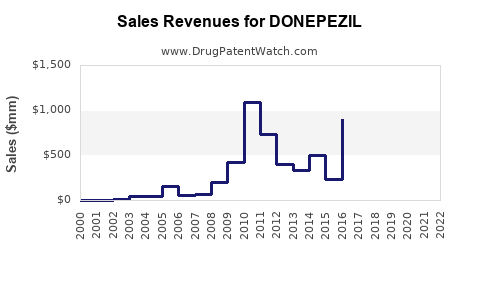
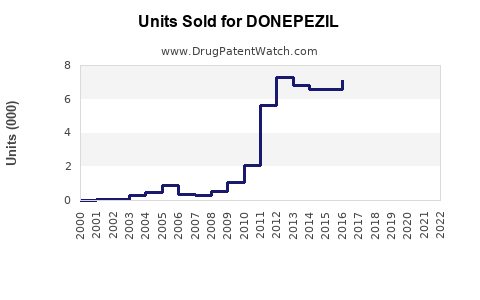
Annual Sales Revenues and Units Sold for DONEPEZIL
| Drug Name | Revenues (USD) | Units | Year |
|---|---|---|---|
| DONEPEZIL | ⤷ Start Trial | ⤷ Start Trial | 2022 |
| DONEPEZIL | ⤷ Start Trial | ⤷ Start Trial | 2021 |
| DONEPEZIL | ⤷ Start Trial | ⤷ Start Trial | 2020 |
| DONEPEZIL | ⤷ Start Trial | ⤷ Start Trial | 2019 |
| DONEPEZIL | ⤷ Start Trial | ⤷ Start Trial | 2018 |
| DONEPEZIL | ⤷ Start Trial | ⤷ Start Trial | 2017 |
| >Drug Name | >Revenues (USD) | >Units | >Year |
Donepezil Market Analysis, Sales Projections, Patent Status, and Generic Competition
Donepezil is a mature, low-cost generic Alzheimer’s disease medicine with stable global demand but limited pricing power. The branded product, Aricept, lost meaningful U.S. exclusivity more than a decade ago. Current commercial value is concentrated in generic tablets, orally disintegrating tablets, and regional branded generics. A reasonable base-case estimate places worldwide donepezil product sales at approximately $1.0 billion to $1.3 billion annually in 2025, with low-single-digit growth through 2030 driven by aging populations and diagnosis rates rather than price increases.
The strongest commercial opportunities are in high-volume generic manufacturing, orally disintegrating formulations, fixed-dose combinations, and markets where diagnosis and treatment rates remain low. The weakest opportunity is a new conventional tablet without differentiation.
What is the current donepezil market size?
Donepezil is sold primarily as donepezil hydrochloride in 5 mg, 10 mg, and 23 mg tablets, along with orally disintegrating tablets. Aricept was developed by Eisai and commercialized in partnership with Pfizer. The FDA first approved Aricept in 1996 for mild to moderate Alzheimer’s disease and later expanded approval to severe disease and the 23 mg dose (FDA, 2024a).
Public market reports produce widely varying estimates because they may include different combinations of:
- Donepezil active pharmaceutical ingredient sales
- Finished-dose generic products
- Branded generic revenue
- Hospital and retail channels
- Alzheimer’s disease medicines generally
- Regional markets with different reimbursement systems
A practical commercial estimate is shown below.
| Metric | 2025 estimate | 2030 base-case estimate | Primary driver |
|---|---|---|---|
| Global donepezil product sales | $1.0B-$1.3B | $1.1B-$1.5B | Patient growth and diagnosis |
| U.S. product sales | $150M-$250M | $145M-$240M | Stable volume, continued price pressure |
| Europe | $250M-$350M | $270M-$390M | Aging population and generic use |
| Japan and East Asia | $350M-$500M | $400M-$600M | High Alzheimer’s prevalence and treatment penetration |
| Rest of world | $200M-$300M | $250M-$350M | Expanding access |
| Global volume growth | 2%-4% annually | 2%-4% annually | Increasing treated population |
| Global price growth | -2% to 0% annually | -2% to 1% annually | Generic competition |
These figures are market-model estimates rather than reported consolidated sales from a single company. Donepezil is distributed through numerous generic manufacturers, and most companies do not separately disclose product revenue.
How are donepezil sales expected to develop through 2030?
The base case assumes that patient volume grows faster than price declines. Donepezil remains one of the most widely prescribed acetylcholinesterase inhibitors, and its low cost supports continued use even as newer Alzheimer’s therapies enter the market.
| Year | Global sales estimate | Annual growth | Market interpretation |
|---|---|---|---|
| 2023 | $1.0B-$1.2B | Baseline | Mature generic market |
| 2024 | $1.0B-$1.25B | 0%-3% | Stable demand |
| 2025 | $1.0B-$1.3B | 1%-4% | Population growth offsets price pressure |
| 2026 | $1.02B-$1.34B | 1%-3% | Generic volume expands |
| 2027 | $1.04B-$1.38B | 1%-3% | Increased diagnosis in emerging markets |
| 2028 | $1.06B-$1.42B | 1%-3% | Continued mature-market demand |
| 2029 | $1.08B-$1.46B | 1%-3% | Formulation mix supports value |
| 2030 | $1.1B-$1.5B | 1%-3% | Low-growth, durable market |
Downside scenario
Under a downside scenario, global sales could decline to approximately $850 million to $1.0 billion by 2030. The principal risks are aggressive generic price competition, reduced use after reimbursement restrictions, poor persistence with therapy, and displacement of some mild-to-moderate patients by newer treatment approaches.
Upside scenario
Under an upside scenario, sales could reach $1.5 billion to $1.8 billion by 2030. This would require higher diagnosis rates in China, India, Latin America, and Southeast Asia; increased treatment duration; stronger demand for orally disintegrating products; and continued use of donepezil alongside newer disease-modifying therapies.
What drives donepezil demand?
Aging populations
Alzheimer’s disease prevalence rises sharply with age. The World Health Organization estimates that more than 55 million people worldwide live with dementia, with Alzheimer’s disease accounting for a substantial share of cases (WHO, 2023). Donepezil demand is therefore linked to the growth of the population aged 65 and older.
Treatment penetration
Many patients with cognitive impairment remain undiagnosed or untreated. Growth in memory clinics, primary-care screening, and reimbursement coverage can increase prescriptions without requiring a new clinical indication.
Low treatment cost
Generic donepezil is inexpensive relative to newer Alzheimer’s disease products. This supports use in public health systems and markets with limited access to high-cost biologic therapies.
Treatment persistence
Donepezil is commonly used for extended periods, although adherence is affected by gastrointestinal adverse events, bradycardia risk, weight loss, caregiver burden, and limited perceived clinical benefit. Product demand is more sensitive to the number of treated patients than to short-term prescription events.
Combination use
Donepezil may be used with memantine in moderate-to-severe disease. Combination therapy can support persistence in later-stage patients, although fixed-dose combination opportunities are subject to regulatory and commercial constraints.
How does donepezil compare with competing Alzheimer’s drugs?
Donepezil competes directly with other symptomatic cognitive therapies and indirectly with disease-modifying treatments.
| Drug or class | Commercial position | Competitive effect on donepezil |
|---|---|---|
| Rivastigmine | Generic oral and transdermal products | Competes in mild-to-moderate disease; patch supports patients with swallowing or gastrointestinal issues |
| Galantamine | Generic oral product | Competes within the acetylcholinesterase inhibitor class |
| Memantine | Generic NMDA antagonist | Often used in moderate-to-severe disease and alongside donepezil |
| Lecanemab | FDA-approved disease-modifying antibody | Limited direct substitution; requires biomarker confirmation, infusion infrastructure, and monitoring |
| Donanemab | FDA-approved disease-modifying antibody | Potentially reduces future symptomatic-treatment demand in selected patients, but access is constrained |
| Combination products | Regional or development-stage opportunities | Could improve convenience and defend market share |
Lecanemab and donanemab target disease biology rather than symptoms and are not simple replacements for donepezil. Their use involves patient selection, amyloid confirmation, infusion administration, MRI monitoring, and safety management. The near-term impact on donepezil sales is likely to be gradual and concentrated in patients eligible for specialized treatment (FDA, 2023; FDA, 2024b).
What patents protect donepezil?
The original donepezil composition-of-matter patent estate has expired in the United States and major markets. The principal U.S. compound patent associated with donepezil was U.S. Patent No. 4,895,841, assigned to Eisai, with an expiration date in 2010 after statutory adjustments. The core patent expiration enabled generic entry.
| Patent category | Commercial status |
|---|---|
| Donepezil compound patent | Expired |
| Conventional 5 mg and 10 mg tablets | Generic competition established |
| 23 mg extended-dose product | Generic competition established in the U.S. |
| Orally disintegrating formulations | Certain historical formulation protections expired or have limited practical value |
| Method-of-use claims | Any remaining claims must be evaluated by jurisdiction and listed indication |
| Manufacturing processes | Potentially enforceable if narrow and commercially relevant, but generally do not block ordinary generic manufacture |
| Combination products | May have separate formulation or use claims |
Historical formulation and dosage patents associated with Aricept created additional protection beyond the compound patent, but those protections did not preserve a broad commercial monopoly after generic entry. Patent scope, listing status, and enforceability depend on the specific jurisdiction and product presentation. The FDA Orange Book remains the controlling source for current U.S. listed patents and exclusivity data (FDA, 2024c).
When did donepezil lose exclusivity?
Aricept’s core U.S. exclusivity ended in stages:
- The original FDA approval occurred in 1996.
- The core compound patent expired in 2010.
- Generic donepezil entered the U.S. market around 2010.
- Additional dosage and formulation protections delayed or shaped competition for selected presentations.
- The 23 mg product later faced generic competition after separate regulatory and patent issues were resolved.
The commercial effect was substantial. Aricept had annual sales of approximately $2 billion at its peak before generic erosion, but originator revenue declined sharply after generic entry. Eisai reported that the U.S. patent expiration for Aricept materially reduced product sales and earnings (Eisai, 2011).
What is the FDA and Orange Book status of donepezil?
Donepezil remains FDA-approved for the treatment of dementia associated with Alzheimer’s disease. FDA-approved presentations include:
- 5 mg tablets
- 10 mg tablets
- 23 mg extended-release tablets
- 5 mg and 10 mg orally disintegrating tablets
The product is approved under an abbreviated new drug application pathway for generic versions. Because donepezil is a small-molecule drug, generic applicants demonstrate pharmaceutical equivalence and bioequivalence rather than biosimilarity.
The main regulatory risk is not biosimilar competition. It is generic crowding, manufacturing inspection findings, supply interruptions, and low-margin competition.
Which companies compete in the donepezil market?
The market is fragmented. Major participants have included:
- Teva Pharmaceutical Industries
- Sandoz
- Viatris
- Dr. Reddy’s Laboratories
- Sun Pharmaceutical Industries
- Zydus Lifesciences
- Cipla
- Hikma Pharmaceuticals
- Torrent Pharmaceuticals
- Eisai, through Aricept and regional commercial rights
The competitive structure varies by country. In the United States, several approved abbreviated new drug applications create price pressure. In Japan, Eisai has retained a stronger historical commercial position, although generic penetration has expanded. In India and other emerging markets, branded generics often compete on physician promotion, distribution, and retail availability rather than on patent exclusivity.
What generic entry risks exist for donepezil?
Generic entry risk is already realized for standard donepezil products. The relevant commercial question is incremental erosion among existing generic suppliers.
Standard tablets
Standard 5 mg and 10 mg tablets have the highest risk of price compression because they are easy to manufacture, widely approved, and clinically substitutable.
23 mg tablets
The 23 mg presentation has greater technical and regulatory complexity than standard strengths. It may support higher unit economics, but generic competition and limited prescribing volume constrain the opportunity.
Orally disintegrating tablets
Orally disintegrating tablets have a more defensible commercial position because they address swallowing difficulty and caregiver administration. Their value depends on meaningful patient preference, reimbursement, and reliable product performance.
Manufacturing barriers
Donepezil API manufacturing is not a major barrier for established suppliers. The principal barriers are:
- Regulatory approval in each market
- Demonstration of bioequivalence
- Reliable API sourcing
- Good manufacturing practice compliance
- Retail and institutional distribution
- Adequate scale to survive price competition
A manufacturer entering only on cost will face limited margin. A manufacturer with multiple strengths, ODT capability, regional registrations, and dependable supply has a stronger position.
What patent litigation and Paragraph IV activity affect donepezil?
Donepezil’s main U.S. patent litigation cycle occurred around generic entry and later dosage or formulation products. Paragraph IV certifications were relevant when generic applicants challenged listed patents before expiration. Since the core compound patent and major commercial protections have expired, current litigation risk is generally lower than for recently launched branded drugs.
Remaining litigation exposure may arise from:
- Narrow formulation patents
- Method-of-use claims
- Patent listings for specific dosage forms
- Contract disputes involving authorized generics
- Manufacturing-process claims
- Product liability and quality matters
A Paragraph IV challenge to a mature product typically creates limited value unless the challenger can obtain 180-day generic exclusivity, secure a first-to-file position, or enter a differentiated formulation market.
How much revenue exposure remains for the original manufacturer?
Eisai retains the strongest historical association with Aricept, but the product’s revenue exposure is much lower than during the branded peak. The primary commercial value now lies in regional sales, licensing arrangements, authorized generic structures, and residual brand loyalty.
For investors, donepezil is unlikely to be a material growth driver for a multinational innovator. It remains relevant as:
- A cash-generating mature product in selected markets
- A portfolio product with low development risk
- A potential co-promotion or licensing asset
- A platform for combination or adherence-focused products
For generic companies, the market offers recurring volume but modest margins. Revenue depends more on manufacturing efficiency and channel access than on patent protection.
What licensing deals and commercial partnerships involve donepezil?
The principal historical partnership was the Eisai-Pfizer collaboration for Aricept. Pfizer participated in commercialization in several markets, while Eisai retained a central role in development and product rights. That partnership helped establish Aricept globally but does not create a current generic barrier.
New licensing value would most likely arise from:
- Fixed-dose combinations with memantine
- ODT or taste-masked formulations
- Long-acting delivery systems
- Regional branded-generic rights
- Co-marketing in markets with low treatment penetration
A new license for conventional immediate-release donepezil would have limited strategic value unless it includes manufacturing scale, distribution rights, or a differentiated formulation.
What are the most likely donepezil launch scenarios?
| Scenario | Likely outcome | Commercial effect |
|---|---|---|
| New standard generic | FDA or regional approval followed by rapid price competition | Low to moderate revenue |
| ODT generic | Gradual uptake through caregiver and swallowing-p difficulty segments | Higher margin potential |
| 23 mg generic | Moderate adoption in severe disease | Concentrated but limited opportunity |
| Donepezil-memantine combination | Differentiated product if clinically and regulatorily supported | Potentially stronger retention |
| Novel long-acting formulation | Higher development risk and regulatory cost | Could create a defensible niche |
| New branded product without differentiation | Weak uptake against low-cost generics | Low probability of commercial success |
Key Takeaways
- Donepezil is a mature global generic market with estimated 2025 sales of approximately $1.0 billion to $1.3 billion.
- Base-case global sales could reach $1.1 billion to $1.5 billion by 2030, mainly through patient-volume growth.
- The original compound patent and major exclusivity protections have expired.
- Standard tablets face intense generic price competition.
- Orally disintegrating tablets, 23 mg products, and fixed-dose combinations offer the clearest differentiation.
- Biosimilar risk is irrelevant because donepezil is a small molecule.
- New conventional generic entrants face low margins and limited patent-based protection.
- Newer Alzheimer’s antibodies are unlikely to eliminate donepezil demand in the near term.
- The strongest commercial opportunity is efficient, reliable supply in underserved markets, not premium pricing.
FAQs
Is donepezil still commercially attractive in 2025?
Yes, but primarily for scaled generic manufacturers and differentiated formulations. The market has durable demand, yet conventional tablet margins are constrained by competition.
Will lecanemab and donanemab replace donepezil?
Not broadly in the near term. They require biomarker confirmation, specialized monitoring, and substantial treatment infrastructure. Many patients will continue receiving symptomatic therapy.
Which donepezil formulation has the best growth potential?
Orally disintegrating tablets and combination products have greater differentiation potential than standard 5 mg and 10 mg tablets. Their success depends on reimbursement and demonstrated adherence benefits.
Does donepezil have biosimilar competition?
No. Donepezil is a chemically synthesized small molecule. Competition occurs through generic abbreviated applications and branded generics, not biosimilar applications.
Can a new company obtain meaningful patent protection for donepezil?
A new company may protect a novel formulation, delivery system, combination, or manufacturing process. A new patent on the original donepezil compound is unavailable because the core compound patent has expired.
References
Eisai Co., Ltd. (2011). Annual report 2011. Eisai.
U.S. Food and Drug Administration. (2023). Leqembi (lecanemab-irmb) prescribing information. FDA.
U.S. Food and Drug Administration. (2024a). Aricept (donepezil hydrochloride) prescribing information. FDA.
U.S. Food and Drug Administration. (2024b). Kisunla (donanemab-azbt) prescribing information. FDA.
U.S. Food and Drug Administration. (2024c). Approved drug products with therapeutic equivalence evaluations: Orange Book. FDA.
World Health Organization. (2023). Dementia. WHO.
More… ↓
