Share This Page
Drug Sales Trends for CYANOCOBALAMIN
✉ Email this page to a colleague
Payment Methods and Pharmacy Types for CYANOCOBALAMIN (2020)
Revenues by Pharmacy Type
Units Sold by Pharmacy Type
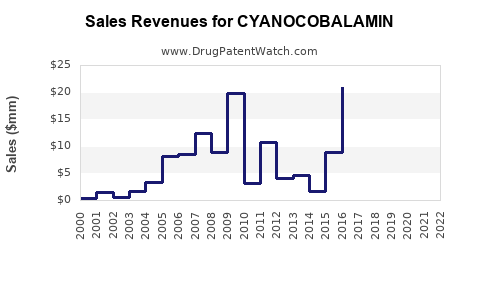
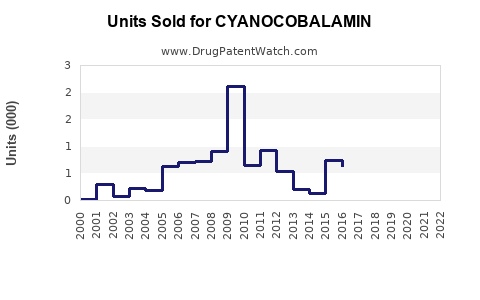
Annual Sales Revenues and Units Sold for CYANOCOBALAMIN
| Drug Name | Revenues (USD) | Units | Year |
|---|---|---|---|
| CYANOCOBALAMIN | ⤷ Start Trial | ⤷ Start Trial | 2022 |
| CYANOCOBALAMIN | ⤷ Start Trial | ⤷ Start Trial | 2021 |
| CYANOCOBALAMIN | ⤷ Start Trial | ⤷ Start Trial | 2020 |
| CYANOCOBALAMIN | ⤷ Start Trial | ⤷ Start Trial | 2019 |
| CYANOCOBALAMIN | ⤷ Start Trial | ⤷ Start Trial | 2018 |
| CYANOCOBALAMIN | ⤷ Start Trial | ⤷ Start Trial | 2017 |
| CYANOCOBALAMIN | ⤷ Start Trial | ⤷ Start Trial | 2016 |
| >Drug Name | >Revenues (USD) | >Units | >Year |
Cyanocobalamin Market Analysis and Sales Projections
Cyanocobalamin, a synthetic form of vitamin B12, is a critical nutrient used in treating and preventing vitamin B12 deficiency. This deficiency can lead to megaloblastic anemia, neurological damage, and other serious health issues. The market for cyanocobalamin is driven by increasing awareness of nutritional deficiencies, aging populations, and the growing demand for dietary supplements and fortified foods.
What is the Current Market Size and Growth Trajectory for Cyanocobalamin?
The global cyanocobalamin market is experiencing steady growth. Market research reports indicate a compound annual growth rate (CAGR) of approximately 4% to 6% over the next five to seven years. The market size was estimated to be between USD 500 million and USD 700 million in 2023. Projections suggest it will reach USD 750 million to USD 1 billion by 2028. This growth is underpinned by an expanding pharmaceutical sector, particularly in emerging economies, and a rising prevalence of conditions necessitating vitamin B12 supplementation.
Table 1: Global Cyanocobalamin Market Size and Projections
| Year | Estimated Market Size (USD Millions) | Projected CAGR |
|---|---|---|
| 2023 | 500 - 700 | N/A |
| 2024 | 520 - 735 | 4.0% - 6.0% |
| 2025 | 541 - 779 | 4.0% - 6.0% |
| 2026 | 563 - 826 | 4.0% - 6.0% |
| 2027 | 586 - 875 | 4.0% - 6.0% |
| 2028 | 609 - 928 | 4.0% - 6.0% |
Source: Market research reports [1, 2]
What are the Key Market Drivers for Cyanocobalamin?
Several factors are fueling the demand for cyanocobalamin:
- Increasing Prevalence of Vitamin B12 Deficiency: Factors such as aging, malabsorption disorders (e.g., pernicious anemia, Crohn's disease, celiac disease), vegan and vegetarian diets, and certain medications (like metformin and proton pump inhibitors) contribute to a higher incidence of vitamin B12 deficiency globally [3].
- Growing Dietary Supplement Market: The global dietary supplement market is expanding due to increased health consciousness and the desire for preventive healthcare. Cyanocobalamin is a common ingredient in multivitamin formulations and standalone B12 supplements [4].
- Fortification of Food Products: Regulatory mandates and voluntary industry initiatives to fortify staple foods like cereals and plant-based milk alternatives with essential vitamins, including B12, are increasing consumption [5].
- Aging Population: Elderly individuals are at a higher risk of vitamin B12 deficiency due to reduced absorption and dietary intake. This demographic trend directly boosts demand for B12 supplements and pharmaceutical preparations [3].
- Awareness and Diagnosis: Improved diagnostic tools and increased public and physician awareness regarding the symptoms and consequences of vitamin B12 deficiency are leading to more diagnoses and subsequent treatment, driving demand for cyanocobalamin [3].
- Pharmaceutical Applications: Beyond supplements, cyanocobalamin is a key active pharmaceutical ingredient (API) in prescription medications for treating diagnosed deficiencies and associated conditions [6].
What are the Major Restraints Affecting the Cyanocobalamin Market?
Despite growth, certain factors pose challenges to the cyanocobalamin market:
- Availability of Alternative Forms: While cyanocobalamin is widely used, other forms of vitamin B12, such as methylcobalamin and adenosylcobalamin, are gaining traction, particularly in the supplement market, due to perceived bioavailability or efficacy for specific individuals [7].
- Regulatory Scrutiny: Pharmaceutical and food-grade ingredients are subject to stringent regulatory oversight regarding purity, safety, and manufacturing practices. Compliance can be costly and time-consuming [8].
- Price Volatility of Raw Materials: The production of cyanocobalamin relies on specific precursors and fermentation processes. Fluctuations in the cost of these raw materials or energy can impact profit margins for manufacturers.
- Competition from Other Nutrient Supplements: Consumers have a wide array of supplement options, and increased focus on other vitamins or minerals may divert consumer spending away from B12 products.
Which are the Dominant Product Segments within the Cyanocobalamin Market?
The cyanocobalamin market can be segmented by product type and end-use.
Product Type Segmentation:
- Pharmaceutical Grade: This segment caters to prescription medications and over-the-counter (OTC) drugs. It demands the highest purity and adherence to Good Manufacturing Practices (GMP).
- Food Grade: Used for fortifying food products and in dietary supplements. While requiring high standards, it may have slightly different purity specifications compared to pharmaceutical grade.
End-Use Segmentation:
- Pharmaceuticals: Includes prescription drugs and OTC medications for treating B12 deficiency.
- Dietary Supplements: A significant and growing segment, encompassing standalone B12 capsules, tablets, and liquids, as well as B12 inclusion in multivitamins.
- Food Fortification: Cyanocobalamin added to cereals, plant-based beverages, and other food items.
- Animal Feed: Vitamin B12 is also incorporated into animal feed to ensure livestock health and productivity.
The dietary supplement segment is projected to remain the largest and fastest-growing end-use market for cyanocobalamin due to increasing consumer self-care trends and demand for preventative health solutions.
What is the Competitive Landscape for Cyanocobalamin Manufacturers?
The cyanocobalamin market is moderately consolidated with a mix of global and regional players. Key manufacturers focus on API production and supplying to pharmaceutical companies, supplement formulators, and food manufacturers. Competition is based on price, product quality, regulatory compliance, and supply chain reliability.
Key Players Include (but are not limited to):
- Merck KGaA
- DSM
- BASF SE
- Xiamen Kingdomway Group Company
- Yantai Vland Biotech Inc.
- Nootropics Depot
- NOW Foods
- Nature Made
- Solgar Inc.
These companies employ various strategies, including product innovation, mergers and acquisitions, and geographic expansion, to maintain and grow their market share. The patent landscape for cyanocobalamin itself is largely expired for the molecule, but patents may exist for novel formulations, delivery methods, or manufacturing processes.
What are the Future Sales Projections and Opportunities for Cyanocobalamin?
Future sales are projected to continue growing, driven by the aforementioned market drivers. Specific growth opportunities lie in:
- Emerging Markets: Increasing healthcare expenditure and rising disposable incomes in regions like Asia-Pacific and Latin America present significant growth potential.
- Specialty Formulations: Development of enhanced delivery systems (e.g., sublingual tablets, nasal sprays, long-acting injectables) that offer improved patient compliance or efficacy can create niche markets.
- Personalized Nutrition: As the concept of personalized nutrition gains traction, demand for specific vitamin formulations, including B12, tailored to individual genetic or health profiles may increase.
- Plant-Based Food Industry Growth: The exponential growth of the plant-based food sector creates a sustained demand for B12 fortification, as plant-based diets can be naturally deficient in this nutrient.
- Research into New Applications: Ongoing research into the role of vitamin B12 in neurological health, cognitive function, and other physiological processes may uncover new therapeutic applications, further boosting demand.
Sales Projection Considerations:
- North America and Europe will likely continue to be the largest markets due to established healthcare infrastructure, high consumer awareness, and existing regulatory frameworks for supplements and fortified foods.
- Asia-Pacific is expected to exhibit the highest growth rate, driven by a large population, increasing disposable income, and growing health consciousness.
- The pharmaceutical segment will remain a stable, albeit slower-growing, demand source, directly linked to diagnosed medical conditions.
- The dietary supplement segment will likely lead overall market expansion, influenced by consumer trends and marketing efforts.
Key Takeaways
- The global cyanocobalamin market is projected for sustained growth, driven by increasing vitamin B12 deficiency rates and a robust dietary supplement industry.
- Key drivers include rising deficiency prevalence, a growing supplement market, food fortification efforts, and an aging global population.
- The market faces restraints from the availability of alternative B12 forms, regulatory hurdles, and raw material price volatility.
- The dietary supplement segment represents the largest and fastest-growing end-use market for cyanocobalamin.
- Future growth opportunities are present in emerging markets, specialty formulations, and the expanding plant-based food sector.
Frequently Asked Questions
1. What is the primary difference between cyanocobalamin and methylcobalamin? Cyanocobalamin is a synthetic form that requires conversion in the body to its active forms, methylcobalamin and adenosylcobalamin. Methylcobalamin is already in an active form. [7]
2. How is cyanocobalamin manufactured? Cyanocobalamin is primarily produced through microbial fermentation, typically using specific strains of bacteria such as Pseudomonas denitrificans or Propionibacterium freudenreichii, followed by chemical purification and conversion into its stable cyanocobalamin form. [9]
3. Are there specific patents that still protect cyanocobalamin itself? The basic molecule of cyanocobalamin is out of patent protection. However, patents may exist for specific novel manufacturing processes, unique formulations, or delivery systems that enhance its stability, bioavailability, or therapeutic delivery. [10]
4. What is the typical dosage range for cyanocobalamin supplementation? Dosage varies significantly based on the indication (prevention vs. treatment) and the individual's deficiency level, ranging from microgram (mcg) amounts for daily maintenance to milligram (mg) amounts for therapeutic intervention. Specific medical guidance is essential. [3]
5. Which geographical regions are expected to show the highest market growth for cyanocobalamin in the next five years? The Asia-Pacific region is anticipated to experience the highest compound annual growth rate due to increasing healthcare awareness, rising disposable incomes, and a large population base. [2]
Cited Sources
[1] Global Market Insights. (2023). Vitamin B12 Market Size, Share & Trends Analysis Report By Product (Cyanocobalamin, Methylcobalamin, Adenosylcobalamin), By Application (Pharmaceuticals, Dietary Supplements, Food Fortification, Animal Feed), By Region, And Segment Forecasts, 2024 - 2032. [2] Grand View Research. (2023). Vitamin B12 Market Size, Share & Trends Analysis Report By Product (Cyanocobalamin, Methylcobalamin, Adenosylcobalamin), By Application (Pharmaceuticals, Dietary Supplements, Food Fortification, Animal Feed), By Region, And Segment Forecasts, 2023 – 2030. [3] Health and Medicine Division (US) National Academies of Sciences, Engineering, and Medicine. (2018). Dietary Reference Intakes for Calcium and Vitamin D. National Academies Press (US). [4] Consumer Health News. (2023). The Booming Vitamin Supplement Market: Trends and Consumer Behavior. [5] Food and Agriculture Organization of the United Nations. (2020). Food Fortification Guidelines. [6] U.S. Food & Drug Administration. (2020). National Drug Code Directory. [7] National Institutes of Health. (2021). Vitamin B12 Fact Sheet for Health Professionals. [8] European Medicines Agency. (2023). Guideline on the quality of finished pharmaceutical products, medicinal products of plant origin. [9] H. P. B. Singh, M. W. L. Koenders, P. H. H. J. Koks, & P. H. J. Koks. (2000). Biotechnological production of vitamin B12. Applied Microbiology and Biotechnology, 54(4), 471-476. [10] U.S. Patent and Trademark Office. (2023). USPTO Patent Search.
More… ↓
