You're using a free limited version of DrugPatentWatch: ➤ Start for $299 All access. No Commitment.

Last Updated: December 16, 2025

Drug Sales Trends for CALCIUM


✉ Email this page to a colleague

« Back to Dashboard


Payment Methods and Pharmacy Types for CALCIUM (2020)

Revenues by Pharmacy Type

Pharmacy Type Revenues
MAIL-ORDER $176,068
INSIDE ANOTHER STORE $656,837
[disabled in preview] $3,523,466
This preview shows a limited data set
Subscribe for full access, or try a Trial

Units Sold by Pharmacy Type

Pharmacy Type Units
MAIL-ORDER 41,624
INSIDE ANOTHER STORE 134,023
[disabled in preview] 638,240
This preview shows a limited data set
Subscribe for full access, or try a Trial

Revenues by Payment Method

Payment Method Revenues
MEDICAID $131,550
MEDICARE $788,662
[disabled in preview] $3,436,159
This preview shows a limited data set
Subscribe for full access, or try a Trial
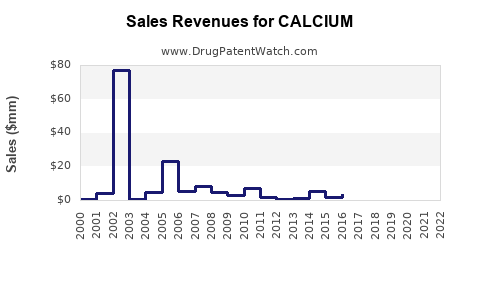
Drug Sales Revenue Trends for CALCIUM
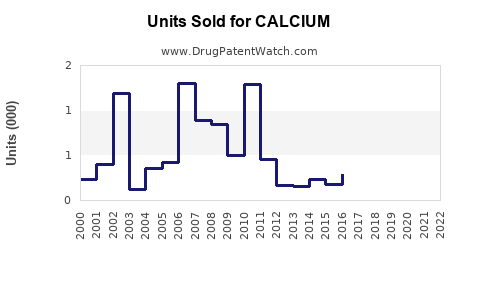
Drug Units Sold Trends for CALCIUM

Market Analysis and Sales Projections for Calcium Supplements

Last updated: August 6, 2025

Introduction

Calcium is a vital mineral primarily known for its role in bone health, muscular function, nerve transmission, and vascular activity. As a foundational nutrient, calcium supplements have become a staple in preventive healthcare, especially among populations at risk for osteoporosis and deficiency-related conditions. This report provides a comprehensive market analysis and sales projection for calcium supplements, emphasizing industry dynamics, consumer trends, regulatory influences, and future growth outlooks to equip stakeholders with strategic insights.


Market Overview

Global Market Size and Revenue

The global calcium supplement market was valued at approximately USD 2.8 billion in 2022, with projections to reach USD 4.5 billion by 2030, reflecting a compound annual growth rate (CAGR) of about 6.0% between 2023 and 2030 (source: Fortune Business Insights). The market growth underscores increasing consumer awareness of bone health, aging demographics, and rising prevalence of osteoporosis.

Key Market Segments

  • Formulation Types:

    • Tablet and Capsule: Dominant due to ease of consumption and cost-effectiveness.
    • Powders and Liquids: Gaining traction for specific populations such as pediatrics and elderly with swallowing difficulties.
    • Chewables: Preferred for pediatric use and convenience.
  • Source Variants:

    • Dicalcium Phosphate: Widely used due to high bioavailability and low cost.
    • Calcium Carbonate: Most common in dietary supplements.
    • Calcium Citrate: Preferred for its better absorption, especially among older adults with reduced stomach acid.
    • Other Sources: Calcium lactate, calcium gluconate.
  • End-User Segments:

    • Retail Pharmacies and Drug Stores: Largest distribution channel.
    • E-commerce Platforms: Growing rapidly due to the shift towards online shopping.
    • Hospital Pharmacies: Minimal but steady market segment.

Geographical Markets

  • North America: Leading market due to high health awareness, aging population, and prevalent osteoporosis cases.
  • Europe: Significant market with increasing health consciousness and aging demographics.
  • Asia-Pacific: Fastest-growing region, driven by urbanization, rising income levels, and increasing prevalence of osteoporosis. China and India dominate growth in this region.

Market Drivers

Aging Population and Osteoporosis Prevalence

The increasing incidence of osteoporosis, especially among postmenopausal women and elderly populations, drives demand for calcium supplementation. The World Health Organization reports osteoporosis affects over 200 million worldwide, with a higher prevalence in women aged over 60.

Preventive Healthcare Trends

An active shift towards preventive healthcare supports the consumption of dietary supplements, including calcium, to maintain bone density and prevent future fractures. Consumer awareness about osteoporosis risk factors significantly influences market expansion.

Product Innovation and Fortification

Innovation in supplement formulations, such as flavored chewables, and fortification of calcium in beverages and cereals, enhance consumer engagement and increase overall intake.

Increasing Awareness of Dietary Guidelines

Health authorities, including the NIH and WHO, recommend daily calcium intake (1000-1300 mg depending on age and gender), fostering consumer compliance and industry growth.


Market Challenges

Regulatory and Labeling Concerns

Regulatory scrutiny regarding claims, labeling, and safety concerns (e.g., risk of cardiovascular events linked to excessive calcium intake) impact market stability. Regulatory bodies in different countries enforce strict compliance, which can delay product launches.

Adverse Effects and Overconsumption Risks

High doses of calcium supplements can be associated with kidney stones, cardiovascular risks, and gastrointestinal discomfort. These concerns necessitate responsible marketing and consumer education.

Competition from Dietary Sources

Growing consumer preference for natural dietary sources of calcium, such as dairy products and plant-based options, can limit supplement market growth.


Competitive Landscape

Major players include Abbott Laboratories, GlaxoSmithKline (GSK), Bayer AG, Amway, and Nature’s Bounty. These companies focus on product diversification, branding, and expanding distribution channels. Private labels and regional brands expand market reach further.


Sales Projections and Future Trends (2023-2030)

Forecast Summary

  • The calcium supplement market is projected to grow at a CAGR of approximately 6.0% over the next seven years.
  • North America and Europe are expected to maintain high sales volumes, supported by aging demographics and health awareness.
  • Rapid growth in Asia-Pacific, with an estimated CAGR of 7-8%, driven by urbanization and increasing health consciousness.

Driving Factors for Growth

  • Preventive health focus among millennials and Generation Z, emphasizing bone health.
  • Expansion of e-commerce channels, facilitating access to a broader consumer base.
  • Product diversification, including combination supplements with vitamin D, magnesium, and other minerals to enhance efficacy, appealing to health-conscious consumers.
  • Regulatory simplification in emerging markets, enabling faster product registration and launch.

Potential Market Limitations

  • Saturation in mature markets may slow growth rates.
  • Emerging regulatory frameworks could introduce compliance costs.
  • Public perception and safety concerns may influence consumer confidence.

Regional Insights and Strategic Opportunities

North America

The largest market, driven by high osteoporosis prevalence and health awareness. Companies should focus on product innovation, fortification, and targeted marketing towards senior demographics.

Europe

Strong regulatory environment necessitates compliance with stringent health claims and safety standards. Organic and natural formulations are gaining favor.

Asia-Pacific

High growth potential; manufacturers should capitalize on urban youth's health awareness and government health initiatives promoting supplement use.

Emerging Markets

India and China represent significant opportunities owing to population size and rising health-consciousness. Local formulations, affordable pricing, and distribution partnerships are critical success factors.


Key Takeaways

  • Market growth remains robust, driven by demographic aging, preventive healthcare, and product innovation.
  • Consumer preference trends favor natural, convenient, and fortified calcium products, demanding tailored marketing strategies.
  • Regulatory landscape demands compliance with evolving safety standards, emphasizing transparency and safety.
  • Emerging markets offer high growth opportunities, provided companies adapt to local preferences and regulatory requirements.
  • E-commerce expansion and direct-to-consumer channels will be pivotal in capturing future market share.

FAQs

  1. What are the main factors influencing calcium supplement demand globally?
    The primary drivers are aging populations at risk of osteoporosis, increased health awareness, preventive health trends, and product innovations targeting convenience and bioavailability.

  2. Which form of calcium supplement is most preferred among consumers?
    Calcium carbonate remains the most common due to cost and availability, but calcium citrate is gaining popularity for its better absorption, especially among older adults.

  3. What are the regulatory challenges facing calcium supplement manufacturers?
    Manufacturers must navigate strict labeling and health claim regulations, safety concerns related to overconsumption, and compliance with country-specific standards to avoid market access issues.

  4. How is the rise of natural dietary sources impacting the calcium supplement market?
    Preference for natural calcium sources, such as dairy and plant-based foods, may limit supplement sales in some regions, prompting companies to innovate with fortified foods and smoothies.

  5. Which regions are expected to experience the fastest growth in calcium supplement sales?
    Asia-Pacific, driven by China and India, is forecasted to see the highest CAGR due to urbanization, rising incomes, and increasing health awareness.


References

  1. Fortune Business Insights. (2023). Calcium Supplements Market Size, Share & Industry Analysis.
  2. World Health Organization. (2022). Osteoporosis Fact Sheet.
  3. National Institutes of Health. (2021). Calcium: Fact Sheet for Consumers.
  4. MarketResearch.com. (2023). Global Dietary Supplements Market Overview.
  5. Allied Market Research. (2023). Calcium Supplements Market Trends, Opportunities & Forecasts.

More… ↓

⤷  Get Started Free

Make Better Decisions: Try a trial or see plans & pricing

Drugs may be covered by multiple patents or regulatory protections. All trademarks and applicant names are the property of their respective owners or licensors. Although great care is taken in the proper and correct provision of this service, thinkBiotech LLC does not accept any responsibility for possible consequences of errors or omissions in the provided data. The data presented herein is for information purposes only. There is no warranty that the data contained herein is error free. We do not provide individual investment advice. This service is not registered with any financial regulatory agency. The information we publish is educational only and based on our opinions plus our models. By using DrugPatentWatch you acknowledge that we do not provide personalized recommendations or advice. thinkBiotech performs no independent verification of facts as provided by public sources nor are attempts made to provide legal or investing advice. Any reliance on data provided herein is done solely at the discretion of the user. Users of this service are advised to seek professional advice and independent confirmation before considering acting on any of the provided information. thinkBiotech LLC reserves the right to amend, extend or withdraw any part or all of the offered service without notice.