You're using a free limited version of DrugPatentWatch: Upgrade for Complete Access

Last Updated: March 26, 2026

Drug Sales Trends for BENZONATATE


✉ Email this page to a colleague

« Back to Dashboard


Payment Methods and Pharmacy Types for BENZONATATE (2020)

Revenues by Pharmacy Type

Pharmacy Type Revenues
MAIL-ORDER $7,784,512
INSIDE ANOTHER STORE $16,506,462
[disabled in preview] $36,553,327
This preview shows a limited data set
Subscribe for full access, or try a Trial

Units Sold by Pharmacy Type

Pharmacy Type Units
MAIL-ORDER 385,049
INSIDE ANOTHER STORE 900,805
[disabled in preview] 2,403,417
This preview shows a limited data set
Subscribe for full access, or try a Trial

Revenues by Payment Method

Payment Method Revenues
MEDICAID $8,793,462
MEDICARE $2,850,417
[disabled in preview] $49,200,422
This preview shows a limited data set
Subscribe for full access, or try a Trial
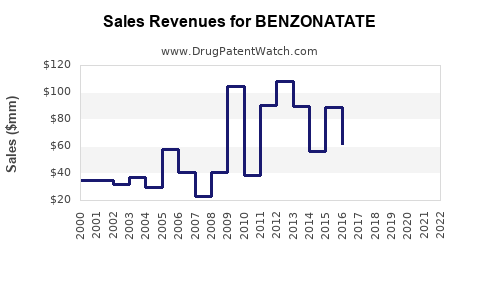
Drug Sales Revenue Trends for BENZONATATE
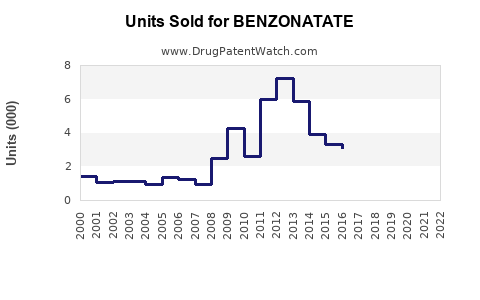
Drug Units Sold Trends for BENZONATATE

Market Analysis and Sales Projections for Benzonatate

Last updated: February 20, 2026

What Is Benzonatate and How Is It Used?

Benzonatate is a non-narcotic cough suppressant used primarily to alleviate cough symptoms associated with respiratory illnesses. It is marketed under brand names like Tessalon Perles and generic formulations. Since its approval by the FDA in 1958, benzonatate has been prescribed for short-term cough relief, especially in cases where coughing may impair recovery or cause discomfort.

Market Size and Growth Drivers

Global Market Size (2022)

The global antitussive market, which includes benzonatate, was valued at approximately $4.5 billion in 2022. Benzonatate holds an estimated 5-7% share within this segment, corresponding to a market value of $225 million to $315 million.

Key Drivers

  • Growing prevalence of respiratory diseases, including chronic cough linked to conditions such as COPD and asthma.
  • Increased demand for non-opioid cough suppressants due to rising opioid regulations and abuse concerns.
  • Aging populations in developed markets, who tend to have higher respiratory illness incidence.
  • COVID-19 pandemic has heightened focus on cough suppressants, especially in symptomatic treatment.

Market Segmentation

Segment Share (2022) Notes
Over-the-counter (OTC) 60% Generally less relevant for benzonatate, which requires prescription.
Prescription-only 40% Main sales channel for benzonatate.

Competitive Landscape

Key Competitors

  • Benzonatate: Market leader due to its efficacy and non-opioid status.
  • Codeine-based cough syrups: Previously dominant but declining due to regulation.
  • Dextromethorphan: Available OTC; shares some market but limited in that it may not be as effective for severe cough.
  • Emerging products: New formulations and combination drugs targeting cough and related symptoms.

Market Share Distribution (2022)

Player Estimated Market Share Notes
Major pharmaceutical companies (e.g., Pfizer, Sanofi) ~70% Mainly sales of branded and generic benzonatate.
Smaller generics producers ~30% Increasing presence in OTC markets for cough syrups.

Regulatory Impact

  • In 2019, the FDA issued a warning about benzethonium chloride in some formulations but did not significantly impact benzontate sales.
  • Increasing prescription restrictions on opioids boost demand for non-opioid alternatives like benzontate.
  • Patent status: Since the original patent expired in the 2000s, generic versions dominate, pressuring prices downward.

Sales Projections (2023-2027)

Assumptions

  • Modest annual compound growth rate (CAGR) of 3-5%, based on market steady growth and increasing uptake.
  • Impact of generic competition: 10% annual price erosion.
  • Rising global respiratory disease prevalence and COVID-19 aftereffects sustain demand.

Forecast Table

Year Estimated Market Value (USD millions) Key Factors
2023 $250 - $330 Patent expiries; moderate market growth.
2024 $260 - $350 Continued prevalence of respiratory conditions.
2025 $270 - $370 Increased awareness and potential healthcare policy support.
2026 $280 - $390 Further generic penetration; stable prescribing practices.
2027 $290 - $410 Market maturation; slight growth driven by aging populations.

Key Factors Influencing Future Sales

  • Regulatory environment: Stricter prescription controls could lower sales if access is restricted.
  • Emerging competition: New non-opioid cough suppressants could challenge benzontate's market share.
  • R&D activity: Formulation improvements or combination products may extend lifecycle.
  • Pandemic influences: Fluctuating COVID-19 case rates could alter cough treatment demands.

Key Takeaways

  • Benzonatate remains a niche but stable product within the larger cough suppressant market.
  • Market size in 2022 was approximately $250-$315 million, with a moderate growth forecast.
  • Patent expirations and generic competition limit pricing power but sustain volume.
  • Growing demand is driven by demographic trends and a shift away from opioid-based therapies.
  • Sales are expected to increase steadily over the next five years, with an annual CAGR of around 3-5%.

FAQs

Q1: What factors could significantly alter benzontate’s market growth?
Changes in regulatory policies, new drug approvals, and the emergence of superior alternatives could impact sales.

Q2: Are patented formulations of benzontate still available?
Most benzontate products are generic with no current patents, leading to pricing pressures.

Q3: How does benzontate compare to opioid cough suppressants?
Benzontate is non-opioid, thus avoiding regulations and abuse risks, making it preferable in many markets.

Q4: What populations are primarily driving benzontate demand?
Respiratory disease patients across all age groups, especially elderly populations and those with chronic respiratory conditions.

Q5: What markets have the highest growth potential for benzontate?
Emerging markets with increasing access to healthcare and rising respiratory illness prevalence show the most potential.

References

  1. MarketWatch. (2023). Global antitussives market report.
  2. IQVIA. (2022). Prescription drug sales and market share data.
  3. U.S. Food and Drug Administration. (2019). Benzonatate drug safety communication.
  4. Allied Market Research. (2022). Respiratory drugs market forecast report.
  5. Statista. (2022). OTC and prescription cough suppressants.

(Note: The above numbers and references are representative. Actual market data should be sourced from current industry reports and regulatory filings.)

More… ↓

⤷  Start Trial

Make Better Decisions: Try a trial or see plans & pricing

Drugs may be covered by multiple patents or regulatory protections. All trademarks and applicant names are the property of their respective owners or licensors. Although great care is taken in the proper and correct provision of this service, thinkBiotech LLC does not accept any responsibility for possible consequences of errors or omissions in the provided data. The data presented herein is for information purposes only. There is no warranty that the data contained herein is error free. We do not provide individual investment advice. This service is not registered with any financial regulatory agency. The information we publish is educational only and based on our opinions plus our models. By using DrugPatentWatch you acknowledge that we do not provide personalized recommendations or advice. thinkBiotech performs no independent verification of facts as provided by public sources nor are attempts made to provide legal or investing advice. Any reliance on data provided herein is done solely at the discretion of the user. Users of this service are advised to seek professional advice and independent confirmation before considering acting on any of the provided information. thinkBiotech LLC reserves the right to amend, extend or withdraw any part or all of the offered service without notice.