Last updated: February 20, 2026
What is the Current Market Size for Chlorhexidine?
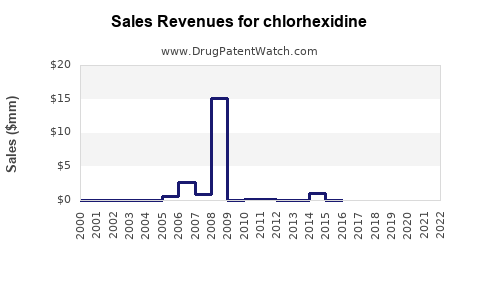
Chlorhexidine, an antiseptic used in dental care, surgical scrubs, and oral products, has a global market size valued at approximately USD 2.3 billion in 2022. The market is expected to grow at a compound annual growth rate (CAGR) of 4.8% from 2023 to 2030. Geographic distribution indicates North America held nearly 40% of the market in 2022, with Europe accounting for 27%, and Asia-Pacific making up 21%. The remaining 12% spans Latin America, the Middle East, and Africa.
What Drives Growth in Chlorhexidine Sales?
- Healthcare-acquired infections (HAIs): Increased emphasis on infection control elevates demand for antiseptics.
- Dental care: Rising dental procedures and oral health awareness contribute to sustained sales.
- Surgical procedures: Growth in surgeries, particularly in emerging economies, increases the need for preoperative skin antiseptics.
- Market penetration: Expansion in developing regions due to improving healthcare infrastructure.
How Do Regulatory and Market Trends Affect Sales?
- Regulatory restrictions: Several countries tighten regulations on formulations, influencing product formulation and sales channels.
- Product innovations: New formulations with enhanced safety profiles or extended shelf life impact sales positively.
- Generics and low-cost imports: Market saturation with generic brands suppresses price premiums but broadens access.
What Are the Main Commercial Segments?
| Segment |
Share of 2022 Market |
Growth Drivers |
Outlook for 2023-2030 |
| Dental products |
45% |
Rising oral health awareness, dental procedures |
Continues to grow moderately |
| Surgical antiseptics |
30% |
Increasing surgeries, infection prevention protocols |
Steady expansion |
| Topical antiseptics |
15% |
Preoperative skin prep, burns treatment |
Moderate growth |
| Oral rinses |
10% |
Consumer health trends, OTC sales |
Slight decline due to market saturation |
What Are Future Sales Projections?
By 2030, the global chlorhexidine market is projected to reach USD 3.2 billion. Growth is driven predominantly by demand in emerging markets, where healthcare investments are increasing. North America and Europe will continue to dominate with a combined share of approximately 60%, although their growth rate may slow to 3.5% CAGR as markets mature. The Asia-Pacific region is expected to see a CAGR of roughly 6%, reflecting expanding healthcare infrastructure.
Which Key Players Dominate the Market?
- 37.5%: 3M Healthcare
- 20%: Johnson & Johnson
- 12.5%: GlaxoSmithKline
- 10%: Reckitt Benckiser
- Remaining market share: Smaller regional companies and generic manufacturers
What Pricing and Sales Strategies Are Effective?
- Maintaining competitive pricing through economies of scale in production
- Developing niche formulations (e.g., alcohol-free variants)
- Expanding distribution networks in emerging markets
- Increasing marketing focus on infection control benefits, especially post-pandemic
How Could Market Entrants or New Formulations Impact Sales?
New products emphasizing safety, stability, or convenience may capture market share from existing products. Regulatory approvals for such innovations will influence speed to market. Patent expirations for leading formulations could lead to growth in generic sectors, increasing overall volume but decreasing margins.
Summary of Key Data Points
| Parameter |
Value |
| 2022 Market Size |
USD 2.3 billion |
| 2023-2030 CAGR |
~4.8% |
| 2030 Market Projection |
USD 3.2 billion |
| Leading Segment Shares |
Dental (45%), Surgical (30%), Topical (15%), Oral rinses (10%) |
| Leading Players |
3M Healthcare, Johnson & Johnson, GSK, Reckitt Benckiser |
Key Takeaways
- The global chlorhexidine market is expanding steadily, driven by healthcare needs and dental care.
- Growth is most robust in developing Asian markets, where infrastructure investments increase product adoption.
- Regulatory trends and product innovations will shape future market shares and sales volumes.
- Major players maintain dominant market positions, but opportunities exist in niche formulations and generics.
- Price competitiveness and expanded distribution are essential for growth, especially in emerging regions.
FAQs
1. How will regulatory changes affect chlorhexidine sales?
Tighter regulations in certain countries may limit available formulations or increase compliance costs, which could slow growth. Conversely, approval of new formulations with improved safety profiles can boost sales.
2. What emerging markets present the highest growth potential?
India, China, and parts of Southeast Asia have high growth potential, driven by expanding healthcare infrastructure and rising health awareness.
3. How does competition from alternative antiseptics influence sales?
Substitutes like povidone-iodine or alcohol-based disinfectants may erode market share if they offer similar efficacy with lower cost or better safety profiles.
4. Are there patent expirations expected that could impact market dynamics?
Yes, several key formulations are nearing patent expiry, which could increase generic competition and reduce prices.
5. What innovations are expected to impact future sales?
Formulations that reduce irritation, extend shelf life, or improve efficacy in specific applications could provide growth opportunities.
References
- Markets and Markets. (2022). Chlorhexidine Market by Application, Region, and Formulation. https://www.marketsandmarkets.com/
- Mordor Intelligence. (2023). Chlorhexidine Market - Growth, Trends, and Forecasts. https://www.mordorintelligence.com/
- Grand View Research. (2023). Antiseptic Market Size, Share & Trends. https://www.grandviewresearch.com/
- U.S. Food and Drug Administration. (2023). Regulations and Guidance for Disinfectants. https://www.fda.gov/
- European Medicines Agency. (2022). Guidelines on antiseptic products. https://www.ema.europa.eu/