Share This Page
Drug Sales Trends for alprazolam
✉ Email this page to a colleague
Payment Methods and Pharmacy Types for alprazolam (2019)
Revenues by Pharmacy Type
Units Sold by Pharmacy Type
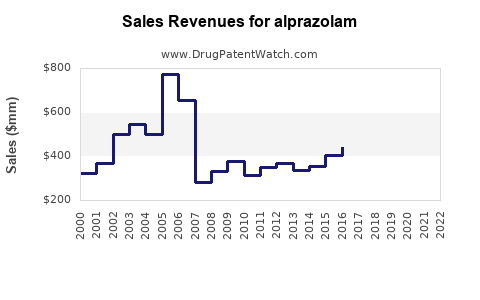
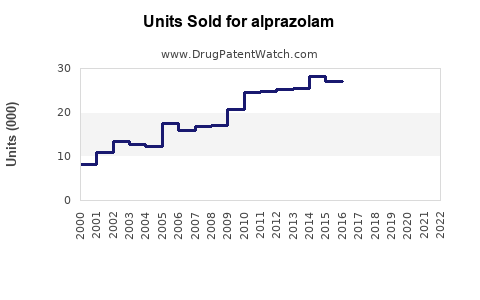
Annual Sales Revenues and Units Sold for alprazolam
| Drug Name | Revenues (USD) | Units | Year |
|---|---|---|---|
| ALPRAZOLAM | ⤷ Start Trial | ⤷ Start Trial | 2022 |
| ALPRAZOLAM | ⤷ Start Trial | ⤷ Start Trial | 2021 |
| ALPRAZOLAM | ⤷ Start Trial | ⤷ Start Trial | 2020 |
| ALPRAZOLAM | ⤷ Start Trial | ⤷ Start Trial | 2019 |
| ALPRAZOLAM | ⤷ Start Trial | ⤷ Start Trial | 2018 |
| >Drug Name | >Revenues (USD) | >Units | >Year |
Alprazolam Market Analysis, Sales Forecast, Patent Status, and Competitive Outlook
Alprazolam is a mature, genericized benzodiazepine with substantial prescription volume but limited pricing power. The U.S. market is dominated by low-cost generic immediate-release tablets, while extended-release tablets retain somewhat higher pricing and fewer manufacturers. Brand Xanax has little strategic relevance to market growth. A base-case forecast places U.S. alprazolam manufacturer revenue at approximately $120 million in 2025, rising modestly to $130 million by 2029 as prescription demand remains stable but generic pricing continues to decline.
Global manufacturer revenue is estimated at approximately $300 million to $600 million annually, depending on the inclusion of hospital, retail, branded, and private-label sales. Public company disclosures generally do not report alprazolam revenue separately.
What is the current alprazolam market size?
Alprazolam is marketed primarily as a generic prescription drug. The principal dosage forms are immediate-release tablets and extended-release tablets.
| Market segment | 2025 estimated manufacturer revenue | Market characteristics |
|---|---|---|
| U.S. immediate-release generic tablets | $70 million-$95 million | Highly fragmented, low average selling prices |
| U.S. extended-release tablets | $35 million-$55 million | Fewer suppliers and higher pricing than immediate-release products |
| U.S. branded and authorized-brand products | Less than $10 million | Limited commercial significance |
| International markets | $150 million-$450 million | Pricing and volume vary materially by country |
| Estimated global total | $300 million-$600 million | Range reflects limited company-level disclosure |
These figures are analytical estimates rather than reported market totals. They reflect prescription volume, generic pricing, dosage-form mix, and international availability. Retail spending would be higher than manufacturer net revenue because it includes wholesaler, pharmacy, and payer margins.
Alprazolam remains one of the most frequently prescribed benzodiazepines in the United States. Use is supported by established physician familiarity, multiple strengths, low generic prices, and indications that include generalized anxiety disorder and panic disorder. The main structural constraint is the long-term decline in benzodiazepine prescribing caused by dependence, withdrawal, overdose, and co-use concerns.
How many prescriptions are written for alprazolam?
U.S. alprazolam prescriptions are generally estimated at approximately 15 million to 20 million annually, depending on the measurement year and whether prescription claims, dispensed prescriptions, or normalized units are used. Alprazolam is commonly ranked among the top prescribed benzodiazepines, alongside lorazepam and clonazepam.
Demand is concentrated in several patient and prescriber groups:
- Adults treated for anxiety and panic disorder.
- Patients receiving short-term or intermittent therapy.
- Long-term users who have not transitioned to antidepressants or behavioral therapy.
- Patients receiving low-cost generic tablets through retail pharmacies.
- Patients requiring multiple strengths for titration or tapering.
Prescription volume is not equivalent to revenue. A prescription for a 30-day supply of 0.25 mg generic tablets produces substantially less revenue than extended-release 2 mg or 3 mg products.
What are the main alprazolam dosage forms and formulations?
Immediate-release alprazolam tablets
Immediate-release tablets are available in 0.25 mg, 0.5 mg, 1 mg, and 2 mg strengths. The 2 mg tablet is often supplied in a scored or multi-scored format to support dose adjustment.
Immediate-release tablets represent the largest volume segment. They are commercially unattractive for many manufacturers because the products are easy to manufacture, broadly substitutable, and exposed to aggressive generic price competition.
Extended-release alprazolam tablets
Extended-release tablets are available in strengths that can include 0.5 mg, 1 mg, 2 mg, and 3 mg. The extended-release formulation was developed to provide once-daily administration and prolonged drug exposure.
Extended-release alprazolam has a higher commercial barrier than immediate-release tablets because formulation performance, dissolution, bioequivalence, and manufacturing controls are more demanding. That barrier is relative, not absolute. Multiple generic approvals reduce the ability of any single supplier to sustain premium pricing.
Orally disintegrating and compounded products
Compounded or specialty formulations may be available in certain markets, but they do not represent a major commercial segment. Regulatory status depends on the formulation, manufacturer, and jurisdiction. FDA-approved commercial products should be distinguished from pharmacy-compounded preparations.
What patents protect alprazolam?
The original alprazolam composition and core product patents have expired. Alprazolam does not have meaningful active ingredient patent protection in the United States.
| Product | Regulatory history | Current patent position |
|---|---|---|
| Xanax immediate-release tablets | FDA approval in the early 1980s | Original product and composition protection expired |
| Generic immediate-release tablets | Approved under abbreviated new drug applications | No active molecule-level exclusivity |
| Xanax XR | Extended-release product approved later | Core formulation exclusivity expired |
| Generic extended-release tablets | Approved through ANDA pathways | Competition depends on formulation, bioequivalence, and manufacturing |
FDA Orange Book listings can include patents associated with a listed drug, but an Orange Book listing does not mean the listed patent remains enforceable or commercially blocking. Patent expiry, terminal disclaimers, regulatory exclusivity, and litigation outcomes must be reviewed separately.
No current alprazolam patent estate provides the type of protection associated with recently launched small-molecule drugs. Commercial differentiation depends on manufacturing cost, supply reliability, channel access, packaging, controlled-substance compliance, and formulation execution rather than basic patent exclusivity.
When did alprazolam lose exclusivity?
The immediate-release alprazolam market lost meaningful exclusivity decades ago. Generic competition has been established for many years, and no current U.S. new chemical entity exclusivity protects alprazolam.
Xanax XR also no longer has commercially meaningful exclusivity. The extended-release segment may have fewer approved suppliers than immediate-release tablets, but that is a market-structure issue rather than a durable patent monopoly.
The practical exclusivity timeline is:
| Period | Event | Commercial effect |
|---|---|---|
| Early 1980s | Original Xanax approval | Brand-led market formation |
| Late 1980s and 1990s | Generic immediate-release entry | Rapid price and share erosion |
| Early 2000s | Xanax XR approval | New extended-release segment |
| Mid-2000s onward | Generic and competitive formulation development | Reduced XR exclusivity |
| Current market | Mature multi-source generic supply | Low pricing and limited brand power |
What is the FDA regulatory status of alprazolam?
Alprazolam is FDA-approved as a prescription benzodiazepine for anxiety disorders, panic disorder, and related short-term treatment uses described in approved labeling. It is a controlled substance under Schedule IV of the federal Controlled Substances Act because it has recognized medical use but also carries abuse, dependence, and diversion risks. [1, 2]
FDA labeling identifies clinically important risks, including:
- Abuse, misuse, and addiction.
- Physical dependence and withdrawal.
- Sedation and impaired coordination.
- Respiratory depression when combined with opioids or other central nervous system depressants.
- Increased risk in older adults and patients with substance-use histories.
The FDA’s boxed warning for benzodiazepines addresses abuse, misuse, addiction, physical dependence, and withdrawal reactions. [2] These warnings create a long-term regulatory headwind for volume growth and limit opportunities for aggressive consumer marketing.
Are there Paragraph IV challenges for alprazolam?
Paragraph IV litigation is not a central current market issue for immediate-release alprazolam because the principal patents and regulatory barriers have expired. Generic applicants generally enter a mature ANDA market rather than challenge a commercially powerful, unexpired patent estate.
For extended-release products, formulation patents or Orange Book-listed patents may have produced historic litigation or certification disputes. The commercial importance of any particular challenge depends on:
- Whether the patent remained listed at the relevant filing date.
- Whether the ANDA applicant made a Paragraph IV certification.
- Whether the patent owner filed suit within the statutory period.
- Whether a 30-month stay applied.
- Whether the patent survived claim construction, validity, and infringement review.
The current market does not depend on a single pending Paragraph IV case. Generic entry risk is therefore high, and litigation is unlikely to restore broad market exclusivity.
Which companies compete in the alprazolam market?
The U.S. generic market has historically included large and mid-sized manufacturers such as:
- Teva Pharmaceuticals.
- Sandoz.
- Viatris and legacy Mylan operations.
- Hikma Pharmaceuticals.
- Sun Pharmaceutical Industries.
- Amneal Pharmaceuticals.
- Zydus Pharmaceuticals.
- Rising Pharmaceuticals and other specialty generic suppliers.
- Authorized distributors and private-label suppliers.
The exact supplier set changes because controlled-substance products are affected by manufacturing allocations, DEA quotas, product discontinuations, recalls, wholesaler contracts, and supply-chain decisions.
The branded Xanax business has limited competitive importance. Generic suppliers compete primarily on price and availability. A manufacturer with a reliable supply position can capture share temporarily during shortages, but that advantage usually weakens when additional suppliers restore inventory.
What are the key demand and pricing drivers?
Demand drivers
Alprazolam demand is supported by:
- Persistent anxiety and panic disorder diagnoses.
- Physician familiarity.
- Low generic prices.
- Established reimbursement.
- Existing long-term users.
- Availability in multiple strengths.
Demand constraints
Volume is restrained by:
- Dependence and withdrawal risk.
- Increased scrutiny of long-term benzodiazepine use.
- Expansion of selective serotonin reuptake inhibitors and serotonin-norepinephrine reuptake inhibitors.
- Cognitive and fall-risk concerns in older adults.
- Opioid and benzodiazepine co-prescribing restrictions.
- Behavioral therapy and non-drug treatment alternatives.
- Prescription-monitoring requirements.
Pricing is more vulnerable than volume. Generic manufacturers can maintain or increase unit volume while revenue declines because pharmacy benefit managers, wholesalers, and retail pharmacies negotiate lower prices.
What are the alprazolam sales projections for 2025 to 2029?
The following forecast covers estimated U.S. manufacturer net revenue. It excludes pharmacy and wholesaler margins and does not represent guidance from any individual company.
| Year | Bear case | Base case | Upside case |
|---|---|---|---|
| 2025 | $105 million | $120 million | $140 million |
| 2026 | $98 million | $120 million | $143 million |
| 2027 | $92 million | $121 million | $145 million |
| 2028 | $86 million | $125 million | $150 million |
| 2029 | $80 million | $130 million | $155 million |
Forecast assumptions
The bear case assumes continued prescription decline, lower generic prices, and no sustained shortage.
The base case assumes broadly stable prescription volume, modest growth in extended-release mix, and annual price erosion of approximately 2% to 4% offset by product-mix improvements and periodic supply disruptions.
The upside case assumes persistent demand, temporary shortages affecting competing suppliers, stable reimbursement, and better-than-expected extended-release sales.
A reasonable base-case compound annual growth rate is approximately 2% from 2025 through 2029. This does not indicate a growing therapeutic franchise. It reflects a mature market in which dosage-form mix and supply events offset structural pricing pressure.
What is the commercial outlook for generic and branded alprazolam?
Generic immediate-release alprazolam has the highest volume but the weakest margin profile. Manufacturers need scale, efficient active pharmaceutical ingredient sourcing, and strong channel relationships to earn acceptable returns.
Extended-release alprazolam is more attractive because:
- Fewer suppliers may compete at any given time.
- Formulation complexity is higher.
- Patients and prescribers may value once-daily administration.
- Average selling prices can exceed those of immediate-release tablets.
- Manufacturing deviations can create temporary supply advantages.
The principal risk is substitution. If a generic extended-release product is therapeutically and economically interchangeable, payers can rapidly shift volume to the lowest-cost supplier.
How strong is the alprazolam patent estate?
The patent estate is weak from an originator perspective and moderate only from a formulation-manufacturing perspective.
| Protection category | Current strength | Commercial assessment |
|---|---|---|
| Active ingredient patent | None of practical relevance | No barrier |
| Immediate-release tablet | Minimal | Commodity generic market |
| Extended-release formulation | Low to moderate | Some technical entry barriers |
| Manufacturing process | Low to moderate | Relevant only if claims are narrow and enforceable |
| Method of treatment | Limited | Regulatory and enforcement value is constrained |
| Trade secrets and know-how | Moderate | Can affect yield, quality, and supply reliability |
Alprazolam is therefore a poor candidate for an originator-style lifecycle strategy based solely on patent protection. The more defensible opportunities are controlled-release delivery, abuse-deterrent designs, combination products, or new indications, although each would require separate clinical, regulatory, and intellectual-property investment.
What licensing deals or partnerships affect alprazolam?
No major current licensing transaction is required to explain the mature alprazolam market. Historically, branded rights, generic commercialization agreements, contract manufacturing, and authorized-generic arrangements have influenced supplier participation. These arrangements are typically private and are not reported as standalone alprazolam transactions.
Commercial partnerships are most relevant in three areas:
- Controlled-substance manufacturing and distribution.
- Authorized generic supply.
- Extended-release formulation and technology transfer.
The absence of an active composition patent reduces the value of licensing a basic alprazolam product. A transaction would need to include manufacturing capacity, regulatory approvals, geographic rights, supply reliability, or differentiated formulation technology to support a material valuation premium.
What generic launch scenarios exist for alprazolam?
A new immediate-release generic launch would face intense price competition and limited room for premium pricing. The most likely commercial strategy would be a low-cost, reliable supply position supported by a broad strength portfolio.
A new extended-release launch could achieve better economics if the supplier has:
- FDA approval with clean substitutability.
- Reliable dissolution and bioequivalence performance.
- Adequate controlled-substance manufacturing capacity.
- Wholesale and pharmacy distribution.
- A differentiated dosage strength or packaging configuration.
- A supply agreement before launch.
The largest launch risk is not patent litigation. It is rapid price compression after additional ANDA approvals.
What is the competitive outlook versus other benzodiazepines?
| Drug | Primary competitive position | Commercial comparison |
|---|---|---|
| Alprazolam | Anxiety and panic disorder | High recognition, strong generic availability |
| Lorazepam | Anxiety, agitation, procedural use | Broad institutional and outpatient use |
| Clonazepam | Panic disorder and seizure indications | Longer duration can reduce dosing frequency |
| Diazepam | Anxiety, muscle spasm, seizures | Broad indications and older generic base |
| Buspirone | Non-benzodiazepine anxiety treatment | Lower dependence profile but slower onset |
| SSRIs and SNRIs | Chronic anxiety and mood disorders | Main long-term substitution risk |
Alprazolam’s rapid onset supports continued use, but its short duration and dependence profile create competitive disadvantages against longer-acting benzodiazepines and non-benzodiazepine treatments. The product is likely to remain commercially durable without becoming a high-growth pharmaceutical market.
Key Takeaways
- Alprazolam is a mature, multi-source generic market with no meaningful active ingredient exclusivity.
- U.S. manufacturer revenue is estimated at approximately $120 million in 2025.
- Base-case U.S. revenue could reach approximately $130 million by 2029, mainly through stable demand and extended-release mix.
- Immediate-release tablets are highly commoditized and price-sensitive.
- Extended-release tablets offer better technical and commercial positioning but remain exposed to generic substitution.
- FDA boxed warnings and controlled-substance restrictions limit long-term volume growth.
- Paragraph IV litigation is not a central current market driver.
- Generic supply reliability, manufacturing economics, and distribution access matter more than patent ownership.
- Global revenue is likely several hundred million dollars annually, but public disclosures do not support a precise company-level total.
- The main downside risks are prescription decline, payer-driven price erosion, supply normalization after shortages, and substitution by non-benzodiazepine therapies.
FAQs
Is alprazolam still a profitable generic drug?
It can be profitable for manufacturers with efficient production, adequate scale, and reliable supply. Immediate-release products generally have thin margins, while extended-release products can provide better economics.
Does Xanax still have patent protection?
The original Xanax active ingredient and core product protection have expired. Any remaining patent issue would relate to a specific formulation, manufacturing process, or later product claim rather than basic alprazolam.
Is alprazolam market growth expected to exceed overall pharmaceutical growth?
No. Alprazolam is expected to grow more slowly than the overall pharmaceutical market because it is mature, genericized, and subject to long-term benzodiazepine prescribing restrictions.
Which alprazolam formulation has the strongest commercial opportunity?
Extended-release tablets have the strongest relative opportunity because formulation complexity can limit the number of suppliers. The opportunity remains constrained by generic substitution and limited pricing power.
What could materially change the alprazolam forecast?
A sustained supply shortage, regulatory action, a major safety-related label change, a new abuse-deterrent formulation, or a substantial shift toward non-benzodiazepine anxiety treatments could materially change demand, pricing, or supplier share.
References
- U.S. Food and Drug Administration. (2023). Xanax prescribing information. https://www.accessdata.fda.gov
- U.S. Food and Drug Administration. (2020). FDA requiring Boxed Warning updated to improve safe use of benzodiazepine drug class. https://www.fda.gov/drugs/drug-safety-and-availability
- U.S. Food and Drug Administration. (2024). Orange Book: Approved drug products with therapeutic equivalence evaluations. https://www.accessdata.fda.gov/scripts/cder/ob/
- Drug Enforcement Administration. (2024). Drug scheduling. https://www.dea.gov/drug-information/drug-scheduling
- U.S. Food and Drug Administration. (2023). Approved drug products and abbreviated new drug applications. https://www.fda.gov/drugs/drug-approvals-and-databases
More… ↓
