Share This Page
Drug Sales Trends for calcitriol
✉ Email this page to a colleague
Payment Methods and Pharmacy Types for calcitriol (2018)
Revenues by Pharmacy Type
Units Sold by Pharmacy Type
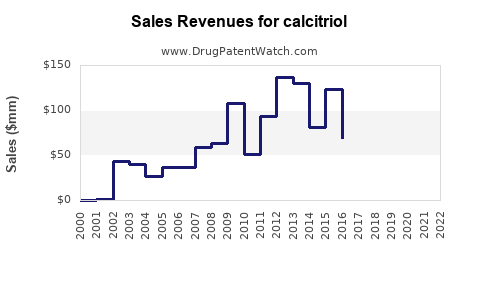
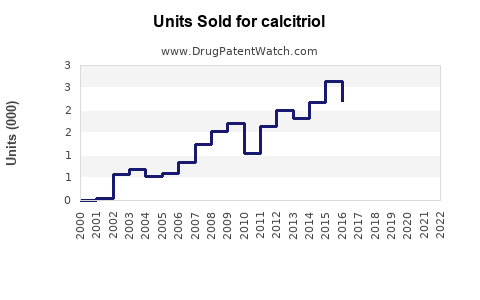
Annual Sales Revenues and Units Sold for calcitriol
| Drug Name | Revenues (USD) | Units | Year |
|---|---|---|---|
| CALCITRIOL | ⤷ Start Trial | ⤷ Start Trial | 2022 |
| CALCITRIOL | ⤷ Start Trial | ⤷ Start Trial | 2021 |
| CALCITRIOL | ⤷ Start Trial | ⤷ Start Trial | 2020 |
| CALCITRIOL | ⤷ Start Trial | ⤷ Start Trial | 2019 |
| CALCITRIOL | ⤷ Start Trial | ⤷ Start Trial | 2018 |
| CALCITRIOL | ⤷ Start Trial | ⤷ Start Trial | 2017 |
| CALCITRIOL | ⤷ Start Trial | ⤷ Start Trial | 2016 |
| >Drug Name | >Revenues (USD) | >Units | >Year |
Calcitriol Market Analysis and Sales Projections
Calcitriol, the active hormonal form of vitamin D, is a critical therapeutic agent used in managing hypocalcemia and secondary hyperparathyroidism in patients with chronic kidney disease (CKD). Its established efficacy and broad patient population drive current market demand. Future growth is contingent on market penetration in emerging economies, potential new indications, and the competitive landscape shaped by generic erosion and novel therapies.
What is the Current Market Landscape for Calcitriol?
The global calcitriol market is characterized by its established presence and a significant installed patient base. Key drivers include the rising prevalence of CKD worldwide, which directly correlates with the demand for calcitriol to manage associated mineral and bone disorders. The drug is available in various formulations, including oral capsules, oral solutions, and injectable solutions, catering to different patient needs and clinical settings.
Market Segmentation:
- By Indication:
- Secondary Hyperparathyroidism (SHPT)
- Hypocalcemia
- Osteoporosis
- Other (e.g., Psoriasis, Rickets)
- By Route of Administration:
- Oral
- Intravenous (IV)
- Topical
- By Distribution Channel:
- Hospital Pharmacies
- Retail Pharmacies
- Online Pharmacies
- By Geography:
- North America
- Europe
- Asia Pacific
- Latin America
- Middle East & Africa
The prevalence of CKD is a primary determinant of calcitriol demand. According to the National Kidney Foundation, over 37 million Americans have CKD, and millions more are at risk. This chronic condition often necessitates long-term management of mineral and bone disorders, where calcitriol plays a central role. The increasing global aging population also contributes to the rising incidence of CKD and related conditions.
Competitive Environment:
The calcitriol market is mature, with several generic manufacturers offering the drug. This has led to price erosion and increased competition, particularly in developed markets. However, branded calcitriol products maintain a market share due to established brand recognition and physician trust.
- Key Branded Products:
- Rocaltrol (Hoffmann-La Roche Ltd.)
- Calcijex (Abbott Laboratories)
- Prominent Generic Manufacturers: Numerous companies worldwide produce generic calcitriol formulations.
The competitive landscape is also influenced by the development of calcitriol analogs and other vitamin D compounds. These may offer improved efficacy or different pharmacological profiles, potentially impacting calcitriol's market share in specific niches.
What are the Sales Projections for Calcitriol?
Global sales projections for calcitriol indicate moderate growth over the next five to seven years. This growth will be driven by an expanding CKD patient population, particularly in emerging economies, and sustained demand in established markets.
Projected Global Market Size (USD Billions):
- 2023: Approximately $X.X billion
- 2025: Projected to reach $Y.Y billion
- 2030: Estimated to grow to $Z.Z billion
Compound Annual Growth Rate (CAGR): The projected CAGR for the calcitriol market is estimated to be between 3.0% and 4.5% from 2024 to 2030. This reflects a balance between mature market saturation, generic competition, and growth opportunities in underpenetrated regions.
Geographic Growth Drivers:
- Asia Pacific: Expected to exhibit the highest growth rate due to increasing CKD incidence, improving healthcare infrastructure, and rising disposable incomes allowing for greater access to treatment. Countries like China, India, and Southeast Asian nations are key contributors.
- Latin America: Steady growth anticipated, driven by expanding healthcare access and a growing understanding of mineral and bone disorder management in CKD patients.
- North America and Europe: While mature markets, these regions will continue to contribute significant revenue. Growth will be more modest, driven by an aging population and the ongoing need for calcitriol in established treatment protocols.
- Middle East & Africa: Potential for growth exists with ongoing healthcare system development and increased awareness of chronic disease management.
Factors Influencing Sales Projections:
- CKD Prevalence: Continued rise in CKD cases globally is the most significant driver.
- Generic Competition: Price pressure from generic calcitriol will limit absolute revenue growth for branded products but will sustain overall volume.
- Reimbursement Policies: Favorable reimbursement policies for CKD treatments, including calcitriol, are crucial for market access and sales.
- Therapeutic Alternatives: Emergence of new therapeutic classes for SHPT or hypocalcemia could present a competitive threat.
- Regulatory Approvals: While calcitriol is an established drug, any new indications or advanced formulations could impact sales.
What are the Key Drivers and Restraints for Calcitriol Market Growth?
Key Drivers:
- Rising Prevalence of Chronic Kidney Disease (CKD): The global increase in CKD incidence, attributed to factors such as diabetes, hypertension, and an aging population, directly fuels the demand for calcitriol to manage associated mineral and bone disorders. The International Society of Nephrology reports that CKD affects an estimated 10% of the global population.
- Increasing Incidence of Secondary Hyperparathyroidism (SHPT): SHPT is a common complication of CKD, and calcitriol is a cornerstone therapy for its management. As CKD progresses, the risk and severity of SHPT escalate, creating a sustained need for calcitriol.
- Growing Geriatric Population: Elderly individuals are more susceptible to chronic diseases, including CKD and osteoporosis, which calcitriol helps manage. The World Health Organization projects that the global population aged 60 and over will reach 2.1 billion by 2050, increasing the target demographic.
- Advancements in Drug Delivery Systems: Development of more convenient and effective calcitriol formulations, such as sustained-release oral capsules or improved injectable forms, can enhance patient compliance and therapeutic outcomes.
- Expanding Healthcare Infrastructure in Emerging Economies: As healthcare systems in developing nations improve, access to diagnostics and treatments for CKD and related conditions, including calcitriol, is increasing. This opens significant market opportunities.
Key Restraints:
- Intense Generic Competition and Price Erosion: The availability of numerous generic calcitriol products has led to significant price reductions, limiting revenue growth for both branded and generic manufacturers and impacting profit margins.
- Development of Novel Therapies: Research into alternative treatments for SHPT and mineral and bone disorders, such as calcimimetics and novel vitamin D analogs with potentially improved safety or efficacy profiles, poses a competitive threat to traditional calcitriol.
- Stringent Regulatory Approval Processes: While calcitriol is an established drug, any new indications or significant formulation changes would require extensive clinical trials and regulatory scrutiny, potentially delaying market entry and increasing development costs.
- Adverse Events and Side Effects: Calcitriol can cause hypercalcemia and hyperphosphatemia if not carefully monitored, leading to potential dose adjustments or discontinuation of treatment. This requires close patient monitoring, which can be a barrier in resource-limited settings.
- Patient Compliance Issues: The need for consistent dosing and regular monitoring for side effects can sometimes lead to poor patient compliance, particularly in chronic disease management.
What are the Opportunities and Threats for Calcitriol in the Coming Years?
Opportunities:
- Market Penetration in Emerging Economies: Significant untapped potential exists in regions like Asia Pacific, Latin America, and Africa, where CKD prevalence is high but access to calcitriol and specialized nephrology care is still developing. Targeted market entry strategies and partnerships can unlock substantial growth.
- Exploration of New Indications: While calcitriol is primarily used for CKD-related conditions, ongoing research may identify new therapeutic applications for its immunomodulatory or anti-inflammatory properties. Areas like autoimmune diseases or certain dermatological conditions could present future opportunities.
- Development of Combination Therapies: Investigating the synergistic effects of calcitriol with other CKD management drugs or novel therapeutic agents could lead to improved treatment paradigms and market differentiation.
- Enhanced Formulations and Delivery Systems: Innovations in drug delivery, such as more patient-friendly oral formulations or targeted delivery systems, can improve therapeutic efficacy, compliance, and physician adoption.
- Personalized Medicine Approaches: Further understanding of genetic predispositions to vitamin D metabolism and response could lead to more personalized calcitriol dosing strategies, optimizing outcomes for individual patients.
Threats:
- Increasing Availability of Biosimil/Generic Alternatives: The ongoing erosion of market exclusivity due to generic competition will continue to suppress pricing and limit revenue potential, especially for branded calcitriol products.
- Emergence of Highly Effective Novel Therapies: The development of new drug classes, such as novel calcimimetics or therapies targeting underlying CKD progression, could displace calcitriol as a first-line treatment option for certain patient subgroups.
- Changes in Reimbursement Policies and Payer Restrictions: Healthcare payers, particularly in developed markets, may implement stricter reimbursement criteria or favor newer, potentially more cost-effective therapies, limiting calcitriol's market access.
- Growing Awareness of Vitamin D Supplementation: While beneficial, an over-reliance on over-the-counter vitamin D supplements without medical supervision could potentially delay diagnosis or proper treatment for conditions requiring prescription-strength calcitriol.
- Adverse Event Profile and Monitoring Requirements: The risk of hypercalcemia and hyperphosphatemia necessitates careful patient monitoring, which can be a burden on healthcare systems and a deterrent for some patients or prescribers.
Key Takeaways
The global calcitriol market is projected for moderate growth, driven by the escalating prevalence of chronic kidney disease and secondary hyperparathyroidism worldwide. Emerging economies, particularly in the Asia Pacific region, present significant expansion opportunities due to improving healthcare infrastructure and a rising CKD patient base. However, intense generic competition and price erosion pose a substantial challenge, limiting revenue growth. The development of novel therapeutic alternatives and potential shifts in reimbursement policies represent key threats. Future success for calcitriol will depend on expanding market penetration in underserved regions, optimizing existing formulations, and potentially exploring new therapeutic indications.
Frequently Asked Questions
-
What is the primary indication for calcitriol in the current market? Calcitriol's primary indication is the management of secondary hyperparathyroidism (SHPT) and hypocalcemia in patients with chronic kidney disease (CKD).
-
Which geographical region is expected to exhibit the highest growth rate for calcitriol sales? The Asia Pacific region is projected to experience the highest growth rate for calcitriol sales due to increasing CKD incidence and developing healthcare infrastructure.
-
What are the main factors contributing to price erosion in the calcitriol market? Intense competition from numerous generic manufacturers is the primary factor driving price erosion in the calcitriol market.
-
Are there any significant novel therapies that could directly compete with calcitriol in its primary indications? Yes, novel calcimimetics and other vitamin D analogs with potentially improved safety or efficacy profiles are being developed and represent a competitive threat to traditional calcitriol.
-
How does the aging global population impact the calcitriol market? The growing geriatric population increases the prevalence of chronic diseases like CKD and osteoporosis, thereby expanding the patient demographic for calcitriol.
Citations
[1] National Kidney Foundation. (n.d.). Kidney Disease Statistics for the U.S. Retrieved from https://www.kidney.org/news/ekidney/fall11/Kidney_Disease_Statistics_for_the_U.S. [2] International Society of Nephrology. (n.d.). Global Kidney Health Atlas. Retrieved from https://www.theisn.org/global-kidney-health-atlas [3] World Health Organization. (n.d.). Ageing and health. Retrieved from https://www.who.int/news-room/fact-sheets/detail/ageing-and-health
More… ↓
