Last updated: February 13, 2026
Amoxicillin remains one of the most widely prescribed antibiotics worldwide. Its broad-spectrum activity, safety profile, and affordability facilitate consistent demand.
Global Market Overview
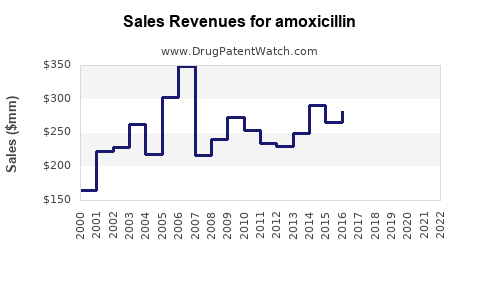
The global market for antibiotics, driven by bacterial infections, was valued at approximately USD 40 billion in 2022. Amoxicillin holds a significant portion of this market due to its widespread use in treating respiratory, urinary, skin, and ear infections. In 2022, the amoxicillin segment was valued north of USD 8 billion, accounting for roughly 20% of the total antibiotics market.
The market growth rate for amoxicillin is approximately 3-5% annually, influenced by increasing antibiotic usage and rising bacterial infection rates, especially in emerging markets. Concerns over antibiotic resistance could impact future demand but are currently mitigated by ongoing stewardship efforts and generic availability.
Market Drivers
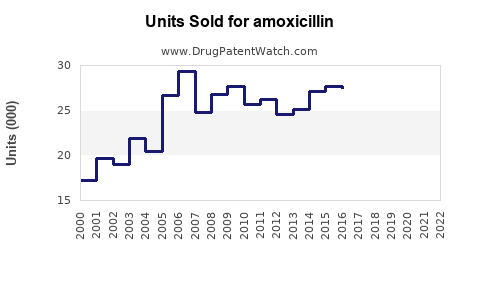
- High prescription volume: Amoxicillin accounts for 40-60% of pediatric antibiotics prescribed globally.
- Affordable cost: Generic formulations dominate, reducing prices and increasing accessibility.
- Expanding indications: Use in combination therapies for H. pylori eradication and prophylaxis of infective endocarditis.
- Rising bacterial infections: Increased prevalence of respiratory and urinary tract infections supports steady demand.
Regional Market Dynamics
| Region |
Market Size (USD Billion, 2022) |
Growth Rate (2022-2027) |
Key Factors |
| North America |
2.5 |
3% |
High prescription rates, antibiotic stewardship programs |
| Europe |
2.2 |
3.5% |
Access to healthcare, antibiotic regulations |
| Asia-Pacific |
2.1 |
5% |
Rising infection rates, population growth, affordable generics |
| Latin America |
0.6 |
4% |
Increased healthcare access, infectious disease prevalence |
Sales Projections (2023-2027)
Estimating based on current market size, growth patterns, and pipeline developments:
| Year |
Estimated Amoxicillin Sales (USD Billion) |
Notes |
| 2023 |
8.0 |
Baseline, maintaining average growth rate of ~4% |
| 2024 |
8.3 |
Steady demand, potential slight increases in new indications |
| 2025 |
8.7 |
Increased use in combination therapies |
| 2026 |
9.1 |
Inventories and stockpile use, new generic entrants |
| 2027 |
9.5 |
Market maturation, slight price declines due to generics |
Factors Influencing Future Sales
- Emerging resistance: Rise in beta-lactamase producing bacteria could diminish efficacy, impacting use.
- Drug development: No significant new formulations or combination pills have been approved recently.
- Policy changes: Antibiotic stewardship initiatives and regulations could restrict overprescription.
- Pipeline: No major pipeline innovations are expected to significantly disrupt the market in the forecast period.
Competitive Landscape
Generic manufacturers dominate, with the top players including Teva, Sandoz, Mylan, and Hikma. Brand-name products are fewer and generally prescribed in specialty settings or for pediatric use.
| Company |
Market Share |
Key Product |
Notes |
| Teva |
30% |
Amoxicillin capsules |
Largest global supplier |
| Sandoz |
25% |
Amoxicillin suspension |
Strong in pediatric dosage |
| Mylan |
15% |
Amoxicillin tablets |
Focus on emerging markets |
| Hikma |
10% |
Amoxicillin formulations |
Growing portfolio |
Pricing pressures and patent expirations enhance generic penetration. Patent protections for fixed-dose combinations and novel formulations are limited.
Risks and Opportunities
Risks:
- Increasing antibiotic resistance diminishes effectiveness.
- Stricter regulation and stewardship initiatives restrict prescribing.
- Market saturation in developed regions.
Opportunities:
- Launch of novel combination therapies targeting resistant strains.
- Expansion into emerging markets.
- Development of formulations with improved pharmacokinetics or reduced resistance potential.
Key Takeaways
- The amoxicillin market is expected to grow steadily at 3-5% annually through 2027, with global sales reaching approximately USD 9.5 billion.
- Generic competition remains dominant, constraining pricing but increasing accessibility.
- Resistance and regulatory pressures pose ongoing challenges.
- The market's growth hinges on bacterial infection prevalence, healthcare access, and stewardship policies.
5 FAQs
1. How does antibiotic resistance impact amoxicillin sales?
Rising resistance reduces efficacy, leading to decreased prescribing unless combined with other agents or reformulated. It may also drive development of new antibiotics.
2. Are new formulations of amoxicillin expected?
No major innovative formulations are currently nearing approval. Market stability relies on generics and existing indications.
3. What regional differences influence sales?
Emerging markets like Asia-Pacific show higher growth due to increasing infections and healthcare access, while developed markets experience slower growth constrained by regulations.
4. How will regulatory policies influence the market?
Implementation of stricter prescribing guidelines and antibiotic stewardship programs can limit sales, although they aim to preserve antibiotic effectiveness.
5. What role do patents play in the market?
Patent expirations for specific formulations or combination products permit entry of generics, boosting volume but suppressing prices.
Sources
- MarketResearch.com, “Global Antibiotics Market Size and Trends,” 2022.
- GlobalData, “Antibiotics Market Analysis,” 2022.
- World Health Organization, “Antimicrobial Resistance Global Report,” 2021.
- IQVIA, “Prescription Drug Market Trends,” 2022.
- U.S. Food and Drug Administration, “Drug Approvals and Patents,” 2023.