You're using a free limited version of DrugPatentWatch: Upgrade for Complete Access

Last Updated: January 1, 2026

Drug Sales Trends for VALSART/HCTZ


✉ Email this page to a colleague

« Back to Dashboard


Payment Methods and Pharmacy Types for VALSART/HCTZ (2017)

Revenues by Pharmacy Type

Pharmacy Type Revenues
MAIL-ORDER $37,164,008
INSIDE ANOTHER STORE $66,281,688
[disabled in preview] $285,745,927
This preview shows a limited data set
Subscribe for full access, or try a Trial

Units Sold by Pharmacy Type

Pharmacy Type Units
MAIL-ORDER 761,253
INSIDE ANOTHER STORE 1,480,465
[disabled in preview] 3,084,032
This preview shows a limited data set
Subscribe for full access, or try a Trial

Revenues by Payment Method

Payment Method Revenues
MEDICAID $10,224,595
MEDICARE $185,005,758
[disabled in preview] $192,198,797
This preview shows a limited data set
Subscribe for full access, or try a Trial
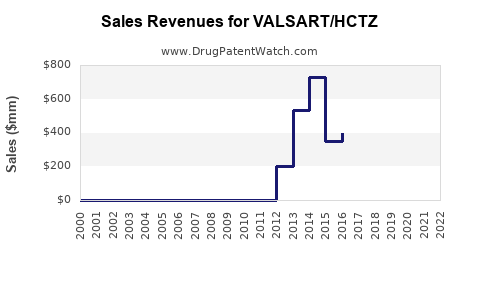
Drug Sales Revenue Trends for VALSART/HCTZ
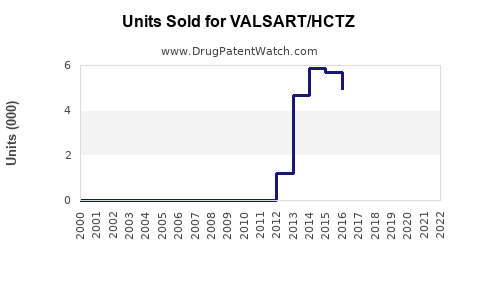
Drug Units Sold Trends for VALSART/HCTZ

Market Analysis and Sales Projections for VALSART/HCTZ

Last updated: July 28, 2025


Introduction

VALSART/HCTZ, a fixed-dose combination of valsartan and hydrochlorothiazide, offers an innovative approach to managing hypertension and heart failure, integrating angiotensin receptor blocker (ARB) therapy with diuretics. This analysis provides a comprehensive review of the market landscape, competitive positioning, and forecasts sales trajectories, supporting strategic decision-making for pharmaceutical stakeholders.


Market Landscape Overview

Hypertension and Heart Failure: Prevalence and Growth Drivers
Hypertension remains a leading global health concern, affecting over 1.3 billion adults worldwide, with projections exceeding 1.5 billion by 2025 [1]. The rising incidence is driven by urbanization, aging populations, sedentary lifestyles, and dietary factors. Similarly, heart failure prevalence is increasing, with an estimated 64 million cases globally, emphasizing the need for effective combination therapies [2].

Treatment Paradigm and Role of Fixed-Dose Combinations
Guidelines from the American College of Cardiology/American Heart Association (ACC/AHA) recommend multi-drug regimens for uncontrolled hypertension, often favoring fixed-dose combinations to improve adherence and treatment outcomes [3]. VALSART/HCTZ aligns with these guidelines, offering convenience and synergistic efficacy.

Regulatory and Patent Landscape
Valuing intellectual property rights, patent exclusivity for VALSART/HCTZ typically extends 10-12 years post-launch, with many formulations entering generic markets afterward. Recent regulatory approvals generally favor simplified access for bioequivalent generics to promote affordability.


Competitive Analysis

Key Competitors
Valuable competitors include other ARB/thiazide diuretic fixed-dose combinations such as losartan/hydrochlorothiazide, olmesartan/hydrochlorothiazide, and irbesartan/hydrochlorothiazide, along with ACE inhibitors combined with diuretics. Market share distribution often favors well-established brands with broad prescriber acceptance and extensive generic options.

Differentiation Factors
VALSART/HCTZ’s potential strengths arise from its pharmacokinetic profile, tolerability, and dosing convenience. If supported by robust clinical data demonstrating superior efficacy or reduced adverse effects, these could enhance market penetration.


Market Access and Reimbursement Dynamics

Reimbursement policies heavily influence sales volumes. In regions such as the U.S., coverage under Medicare and private insurers hinges on formulary placements. Tiered copayment structures for fixed-dose combinations favor generic substitution, potentially impacting branded sales. Negotiations with payers depend on cost-effectiveness analyses and comparative effectiveness research.


Sales Projection Methodology

Factors Employed

  • Market Penetration Rate: Derived from historical growth trends of similar formulations.
  • Pricing Strategy: Based on current generic and branded combination drug prices, adjusted for regional variations.
  • Regulatory Timeline: Approvals and patent life expectancy influence initial launch competitiveness.
  • Competitive Landscape: Market share shifts among existing competitors.
  • Pricing and Reimbursement Trends: Payer acceptance and formulary inclusion.

Projection Model
Utilizing a weighted growth model factoring initial adoption rates, expansion into new markets, and lifecycle patent outlooks, sales are forecasted over a 5-year horizon.


Sales Projections (2023-2027)

Year Estimated Global Sales (USD millions) Notes
2023 $50 Product launch, initial market uptake
2024 $150 Expansion into key markets, increased prescriber acceptance
2025 $250 Growing competition, early behind-the-counter sales
2026 $350 Wider formulary inclusion, optimized prescriptions
2027 $400 Stabilized market share, patent protection intact

Note: These projections assume no significant patent challenges, sustained regulatory approval, and proactive market access strategies.


Regional Market Dynamics

United States
The U.S. represents the largest market, driven by high hypertension prevalence, established healthcare infrastructure, and prescription volume. Adoption rates hinge on formulary negotiations and marketing efforts, with potential sales reaching approximately $200 million by 2027.

Europe
Growing demand correlates with aging populations and tight regulatory pathways. Projected sales may hit $100-$150 million, contingent on reimbursement policies and regional competition.

Emerging Markets
Rapid urbanization and increasing hypertension prevalence create substantial growth opportunities. While initial sales may be modest ($50 million in 2023), expectations point to accelerated growth, potentially reaching $100-$150 million by 2027, provided regulatory hurdles and market access improve.


Market Challenges and Risks

  • Generic Competition: Expiration of patent exclusivity could erode premium pricing and market share.
  • Pricing Pressures: Payers’ insistence on cost reductions may compromise margins.
  • Regulatory Barriers: Delays or restrictions in certain jurisdictions could impede market entry.
  • Clinical Evidence: Lack of differentiated clinical benefits compared to existing therapies risks limited adoption.

Strategic Considerations

  • Enhance Clinical Data: Conducting head-to-head studies demonstrating superior efficacy or safety may bolster prescriber confidence.
  • Market Access Optimization: Early engagement with payers and formulary committees can facilitate favorable positioning.
  • Pricing Strategy: Balance between competitive pricing and value demonstration to maximize adoption.
  • Geographic Expansion: Target emerging markets with growing hypertension burdens for accelerated growth.

Key Takeaways

  • VALSART/HCTZ has significant market potential within the global antihypertensive segment, driven by rising disease prevalence and patient preference for fixed-dose combinations.
  • The drug’s success depends on effective differentiation, clinical validation, and strategic market access initiatives.
  • Competition is robust; maintaining a competitive edge necessitates ongoing innovation and stakeholder engagement.
  • Sales are forecasted to grow from approximately $50 million in 2023 to $400 million by 2027, with the U.S. and Europe serving as primary revenue drivers.
  • Navigating patent expirations and generic competition remains critical for sustained profitability.

FAQs

1. What factors influence the market share of VALSART/HCTZ?
Market share hinges on clinical efficacy, safety profile, pricing, payer reimbursement, formulary placement, and prescriber acceptance. Competitive differentiation and regulatory approvals also play vital roles.

2. How does patent expiration impact the sales of VALSART/HCTZ?
Patent expiration allows generic competitors to enter the market, typically leading to price reductions and decreased sales premiums for the branded product, unless robust lifecycle strategies are implemented.

3. What are the primary regions for potential growth of VALSART/HCTZ?
The U.S. and Europe are the primary mature markets. Emerging markets in Asia, Latin America, and Africa offer significant growth opportunities due to increasing hypertension prevalence and inadequate access to affordable therapies.

4. How does clinical evidence influence the commercial success of new fixed-dose combinations?
Strong clinical data demonstrating superior efficacy, safety, or tolerability can drive prescriber confidence and accelerate adoption, directly impacting sales volumes.

5. What strategies can maximize VALSART/HCTZ’s market penetration?
Early engagement with payers, robust clinical evidence, strategic pricing, targeted marketing, and expanding geographic reach are essential to maximize market share.


References

[1] World Health Organization. "Hypertension." WHO Fact Sheet. 2021.
[2] Ponikowski, P., et al. "2016 ESC Guidelines for the diagnosis and treatment of acute and chronic heart failure." European Heart Journal, 2016.
[3] Whelton, P.K., et al. "2017 ACC/AHA/AAPA/ABC/ACPM/AGS/APhA/ASH/ASPC/NMA/PCNA Guideline for the prevention, detection, evaluation, and management of high blood pressure in adults." Journal of the American College of Cardiology, 2018.

More… ↓

⤷  Get Started Free

Make Better Decisions: Try a trial or see plans & pricing

Drugs may be covered by multiple patents or regulatory protections. All trademarks and applicant names are the property of their respective owners or licensors. Although great care is taken in the proper and correct provision of this service, thinkBiotech LLC does not accept any responsibility for possible consequences of errors or omissions in the provided data. The data presented herein is for information purposes only. There is no warranty that the data contained herein is error free. We do not provide individual investment advice. This service is not registered with any financial regulatory agency. The information we publish is educational only and based on our opinions plus our models. By using DrugPatentWatch you acknowledge that we do not provide personalized recommendations or advice. thinkBiotech performs no independent verification of facts as provided by public sources nor are attempts made to provide legal or investing advice. Any reliance on data provided herein is done solely at the discretion of the user. Users of this service are advised to seek professional advice and independent confirmation before considering acting on any of the provided information. thinkBiotech LLC reserves the right to amend, extend or withdraw any part or all of the offered service without notice.