Share This Page
Drug Sales Trends for PROZAC
✉ Email this page to a colleague
Payment Methods and Pharmacy Types for PROZAC (2017)
Revenues by Pharmacy Type
Units Sold by Pharmacy Type
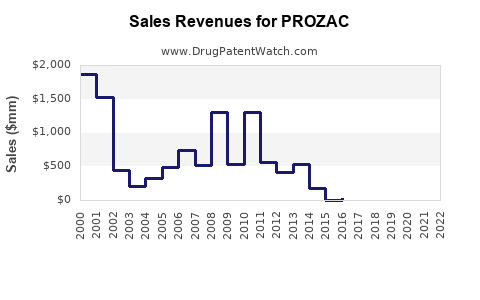
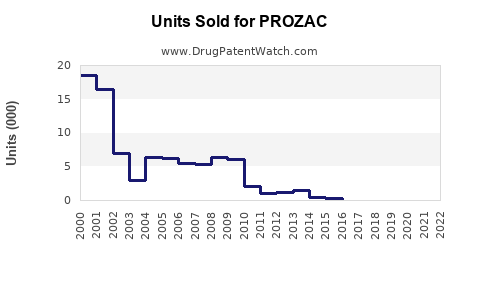
Annual Sales Revenues and Units Sold for PROZAC
| Drug Name | Revenues (USD) | Units | Year |
|---|---|---|---|
| PROZAC | ⤷ Start Trial | ⤷ Start Trial | 2022 |
| PROZAC | ⤷ Start Trial | ⤷ Start Trial | 2021 |
| PROZAC | ⤷ Start Trial | ⤷ Start Trial | 2020 |
| PROZAC | ⤷ Start Trial | ⤷ Start Trial | 2019 |
| PROZAC | ⤷ Start Trial | ⤷ Start Trial | 2018 |
| PROZAC | ⤷ Start Trial | ⤷ Start Trial | 2017 |
| >Drug Name | >Revenues (USD) | >Units | >Year |
Prozac (Fluoxetine) Market Analysis, Sales Projections, Patent Status, and Generic Competition
Prozac is a mature, off-patent selective serotonin reuptake inhibitor (SSRI) with limited branded revenue and substantial generic volume. Eli Lilly’s commercial opportunity is concentrated in generic fluoxetine supply, authorized generic arrangements, combination products, and any differentiated formulations rather than the original Prozac capsule. The base-case global market for fluoxetine is expected to remain broadly stable in volume but decline modestly in value as generic prices erode. A reasonable 2025-2029 global fluoxetine market estimate is approximately $250 million to $400 million annually, with branded Prozac representing a small minority of sales.
What is Prozac and how large is the fluoxetine market?
Prozac is the original brand of fluoxetine hydrochloride, an SSRI developed and commercialized by Eli Lilly. The U.S. Food and Drug Administration approved Prozac for major depressive disorder in 1987. Fluoxetine is also approved in the United States for obsessive-compulsive disorder, bulimia nervosa, panic disorder, and premenstrual dysphoric disorder under the Sarafem brand and labeling history [1].
The commercial market now consists primarily of generic fluoxetine capsules, tablets, and oral solutions. Prozac remains clinically recognized, but prescribing decisions are driven mainly by generic availability, price, formulary status, and physician familiarity.
Estimated market structure
| Segment | Estimated 2025 share of fluoxetine units | Estimated 2025 share of market value | Commercial outlook |
|---|---|---|---|
| Generic fluoxetine capsules and tablets | 85%-95% | 65%-85% | Stable volume; continuing price pressure |
| Generic oral solution | 2%-5% | 5%-10% | Smaller but higher-value niche |
| Branded Prozac | Less than 5% | 5%-15% | Limited, declining, or flat |
| Sarafem and other branded niche products | Less than 1% | Less than 5% | Minimal commercial impact |
| Hospital, institutional, and international channels | Variable | 10%-20% | Dependent on tendering and local reimbursement |
These figures are analytical estimates rather than reported company revenue totals. Public companies generally do not disclose current Prozac sales separately after the product became a mature generic medicine.
What were Prozac’s historical sales and peak revenue?
Prozac was one of the largest pharmaceutical products in the world during the 1990s. Eli Lilly reported annual Prozac sales of approximately $2.6 billion around the product’s commercial peak, before major generic entry in the United States [2].
The product’s commercial decline was driven by patent expiry and generic substitution rather than a rapid loss of clinical demand. Fluoxetine remained widely used after generic entry because it had a long clinical history, broad indications, low cost, and a comparatively long half-life.
| Period | Commercial event | Market effect |
|---|---|---|
| 1987 | FDA approval of Prozac | Launch of a new SSRI franchise |
| Early to mid-1990s | Expansion of depression and anxiety treatment | Rapid prescription and revenue growth |
| Late 1990s | Peak brand commercialization | Annual sales reached approximately $2.6 billion |
| 2001 | U.S. patent expiry and generic entry | Rapid erosion of branded revenue |
| 2000s onward | Broad generic substitution | Volume persisted; value shifted to generic manufacturers |
| 2010s-2020s | Mature generic market | Low-cost, stable-demand product |
Lilly’s historical filings document Prozac as a major contributor to revenue before generic competition. Current Lilly filings do not treat Prozac as a material standalone growth product [2, 3].
When did Prozac lose exclusivity?
Prozac lost effective U.S. market exclusivity in 2001 after expiration of key patents and the launch of generic fluoxetine. The product is no longer protected by meaningful market exclusivity in the United States.
Patent and regulatory timeline
| Protection category | Status |
|---|---|
| Original active-ingredient protection | Expired |
| Original U.S. compound patent | Expired before or around generic entry |
| FDA regulatory exclusivity | Expired |
| Pediatric exclusivity | Expired |
| Orange Book protection for core Prozac product | No meaningful commercial barrier |
| Generic substitution | Permitted and widespread |
| Biosimilar pathway | Not applicable |
The exact patent history includes compound, formulation, and use-related rights associated with fluoxetine and Prozac. Those rights have expired or have ceased to create a practical barrier to generic competition. Current commercial protection depends on manufacturing economics, supply reliability, regulatory compliance, and local market access rather than originator exclusivity.
What is the Orange Book status of Prozac?
Prozac’s core dosage forms do not have active market exclusivity that would prevent generic fluoxetine approval. The FDA Orange Book has historically listed Prozac and related fluoxetine products alongside approved generic equivalents [4].
Relevant dosage forms include:
- 10 mg, 20 mg, and 40 mg capsules
- 90 mg delayed-release weekly capsules
- Oral solution
- Generic immediate-release fluoxetine products
- Weekly fluoxetine products, where approved and commercially available
The weekly 90 mg formulation has different formulation and dosing characteristics from daily fluoxetine. It may create a narrower commercial niche, but it does not restore the original Prozac franchise economics.
What formulations are protected by Prozac-related patents?
The original Prozac formulation portfolio included daily capsules, oral solution, and weekly delayed-release capsules. Core formulation patents have expired. Current formulation opportunities are therefore limited to new delivery systems, combination products, patient-convenience designs, or specific populations.
Formulation opportunities
| Formulation | Commercial position | IP opportunity |
|---|---|---|
| Immediate-release capsule | Highly commoditized | Low |
| Oral solution | Smaller market; useful for titration and swallowing difficulty | Moderate if delivery or stability is differentiated |
| Weekly delayed-release capsule | Niche product | Potentially moderate for new release systems |
| Pediatric liquid formulation | Limited but clinically relevant | Possible formulation and device protection |
| Fixed-dose combination | Product-specific opportunity | Moderate to high if clinically differentiated |
| Digital or adherence-linked delivery | Emerging commercial concept | Patentability depends on technical implementation |
A new fluoxetine formulation would need a clear clinical, adherence, tolerability, or administration advantage. A reformulation relying only on a different capsule presentation would face weak pricing power and rapid generic substitution.
What method-of-use patents protect fluoxetine?
Broad method-of-use protection for established fluoxetine indications has expired. The core indications include:
- Major depressive disorder
- Obsessive-compulsive disorder
- Bulimia nervosa
- Panic disorder
- Premenstrual dysphoric disorder
A new method-of-use patent could potentially cover a specific patient population, dosing schedule, biomarker-defined subgroup, adjunctive use, or treatment-resistant condition. Such protection would need to satisfy novelty, non-obviousness, written-description, enablement, and patent-eligibility requirements.
The commercial value of a new method-of-use patent would depend on whether physicians can identify the protected population and whether payers or pharmacies can enforce indication-specific prescribing restrictions. Broad label-based enforcement would be difficult in a generic market.
Which companies compete with Prozac and generic fluoxetine?
Competition is strongest from other SSRIs and from low-cost generic antidepressants.
Direct and therapeutic competitors
| Product | Active ingredient | Key competitor type |
|---|---|---|
| Generic fluoxetine | Fluoxetine | Direct generic substitute |
| Zoloft and generic sertraline | Sertraline | Broad SSRI competitor |
| Lexapro and generic escitalopram | Escitalopram | Major branded-to-generic competitor |
| Celexa and generic citalopram | Citalopram | Established SSRI competitor |
| Paxil and generic paroxetine | Paroxetine | SSRI competitor |
| Wellbutrin and generic bupropion | Bupropion | Non-SSRI antidepressant |
| Effexor and generic venlafaxine | Venlafaxine | SNRI competitor |
| Cymbalta and generic duloxetine | Duloxetine | SNRI and pain-related competitor |
Generic manufacturers may include Teva, Viatris, Sandoz, Lupin, Sun Pharma, Hikma, Amneal, Zydus, Dr. Reddy’s, and other region-specific suppliers. The competitive field varies by dosage form and country.
Fluoxetine retains several clinical advantages: long half-life, extensive physician experience, generic affordability, and broad approved indications. Its disadvantages include delayed therapeutic onset, potential activation or insomnia, drug-interaction concerns, and less favorable fit for some patients compared with newer SSRIs.
How strong is the Prozac patent estate?
The current Prozac patent estate is commercially weak because the fundamental compound and core product protections have expired.
| Patent estate factor | Assessment |
|---|---|
| Compound patent | Expired |
| Core formulation patents | Expired |
| Broad method-of-use patents | Expired |
| Generic entry barrier | Very low |
| Manufacturing complexity | Low to moderate |
| Regulatory barrier | Low for approved generic pathways |
| Brand recognition | Still high |
| Pricing power | Low |
| Litigation leverage | Low |
Manufacturing remains an operational barrier rather than a durable intellectual-property barrier. Suppliers must maintain FDA-compliant facilities, demonstrate bioequivalence, manage controlled quality systems, and secure active pharmaceutical ingredient supply. These requirements can cause temporary shortages or supplier exits but do not protect the originator from generic competition.
Are there Paragraph IV challenges or Prozac patent lawsuits?
Paragraph IV litigation against the original Prozac patents is no longer a meaningful current risk because the principal patent barriers expired years ago. Generic fluoxetine entry occurred after abbreviated new drug applications and patent certifications associated with the historical Prozac franchise.
Current disputes are more likely to involve:
- Generic quality or manufacturing compliance
- Product liability
- Supply and contract disputes
- Labeling and pharmacovigilance
- Pricing or distribution practices
- Patent disputes over new formulations or combination products
No active, commercially material Paragraph IV barrier is expected to delay ordinary generic fluoxetine entry in the United States. The absence of a live core patent estate also reduces the likelihood of a significant originator-generic settlement affecting market timing.
What is the FDA regulatory status of Prozac?
Prozac is FDA approved, and fluoxetine generics are approved through the abbreviated new drug application pathway. Generic manufacturers generally demonstrate pharmaceutical equivalence and bioequivalence rather than repeat the full clinical development program required for the original brand [1, 4].
Key regulatory characteristics include:
- Small-molecule drug
- Prescription medicine
- No biosimilar pathway
- Multiple approved generic manufacturers
- Established safety and efficacy record
- Mature labeling and post-market surveillance requirements
Biosimilar risk is not relevant because fluoxetine is a chemically synthesized small molecule, not a biologic. The principal substitution risk is generic competition.
What are Prozac sales projections for 2025 through 2029?
Because Prozac is no longer disclosed as a major standalone branded product, projections should focus on the total fluoxetine market and separate branded revenue from generic revenue.
Base-case global fluoxetine market projection
| Year | Estimated global market value | Estimated unit-volume growth | Main assumption |
|---|---|---|---|
| 2025 | $300 million | 1.0% | Mature demand and stable generic access |
| 2026 | $295 million | 1.0% | Price erosion offsets volume growth |
| 2027 | $292 million | 1.2% | Continued generic substitution |
| 2028 | $290 million | 1.2% | Stable use in established indications |
| 2029 | $288 million | 1.3% | Modest volume growth, lower prices |
The projection assumes a global market including generic fluoxetine, branded Prozac, oral solution, weekly products, institutional supply, and selected international markets. It excludes the broader antidepressant market.
Scenario analysis
| Scenario | 2029 market value | CAGR from 2025 | Key drivers |
|---|---|---|---|
| Low case | $220 million | -7.5% | Faster price erosion, fewer suppliers, substitution by newer SSRIs |
| Base case | $288 million | -1.0% | Stable volume and gradual generic price decline |
| High case | $410 million | 8.1% | Increased diagnosis and treatment, supply constraints, higher international demand |
The high case is less likely without a new formulation, regulatory change, or supply disruption. The base case is more consistent with a mature generic medicine whose demand remains clinically durable but whose price declines over time.
What is the revenue exposure for Eli Lilly?
Prozac is unlikely to represent material current revenue exposure for Eli Lilly relative to its diabetes, obesity, oncology, immunology, and neuroscience portfolios. The product’s historical revenue importance was substantial, but generic entry removed most of the brand’s economic value.
Commercial exposure can be divided into three categories:
- Direct branded Prozac sales: limited.
- Legacy intellectual-property or licensing income: limited and not a central Lilly growth driver.
- Strategic value: brand recognition, historical clinical data, and potential platform value for reformulation or combination research.
A new branded fluoxetine product would face a difficult return-on-investment profile unless it addressed a large unmet need or secured premium reimbursement.
What generic launch scenarios exist for fluoxetine?
Generic competition is already established. Future launch scenarios concern new suppliers, new dosage forms, and reformulated products rather than first entry.
Likely market scenarios
Additional standard capsule entrants. These launches would increase price pressure but produce limited market expansion.
Supply-constrained pricing. If manufacturers exit because of low margins, remaining suppliers may obtain temporary pricing improvement. This would be operational and reversible.
Oral-solution expansion. A supplier with reliable pediatric, geriatric, or swallowing-difficulty positioning could gain share in a smaller niche.
Weekly formulation relaunch. A successful weekly product could compete on adherence, but clinical adoption and payer coverage would determine uptake.
Combination or adjunctive product. This could create a more defensible market if supported by clinical evidence and patent protection.
What licensing deals affect Prozac?
No current licensing transaction is likely to materially alter the global Prozac market. The franchise was developed and commercialized by Eli Lilly, while current fluoxetine supply is largely controlled by generic manufacturers and distributors.
Potential licensing value would arise from:
- A novel long-acting formulation
- A pediatric delivery system
- A fixed-dose combination
- A digital adherence platform tied to treatment
- A region-specific commercialization agreement
- A new use supported by clinical evidence
Without differentiated technology, licensing economics are weak because generic fluoxetine is widely available and price competition is intense.
How does Prozac compare with sertraline and escitalopram?
| Factor | Fluoxetine | Sertraline | Escitalopram |
|---|---|---|---|
| Market maturity | Very mature | Very mature | Mature |
| Generic availability | Extensive | Extensive | Extensive |
| Half-life | Long | Intermediate | Shorter |
| Dosing flexibility | Daily and selected weekly products | Daily | Daily |
| Brand pricing power | Minimal | Minimal | Minimal |
| Clinical familiarity | Very high | Very high | High |
| Differentiated commercial opportunity | Low | Low to moderate | Low to moderate |
| Main business risk | Price erosion | Price erosion | Price erosion |
Fluoxetine’s long half-life differentiates it pharmacologically, but that feature has not created durable pricing power. Sertraline and escitalopram generally present stronger commercial competition because of broad use, extensive generic supply, and physician familiarity.
Key Takeaways
- Prozac is an FDA-approved fluoxetine brand with a mature clinical position and minimal current branded revenue.
- U.S. exclusivity ended in 2001, and generic fluoxetine dominates the market.
- The core Prozac patent estate is expired and does not create a meaningful generic-entry barrier.
- Biosimilar risk does not apply because fluoxetine is a small-molecule drug.
- The estimated 2025 global fluoxetine market is approximately $300 million, with a base-case decline to about $288 million by 2029.
- Generic supply, manufacturing quality, and price competition matter more than patent litigation.
- New commercial value would require a differentiated formulation, combination product, delivery system, or validated method of use.
- Eli Lilly’s current revenue exposure to Prozac is likely immaterial relative to its newer growth franchises.
FAQs
Is Prozac still profitable for Eli Lilly?
Prozac is unlikely to be a material standalone profit driver for Eli Lilly because generic competition removed most originator pricing power after 2001.
Does Prozac still have patent protection?
The original compound, core formulations, and broad clinical uses are no longer protected by commercially meaningful U.S. patents.
Can a generic company launch fluoxetine without clinical trials?
Generally, yes. Generic manufacturers can pursue FDA approval through an abbreviated new drug application by demonstrating pharmaceutical equivalence and bioequivalence.
Is weekly Prozac commercially differentiated?
Weekly fluoxetine offers a dosing-convenience distinction, but its market remains niche because daily generic fluoxetine is inexpensive and widely available.
What is the main investment risk in the fluoxetine market?
The main risk is continuing generic price erosion, followed by supplier consolidation, therapeutic substitution, and limited opportunities to create premium-priced reformulations.
References
- U.S. Food and Drug Administration. (2024). Prozac (fluoxetine hydrochloride) prescribing information. FDA.
- Eli Lilly and Company. (2001). Annual report. Eli Lilly and Company.
- Eli Lilly and Company. (2024). Form 10-K annual report. U.S. Securities and Exchange Commission.
- U.S. Food and Drug Administration. (2024). Approved drug products with therapeutic equivalence evaluations: Orange Book. FDA.
- U.S. Food and Drug Administration. (2024). Drugs@FDA: FDA-approved drugs database. FDA.
More… ↓
