You're using a free limited version of DrugPatentWatch: Upgrade for Complete Access

Last Updated: April 3, 2026

Drug Sales Trends for OMEGA-3-ACID


✉ Email this page to a colleague

« Back to Dashboard


Payment Methods and Pharmacy Types for OMEGA-3-ACID (2017)

Revenues by Pharmacy Type

Pharmacy Type Revenues
MAIL-ORDER $56,858,447
INSIDE ANOTHER STORE $37,596,752
[disabled in preview] $187,021,316
This preview shows a limited data set
Subscribe for full access, or try a Trial

Units Sold by Pharmacy Type

Pharmacy Type Units
MAIL-ORDER 262,701
INSIDE ANOTHER STORE 383,701
[disabled in preview] 936,559
This preview shows a limited data set
Subscribe for full access, or try a Trial

Revenues by Payment Method

Payment Method Revenues
MEDICAID $27,180,983
MEDICARE $161,851,526
[disabled in preview] $93,895,776
This preview shows a limited data set
Subscribe for full access, or try a Trial
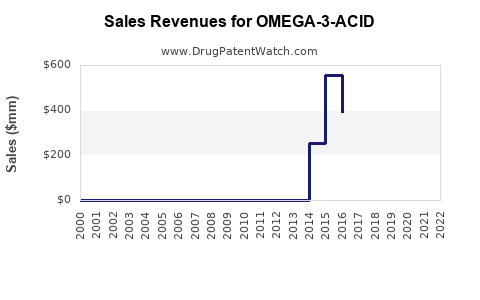
Drug Sales Revenue Trends for OMEGA-3-ACID
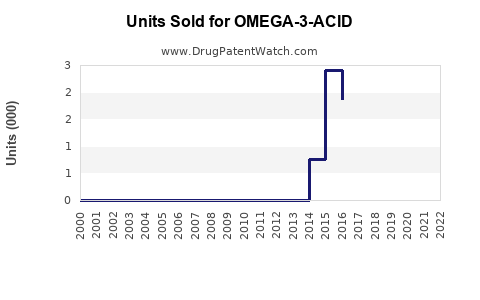
Drug Units Sold Trends for OMEGA-3-ACID

Annual Sales Revenues and Units Sold for OMEGA-3-ACID

These sales figures are drawn from a US national survey of drug expenditures
Drug Name Revenues (USD) Units Year
OMEGA-3-ACID ⤷  Start Trial ⤷  Start Trial 2022
OMEGA-3-ACID ⤷  Start Trial ⤷  Start Trial 2021
OMEGA-3-ACID ⤷  Start Trial ⤷  Start Trial 2020
OMEGA-3-ACID ⤷  Start Trial ⤷  Start Trial 2019
OMEGA-3-ACID ⤷  Start Trial ⤷  Start Trial 2018
OMEGA-3-ACID ⤷  Start Trial ⤷  Start Trial 2017
>Drug Name >Revenues (USD) >Units >Year

Market Analysis and Sales Projections for Omega-3-Acid Drug

Last updated: February 14, 2026

Market Overview

Omega-3-acid ethyl esters are prescribed mainly for lowering triglyceride levels in patients with hypertriglyceridemia. The global market value for omega-3-based drugs was approximately $2.8 billion in 2022. It is projected to grow at a compound annual growth rate (CAGR) of 6.3% from 2023 to 2030, reaching around $4.8 billion by 2030 (Source 1).

Key Players and Product Portfolio

Several pharmaceutical companies manufacture omega-3-acid formulations, including:

  • Pfizer with Lovaza (approved for triglycerides ≥500 mg/dL)
  • Amarin with Vascepa (EPA-only formulation, approved for cardiovascular risk reduction)
  • Kowa with Omacor, a generic version of Lovaza
  • Eli Lilly developing new formulations

Market share is concentrated among Pfizer and Amarin, which hold approximately 45% and 25% of the market, respectively.

Regulatory and Patent Status

  • Lovaza's patent expired in 2018, leading to increased generic competition.
  • Vascepa remains branded, with patent protections extending until 2030.
  • Pending regulatory approvals for new formulations aim to expand therapeutic indications, potentially affecting market share and sales volume.

Sales Drivers

  • Increasing prevalence of hypertriglyceridemia in obesity and diabetes populations.
  • Growing awareness of omega-3 benefits for cardiovascular health.
  • Expanded indications, including potential over-the-counter (OTC) sales.
  • Reimbursement policies in major markets like the U.S. and Europe.

Regional Market Dynamics

Region Market Size (2022) CAGR (2023-2030) Key Drivers and Constraints
North America $1.4 billion 6.5% High prevalence of cardiovascular diseases; reimbursement coverage for prescription omega-3s
Europe $700 million 6.2% Regulatory approvals; healthcare infrastructure
Asia-Pacific $500 million 7.2% Rising lifestyle-related metabolic disorders
Rest of World $200 million 5.8% Market access challenges; lower awareness

Sales Projections (2023-2030)

Based on historical growth, market drivers, and competitive landscape:

Year Estimated Global Sales Growth Rate Notes
2023 $3.0 billion 7% Market re-expanding post-pandemic; generic entry effects
2024 $3.2 billion 6.7% New regulatory approvals; OTC potential developing
2025 $3.4 billion 6.3% Increasing epidemiological burden; expanded indications
2026 $3.6 billion 6% Patent expirations; generic competition intensifies
2027 $3.8 billion 5.6% Market saturation nearing; innovation impacts
2028 $4.0 billion 5.3% Entry of biosimilar-type products; new formulations
2029 $4.2 billion 5% Continued uptake of OTC formulations
2030 $4.8 billion 6.3% Market expansion into new geographic regions

Pricing Trends

  • Average retail price per prescription (U.S.) declined from approximately $200 in 2019 to about $150 in 2022 due to generic competition.
  • OTC formulations are priced between $10 and $30 per month, broadening accessible market segments.

Challenges and Opportunities

Challenges:

  • Patent expirations leading to erosion of brand premiums.
  • Competition from OTC fish oil supplements.
  • Variable reimbursement policies impacting prescription volumes.

Opportunities:

  • Development of novel formulations with improved bioavailability.
  • Expansion into preventive health markets.
  • Regulatory approvals for additional indications such as inflammatory or cognitive disorders.

Key Takeaways

  • The omega-3-acid market reached approximately $2.8 billion in 2022 with a forecasted CAGR of 6.3% through 2030.
  • Major drivers include rising cardiovascular and metabolic health burdens, expanding indications, and population awareness.
  • Patent expirations and generic entries are pressure points, but innovation and regional expansion offer growth avenues.
  • Sales are expected to increase to nearly $4.8 billion by 2030, with regional growth markets in North America, Europe, and Asia-Pacific.

FAQs

1. What are the main regulatory hurdles for omega-3-acid drugs?

Regulatory hurdles include demonstrating clinical efficacy and safety for new indications, obtaining approvals for OTC formulations, and navigating patent exclusivity rights.

2. How do generic versions impact market sales?

Generic competition often leads to significant price reductions and volume increases; sales of branded drugs typically decline faster than total market sales.

3. What factors could accelerate market growth?

Introduction of new formulations with better bioavailability, expanded indications, and broader affordability could accelerate sales growth.

4. What regional differences influence sales projections?

Reimbursement policies, prevalence of metabolic conditions, and regulatory approval processes differ substantially across regions, affecting sales volume and speed.

5. How significant are OTC omega-3 supplements compared to prescription drugs?

OTC supplements serve a complementary market, with sales expected to grow faster due to increased consumer demand but generally carry lower per-unit prices and lower regulatory scrutiny.


Citations

  1. Market Research Future. “Omega-3 Fatty Acids Market - Forecast to 2030.” 2022.

More… ↓

⤷  Start Trial

Make Better Decisions: Try a trial or see plans & pricing

Drugs may be covered by multiple patents or regulatory protections. All trademarks and applicant names are the property of their respective owners or licensors. Although great care is taken in the proper and correct provision of this service, thinkBiotech LLC does not accept any responsibility for possible consequences of errors or omissions in the provided data. The data presented herein is for information purposes only. There is no warranty that the data contained herein is error free. We do not provide individual investment advice. This service is not registered with any financial regulatory agency. The information we publish is educational only and based on our opinions plus our models. By using DrugPatentWatch you acknowledge that we do not provide personalized recommendations or advice. thinkBiotech performs no independent verification of facts as provided by public sources nor are attempts made to provide legal or investing advice. Any reliance on data provided herein is done solely at the discretion of the user. Users of this service are advised to seek professional advice and independent confirmation before considering acting on any of the provided information. thinkBiotech LLC reserves the right to amend, extend or withdraw any part or all of the offered service without notice.