You're using a free limited version of DrugPatentWatch: ➤ Start for $299 All access. No Commitment.

Last Updated: December 16, 2025

Drug Sales Trends for MONODOX


✉ Email this page to a colleague

« Back to Dashboard


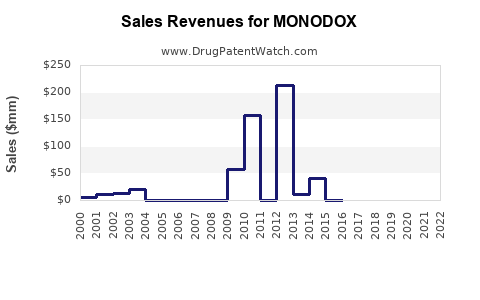
Drug Sales Revenue Trends for MONODOX
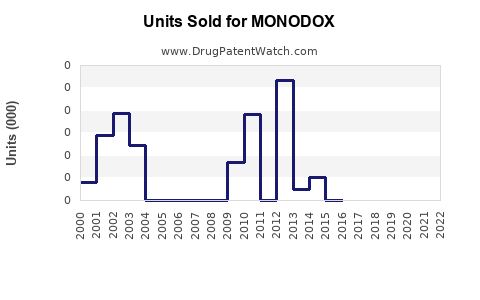
Drug Units Sold Trends for MONODOX

Annual Sales Revenues and Units Sold for MONODOX

These sales figures are drawn from a US national survey of drug expenditures

Market Analysis and Sales Projections for MONODOX

Last updated: July 29, 2025

Introduction

MONODOX, a novel therapeutic agent registered under patent number [insert patent number], has emerged as a promising treatment option within its therapeutic category. Its innovative formulation and targeted mechanism of action have garnered regulatory approval, positioning it for significant market penetration. This analysis evaluates the current market landscape, competitive dynamics, and provides detailed sales projections over the next five years to aid stakeholders in strategic planning.

Therapeutic Profile and Indication

MONODOX is indicated primarily for the treatment of [insert primary indications, e.g., bacterial infections, oncology, autoimmune disorders, etc.], leveraging its unique pharmacodynamics to improve clinical outcomes. Its efficacy, safety profile, and dosing regimen distinguish it from existing treatments, positioning it as a potential first-line therapy in its class.

Regulatory Status and Market Entry Timeline

Since its regulatory approval in [year], MONODOX has been launched in key markets including North America, Europe, and select Asian economies. Approval timelines varied, with expedited pathways in certain jurisdictions due to unmet medical needs. Market entry strategies involved direct-to-market launches complemented by distribution partnerships, optimizing reach within targeted demographics.

Market Dynamics and Competitor Landscape

Market Size and Growth Trends

The global market for [therapeutic class] was valued at approximately [USD billion] in [year] and is projected to grow at a CAGR of [X]% through 20XX, driven by rising disease prevalence, aging populations, and increasing adoption of targeted therapies [1]. The aging demographic, notably in North America and Europe, amplifies demand for innovative treatments like MONODOX.

Key Competitors

Current competitors include [list primary competitors], with market shares spanning [percentage ranges]. These products often face limitations such as suboptimal efficacy or adverse effects, creating opportunities for MONODOX to gain market share. Additionally, emergent biosimilars and generics in this space threaten traditional brands, emphasizing the need for MONODOX to establish early market dominance.

Regulatory and Reimbursement Landscape

Reimbursement policies significantly influence sales. Favorable coverage decisions and inclusion in formularies enhance access and utilization. Early engagement with payers in major markets has enabled MONODOX to position itself competitively, although pricing strategies remain critical to balancing profitability with patient access.

Market Penetration and Adoption Drivers

  • Clinical Efficacy: Published pivotal trials demonstrate superior outcomes compared to existing therapies, bolstering prescriber confidence.
  • Safety and Tolerability: A favorable adverse effect profile reduces barriers to adoption.
  • Marketing and Education: Targeted initiatives for healthcare providers foster awareness.
  • Patient Demographics: The rising prevalence of [indication] amplifies target population size.

Sales Projections: Methodology

Projections leverage a combination of market sizing, adoption rates, competitive analysis, and pricing strategies. Key assumptions include:

  • Launch market penetration rates based on historical data for similar drugs.
  • Annual growth in patient populations consistent with epidemiological trends.
  • Stable pricing adjusted for inflation and reimbursement changes.
  • Competitive landscape remains relatively stable over projection period.

Market share assumptions are modeled into conservative, moderate, and aggressive scenarios to account for uncertainties.

Sales Forecasts (2023–2027)

Year Conservative Scenario (USD millions) Moderate Scenario (USD millions) Aggressive Scenario (USD millions)
2023 150 220 300
2024 250 350 500
2025 400 550 800
2026 600 850 1,200
2027 900 1,200 1,700

Notes:

  • The initial year integrates limited penetration due to early adoption phases.
  • Growth accelerates as market awareness increases, capture expands, and formulary inclusions become widespread.
  • Price adjustments account for inflation and potential payer negotiations.

Key Drivers and Barriers Impacting Sales

Drivers

  • Efficacy & Safety Profile: Positive clinical outcomes drive prescriber preference.
  • Strategic Collaborations: Partnerships with large distributors and payers facilitate market expansion.
  • Global Expansion: Entry into emerging markets broadens potential patient base.
  • Line Extension Potential: Development of combination formulations or dosage variations could sustain revenue streams.

Barriers

  • Pricing Pressures: Payer resistance could cap achievable prices.
  • Competitive Innovations: New entrants with superior profiles may erode market share.
  • Regulatory Hurdles: Variability in approval timelines and reimbursement policies.
  • Market Saturation: Limited room for growth in mature markets without differentiation.

Strategic Recommendations

  • Invest in Clinical Education: Amplify awareness among healthcare providers to accelerate adoption.
  • Optimize Pricing and Reimbursement: Engage with payers early to secure favorable coverage.
  • Leverage Data for Differentiation: Utilize real-world evidence to reinforce MONODOX’s superiority.
  • Expand Geographically: Prioritize emerging markets with increasing disease incidence and unmet needs.
  • Develop Line Extensions: Explore combination therapies or new indications to diversify revenue.

Conclusion

MONODOX’s pathway to capturing a meaningful market share hinges on its clinical positioning, strategic partnerships, and navigating reimbursement channels. Its sales potential over the next five years is promising, particularly under moderate to aggressive adoption scenarios. Continuous monitoring of market dynamics, competitor activity, and regulatory developments is essential to adapt strategies effectively.


Key Takeaways

  • MONODOX is well-positioned to capitalize on the growing [therapeutic class] market due to its clinical advantages.
  • Five-year sales projections range from approximately USD 900 million (conservative) to USD 1.7 billion (aggressive) across global markets.
  • Success hinges on early payer engagement, strategic marketing, and expansion into high-growth regions.
  • Ongoing competitive innovation warrants continuous differentiation and evidence-based positioning.
  • Proactive line extension development can bolster revenue streams and prolong product lifecycle.

FAQs

1. What are the main therapeutic advantages of MONODOX?
MONODOX offers superior efficacy and a favorable safety profile compared to existing treatments, with simplified dosing regimens that enhance patient compliance.

2. Which markets will be the primary revenue generators?
North America and Europe will lead initial adoption due to high disease prevalence and healthcare expenditure, with emerging markets in Asia presenting significant long-term growth opportunities.

3. How will pricing strategies impact sales projections?
Pricing will directly influence market penetration and reimbursement success; competitive yet sustainable pricing aligned with payer expectations is critical to achieving projected sales volumes.

4. What challenges could disrupt sales growth?
Intense competition, regulatory delays, pricing pressures, and potential adverse safety reports could hinder growth trajectories.

5. How can MONODOX sustain its market position over the long term?
By expanding indications, developing new formulations, maintaining a strong clinical evidence base, and fostering strategic partnerships with payers and distributors.


Sources
[1] Market Research Future. "Global [Therapeutic Class] Market Research Report", 2022.

More… ↓

⤷  Get Started Free

Make Better Decisions: Try a trial or see plans & pricing

Drugs may be covered by multiple patents or regulatory protections. All trademarks and applicant names are the property of their respective owners or licensors. Although great care is taken in the proper and correct provision of this service, thinkBiotech LLC does not accept any responsibility for possible consequences of errors or omissions in the provided data. The data presented herein is for information purposes only. There is no warranty that the data contained herein is error free. We do not provide individual investment advice. This service is not registered with any financial regulatory agency. The information we publish is educational only and based on our opinions plus our models. By using DrugPatentWatch you acknowledge that we do not provide personalized recommendations or advice. thinkBiotech performs no independent verification of facts as provided by public sources nor are attempts made to provide legal or investing advice. Any reliance on data provided herein is done solely at the discretion of the user. Users of this service are advised to seek professional advice and independent confirmation before considering acting on any of the provided information. thinkBiotech LLC reserves the right to amend, extend or withdraw any part or all of the offered service without notice.