Share This Page
Drug Sales Trends for LEVETIRACETA
✉ Email this page to a colleague
Payment Methods and Pharmacy Types for LEVETIRACETA (2017)
Revenues by Pharmacy Type
Units Sold by Pharmacy Type
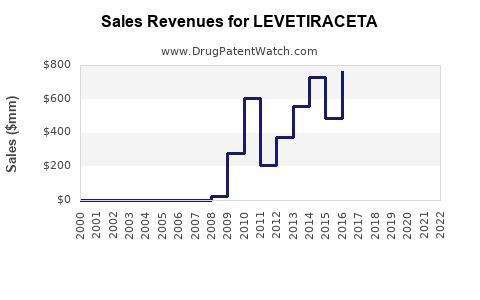
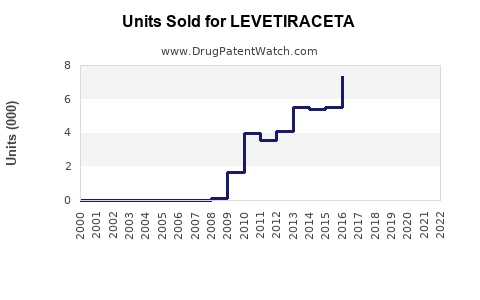
Annual Sales Revenues and Units Sold for LEVETIRACETA
| Drug Name | Revenues (USD) | Units | Year |
|---|---|---|---|
| LEVETIRACETA | ⤷ Start Trial | ⤷ Start Trial | 2022 |
| LEVETIRACETA | ⤷ Start Trial | ⤷ Start Trial | 2021 |
| LEVETIRACETA | ⤷ Start Trial | ⤷ Start Trial | 2020 |
| LEVETIRACETA | ⤷ Start Trial | ⤷ Start Trial | 2019 |
| LEVETIRACETA | ⤷ Start Trial | ⤷ Start Trial | 2018 |
| LEVETIRACETA | ⤷ Start Trial | ⤷ Start Trial | 2017 |
| LEVETIRACETA | ⤷ Start Trial | ⤷ Start Trial | 2016 |
| >Drug Name | >Revenues (USD) | >Units | >Year |
Levetiracetam Market Analysis, Patent Status, Competitive Landscape, and Sales Projections
Levetiracetam is a mature, off-patent antiepileptic drug with broad global use, low manufacturing barriers, and intense generic competition. The market remains commercially relevant because of high prescription volume, hospital use, intravenous availability, pediatric demand, and established use in focal-onset seizures and seizure prophylaxis. Revenue growth is expected to come from population expansion, increased diagnosis and treatment access, and emerging-market penetration rather than price increases.
A modeled global market value of approximately $0.7 billion to $1.0 billion in 2024 is reasonable for levetiracetam across immediate-release tablets, oral solution, intravenous products, and extended-release formulations. The market is likely to grow at approximately 2% to 4% annually through 2030, reaching roughly $0.8 billion to $1.25 billion under a base-case range.
UCB’s branded Keppra and Keppra XR products no longer have meaningful U.S. composition-of-matter exclusivity. Generic levetiracetam dominates the market, while branded and authorized-generic products retain limited value in hospital contracts, specialty channels, and markets with slower generic substitution.
What is the current levetiracetam market size?
The global levetiracetam market is a high-volume, low-price pharmaceutical market. Public market-research estimates vary because some reports include only finished-dose products, while others include hospital formulations, extended-release products, and regional generic sales.
| Market metric | 2024 modeled range | 2030 base-case range |
|---|---|---|
| Global levetiracetam sales | $0.7 billion-$1.0 billion | $0.8 billion-$1.25 billion |
| Annual market growth | 2%-4% | 2%-4% |
| Generic share by volume | More than 90% in mature markets | More than 93% |
| Generic share by value | Approximately 65%-85% | Approximately 75%-90% |
| Oral products share | Approximately 80%-90% | Approximately 80%-88% |
| Intravenous products share | Approximately 10%-20% | Approximately 12%-20% |
| Extended-release share | Low single digits to high single digits | Low-to-mid single digits |
The market has limited pricing power. Generic price erosion is strongest in the United States and Western Europe, while volume growth is more favorable in Asia-Pacific, Latin America, the Middle East, and Africa.
Levetiracetam benefits from several demand characteristics:
- Broad use across focal-onset seizures and adjunctive epilepsy treatment.
- Availability in tablets, oral solution, and intravenous form.
- Use in emergency and inpatient settings.
- Simple pharmacokinetics and limited drug-drug interaction concerns compared with older antiepileptic drugs.
- Pediatric and geriatric use.
- Continued substitution away from older agents such as phenytoin, carbamazepine, and phenobarbital in some treatment settings.
Its primary commercial limitation is that the active ingredient is mature, widely manufactured, and therapeutically substitutable with several low-cost antiepileptic drugs.
What are the main levetiracetam sales projections through 2030?
The base-case outlook assumes stable patient volume, modest diagnosis and treatment expansion, continued generic price compression, and gradual growth in hospital intravenous use.
| Scenario | 2024 market | 2030 market | CAGR | Primary assumptions |
|---|---|---|---|---|
| Downside | $0.7 billion | $0.75 billion | 1.2% | Accelerated price erosion, weak new-patient growth |
| Base case | $0.85 billion | $1.0 billion | 2.7% | Volume growth offsets lower prices |
| Upside | $1.0 billion | $1.25 billion | 3.8% | Strong emerging-market access and hospital demand |
Regional projection
| Region | 2024 modeled share | 2030 outlook | Commercial view |
|---|---|---|---|
| North America | 25%-35% | Stable to slightly lower | High generic penetration and severe price competition |
| Europe | 25%-35% | Stable | Mature generic market with hospital demand |
| Asia-Pacific | 20%-30% | Increasing | Largest structural volume opportunity |
| Latin America | 7%-12% | Increasing | Public procurement and local manufacturing matter |
| Middle East and Africa | 5%-10% | Increasing from a small base | Access expansion offsets pricing pressure |
Asia-Pacific is the strongest volume-growth region. China and India have large epilepsy populations and extensive local generic manufacturing. Commercial performance depends on registration, procurement access, local pricing, and the ability to supply multiple strengths and dosage forms.
North America remains important by value but is structurally unattractive for undifferentiated tablets. Intravenous products and hospital supply contracts can produce better revenue quality than standard immediate-release tablets.
When did levetiracetam lose exclusivity?
Levetiracetam’s original U.S. product, Keppra, was approved by the FDA in 1999. U.S. generic competition began after expiration of the principal product patents and associated regulatory protections in the late 2000s and early 2010s.
| Product | FDA approval | Exclusivity or patent position | Current status |
|---|---|---|---|
| Keppra immediate-release tablets | 1999 | Original product protection expired | Generic competition established |
| Keppra oral solution | 1999 | Product protection expired | Generic competition established |
| Keppra injection | 2006 | Product protection expired | Generic competition established |
| Keppra XR | 2008 | Extended-release formulation protection expired or is commercially ineffective | Generic and alternative ER products available |
The principal composition-of-matter patent associated with levetiracetam was U.S. Patent No. 4,943,639, assigned to UCB and directed to the compound and related anticonvulsant use. The patent expired before the current commercial period. UCB’s later intellectual-property position focused more on extended-release delivery and product-specific formulations than on the active ingredient itself.
FDA approval of levetiracetam occurred before the current five-year New Chemical Entity framework was applied in its modern form. Pediatric exclusivity and supplemental protections affected the timing of certain generic approvals but did not create a durable post-2010 commercial barrier.
What patents protect levetiracetam products today?
The commercially important patent estate is limited. The active ingredient is off patent, and generic manufacturers can market immediate-release levetiracetam if they satisfy FDA requirements and resolve any applicable listed patents or exclusivity.
Composition-of-matter protection
The original compound patent provided the strongest protection but has expired. There is no practical composition-of-matter barrier preventing generic manufacture of levetiracetam.
Formulation patents
Extended-release products created the principal secondary patent opportunity. These patents generally addressed:
- Modified-release matrices.
- Release profiles.
- Dosage-form architecture.
- Once-daily administration.
- Excipients and tablet manufacturing.
- Pharmacokinetic performance.
Formulation patents can support a branded or specialty product only if they cover a commercially meaningful product and remain enforceable. For levetiracetam, generic substitution and the availability of immediate-release alternatives substantially reduce the value of extended-release exclusivity.
Method-of-use patents
Levetiracetam labeling includes treatment indications for seizure disorders and adjunctive therapy. Method-of-use claims have limited commercial value because the core epilepsy indications are established and generic products can often be marketed with permitted labeling carve-outs where applicable.
A method patent would have greater value if it covered a differentiated population, dosing strategy, or treatment setting with significant prescribing volume. Current commercial evidence does not support a large, durable revenue opportunity from a new levetiracetam method-of-use patent.
What is the FDA regulatory status of levetiracetam?
Levetiracetam is FDA-approved in multiple dosage forms and strengths. The principal products include:
| Dosage form | Typical commercial role |
|---|---|
| Immediate-release tablets | Main outpatient product |
| Oral solution | Pediatric, geriatric, and swallowing-impaired patients |
| Intravenous injection | Hospital and emergency use |
| Extended-release tablets | Once-daily outpatient treatment |
The drug is generally marketed through abbreviated new drug applications for generic products. The ANDA pathway does not require new efficacy trials when the generic demonstrates pharmaceutical equivalence and bioequivalence to the reference product.
FDA regulatory risk is therefore concentrated in manufacturing quality, bioequivalence, product consistency, labeling, and supply reliability rather than clinical-development risk.
What is the Orange Book status of levetiracetam?
The Orange Book has historically listed Keppra and related dosage forms as reference products against which generic levetiracetam products are approved. The original patent estate is no longer a significant barrier to standard immediate-release generic entry.
Orange Book strategy is more relevant for extended-release products and formulation-specific claims. A company evaluating a new levetiracetam product must distinguish between:
- Immediate-release tablets and oral solution, where competition is mature.
- Intravenous products, where manufacturing and hospital supply reliability matter.
- Extended-release products, where formulation patents and bioequivalence requirements may create limited differentiation.
- Combination or specialty delivery systems, where clinical and commercial value must justify development cost.
Which companies compete in the levetiracetam market?
Competition is fragmented. Major participants have included UCB for Keppra, along with generic manufacturers such as Teva, Sandoz, Viatris, Dr. Reddy’s Laboratories, Sun Pharmaceutical Industries, Lupin, Cipla, Aurobindo Pharma, Zydus, Hikma, and regional manufacturers.
The competitive structure differs by market:
- In the United States, pharmacy benefit managers and wholesalers exert strong price pressure.
- In Europe, national reimbursement systems and tendering determine price and market share.
- In India, branded generics can preserve higher unit prices despite active competition.
- In China, centralized procurement can compress prices sharply while increasing volume for selected suppliers.
- In emerging markets, regulatory registrations and distribution reach are more important than patent protection.
The most defensible competitive positions are based on supply reliability, injectable capacity, regulatory history, institutional contracts, and broad geographic registrations.
How strong is the levetiracetam patent estate?
The patent estate is weak for standard levetiracetam and moderate at most for selected extended-release or delivery-system products.
| Patent category | Strength | Commercial effect |
|---|---|---|
| Active ingredient | None in major markets | No barrier to generic entry |
| Immediate-release tablet | Low | Commodity competition |
| Oral solution | Low | Limited formulation differentiation |
| Intravenous injection | Low to moderate | Manufacturing and quality barriers matter more |
| Extended-release formulation | Moderate for specific claims | Potential niche protection, but substitution limits value |
| Method of use | Low to moderate | Depends on claim scope and labeling strategy |
| Manufacturing process | Low to moderate | May protect efficiency or quality but rarely blocks all supply |
Levetiracetam is therefore a poor candidate for a conventional patent-extension strategy unless a company can demonstrate a clinically meaningful delivery advantage, improved adherence, reduced dosing frequency, or a new indication with substantial prescribing potential.
What generic entry risks exist for levetiracetam?
Generic entry risk is already realized in the principal markets. Future risk is primarily additional price erosion and share migration among generic suppliers.
Immediate-release tablets
This segment has the highest entry risk and the lowest margin potential. Multiple suppliers can produce standard strengths, and switching costs are limited.
Oral solution
The oral solution has somewhat greater operational complexity because of formulation stability, packaging, taste, and pediatric acceptance. Those factors can support modestly better margins but do not create durable patent protection.
Intravenous injection
Intravenous levetiracetam has greater manufacturing and quality-control requirements. Hospital buyers may value continuity of supply, validated manufacturing, and regulatory reliability. This segment has stronger commercial barriers than tablets but remains exposed to institutional tendering and contract pricing.
Extended-release formulations
Extended-release products offer the best possibility for differentiation. The opportunity is constrained by the availability of immediate-release treatment, limited willingness to pay, and the need to demonstrate bioequivalence or clinical utility.
Are biosimilar risks relevant to levetiracetam?
No. Levetiracetam is a small-molecule drug, not a biologic. Biosimilar regulation does not apply. Competition occurs through generic small-molecule pathways, including ANDAs in the United States and comparable generic approval routes in other jurisdictions.
This distinction matters commercially. Levetiracetam does not benefit from the manufacturing complexity, substitution friction, or regulatory barriers that support some biologic products.
What manufacturing and intellectual-property barriers affect levetiracetam?
The active pharmaceutical ingredient is commercially available from multiple producers. Manufacturing barriers are therefore operational rather than patent-based.
Important barriers include:
- Compliance with current good manufacturing practices.
- Consistent particle size and solid-state properties.
- Control of impurities and degradation products.
- Bioequivalence across strengths and formulations.
- Sterile manufacturing for intravenous products.
- Packaging and stability for oral solutions.
- Reliable supply of multiple strengths.
- Regulatory registrations in each target market.
- Hospital tender qualification and vendor history.
The injectable segment has the highest technical barrier because sterile manufacturing failures can lead to product shortages, recalls, and loss of hospital contracts. The oral segment has lower technical risk but higher price competition.
What licensing deals affect levetiracetam?
The key commercial rights historically rested with UCB, the developer and originator of Keppra. The market has not produced a prominent current licensing structure comparable with products that depend on co-development, regional commercialization, or complex biologic manufacturing.
New licensing value would likely arise from:
- A differentiated extended-release product.
- A pediatric or abuse-deterrent delivery system.
- A combination product.
- A hospital-focused injectable platform.
- Rights in an underserved geographic market.
- A reformulated product with a defensible regulatory pathway.
A license for standard immediate-release levetiracetam would have limited strategic value because generic supply is broad and pricing is compressed.
What patent litigation and Paragraph IV challenges affect levetiracetam?
The main U.S. patent disputes occurred during the earlier generic-entry period, particularly around patents associated with Keppra and later extended-release products. Standard immediate-release levetiracetam is no longer an attractive target for major Paragraph IV litigation because the principal patents have expired and generic competition is established.
Current litigation risk is more likely to involve:
- Formulation patents.
- Product-specific extended-release claims.
- Manufacturing process patents.
- ANDA compliance or regulatory exclusivity disputes.
- Commercial contracts and supply obligations.
The probability of a major new patent litigation event affecting standard levetiracetam revenue is low.
How does levetiracetam compare with competing antiepileptic drugs?
| Drug | Market position | Patent risk | Commercial outlook |
|---|---|---|---|
| Levetiracetam | Broadly used, generic | Very low | Stable volume, low pricing |
| Brivaracetam | Newer, differentiated mechanism | Higher than levetiracetam | Higher price, narrower market |
| Lamotrigine | Mature, broad use | Very low | Large generic market |
| Valproate | Mature, broad efficacy | Very low | Safety concerns constrain some use |
| Lacosamide | Mature branded-to-generic transition | Low to moderate by market | Higher value per patient |
| Carbamazepine | Older generic | Very low | Stable but declining in some settings |
| Phenytoin | Older generic | Very low | Hospital and legacy use |
| Perampanel | Branded or recently generic in some markets | Market-dependent | Smaller, higher-value segment |
Levetiracetam’s advantage is its balance of efficacy, tolerability, formulation breadth, and prescribing familiarity. Its disadvantage is the absence of meaningful pricing protection.
What revenue exposure exists for manufacturers?
Revenue exposure is greatest for companies with:
- High dependence on U.S. generic pricing.
- Concentrated hospital contracts.
- Single-site sterile manufacturing.
- Limited product portfolios.
- Heavy exposure to immediate-release tablets.
- Weak supply continuity or regulatory inspection history.
Revenue upside is greater for manufacturers that combine levetiracetam with other antiepileptic products and sell across multiple markets. A standalone levetiracetam strategy is unlikely to produce high returns unless it targets a differentiated formulation or an underpenetrated region.
Key Takeaways
- Levetiracetam is a mature, off-patent antiepileptic drug with global modeled sales of approximately $0.7 billion to $1.0 billion in 2024.
- Base-case market growth through 2030 is approximately 2% to 4% annually.
- Generic products control the market by volume and hold most value share in mature markets.
- U.S. composition-of-matter and principal product protections have expired.
- Immediate-release tablets are commodity products with low margin potential.
- Intravenous products have stronger operational barriers because of sterile manufacturing and hospital procurement requirements.
- Extended-release formulations offer the most credible differentiation but have limited market size and substitution-based constraints.
- Biosimilar risk does not apply because levetiracetam is a small molecule.
- The strongest growth opportunity is in Asia-Pacific and other markets where diagnosis, treatment access, and generic penetration are expanding.
- The strongest commercial strategy is a multi-product antiepileptic portfolio supported by reliable manufacturing and broad geographic registrations.
FAQs
Is levetiracetam still profitable for generic manufacturers?
Yes, but profitability depends on scale, supply reliability, manufacturing cost, and portfolio economics. Standard tablets have low margins, while injectable and extended-release products can provide better returns.
Can a company obtain a new patent on levetiracetam?
A company may patent a genuinely novel formulation, delivery system, manufacturing process, or method of use. A new patent cannot restore broad exclusivity over the expired active ingredient.
Is Keppra still commercially important?
Keppra remains clinically recognized and may retain value in selected markets, but its commercial position is substantially weaker than during the exclusivity period because generic substitution is widespread.
Which levetiracetam dosage form has the best growth potential?
Intravenous levetiracetam has the strongest hospital-related opportunity, while extended-release products have the strongest formulation-differentiation potential. Immediate-release tablets offer the largest volume but the weakest pricing outlook.
What is the most likely long-term market outcome for levetiracetam?
The most likely outcome is stable or modestly growing global volume combined with continuing price erosion. Market value should grow slowly, with revenue shifting toward emerging markets, injectable products, and differentiated formulations.
References
-
U.S. Food and Drug Administration. (1999). Keppra (levetiracetam) prescribing information. FDA.
-
U.S. Food and Drug Administration. (2024). Approved drug products with therapeutic equivalence evaluations: Orange Book. FDA.
-
UCB. (2024). Annual report 2023. UCB S.A.
-
U.S. Patent and Trademark Office. (1990). U.S. Patent No. 4,943,639: Alpha-ethyl-2-oxo-1-pyrrolidine acetamide. U.S. Department of Commerce.
-
U.S. Food and Drug Administration. (2024). Approved drug products and abbreviated new drug application database. FDA.
-
World Health Organization. (2023). Epilepsy: Key facts. WHO.
-
IQVIA Institute for Human Data Science. (2024). The global use of medicines 2024: Outlook to 2028. IQVIA.
More… ↓
