Drug Sales Trends for DYMISTA
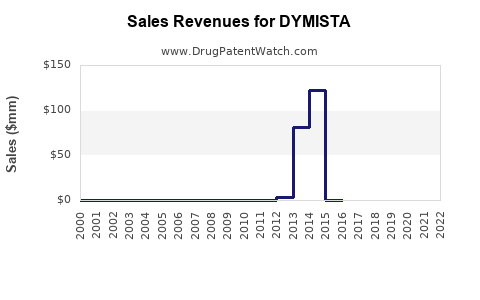
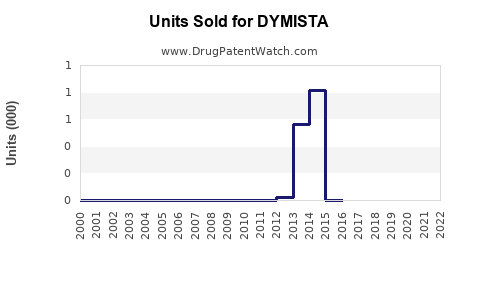
Annual Sales Revenues and Units Sold for DYMISTA
| Drug Name | Revenues (USD) | Units | Year |
|---|---|---|---|
| DYMISTA | ⤷ Start Trial | ⤷ Start Trial | 2022 |
| DYMISTA | ⤷ Start Trial | ⤷ Start Trial | 2021 |
| DYMISTA | ⤷ Start Trial | ⤷ Start Trial | 2020 |
| DYMISTA | ⤷ Start Trial | ⤷ Start Trial | 2019 |
| DYMISTA | ⤷ Start Trial | ⤷ Start Trial | 2018 |
| DYMISTA | ⤷ Start Trial | ⤷ Start Trial | 2017 |
| >Drug Name | >Revenues (USD) | >Units | >Year |
Dymista Market Analysis and Sales Projections
Dymista is a mature intranasal allergy product containing azelastine hydrochloride and fluticasone propionate. The product is commercially established but faces limited growth because its active ingredients are generic, competing nasal sprays are widely available, and generic-equivalent entry can pressure price and volume. Viatris, which inherited Dymista through Mylan’s acquisition of Meda, does not separately disclose Dymista revenue in public financial filings. Exact product-level sales therefore cannot be verified from company reports.
The base-case outlook is declining revenue, with global sales falling approximately 4% to 8% annually from a 2024 index of 100. A stronger outcome is possible if Dymista retains physician preference and pharmacy coverage, but the product is unlikely to generate material growth without a new delivery format, expanded indication, or stronger consumer marketing.
What is Dymista and how does it compete?
Dymista is a prescription nasal spray combining two established allergy medicines:
| Attribute | Dymista |
|---|---|
| Active ingredients | Azelastine hydrochloride and fluticasone propionate |
| Strength per spray | 137 mcg azelastine hydrochloride and 50 mcg fluticasone propionate |
| Dosage form | Metered nasal spray |
| Primary indication | Seasonal allergic rhinitis |
| U.S. approval | FDA approval in 2012 |
| U.S. NDA | NDA 202236 |
| Original developer | Meda AB |
| Current corporate owner | Viatris through Mylan’s acquisition of Meda |
| Main competitors | Separate azelastine and fluticasone sprays, combination nasal sprays, oral antihistamines, and corticosteroid sprays |
Dymista’s clinical and commercial proposition is convenience. It combines an antihistamine and a corticosteroid in one device, reducing the need for patients to use two separate nasal products. The product is most relevant for patients with moderate-to-severe seasonal allergic rhinitis whose symptoms are not adequately controlled by an antihistamine or corticosteroid alone.
Its competitive weakness is price. Fluticasone propionate, azelastine, and alternative nasal corticosteroids are available as lower-cost products. The value of a combination device must therefore outweigh the price premium and any formulary restrictions.
What is the current market position of Dymista?
Dymista occupies a specialized position in the allergic-rhinitis market rather than competing across the entire antihistamine category. Its addressable market includes patients who need both anti-inflammatory and antihistamine treatment and prefer one spray over two separate products.
The commercial market is divided into four major segments:
| Segment | Representative products | Competitive effect on Dymista |
|---|---|---|
| Intranasal corticosteroids | Fluticasone, mometasone, triamcinolone | Lower-cost first-line alternatives |
| Intranasal antihistamines | Azelastine, olopatadine | Compete on rapid symptom relief |
| Combination nasal sprays | Dymista and generic-equivalent products | Direct competition |
| Oral allergy medicines | Cetirizine, loratadine, fexofenadine | Substitute for patients preferring oral dosing |
Dymista benefits from a differentiated combination formulation, but that differentiation is narrow. It does not create a durable barrier comparable to a novel active ingredient or biologic therapy.
What are Dymista’s principal commercial advantages?
Dymista has four commercial advantages:
- One-device dosing improves convenience.
- The product addresses both histamine-mediated and inflammatory symptoms.
- The product has established physician and patient familiarity.
- The spray can be positioned for patients who have inadequate response to single-agent therapy.
The main constraints are generic active ingredients, seasonal demand, payer controls, and the availability of separate low-cost sprays.
What are Dymista sales and revenue trends?
Viatris does not report Dymista as a separately identified revenue line in its principal public financial statements. Revenue is generally aggregated across product portfolios, therapeutic categories, or geographic segments. Third-party prescription and pharmacy data may estimate volume, but those data are not equivalent to audited manufacturer net sales.
The absence of separate disclosure limits the precision of any Dymista revenue estimate. A defensible model should therefore use indexed sales or a range rather than present an unsupported point estimate.
Dymista sales projection, base index
The following model sets 2024 Dymista revenue at 100. It is a scenario framework, not Viatris guidance.
| Year | Bear case | Base case | Upside case |
|---|---|---|---|
| 2024 | 100 | 100 | 100 |
| 2025 | 92 | 96 | 101 |
| 2026 | 84 | 92 | 103 |
| 2027 | 77 | 88 | 104 |
| 2028 | 70 | 84 | 105 |
| 2029 | 64 | 80 | 105 |
| 2024-2029 CAGR | -8.3% | -4.4% | 1.0% |
Under the base case, Dymista revenue declines 20% from 2024 to 2029. The bear case assumes faster generic conversion, reimbursement deterioration, and lower brand retention. The upside case assumes sustained combination-product preference, limited direct generic substitution, and stable reimbursement.
If 2024 Dymista revenue were $100 million, the implied 2029 outcomes would be approximately $64 million, $80 million, and $105 million under the bear, base, and upside cases, respectively. These dollar examples are scaling illustrations and do not represent reported Viatris revenue.
What drives Dymista sales projections?
Generic competition and net price erosion
Generic substitution is the largest risk to Dymista revenue. Even where a branded product retains prescription volume, generic alternatives can reduce net price through rebates, payer preference, and pharmacy substitution.
The most likely effect is gradual erosion rather than immediate disappearance. Dymista has a convenience advantage, but the active ingredients are mature and physicians can recreate the same pharmacological approach with separate sprays.
Seasonal allergy demand
Dymista demand is seasonal and sensitive to pollen intensity, weather patterns, diagnosis rates, and patient adherence. A severe allergy season can increase prescriptions without changing the product’s long-term market share. Investors should distinguish temporary seasonal growth from durable revenue expansion.
Payer and formulary access
Commercial insurers and pharmacy benefit managers can place Dymista behind generic fluticasone, generic azelastine, or both products used separately. Prior authorization and step-therapy requirements can reduce first-line prescribing.
Net sales are affected by rebates, mandatory substitutions, and channel mix. Gross prescription growth therefore may not translate into revenue growth.
Physician adoption
Dymista is most defensible in patients who have failed single-agent treatment. Its growth depends on physicians recognizing the clinical benefit of combination therapy and prescribing the product before patients move to lower-cost alternatives.
Consumer and OTC substitution
Fluticasone and several other allergy therapies are available over the counter in the United States. OTC availability increases price transparency and gives consumers direct access to single-agent treatment. That weakens Dymista’s ability to sustain a premium unless patients value the combination and convenience.
What FDA regulatory status does Dymista have?
Dymista received FDA approval in 2012 for the treatment of symptoms associated with seasonal allergic rhinitis. The product is regulated as a prescription combination drug delivered through a metered nasal spray. Its regulatory profile is mature, with no dependence on a new active pharmaceutical ingredient or complex biologic manufacturing process. (U.S. Food and Drug Administration, 2012)
The regulatory pathway for a competing product can rely on the established reference product and demonstrate pharmaceutical equivalence and bioequivalence under the abbreviated new drug application pathway. That makes Dymista more exposed to generic competition than products requiring complex clinical efficacy programs.
What patents protect Dymista?
Dymista’s patent position must be separated into three categories:
| Protection category | Relevance |
|---|---|
| Combination formulation | Covers the use or composition of azelastine and fluticasone in a defined product |
| Nasal-delivery device | May protect spray mechanics, metering, or device configuration |
| Method of use | May cover treatment of allergic-rhinitis symptoms using the combination |
The active ingredients themselves are longstanding compounds and do not provide meaningful new-molecule exclusivity. The commercial value of any remaining protection depends on claim scope, expiration, terminal disclaimers, Orange Book listing status, and whether an ANDA applicant can avoid infringement.
What is the Orange Book status of Dymista?
The FDA Orange Book is the controlling source for current U.S. patent and exclusivity listings associated with NDA 202236. A Dymista investment analysis should not treat the original approval date as proof of current patent protection. Orange Book-listed patents can expire, be delisted, or become commercially irrelevant if a generic applicant can use a Paragraph IV certification or a non-infringing formulation. (U.S. Food and Drug Administration, n.d.-a)
The practical conclusion is that Dymista should be modeled as a mature combination product with formulation and device protection risks, not as a product supported by active-ingredient exclusivity.
When does Dymista lose exclusivity?
Dymista’s market exclusivity is determined by the combined effect of:
- New chemical entity exclusivity, which does not apply in the same way to a combination of previously known active ingredients.
- Patent expiration dates listed in the Orange Book.
- Pediatric exclusivity, if granted.
- Litigation-based stays following a Paragraph IV notice.
- Generic approval and commercial launch timing.
- State substitution rules and payer contracting.
The commercially relevant date is not always the earliest patent expiration. A generic may launch after settlement, at-risk litigation launch, or approval of an alternative product that does not infringe the listed claims.
Because Dymista contains old active ingredients, the most important barriers are formulation, device, regulatory, and market-access barriers. Those barriers are weaker than the exclusivity profile of a new chemical entity.
Which companies are challenging Dymista?
Potential competitors include generic manufacturers with nasal-spray capabilities, branded manufacturers of azelastine or fluticasone, and companies selling separate products that can replace the combination.
The relevant competitive groups are:
- Generic manufacturers seeking an ANDA for the combination spray.
- Manufacturers of generic azelastine and fluticasone.
- Large respiratory and allergy companies with established pharmacy distribution.
- Private-label and retail pharmacy suppliers.
- Digital and consumer-health companies marketing OTC allergy products.
Public filings do not establish a complete, current list of all commercial challengers or their launch plans. ANDA litigation and Paragraph IV activity may not translate into commercial entry because settlement terms, approval timing, and manufacturing capacity can change the outcome.
What litigation and settlement risks affect Dymista?
Dymista litigation risk is concentrated in patent validity, infringement, and regulatory exclusivity disputes. A Paragraph IV certification could trigger patent litigation under the Hatch-Waxman Act. A lawsuit may impose a 30-month regulatory stay, subject to statutory exceptions and court developments. (U.S. Food and Drug Administration, n.d.-b)
The main litigation scenarios are:
| Scenario | Commercial effect |
|---|---|
| No generic challenge | Brand retains price and volume longer |
| Paragraph IV challenge with litigation | Launch may be delayed or accelerated depending on outcome |
| Settlement with licensed entry | Predictable but earlier erosion |
| Patent invalidation | Rapid generic-price pressure |
| Non-infringing generic approval | Entry despite surviving brand patents |
| At-risk launch | Potential rapid share loss and damages exposure |
A settlement can protect short-term revenue while establishing a fixed generic-entry date. The economic value depends on the launch date, royalty terms, authorized-generic rights, and the number of competing entrants.
How strong is the Dymista patent estate?
Dymista has a moderate-to-weak long-term patent profile from an investment perspective.
Its strengths are:
- Combination-product differentiation.
- Potential formulation and device claims.
- Established clinical use and brand recognition.
- Switching friction for patients satisfied with one-device dosing.
Its weaknesses are:
- Old active ingredients.
- Availability of separate generic components.
- Limited indication breadth.
- Potentially narrow claim scope.
- High probability of payer pressure.
- Lack of biologic or complex-molecule manufacturing barriers.
The estate may delay or shape generic entry, but it is unlikely to support sustained premium pricing without commercial exclusivity or a materially differentiated device.
What manufacturing and geographic barriers affect Dymista?
Manufacturing is more complex than producing an oral tablet because the product requires:
- Stable suspension or solution characteristics.
- Consistent dose delivery.
- Spray-pump performance.
- Container-closure compatibility.
- Microbiological control.
- Device assembly and quality testing.
These requirements can slow generic entry, but they do not create the same barrier as sterile biologics, inhaled powders with highly complex devices, or cell and gene therapies.
Geographic performance will vary by regulatory pathway and reimbursement:
| Market | Main commercial issue |
|---|---|
| United States | Generic substitution, Orange Book patents, payer controls |
| European Union | National reimbursement and decentralized generic competition |
| Canada | Provincial reimbursement and substitution policies |
| Emerging markets | Price sensitivity, local registration, distributor access |
| Asia-Pacific | Variable allergy diagnosis rates and local manufacturing competition |
The United States remains the most important market for premium pricing, but it also has the clearest generic-substitution mechanism.
How does Dymista compare with competing allergy drugs?
| Product strategy | Convenience | Price position | Patent strength | Dymista risk |
|---|---|---|---|---|
| Dymista combination spray | High | Premium or mid-tier | Moderate formulation protection | Baseline |
| Separate generic fluticasone and azelastine | Low to moderate | Low | Weak | High |
| Generic azelastine alone | Moderate | Low | Weak | Moderate |
| OTC fluticasone alone | High | Low | Minimal | High |
| Oral antihistamines | High | Low | Minimal | Moderate |
| Other combination nasal sprays | High | Variable | Product-specific | Moderate |
Dymista’s best defense is convenience and symptom control in patients who need both mechanisms. Its weakest position is against patients who can obtain adequate relief from a single low-cost OTC nasal corticosteroid.
What generic launch risks exist for Dymista?
The base-case generic launch sequence is likely to produce:
- Initial price discounts by the brand.
- Formulary preference for generic components.
- Reduced new prescriptions for Dymista.
- Greater retention among existing patients with favorable coverage.
- Progressive net-price compression.
- Further erosion as additional manufacturers enter.
A single generic entrant may reduce price without eliminating the brand. Multiple entrants create more severe erosion because pharmacy and payer incentives become stronger.
Key Takeaways
- Dymista is a mature azelastine/fluticasone combination nasal spray approved by the FDA in 2012.
- Viatris does not separately disclose Dymista revenue in public financial reporting.
- The base-case sales outlook is a 4% to 8% annual decline through 2029.
- Generic competition, payer controls, and OTC substitution are the principal revenue risks.
- Dymista’s formulation and device characteristics may delay or shape generic entry, but the active ingredients are old and widely available.
- Patent protection should be assessed through current Orange Book listings and claim-by-claim litigation analysis.
- The product’s strongest commercial asset is one-device convenience for patients requiring both antihistamine and corticosteroid therapy.
- The most likely outcome is continued brand revenue with gradual volume and net-price erosion, not an immediate loss of the market.
FAQs
Is Dymista still a profitable product?
Dymista may remain profitable because its development costs have largely been recovered and its manufacturing platform is established. Profitability depends on current net price, generic competition, rebate levels, and manufacturing utilization. Viatris does not publicly provide a separate Dymista profit figure.
Is Dymista stronger than using fluticasone and azelastine separately?
Dymista is more convenient because it combines both medicines in one spray. Separate products may offer a lower total cost and flexible dosing. The commercial advantage depends on symptom control, adherence, insurance coverage, and patient preference.
Can generic manufacturers copy Dymista?
A generic manufacturer can seek approval for a pharmaceutically equivalent combination nasal spray through the ANDA pathway. Approval and launch depend on formulation equivalence, device performance, patent certifications, and any resulting litigation.
Does Dymista have biologic or biosimilar risk?
Dymista has no biosimilar risk because it is a small-molecule combination product, not a biologic. Its relevant competitive risk comes from generic drugs and therapeutic substitutes.
What would increase Dymista sales?
Sales could improve through stronger formulary access, expanded geographic distribution, improved adherence, a lower-cost authorized generic strategy, or a reformulated delivery device with clinically meaningful convenience advantages. Without one of those changes, durable growth is unlikely.
References
Mylan N.V. (2017). Annual report 2016. https://www.mylan.com
U.S. Food and Drug Administration. (2012). Dymista (azelastine hydrochloride and fluticasone propionate) nasal spray: Approval history and prescribing information. https://www.accessdata.fda.gov
U.S. Food and Drug Administration. (n.d.-a). Approved drug products with therapeutic equivalence evaluations: Orange Book. https://www.fda.gov/drugs/drug-approvals-and-databases/approved-drug-products-therapeutic-equivalence-evaluations-orange-book
U.S. Food and Drug Administration. (n.d.-b). Abbreviated new drug application process and patent certifications. https://www.fda.gov/drugs/types-applications/abbreviated-new-drug-application-anda
Viatris Inc. (2024). Annual report and Form 10-K. https://investor.viatris.com/financial-information/sec-filings
More… ↓
