Share This Page
Drug Sales Trends for DIFLUCAN
✉ Email this page to a colleague
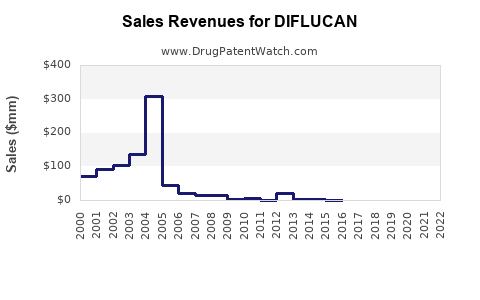
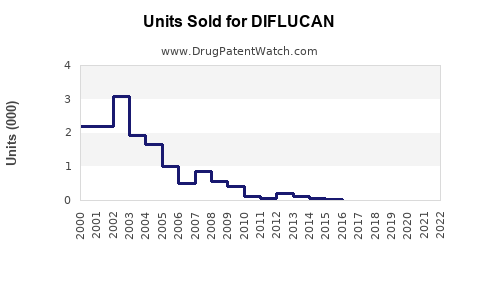
Annual Sales Revenues and Units Sold for DIFLUCAN
| Drug Name | Revenues (USD) | Units | Year |
|---|---|---|---|
| DIFLUCAN | ⤷ Start Trial | ⤷ Start Trial | 2022 |
| DIFLUCAN | ⤷ Start Trial | ⤷ Start Trial | 2021 |
| DIFLUCAN | ⤷ Start Trial | ⤷ Start Trial | 2020 |
| >Drug Name | >Revenues (USD) | >Units | >Year |
Market Analysis and Sales Projections for DIFLUCAN
What is the current market landscape for DIFLUCAN?
DIFLUCAN (fluconazole) is a fungal infection treatment developed by Pfizer. It is primarily used for systemic fungal infections and prophylaxis in immunocompromised patients. The drug’s patent expired in many markets around 2010, shifting its status to a generic drug in those regions.
Key points:
- Globally, the antifungal drug market was valued at approximately $5.8 billion in 2022.
- The market is projected to grow at a compound annual growth rate (CAGR) of around 4.5% from 2023 to 2028.
- DIFLUCAN accounts for a significant share due to its widespread use in HIV/AIDS, cancer, and transplant-related fungal infections.
What are the primary drivers influencing DIFLUCAN’s sales trajectory?
- Growing prevalence of fungal infections: The global incidence of invasive fungal infections (IFIs) has increased, especially in immunocompromised populations.
- Expansion of off-label indications: New uses in dermatology and prophylaxis are emerging.
- Generic penetration: Entry of generics in key markets has driven down prices, increasing accessibility but reducing per-unit revenue.
- Competitive landscape: Other antifungals like voriconazole and amphotericin B compete in the same space, impacting market share.
How does the patent status affect future sales?
- The original patent for DIFLUCAN expired in the U.S. in 2006 and in the European Union in 2010.
- Pfizer’s exclusivity extended until patent expiration, after which generic manufacturers entered the market.
- Price erosion due to generics has reduced profit margins but increased volume sales.
What are the regional sales projections?
| Region | 2022 Sales (USD millions) | 2028 Projected Sales (USD millions) | CAGR (2023-2028) |
|---|---|---|---|
| North America | 1,500 | 2,100 | 6% |
| Europe | 1,200 | 1,700 | 6.2% |
| Asia-Pacific | 800 | 1,300 | 8.4% |
| Rest of World | 500 | 700 | 6.1% |
Asia-Pacific shows the highest growth rates due to expanding healthcare infrastructure and increasing fungal infection cases.
What are the sales projections based on different scenarios?
- Base case: Steady growth in existing markets driven by increased diagnosis and use in off-label indications. Sales reach approximately $5.8 billion globally by 2028.
- Optimistic case: Accelerated uptake in emerging markets, fewer generic price erosions, and new indications lead to a 10% CAGR. Sales could surpass $6.5 billion.
- Pessimistic case: Market saturation, entry of new competing antifungals, or regulatory hurdles slow growth, limiting sales to around $4.7 billion.
What are the key market risks?
- Pricing pressure: Dominance of generics compresses profit margins.
- Regulatory changes: Stringent rules in emerging markets could restrict access.
- Competitive innovations: Development of new antifungal agents with better efficacy or safety profiles could reduce DIFLUCAN’s market share.
- Supply chain disruptions: Manufacturing issues could impact availability, affecting sales.
What strategic considerations should companies evaluate?
- Diversify indications, including prophylactic and preemptive uses.
- Focus on emerging markets with rising fungal infection incidence.
- Invest in drug formulation improvements to support new administration routes.
- Monitor patent litigation and regulatory policies impacting generic entry.
Key Takeaways
- DIFLUCAN's global sales are expected to reach approximately $5.8 billion in 2028, assuming steady market growth.
- The drug maintains strong position in fungal infection treatment, but generic competition significantly affects profitability.
- Asia-Pacific presents highest growth potential due to demographic and healthcare trends.
- The evolving competitive landscape and regulatory environment pose substantial risks to continued sales growth.
- Strategic focus on expanding indications and market penetration in emerging territories can enhance revenue prospects.
FAQs
-
How has the patent expiration affected DIFLUCAN's market share?
Patent expiration led to increased generic competition, reducing prices but boosting volume sales in many markets. -
What are the main indications for DIFLUCAN today?
Treating systemic fungal infections such as candidiasis, cryptococcal meningitis, and prophylaxis in immunocompromised hosts. -
Are new formulations or indications under development?
Currently, no major new formulations, but research into IV-to-oral switching and expanded prophylaxis uses continues. -
How does DIFLUCAN compare to newer antifungal agents?
It remains cost-effective for broad indications, but newer agents may offer advantages in efficacy, safety, or dosing. -
What factors most influence future sales?
Market penetration in emerging regions, off-label use expansion, generic price dynamics, and new competitive drugs.
References
[1] Markets and Markets. (2023). Antifungal drugs market forecast.
[2] Pfizer Inc. (2022). DIFLUCAN product details.
[3] Grand View Research. (2023). Fungal infection treatment market analysis.
[4] U.S. Food and Drug Administration. (2022). Patent and exclusivity status for fluconazole.
[5] World Health Organization. (2022). Fungal infection epidemiology.
More… ↓
