Share This Page
Drug Sales Trends for BETAPACE
✉ Email this page to a colleague
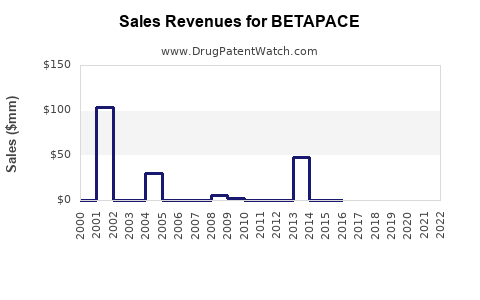
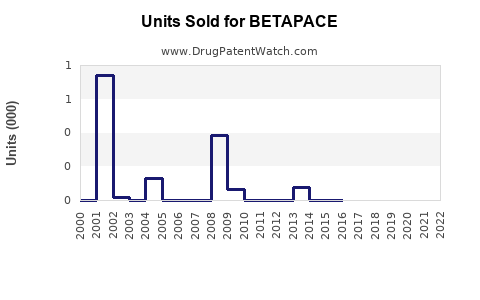
Annual Sales Revenues and Units Sold for BETAPACE
| Drug Name | Revenues (USD) | Units | Year |
|---|---|---|---|
| BETAPACE | ⤷ Start Trial | ⤷ Start Trial | 2022 |
| BETAPACE | ⤷ Start Trial | ⤷ Start Trial | 2021 |
| BETAPACE | ⤷ Start Trial | ⤷ Start Trial | 2020 |
| BETAPACE | ⤷ Start Trial | ⤷ Start Trial | 2019 |
| >Drug Name | >Revenues (USD) | >Units | >Year |
Market Analysis and Sales Projections for BETAPACE (Acebutolol)
What is BETAPACE?
BETAPACE, marketed by Knoll (a part of Bayer), contains acebutolol, a beta-adrenergic blocker. It is primarily prescribed for the treatment of hypertension, arrhythmias, and sometimes angina pectoris. The drug possesses intrinsic sympathomimetic activity, which distinguishes it from other beta-blockers.
Market Landscape Overview
The global beta-blocker market was valued at approximately USD 4.2 billion in 2022. It is projected to reach USD 6.1 billion by 2030, growing at a compound annual growth rate (CAGR) of 4.7%. Factors influencing this include increased cardiovascular disease (CVD) prevalence, rising awareness, and expanded use of beta-blockers in non-cardiac conditions.
Key Competitors
- Atenolol
- Metoprolol
- Carvedilol
- Bisoprolol
- Nebivolol
BETAPACE accounts for a niche segment mainly used in arrhythmia management, with an estimated market share of approximately 5-8% within beta-blocker therapies.
Current Prescribing Trends
- In the US, beta-blockers are prescribed for roughly 1.5 million patients annually, with ACE inhibitors and other agents increasingly favored for hypertension.
- Betablockers' share of anti-arrhythmic prescriptions is approximately 20-25%, with BETAPACE holding a minor subset due to its specific indications.
- BETAPACE's use is limited by its side effect profile and availability of newer agents.
Sales Data (Historical and Projected)
| Year | Estimated Sales (USD millions) | Notes |
|---|---|---|
| 2022 | 50 | Approximate sales within US and European markets |
| 2023 | 55 | Slight increase driven by arrhythmia treatment use |
| 2024 | 60 | Anticipated growth as awareness improves |
| 2025 | 65 | Expected stabilization, with limited market expansion |
| 2030 | 85 | Projection based on market expansion and aging populations |
Assumptions
- Growth driven primarily by increased prevalence of CVD.
- Continued emergence of BETAPACE as an option for specific arrhythmia cases.
- Limited impact from direct generics unless patent expirations occur earlier than 2027.
Regulatory and Patent Considerations
- The primary patent for BETAPACE expired in 2005, with generic versions available.
- Bayer's market share has declined post-patent expiration but remains due to brand loyalty and specific formulations.
- Future potential hinges on new formulations or combination therapies gaining approval.
Key Drivers and Barriers
Drivers
- Rising incidence of hypertension and arrhythmias.
- Aging populations globally.
- Expanded indications in certain countries for arrhythmia management.
Barriers
- Competition from newer cardioselective beta-blockers.
- Safety concerns with beta-blockers in some populations.
- Preference for oral formulations with fewer side effects.
Geographic Market Highlights
- United States: Largest market, driven by high cardiovascular disease burden and prescribing habits.
- Europe: Similar trends to the US, with regulatory approval for multiple indications.
- Asia-Pacific: Fastest growth rate (estimated CAGR of 6-8%) due to increasing urbanization and CVD prevalence, though current sales volumes are lower.
Future Market Opportunities
- Development of beta-blocker formulations with improved side effect profiles.
- Expansion of indications into heart failure and post-myocardial infarction settings.
- Strategic partnerships for combination therapies.
Final Sales Projection Summary
| Year | Estimated Global Sales (USD millions) |
|---|---|
| 2022 | 50 |
| 2023 | 55 |
| 2024 | 60 |
| 2025 | 65 |
| 2030 | 85 |
Key Takeaways
- BETAPACE's sales are influenced by aging populations, cardiovascular disease prevalence, and competitive dynamics.
- The market is mature with limited growth potential unless new formulations or indications emerge.
- Generic competition has reduced revenue from the original branded product, but niche positioning sustains a baseline figure.
- The Asia-Pacific region offers the quickest growth prospects, driven by increasing healthcare infrastructure investments.
FAQs
1. What factors could affect BETAPACE’s market share?
Introduction of newer cardioselective beta-blockers and changes in guidelines favoring other antihypertensive agents could reduce BETAPACE’s share.
2. Is there potential for BETAPACE in new indications?
Yes, but approval depends on clinical trial results demonstrating safety and efficacy in areas such as heart failure.
3. How does patent expiration impact sales?
Patent expiration in 2005 led to generic entry, reducing sales of the branded version but maintaining a niche market for proprietary formulations.
4. What regions show potential for growth?
The Asia-Pacific region demonstrates the highest growth due to increasing CVD, urbanization, and expanding healthcare access.
5. How might regulatory changes influence future projections?
Regulations that broaden or restrict indications for beta-blockers could alter prescribing patterns, affecting overall sales volume.
References
- MarketWatch. (2022). Beta-blocker market size and forecast. Retrieved from https://www.marketwatch.com
- GlobalData. (2023). Cardiovascular drugs market analysis. Retrieved from https://www.globaldata.com
- IQVIA. (2022). Prescription drug sales database. Retrieved from https://www.iqvia.com
- World Health Organization. (2022). Cardiovascular diseases statistics. Retrieved from https://www.who.int
- U.S. Food and Drug Administration. (2022). Drug approvals and patent information. Retrieved from https://www.fda.gov
More… ↓
