Share This Page
Drug Sales Trends for pregabalin
✉ Email this page to a colleague
Payment Methods and Pharmacy Types for pregabalin (2016)
Revenues by Pharmacy Type
Units Sold by Pharmacy Type
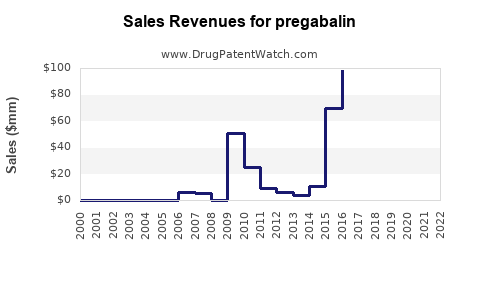
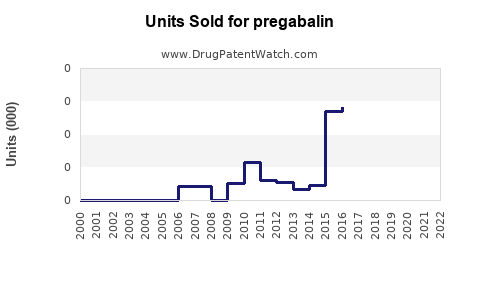
Annual Sales Revenues and Units Sold for pregabalin
| Drug Name | Revenues (USD) | Units | Year |
|---|---|---|---|
| PREGABALIN | ⤷ Start Trial | ⤷ Start Trial | 2022 |
| PREGABALIN | ⤷ Start Trial | ⤷ Start Trial | 2021 |
| PREGABALIN | ⤷ Start Trial | ⤷ Start Trial | 2020 |
| PREGABALIN | ⤷ Start Trial | ⤷ Start Trial | 2019 |
| PREGABALIN | ⤷ Start Trial | ⤷ Start Trial | 2018 |
| PREGABALIN | ⤷ Start Trial | ⤷ Start Trial | 2017 |
| >Drug Name | >Revenues (USD) | >Units | >Year |
Pregabalin Market Analysis, Sales Projections, Patent Status, and Generic Competition
Pregabalin is a mature, high-volume neuropathic-pain and anticonvulsant product with global sales driven primarily by generic capsules and oral solutions. The branded Lyrica franchise lost U.S. market exclusivity after 2018, and generic entry materially reduced Pfizer’s revenue. The market remains commercially significant because of broad prescribing, chronic use, low manufacturing complexity, and demand across neuropathic pain, fibromyalgia, epilepsy, and generalized anxiety disorder in selected non-U.S. markets.
A base-case forecast places global pregabalin sales at approximately $6.0 billion to $6.5 billion in 2024, rising to $7.0 billion to $7.8 billion by 2029 at an estimated 3% to 5% compound annual growth rate. Growth is expected to come from prescription-volume expansion in emerging markets, wider use of generic products, and increasing treatment of chronic neuropathic pain. Price erosion, substitution by gabapentin and duloxetine, and controlled-substance restrictions will limit value growth.
What is the current pregabalin market size?
Published market estimates vary because some reports count active pharmaceutical ingredient sales, while others count finished-dose prescriptions or include branded and generic products across different geographies. A practical market model is:
| Metric | 2024 estimate | 2029 base-case estimate |
|---|---|---|
| Global pregabalin market value | $6.0B-$6.5B | $7.0B-$7.8B |
| Base-case CAGR | - | 3%-5% |
| Generic share of unit volume | More than 90% in the U.S. | More than 90% |
| Branded share of global value | Approximately 20%-30% | Approximately 10%-20% |
| Largest therapeutic use | Neuropathic pain | Neuropathic pain |
| Principal growth driver | Chronic pain treatment volume | Emerging-market volume and broader generic access |
The U.S. remains one of the largest individual markets by value, but most U.S. revenue now comes from generic pregabalin rather than Lyrica. Japan, China, South Korea, Italy, Spain, Germany, the United Kingdom, Brazil, and India are important volume markets. Country-level market value differs substantially because of reimbursement, brand penetration, controlled-substance rules, and local pricing.
How are pregabalin sales projected through 2029?
The following base-case projection assumes continued unit growth, annual generic price erosion, stable clinical use, and no major safety-driven withdrawal.
| Year | Estimated global sales | Annual growth | Market condition |
|---|---|---|---|
| 2024 | $6.0B-$6.5B | 2%-4% | Mature generic market |
| 2025 | $6.2B-$6.7B | 3%-4% | Volume growth offsets price pressure |
| 2026 | $6.4B-$6.9B | 3%-4% | Continued generic substitution |
| 2027 | $6.6B-$7.2B | 3%-4% | Emerging-market expansion |
| 2028 | $6.8B-$7.5B | 3%-5% | Stable chronic-use demand |
| 2029 | $7.0B-$7.8B | 3%-5% | Mature, volume-led market |
Downside case
A downside scenario produces 0% to 2% annual growth and 2029 sales of roughly $6.2 billion to $6.8 billion. The principal risks are intensified reimbursement controls, increased use of duloxetine and gabapentin, tighter prescribing restrictions because of misuse and respiratory-depression concerns, and accelerated tender-price erosion.
Upside case
An upside scenario produces 5% to 7% annual growth and 2029 sales of approximately $7.8 billion to $8.5 billion. This outcome would require stronger diagnosis and treatment of neuropathic pain, continued growth in generic access across Asia and Latin America, and sustained demand for pregabalin in fibromyalgia and seizure disorders.
These estimates are market-model projections, not audited company guidance. Public market-research estimates differ because of product and geography definitions.
What were Pfizer’s Lyrica sales before generic entry?
Pfizer’s Lyrica revenue declined sharply after loss of U.S. exclusivity but remained material internationally for several years.
| Fiscal year | Reported Lyrica revenue |
|---|---|
| 2017 | Approximately $4.97B |
| 2018 | Approximately $4.63B |
| 2019 | Approximately $3.27B |
Pfizer reported Lyrica revenue of approximately $4.6 billion in 2018 and approximately $3.3 billion in 2019. The decline reflected generic competition in the United States and other markets, as well as normal price and volume erosion after loss of exclusivity (Pfizer, 2019, 2020).
After Pfizer’s Upjohn business was separated and combined with Mylan to form Viatris, Lyrica reporting became less useful as a standalone indicator of the global pregabalin market. Generic manufacturers now capture most prescription volume, while branded Lyrica retains a smaller position in markets where physicians, hospitals, or patients prefer the originator product.
When did pregabalin lose exclusivity?
Pregabalin lost its principal U.S. compound-patent protection in December 2018. The first U.S. generic approvals followed in 2019, and generic commercialization rapidly reduced Lyrica prescriptions and net pricing.
The FDA approved Lyrica in 2004 for adjunctive treatment of partial-onset seizures and later approved it for postherpetic neuralgia, diabetic peripheral neuropathy, fibromyalgia, and neuropathic pain associated with spinal cord injury. Lyrica is a Schedule V controlled substance in the United States because of misuse and dependence concerns.
Key U.S. exclusivity timeline
| Date | Event |
|---|---|
| 1990s | Warner-Lambert, later acquired by Pfizer, develops pregabalin |
| 2004 | FDA approves Lyrica for partial-onset seizures |
| 2005 | FDA approves Lyrica for postherpetic neuralgia |
| 2007 | FDA approves Lyrica for diabetic peripheral neuropathy and fibromyalgia |
| 2010 | FDA approves Lyrica for neuropathic pain associated with spinal cord injury |
| December 2018 | Principal U.S. patent protection expires |
| July 2019 | FDA approves first generic pregabalin applications |
| 2021 | FDA approves Lyrica CR, an extended-release formulation, for selected indications |
| 2024-2025 | Market remains predominantly generic |
What patents protect pregabalin and Lyrica?
The original pregabalin compound patent was the most commercially important patent. Product-specific formulation and method-of-use patents provided additional protection but did not preserve the original Lyrica market after generic capsule entry.
| Patent category | Subject matter | Commercial significance |
|---|---|---|
| Compound patent | Pregabalin molecule and related chemical scope | Primary protection; expired in the U.S. in 2018 |
| Neuropathic-pain patents | Treatment of diabetic neuropathy and related pain | Supported later indication protection |
| Fibromyalgia patents | Pregabalin treatment for fibromyalgia | Protected an important indication before generic entry |
| Seizure-use patents | Adjunctive treatment of partial-onset seizures | Relevant to early Lyrica commercialization |
| Extended-release formulation | Lyrica CR delivery profile | Supports differentiated formulation positioning |
| Manufacturing patents | Synthesis, purification, and solid-form processes | May reduce manufacturing risk but rarely blocks mature generic entry |
The U.S. Orange Book should be used for current listed patents and regulatory exclusivity. Patent scope differs by dosage form and indication, and an expired compound patent does not automatically eliminate every formulation or method-of-use patent (FDA, 2024).
What is the Orange Book status of Lyrica?
Lyrica capsules and oral solution are no longer protected by the original U.S. compound exclusivity that supported premium pricing. Generic pregabalin products have been approved in the same dosage forms. Lyrica CR has a separate extended-release formulation and regulatory history, but its commercial impact is substantially smaller than the original immediate-release franchise.
Generic applicants may avoid some method-of-use claims through Paragraph IV certifications, label carve-outs, or use of a restricted label. In practice, generic competition has been strongest in immediate-release capsules, where the principal commercial patents expired and the product is technically straightforward to manufacture.
Which companies are challenging Lyrica patents?
The principal generic challengers included Teva, Mylan, Actavis, Amneal, and other abbreviated new drug application sponsors. Generic entry was supported by multiple ANDA approvals after patent expiry and by patent litigation involving Pfizer and generic applicants.
The competitive field includes:
- Viatris and legacy Mylan products
- Teva Pharmaceutical Industries
- Amneal Pharmaceuticals
- Hikma Pharmaceuticals
- Zydus Lifesciences
- Sun Pharmaceutical Industries
- Torrent Pharmaceuticals
- Dr. Reddy’s Laboratories
- Cipla
- Lupin
- Sandoz
- Regional manufacturers in China, Japan, South Korea, and Latin America
The U.S. market has a high number of approved generic suppliers. This structure creates strong price competition and limits the ability of any single manufacturer to sustain a large premium without a differentiated formulation, supply advantage, or major payer contract.
What formulation patents protect pregabalin?
The main formulation opportunity is extended-release pregabalin. Lyrica CR was approved by the FDA in 2017 for once-daily treatment of diabetic peripheral neuropathy associated with diabetes and postherpetic neuralgia. It was later marketed as a differentiated product from immediate-release Lyrica.
Formulation patents can protect:
- Extended-release matrix systems
- Once-daily dosing
- Release-control polymers
- Tablet coating and dissolution profiles
- Reduced dosing frequency
- Modified pharmacokinetics
- Specific excipient combinations
Formulation patents have commercial value only when the product delivers a meaningful adherence, tolerability, or convenience advantage. Pregabalin’s immediate-release dosage forms are difficult to differentiate because generic capsules and oral solutions are widely available and clinically familiar.
What generic entry risks exist for pregabalin?
Pregabalin has high generic-entry exposure in the United States and other developed markets. The main risks are commercial rather than patent-based.
Price erosion
Multiple approved manufacturers create aggressive competition in pharmacy, hospital, and government channels. U.S. generic prices have declined substantially from branded Lyrica levels. Net sales depend more on prescription volume, supply reliability, and channel access than on patent exclusivity.
Therapeutic substitution
Pregabalin competes with gabapentin, duloxetine, amitriptyline, venlafaxine, topical lidocaine, and opioid-sparing treatment strategies. Gabapentin is generally cheaper and more familiar, while duloxetine has stronger positioning in some depressive and pain-related patient populations.
Regulatory restrictions
Pregabalin is controlled in the United States and has been subject to tighter prescribing or monitoring rules in several countries. Regulators have focused on misuse, dependence, withdrawal, overdose risk, and respiratory depression, especially when pregabalin is combined with opioids or other central nervous system depressants (FDA, 2019).
Manufacturing and supply risk
Pregabalin is a small-molecule product with no biosimilar barrier. The active ingredient and finished product can be produced by numerous suppliers. Manufacturing barriers include:
- Control of chemical impurities
- Consistent particle size
- Chiral purity
- Dissolution performance
- Stability of oral solutions
- Compliance with controlled-substance distribution rules
- Adequate API and finished-dose capacity
The manufacturing barrier is moderate for regulated markets and low for mature generic markets with established suppliers.
Is biosimilar risk relevant to pregabalin?
No. Pregabalin is a synthetic small molecule, not a biologic. Biosimilar pathways do not apply. Competition arises through ANDAs, national generic procedures, and other small-molecule regulatory routes.
This distinction matters commercially. Pregabalin does not require biologic comparability studies, complex cell-line manufacturing, or interchangeability litigation. Generic manufacturers can enter once patent and regulatory barriers are satisfied, which accelerates price competition.
What is the competitive landscape for pregabalin?
Pregabalin competes on price, availability, physician familiarity, dosage form, and reimbursement status. The originator brand has limited ability to preserve a premium in markets with automatic generic substitution.
| Competitor | Competitive position |
|---|---|
| Gabapentin | Low-cost substitute; extensive generic availability |
| Duloxetine | Important alternative for diabetic neuropathy and chronic pain |
| Amitriptyline | Low-cost option, often limited by tolerability |
| Venlafaxine | Alternative for selected neuropathic-pain patients |
| Tramadol and opioids | Used in some markets, but face safety and regulatory pressure |
| Topical lidocaine and capsaicin | Relevant for localized neuropathic pain |
| Pregabalin generics | Primary direct competitors to Lyrica |
Pregabalin retains advantages in predictable absorption, established evidence, multiple dosage strengths, and broad physician familiarity. Its disadvantages include sedation, dizziness, edema, weight gain, dependence concerns, and dose adjustment in renal impairment.
What licensing deals and commercial partnerships affect pregabalin?
Pregabalin’s commercial history includes originator development by Warner-Lambert and subsequent commercialization under Pfizer’s Lyrica brand. Generic commercialization is typically based on local manufacturing, distribution, or licensing arrangements rather than a single global license.
Regional companies may license:
- Pregabalin API
- Finished-dose capsules
- Oral solution technology
- Extended-release formulations
- Country-specific registrations
- Government and hospital supply rights
The market has limited need for large strategic licensing transactions because the compound is off-patent and available from multiple manufacturers. Deal value is more likely to depend on registration rights, supply contracts, local reimbursement, or manufacturing access than on exclusive molecule rights.
What patent litigation affects pregabalin?
Pregabalin litigation historically centered on the timing of generic entry and the scope of use patents. The principal commercial issue was whether generic manufacturers could launch before expiry of patents covering the compound or specific indications.
Current litigation risk is lower for standard immediate-release pregabalin than it was before 2019. Residual disputes may involve:
- Extended-release formulations
- Specific method-of-use claims
- Labeling carve-outs
- Patent listings and delisting
- ANDA Paragraph IV certifications
- Manufacturing-process patents
- Product liability and controlled-substance claims
Settlement agreements may delay or authorize generic entry, but their value declines after the core compound patents expire. The most relevant current legal question is whether a formulation or method patent can support meaningful market share, not whether it can preserve the original Lyrica franchise.
How strong is the pregabalin patent estate?
The patent estate is weak for the original immediate-release product and moderate for differentiated formulations.
| Product segment | Patent strength | Generic risk |
|---|---|---|
| Immediate-release capsules | Low | Very high |
| Oral solution | Low to moderate | High |
| Extended-release tablets | Moderate | Moderate to high |
| New combination products | Depends on formulation and use claims | Moderate |
| API manufacturing process | Moderate operational value | Low blocking power |
| New indication claims | Limited after generic label carve-outs | Moderate |
The commercial value of a late-stage pregabalin patent depends on claim breadth, enforceability, Orange Book listing, and whether physicians prescribe the protected use at sufficient volume. Broad molecule protection is no longer available in the U.S.
What are the major geographic opportunities?
United States
The U.S. is a large, mature generic market with high prescription volume but intense price competition. Revenue growth depends on supply contracts, pharmacy benefit manager access, and manufacturing efficiency.
Europe
European markets are fragmented. Reference pricing and tender systems limit price, while aging populations support chronic neuropathic-pain demand. Germany, Italy, Spain, France, and the United Kingdom remain important markets.
Japan
Japan has strong demand for neuropathic-pain therapies and a meaningful generic market. Regulatory and commercial access requirements can favor local partnerships.
China
China offers substantial volume potential because of its population and growing diagnosis of chronic disease. Centralized procurement can produce severe price reductions.
India
India is a major manufacturing and export base. Domestic demand is supported by diabetes, neuropathic pain, and broad private-market prescribing. Competition is intense, with numerous branded-generic suppliers.
Latin America
Brazil and Mexico are important markets, while Argentina, Colombia, and Chile contribute regional volume. Currency volatility and government procurement can affect reported sales.
Key Takeaways
Pregabalin is a large, mature generic market with durable volume demand and limited patent protection.
- Global sales are estimated at $6.0 billion to $6.5 billion in 2024.
- Base-case sales are projected to reach $7.0 billion to $7.8 billion by 2029.
- Expected growth is volume-led, with a base-case CAGR of 3% to 5%.
- Pfizer’s Lyrica sales fell from approximately $4.63 billion in 2018 to approximately $3.27 billion in 2019 after generic entry.
- U.S. compound-patent protection expired in December 2018.
- Immediate-release pregabalin has very high generic-entry exposure.
- Extended-release formulations offer the principal remaining differentiation opportunity.
- Biosimilar risk does not apply because pregabalin is a synthetic small molecule.
- The largest commercial risks are price erosion, therapeutic substitution, controlled-substance restrictions, and supply competition.
- Manufacturing complexity is manageable, making regulatory execution and cost position more important than proprietary chemistry.
FAQs
What is the estimated 2025 revenue for pregabalin?
Global pregabalin sales are estimated at approximately $6.2 billion to $6.7 billion in 2025 under a base-case market model.
Is Lyrica still commercially important after generic entry?
Yes, but its role is smaller. Lyrica retains brand recognition and some payer or physician preference, while generic pregabalin captures most U.S. prescription volume.
Can a generic company launch pregabalin without infringing method-of-use patents?
A generic company may use a label carve-out or other legally permitted labeling strategy when a patented indication is excluded. Launch risk depends on the specific Orange Book claims and the product label.
Which dosage form has the strongest commercial opportunity?
Extended-release tablets have greater differentiation potential than standard capsules, but their addressable market is smaller and they face formulation, clinical, and patent risks.
Is pregabalin a high-growth pharmaceutical market?
No. Pregabalin is a mature, low- to mid-single-digit growth market. Its investment case depends on volume, manufacturing efficiency, regional expansion, and reliable generic supply rather than molecule-level exclusivity.
References
-
European Medicines Agency. (2009). Lyrica: EPAR - product information. https://www.ema.europa.eu/
-
U.S. Food and Drug Administration. (2019). FDA warns about serious breathing problems with seizure and nerve pain medicines gabapentin and pregabalin. https://www.fda.gov/
-
U.S. Food and Drug Administration. (2024). Orange Book: Approved drug products with therapeutic equivalence evaluations. https://www.accessdata.fda.gov/scripts/cder/ob/
-
U.S. Food and Drug Administration. (2024). Drugs@FDA: Lyrica prescribing information and approval history. https://www.accessdata.fda.gov/scripts/cder/daf/
-
Pfizer Inc. (2019). 2018 annual report. Pfizer Inc.
-
Pfizer Inc. (2020). 2019 annual report. Pfizer Inc.
-
U.S. Patent and Trademark Office. (2024). Patent Center and patent term information. https://patentcenter.uspto.gov/
More… ↓
