Share This Page
Drug Sales Trends for ZINC
✉ Email this page to a colleague
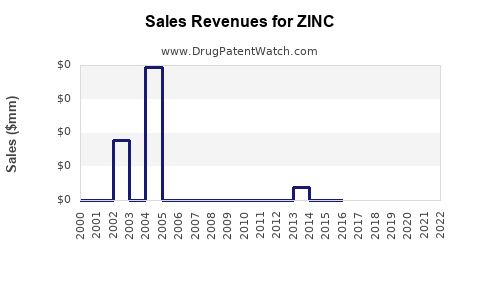
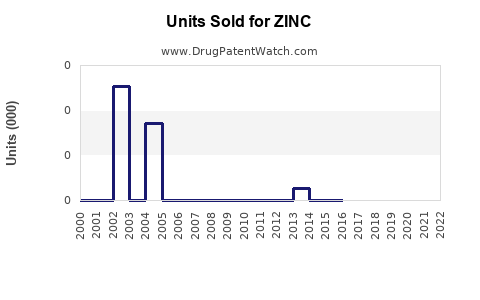
Annual Sales Revenues and Units Sold for ZINC
| Drug Name | Revenues (USD) | Units | Year |
|---|---|---|---|
| ZINC | ⤷ Start Trial | ⤷ Start Trial | 2022 |
| ZINC | ⤷ Start Trial | ⤷ Start Trial | 2021 |
| ZINC | ⤷ Start Trial | ⤷ Start Trial | 2020 |
| >Drug Name | >Revenues (USD) | >Units | >Year |
Market Analysis and Sales Projections for ZINC
Market Overview
Zinc-based drugs have shown increased interest primarily for their roles in immune support, wound healing, and zinc deficiency treatment. The global zinc supplement market was valued at approximately $387 million in 2021 and is projected to grow at a compound annual growth rate (CAGR) of 7.2% from 2022 to 2028, reaching an estimated $627 million by 2028 [1].
Therapeutic Indications
Zinc drugs are used for:
- Zinc deficiency correction
- Immune system support, especially during respiratory infections
- Skin and wound healing
- Certain dermatological conditions such as dermatitis
The market evolution is driven by rising awareness of micronutrient deficiencies, particularly in developing countries, aging populations, and increasing prevalence of immune-compromised individuals.
Competitive Landscape
Leading players include:
- GlaxoSmithKline (GSK)
- Pfizer
- Novartis
- Local generics manufacturers in emerging markets
Innovations include slow-release formulations, combined micronutrient therapies, and targeted delivery systems. Despite many existing products, patent expirations are opening opportunities for generic entry.
Regulatory Environment
Regulatory pathways vary:
- In the U.S., FDA approval for OTC zinc supplements is straightforward if claims are substantiated.
- In the EU, health claims require rigorous substantiation under EFSA.
- Some formulations for therapeutic indications may require higher-level approval, including clinical trials.
Registrations have been streamlined in some markets to expedite availability, though patent protections still influence market entry timing.
Sales Projections
Assumptions:
- Product launches within the next 12-24 months
- Entry into key markets: North America, Europe, Asia Pacific
- Continued trend of increased supplement use for immune health
Estimated Sales Volumes (2023-2027):
| Year | Market Size (USD millions) | Annual Growth Rate | Drivers |
|---|---|---|---|
| 2023 | 410 | 6% | Growing immune health awareness |
| 2024 | 436 | 6.3% | Expansion in emerging markets |
| 2025 | 464 | 6.4% | Increased use in chronic deficiency populations |
| 2026 | 495 | 6.7% | Broader incorporation into multi-nutrient products |
| 2027 | 527 | 6.7% | Expansion into clinical indications |
Sales Drivers:
- Demographic shifts with aging populations
- Elevated usage during respiratory disease outbreaks
- Broader incorporation into immune support formulations
Key Opportunities and Risks
Opportunities:
- Patent expiries create generic opportunities
- Development of novel delivery systems
- Strategic partnerships with healthcare providers
Risks:
- Regulatory delays
- Market saturation in mature markets
- Competition from alternative micronutrients
Conclusion
ZINC is positioned for steady growth driven by increasing health awareness and demographic shifts. Companies that innovate formulations, navigate regulatory pathways effectively, and expand into emerging markets will capture growth. Sales are expected to reach approximately $527 million globally by 2027, with a CAGR exceeding 6% over this period.
Key Takeaways
- The global zinc supplement market is projected to reach $627 million by 2028.
- Growth centers on immune health, aging populations, and unmet deficiencies.
- Patent expirations foster opportunities for generics and new formulations.
- Sales projections indicate consistent growth, with potential acceleration through strategic market expansion.
- Market entry risks include regulatory barriers and intense competition.
FAQs
Q1: What are the primary therapeutic benefits of zinc drugs?
Zinc drugs primarily correct deficiencies, support immune health, and promote wound and skin healing.
Q2: Which regions offer the most significant growth opportunities?
Emerging markets in Asia Pacific and Latin America show high potential due to increasing health awareness and nutritional deficiencies.
Q3: How do patent expiries influence market dynamics?
Patent expirations enable generic manufacturers to produce lower-cost alternatives, increasing competition and market size.
Q4: What regulatory challenges might companies face?
Regulatory approval depends on claims substantiation, especially for therapeutic uses, which may require clinical data.
Q5: What innovation areas could boost sales?
Slow-release formulations, combination products, and targeted delivery technologies are promising areas.
References
[1] MarketDataForecast, "Global Zinc Supplements Market Size, Share & Industry Trends," 2022.
More… ↓
