Share This Page
Drug Sales Trends for XOLEGEL
✉ Email this page to a colleague
Payment Methods and Pharmacy Types for XOLEGEL (2016)
Revenues by Pharmacy Type
Units Sold by Pharmacy Type
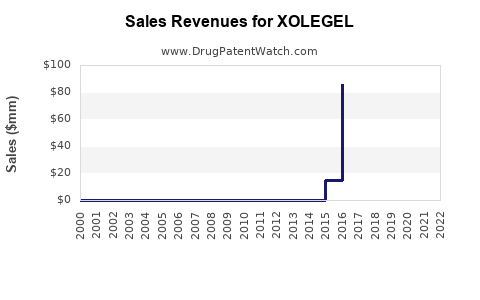
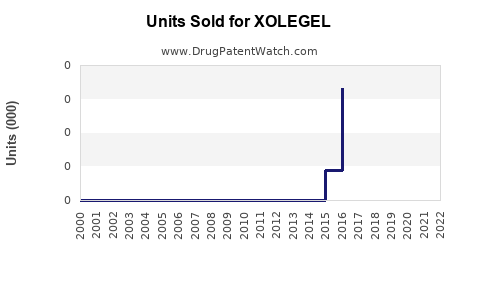
Annual Sales Revenues and Units Sold for XOLEGEL
| Drug Name | Revenues (USD) | Units | Year |
|---|---|---|---|
| XOLEGEL | ⤷ Start Trial | ⤷ Start Trial | 2022 |
| XOLEGEL | ⤷ Start Trial | ⤷ Start Trial | 2021 |
| XOLEGEL | ⤷ Start Trial | ⤷ Start Trial | 2020 |
| XOLEGEL | ⤷ Start Trial | ⤷ Start Trial | 2019 |
| XOLEGEL | ⤷ Start Trial | ⤷ Start Trial | 2018 |
| XOLEGEL | ⤷ Start Trial | ⤷ Start Trial | 2017 |
| >Drug Name | >Revenues (USD) | >Units | >Year |
Xolegel Market Analysis, Sales Projections, Patent Status, and Competitive Outlook
Xolegel is a ketoconazole 2% topical gel for seborrheic dermatitis. Its commercial opportunity is limited by generic ketoconazole products, low disease severity, extensive competition from shampoos and creams, and the absence of meaningful exclusivity. Public sources do not disclose reliable current Xolegel brand sales. The base-case outlook is a small, declining U.S. prescription market rather than a growth franchise.
What is Xolegel and what is it used for?
Xolegel contains ketoconazole 2% and is applied topically for seborrheic dermatitis in adults and pediatric patients 12 years and older. The product is a prescription gel, not an oral antifungal or biologic therapy.[1]
| Product attribute | Xolegel |
|---|---|
| Active ingredient | Ketoconazole |
| Strength | 2% |
| Dosage form | Topical gel |
| FDA indication | Seborrheic dermatitis |
| Administration | Topical |
| Prescription status | Prescription drug |
| Primary prescriber base | Dermatologists, primary-care physicians |
| Main competitors | Ketoconazole shampoo, ketoconazole cream, corticosteroid products, ciclopirox, OTC dandruff products |
| Commercial category | Mature topical dermatology product |
Seborrheic dermatitis is commonly treated with lower-cost shampoos, creams, foams, lotions and nonprescription products. Xolegel’s gel vehicle may support use on selected facial or localized lesions, but the formulation has limited differentiation from other topical ketoconazole products.
What is the FDA regulatory status of Xolegel?
Xolegel was approved under FDA New Drug Application 021159. The FDA labeling identifies ketoconazole 2% gel as a treatment for seborrheic dermatitis.[1] The product has no biologic component and does not require biosimilar review.
The relevant regulatory issues are:
- FDA approval is based on topical ketoconazole efficacy and safety.
- The product does not have the commercial protection associated with an orphan drug or biologic exclusivity period.
- The regulatory pathway for competing ketoconazole products is generally abbreviated drug approval, where eligible.
- The primary commercial question is current marketing activity and reimbursement, not FDA clinical differentiation.
A product’s presence in historical FDA records does not establish that the brand is actively marketed. FDA databases can retain approval records after commercial sales decline or cease.[2]
What is the Orange Book status of Xolegel?
Xolegel’s commercial protection is limited because the product is an older small-molecule topical drug with generic substitution potential. The Orange Book is the principal FDA source for listed patents, exclusivity and therapeutic-equivalence information.[2]
No current commercial forecast should assume that Xolegel has meaningful active exclusivity unless a current Orange Book record confirms an unexpired patent or exclusivity period. The product’s practical market position is consistent with a mature, generic-exposed medicine.
| Exclusivity category | Xolegel assessment |
|---|---|
| New chemical entity exclusivity | Expired or not commercially relevant |
| Orphan exclusivity | Not applicable |
| Pediatric exclusivity | No material current impact identified |
| Biologic exclusivity | Not applicable |
| Active brand-protection period | Not established from public commercial data |
| Generic substitution risk | High |
When did Xolegel lose exclusivity?
Xolegel’s primary product protection would have been tied to its initial FDA approval and any formulation patents listed during the launch period. Those protections are no longer sufficient to support a premium branded market.
The key distinction is between:
- FDA approval remaining in force;
- a patent remaining legally unexpired; and
- the brand retaining commercial exclusivity.
A drug can remain FDA-approved after its effective market exclusivity has ended. For Xolegel, generic ketoconazole products and competing topical formulations have materially reduced the value of any historical formulation protection.
A precise current patent-expiration conclusion cannot be made from the product name alone because topical formulation patents may have different filing dates, terminal disclaimers, ownership records and listing histories. The commercial conclusion is more direct: Xolegel does not have a defensible high-value exclusivity position comparable to a recently launched dermatology product.
How many patents cover Xolegel?
The number of patents that historically covered Xolegel is less important than whether any enforceable, unexpired patent currently blocks competing ketoconazole gel products.
Potential protection could have covered:
- the ketoconazole gel composition;
- solvent and vehicle selection;
- gel stability;
- manufacturing processes;
- treatment of seborrheic dermatitis;
- packaging or container systems.
Generic applicants may challenge listed patents through Paragraph IV certifications, but no major, publicly prominent Paragraph IV litigation campaign associated with Xolegel is evident in the standard commercial profile of the product. This is consistent with a low-value, mature topical market in which litigation economics are weaker than for high-revenue systemic medicines.
What formulations are protected by Xolegel?
Xolegel’s main differentiator is its gel formulation rather than a new active ingredient. The formulation may provide:
- a cosmetically acceptable topical vehicle;
- localized application to affected skin;
- an alternative to shampoo-based treatment;
- a different drying and spread profile from creams or ointments.
The formulation does not create a strong barrier by itself. Generic developers can compete through the same active ingredient and dosage form if they demonstrate the required pharmaceutical equivalence and regulatory suitability.
Xolegel also competes indirectly with formulations that are not pharmaceutical equivalents, including ketoconazole shampoo, ketoconazole cream and ciclopirox products. Patients and physicians can substitute across these products based on site of disease, convenience, formulary status and out-of-pocket cost.
What is the competitive landscape for Xolegel?
Xolegel competes in a fragmented topical dermatology market. The most important competitive groups are listed below.
| Competitive group | Examples | Competitive effect |
|---|---|---|
| Ketoconazole products | 2% shampoo, cream and other topical formulations | Highest active-ingredient substitution risk |
| Ciclopirox products | Shampoo, cream and gel formulations | Alternative prescription antifungal therapy |
| Corticosteroids | Low- and medium-potency topical steroids | Rapid anti-inflammatory relief, but different safety profile |
| Calcineurin inhibitors | Tacrolimus and pimecrolimus | Used in selected inflammatory or sensitive-area cases |
| OTC products | Zinc pyrithione, selenium sulfide, coal tar and salicylic acid products | Reduce prescription demand |
| Cosmetic products | Medicated shampoos and scalp treatments | Compete on convenience and price |
Xolegel has limited ability to expand the total market. Most incremental sales would need to come from switching among existing seborrheic dermatitis treatments.
What patent litigation affects Xolegel?
No major current patent litigation is central to Xolegel’s commercial outlook based on the product’s mature status and limited revenue potential. The likely legal risks are generic entry, trademark enforcement, product liability and reimbursement disputes rather than high-value patent litigation.
Paragraph IV challenges
A Paragraph IV challenge would be commercially rational only if the expected market size justified litigation expense. Topical ketoconazole products generally have lower revenue per product than high-value specialty medicines. This reduces the incentive for prolonged patent litigation.
Settlement agreements
No commercially material settlement agreement is a recognized driver of Xolegel’s current market position. Any historical settlement would need to be evaluated against the specific patent, applicant, launch date and settlement restrictions.
Manufacturing and intellectual-property barriers
Manufacturing barriers are moderate. A developer must produce a stable topical gel with acceptable uniformity, microbiological quality, packaging compatibility and patient-use characteristics. These requirements can delay approval but do not create a durable barrier comparable to complex biologics, long-acting injectables or sterile combination products.
Which companies are challenging or competing with Xolegel?
The competitive field includes generic manufacturers and branded dermatology companies with ketoconazole, ciclopirox and corticosteroid products. Public commercial data do not support identifying one dominant company as the principal current challenger to Xolegel.
The relevant competitor types are:
- generic topical manufacturers;
- dermatology-focused specialty companies;
- large pharmaceutical companies with mature antifungal portfolios;
- consumer-health companies selling medicated dandruff products.
The market is price-sensitive. Pharmacy benefit managers and insurers can favor generic creams, shampoos or lower-cost alternatives over a branded gel.
What are the sales projections for Xolegel?
Public sources do not disclose audited, current Xolegel brand revenue. A precise historical sales series or company-level forecast would therefore not be reliable. The following is a scenario model for U.S. branded Xolegel sales, not reported revenue.
| Year | Bear case | Base case | Upside case |
|---|---|---|---|
| 2025 | $0-$0.25 million | $0.25-$1.0 million | $1.0-$2.5 million |
| 2026 | $0-$0.2 million | $0.2-$0.8 million | $0.8-$2.0 million |
| 2027 | $0 | $0.1-$0.6 million | $0.6-$1.6 million |
| 2028 | $0 | $0.1-$0.5 million | $0.5-$1.3 million |
| 2029 | $0 | $0-$0.4 million | $0.4-$1.1 million |
The base case assumes:
- no meaningful new indication;
- no major promotional relaunch;
- continued generic and OTC competition;
- stable or declining prescription volume;
- limited payer preference for the branded product;
- no major supply disruption among competing products.
The upside case requires a commercial event such as renewed dermatology promotion, a distribution agreement, a supply shortage affecting alternatives or a new owner repositioning the product. Those conditions are not established by the current public record.
What revenue exposure does Xolegel create for an owner?
Xolegel is unlikely to provide material revenue exposure for a diversified pharmaceutical company. Its value is more likely to arise from portfolio fit, manufacturing capacity, distribution relationships or a broader dermatology bundle.
| Value driver | Assessment |
|---|---|
| Revenue scale | Low |
| Gross-margin potential | Potentially favorable if manufacturing cost is low |
| Growth potential | Low |
| Generic erosion | High |
| Regulatory risk | Low to moderate |
| Litigation exposure | Low relative to specialty drugs |
| Commercial complexity | Low |
| Strategic value | Mainly portfolio or channel-related |
A buyer should value Xolegel on cash-flow durability and operating cost, not on historical branded-drug multiples.
How does Xolegel compare with ketoconazole shampoo and cream?
| Factor | Xolegel | Ketoconazole shampoo | Ketoconazole cream |
|---|---|---|---|
| Main use | Localized seborrheic dermatitis | Scalp and broader seborrheic dermatitis use | Localized fungal or seborrheic conditions |
| Patient convenience | Moderate | High for scalp disease | Moderate |
| Generic pressure | High | High | High |
| OTC substitution | High | Very high | Moderate |
| Differentiation | Gel vehicle | Scalp-focused delivery | Cream vehicle |
| Commercial outlook | Small niche | Larger prescription and OTC market | Mature generic market |
Xolegel may retain a niche where patients prefer a gel or where physicians want a non-shampoo topical option. That niche is unlikely to support substantial price premiums without payer coverage or strong physician promotion.
What generic entry risks exist for Xolegel?
Generic entry risk is high because:
- ketoconazole is an established active ingredient;
- the indication is common and non-life-threatening;
- multiple topical treatment alternatives exist;
- treatment courses are generally short or intermittent;
- prescribers can substitute among dosage forms;
- payers have strong incentives to use low-cost products.
The most likely generic-launch scenario is gradual brand erosion rather than a sudden loss of a large revenue stream. If Xolegel is already minimally marketed, generic entry would have limited incremental impact on brand sales because the brand may have already lost most of its commercial share.
What licensing deals affect Xolegel?
No major recent licensing transaction is a known driver of Xolegel’s commercial outlook. Any licensing value would likely depend on rights to a broader dermatology portfolio, geographic distribution, manufacturing economics or a bundled commercial arrangement.
A standalone Xolegel transaction would likely attract limited strategic interest unless the buyer has:
- low-cost topical manufacturing;
- an established dermatology sales force;
- a branded-generic portfolio;
- access to underpenetrated markets;
- a plan to combine the product with other seborrheic dermatitis treatments.
What geographic markets offer the most opportunity?
The United States is the most relevant market for Xolegel because of its FDA approval and established prescription infrastructure. The largest practical opportunity outside the United States would come from countries where:
- ketoconazole gel has local regulatory approval;
- topical dermatology products are reimbursed;
- generic competition is less intense;
- branded-generic pricing remains viable.
International expansion would require separate regulatory approvals, local trademarks, supply arrangements and pricing strategies. It would not automatically create protection against local generic competition.
Key Takeaways
- Xolegel is a ketoconazole 2% prescription gel for seborrheic dermatitis.
- Its active-ingredient and formulation differentiation are limited.
- Generic ketoconazole products, OTC dandruff products and alternative topical therapies constrain pricing.
- No meaningful current exclusivity advantage is evident from the product’s mature market position.
- Current public sources do not disclose reliable Xolegel brand sales.
- A reasonable U.S. base-case forecast is $0.25 million to $1.0 million in 2025, declining to zero to $0.4 million by 2029.
- The product has low strategic value as a standalone asset but may fit a low-cost dermatology portfolio.
- Biosimilar risk is irrelevant because Xolegel is a small-molecule topical drug.
- Generic substitution and commercial inactivity are more important risks than patent litigation.
FAQs
Is Xolegel still marketed in the United States?
Historical FDA approval records do not establish active commercial marketing. Current brand availability should be treated as limited unless confirmed through current pharmacy, wholesaler or manufacturer records.
Is there a generic version of Xolegel?
Generic ketoconazole topical products compete with Xolegel, although the exact availability of a therapeutically equivalent gel may vary by market and time. Ketoconazole creams and shampoos also create substantial indirect substitution.
Does Xolegel have biosimilar competition?
No. Xolegel contains the small molecule ketoconazole and is regulated as a conventional drug, not a biologic.
Is Xolegel a high-value licensing opportunity?
No, not as a standalone asset. Its value is more likely to depend on manufacturing cost, distribution access and inclusion in a broader dermatology portfolio.
What would increase Xolegel sales?
A supply shortage affecting competing products, renewed physician promotion, improved payer coverage, international expansion or a differentiated delivery claim could increase sales. None is established as a current base-case assumption.
References
- U.S. Food and Drug Administration. (2006). Xolegel (ketoconazole) gel, 2% prescribing information. Drugs@FDA.
- U.S. Food and Drug Administration. (n.d.). Approved drug products with therapeutic equivalence evaluations: Orange Book. https://www.fda.gov/drugsatfda
- U.S. National Library of Medicine. (n.d.). DailyMed: Ketoconazole topical gel and related product labeling. https://dailymed.nlm.nih.gov/
More… ↓
