Share This Page
Drug Sales Trends for PROLENSA
✉ Email this page to a colleague
Payment Methods and Pharmacy Types for PROLENSA (2016)
Revenues by Pharmacy Type
Units Sold by Pharmacy Type
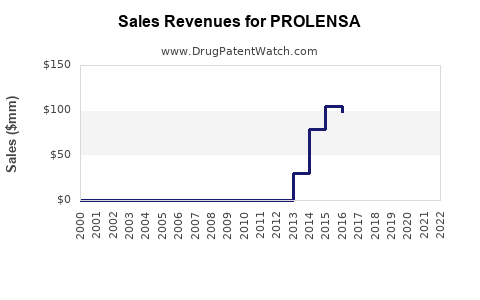
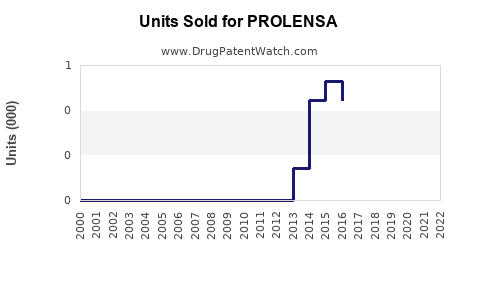
Annual Sales Revenues and Units Sold for PROLENSA
| Drug Name | Revenues (USD) | Units | Year |
|---|---|---|---|
| PROLENSA | ⤷ Start Trial | ⤷ Start Trial | 2022 |
| PROLENSA | ⤷ Start Trial | ⤷ Start Trial | 2021 |
| PROLENSA | ⤷ Start Trial | ⤷ Start Trial | 2020 |
| >Drug Name | >Revenues (USD) | >Units | >Year |
PROLENSA Market Analysis, Sales Forecast, Patent Risk, and Competitive Outlook
PROLENSA, Bausch + Lomb’s nepafenac ophthalmic suspension 0.07%, is an established branded ophthalmic NSAID used after cataract surgery. Its commercial base is supported by recurring cataract procedures, once-daily dosing, and physician familiarity. The main risks are generic nepafenac competition, lower-cost bromfenac and ketorolac alternatives, payer pressure, and limited product differentiation.
Bausch + Lomb does not publicly disclose standalone PROLENSA revenue in its reported product tables. The projections below are therefore an analyst model, not company guidance. Under the base case, estimated U.S. net sales decline gradually from approximately $125 million in 2024 to $100 million by 2029.
What is PROLENSA and what is it used for?
PROLENSA contains nepafenac 0.07%, a nonsteroidal anti-inflammatory drug administered as an ophthalmic suspension. The FDA approved PROLENSA for the treatment of postoperative inflammation and reduction of ocular pain in patients who have undergone cataract surgery.[1]
The labeled regimen is one drop in the affected eye once daily, beginning one day before cataract surgery, continued on the day of surgery, and for 14 days after surgery.[1] The regimen is commercially relevant because once-daily dosing is simpler than several competing topical NSAID schedules.
PROLENSA product profile
| Attribute | PROLENSA |
|---|---|
| Active ingredient | Nepafenac |
| Strength | 0.07% ophthalmic suspension |
| Dosage form | Prescription eye drops |
| Primary use | Postoperative inflammation and ocular pain after cataract surgery |
| Sponsor and marketer | Bausch + Lomb |
| FDA pathway | New drug application |
| Primary channel | U.S. ophthalmology and cataract surgery |
| Dosing | Once daily around cataract surgery |
| Main competitors | Generic nepafenac, ILEVRO, bromfenac, ketorolac, branded combination drops |
PROLENSA is not a biologic and has no biosimilar exposure. Its competitive risk comes from small-molecule generic ophthalmic products and therapeutic substitutes.
How large is the PROLENSA market?
The addressable market is tied primarily to cataract surgery volume rather than chronic disease prevalence. U.S. cataract procedures are generally estimated in the several-million-procedure range annually, with volume supported by population aging, improved surgical access, and demand for visual correction.
The relevant commercial market includes:
- Branded and generic ophthalmic NSAIDs
- Ophthalmic corticosteroids
- Fixed-dose antibiotic-steroid combinations
- Postoperative combination regimens
- Physician samples and specialty-pharmacy prescriptions
- Hospital and ambulatory surgery center purchases
The cataract market is structurally attractive because each procedure can generate a short-duration prescription. It is also price-sensitive because the treatment course is brief and multiple low-cost alternatives are available.
Estimated PROLENSA U.S. net sales
Bausch + Lomb reports at the portfolio and therapeutic-area level rather than providing a reliable standalone PROLENSA sales line in public filings. The following estimates use prescription volume, estimated net price, and brand retention assumptions.
| Year | Downside case | Base case | Upside case |
|---|---|---|---|
| 2024 | $95 million | $125 million | $155 million |
| 2025 | $82 million | $121 million | $153 million |
| 2026 | $68 million | $117 million | $150 million |
| 2027 | $55 million | $113 million | $148 million |
| 2028 | $43 million | $108 million | $145 million |
| 2029 | $33 million | $102 million | $142 million |
The base case assumes gradual price erosion and moderate branded retention. The downside case assumes a more aggressive generic conversion rate, formulary exclusion, and limited ability to maintain premium pricing. The upside case assumes continued physician preference for once-daily nepafenac, relatively slow generic substitution, and stable cataract procedure growth.
These figures represent estimated U.S. net sales, not gross prescription value. They exclude international revenue, rebates that cannot be independently verified, and potential acquisitions or divestitures.
What are the main drivers of PROLENSA sales?
Cataract procedure growth
Cataract surgery is the core volume driver. A growing older population supports procedure demand, although annual volume can be affected by Medicare utilization, operating-room capacity, staffing, and ambulatory surgery center economics.
Once-daily dosing
PROLENSA’s once-daily regimen is its clearest product-level advantage. Physicians may prefer lower dosing frequency when adherence is a concern, particularly for elderly patients using multiple postoperative medications.
Brand prescribing and surgeon preference
Postoperative ophthalmic prescribing is influenced by surgeon habit, clinical familiarity, sample availability, payer coverage, and the preferred pharmacy channel of the practice. A product with established use can retain a meaningful share even after generic entry if the prescriber views the formulation or dosing schedule as valuable.
Formulation characteristics
PROLENSA uses a nepafenac suspension at 0.07%. Its formulation and concentration differentiate it from older nepafenac products and from other topical NSAIDs. The commercial value of that differentiation depends on whether payers and physicians consider the clinical benefit sufficient to justify the branded price.
Payer and pharmacy substitution
Generic substitution is the principal revenue pressure. Plans may place generic nepafenac, bromfenac, or ketorolac on preferred tiers while assigning PROLENSA higher copays or requiring prior authorization. In a short postoperative treatment course, prescribers and patients have limited economic incentive to absorb a large brand premium.
How does PROLENSA compare with competing ophthalmic NSAIDs?
| Product or class | Active ingredient | Typical commercial position | Competitive impact |
|---|---|---|---|
| PROLENSA | Nepafenac 0.07% | Branded, once-daily postoperative NSAID | Retains value through dosing and brand familiarity |
| Generic nepafenac | Nepafenac, commonly 0.1% | Lower-cost generic alternative | Direct substitution risk |
| ILEVRO | Nepafenac 0.3% | Branded once-daily nepafenac product | Direct branded competitor |
| Bromfenac products | Bromfenac | Branded and generic postoperative NSAIDs | Strong therapeutic substitute |
| Ketorolac products | Ketorolac | Low-cost generic NSAID | High payer pressure |
| NSAID-steroid combinations | Various | Simplified postoperative regimens | May reduce standalone NSAID use |
PROLENSA competes most directly with other once-daily or low-frequency NSAIDs. Its position is weaker against generic ketorolac when payers prioritize cost and stronger where surgeons value branded nepafenac or dosing convenience.
What is the FDA regulatory status of PROLENSA?
PROLENSA is FDA-approved for postoperative ocular inflammation and pain associated with cataract surgery.[1] It is a conventional small-molecule prescription drug, not a biologic. The product does not depend on a supplemental biologics pathway or interchangeability designation.
FDA regulatory risk is relatively low because the product has an established indication and a mature safety record. Commercial risk is higher than regulatory risk. The relevant regulatory issues are generic approvals, labeling differences, manufacturing compliance, supply continuity, and any changes to ophthalmic suspension quality controls.
Key regulatory considerations
- The active ingredient is nepafenac.
- The product is administered topically to the eye.
- Generic competition can be approved through an abbreviated new drug application.
- Ophthalmic suspensions require controls for sterility, particle characteristics, content uniformity, and container-closure performance.
- Product shortages or manufacturing interruptions could affect market share but would not create durable exclusivity.
What patents protect PROLENSA and when does it lose exclusivity?
PROLENSA’s commercial protection has historically depended on formulation, concentration, dosing, and method-of-use claims rather than a new molecular entity exclusivity period for nepafenac itself.
The base compound is old, and the key business question is whether enforceable patents covering the specific ophthalmic formulation remain listed or otherwise relevant to an ANDA challenge. Patent status must be evaluated against the current FDA Orange Book, issued patents, terminal disclaimers, patent-term adjustments, litigation records, and any settlement agreements.[2]
Exclusivity assessment
| Protection type | Relevance to PROLENSA |
|---|---|
| New chemical entity exclusivity | Not the principal protection mechanism |
| Formulation patents | Potentially important |
| Concentration and suspension claims | Potentially important |
| Method-of-use claims | May protect postoperative use |
| Orphan exclusivity | Not relevant |
| Pediatric exclusivity | Not a core commercial assumption |
| Regulatory exclusivity | Limited compared with new molecular entities |
| Trademark and brand equity | Supports residual sales after patent expiry |
A Paragraph IV certification against a listed patent could trigger Hatch-Waxman litigation and a 30-month stay of ANDA approval under applicable conditions.[3] The commercial impact depends on whether the generic applicant receives a first-filer advantage, whether the patent survives, and whether the parties settle.
No reliable public basis supports treating PROLENSA as having a long remaining period of uncontested market exclusivity. The forecast therefore assumes continuing generic risk rather than a protected monopoly through 2029.
Are there Paragraph IV challenges or patent litigation affecting PROLENSA?
Publicly available information does not support assigning a current, material litigation premium to the forecast without a verified active docket, Orange Book listing, or settlement document. The relevant litigation trigger would be an ANDA applicant certifying that a listed PROLENSA patent is invalid, unenforceable, or not infringed.
Potential litigation outcomes include:
- Generic approval after the relevant patent expires.
- Settlement with a licensed or agreed launch date.
- Early launch after a favorable non-infringement or invalidity ruling.
- Delayed launch if the patent remains enforceable.
- At-risk launch, followed by damages exposure if the patent is later upheld.
The absence of a confirmed active litigation event in the model means the forecast uses gradual erosion rather than a single abrupt generic-entry date.
What generic launch scenarios exist for PROLENSA?
Scenario 1: Controlled generic entry
One or more generic products launch with limited pharmacy substitution because surgeons continue prescribing the brand. PROLENSA loses volume but preserves a premium price in selected plans and practices.
Estimated outcome: 3% to 7% annual revenue decline.
Scenario 2: Broad substitution
Generic nepafenac gains preferred formulary status and pharmacies substitute it routinely. Bausch + Lomb responds with contracting, samples, and price concessions.
Estimated outcome: 10% to 20% annual revenue decline during the first two years after broad generic adoption.
Scenario 3: Therapeutic substitution
Plans steer patients to bromfenac or ketorolac rather than generic nepafenac. PROLENSA loses share even if direct nepafenac competition remains limited.
Estimated outcome: faster volume loss but lower direct price transparency because the erosion is spread across multiple products.
How strong is the PROLENSA commercial and patent estate?
PROLENSA has moderate commercial durability and limited molecular defensibility.
| Factor | Assessment |
|---|---|
| Market need | Stable and recurring |
| Volume growth | Low to moderate |
| Brand recognition | Moderate to strong among cataract surgeons |
| Dosing advantage | Meaningful but not exclusive |
| Generic vulnerability | High |
| Patent durability | Dependent on current formulation and method claims |
| Biosimilar risk | None |
| Manufacturing complexity | Moderate |
| Pricing power | Limited |
| Revenue visibility | Moderate, but standalone sales are not disclosed |
Manufacturing creates some friction for competitors because sterile ophthalmic suspensions require validated production, packaging, and quality systems. It is not a high barrier comparable with complex biologics or specialized injectables. A capable generic manufacturer can replicate the dosage form if it satisfies FDA requirements.
What is the outlook for PROLENSA revenue exposure?
Under the base case, PROLENSA remains a meaningful but declining contributor to Bausch + Lomb’s ophthalmic pharmaceutical portfolio.
The modeled five-year decline from $125 million to $102 million represents a compound annual decline of approximately 4%. That trajectory assumes no severe supply disruption and no abrupt loss of formulary access.
The main variables are:
- Timing of broad generic entry
- Size of the brand price premium
- Share of cataract surgeons using once-daily NSAIDs
- Bausch + Lomb contracting strategy
- Generic nepafenac availability
- Relative pricing of bromfenac and ketorolac
- Cataract surgery volume
- Payer coverage and patient copays
PROLENSA is more likely to experience a gradual harvest phase than an immediate commercial collapse. The product can retain revenue after exclusivity through surgeon preference, but its premium is difficult to defend indefinitely against low-cost ophthalmic NSAIDs.
How does PROLENSA compare with ILEVRO and generic nepafenac?
PROLENSA and ILEVRO compete within the same nepafenac category, while generic nepafenac competes primarily on price. The two branded products have similar commercial vulnerabilities because their value depends on formulation, dosing, and physician preference rather than a unique mechanism.
Generic nepafenac has the strongest payer position. ILEVRO and PROLENSA have stronger brand positioning but face similar substitution pressure. Ketorolac is the principal low-cost benchmark, while bromfenac competes on clinical familiarity and dosing convenience.
Key Takeaways
- PROLENSA is a branded nepafenac 0.07% ophthalmic suspension marketed by Bausch + Lomb.
- Its approved use is postoperative inflammation and ocular pain after cataract surgery.
- Standalone PROLENSA revenue is not publicly disclosed with sufficient reliability.
- The modeled U.S. net-sales base is approximately $125 million in 2024.
- Base-case sales decline to about $102 million by 2029.
- The core demand driver is recurring cataract surgery volume.
- Once-daily dosing and physician familiarity support brand retention.
- Generic nepafenac, bromfenac, and ketorolac create substantial pricing and substitution risk.
- PROLENSA has no biosimilar risk because it is a small-molecule ophthalmic drug.
- Patent value depends on current formulation, concentration, method-of-use, and Orange Book records.
- The product has moderate commercial durability but limited long-term defensibility against generic entry.
FAQs about PROLENSA market sales and exclusivity
Is PROLENSA still a branded drug?
Yes. PROLENSA remains a branded prescription ophthalmic product marketed by Bausch + Lomb.
Does PROLENSA have generic competition?
Generic nepafenac and other ophthalmic NSAIDs create direct or therapeutic competition. The commercial effect depends on FDA approvals, patent status, formulary placement, and pharmacy substitution.
Is PROLENSA covered by Medicare?
Coverage varies by Medicare Part D plan, formulary tier, pharmacy benefit design, and postoperative prescribing arrangement. Cataract-surgery drug coverage can also depend on the treatment setting and payer policy.
What is the largest risk to PROLENSA sales?
The largest risk is broad substitution to lower-cost generic nepafenac, ketorolac, or bromfenac products after loss or weakening of formulation-based market protection.
Is PROLENSA a high-growth ophthalmology product?
No. PROLENSA is better characterized as a mature, cash-generating ophthalmic product with stable procedure-linked demand and gradual erosion risk.
References
- U.S. Food and Drug Administration. (2013). PROLENSA (nepafenac ophthalmic suspension) 0.07% prescribing information.
- U.S. Food and Drug Administration. (n.d.). Approved drug products with therapeutic equivalence evaluations: Orange Book.
- U.S. Congress. (1984). Drug Price Competition and Patent Term Restoration Act of 1984, 21 U.S.C. § 355(j).
- Bausch + Lomb Corporation. (2024). Annual report pursuant to Section 13 or 15(d) of the Securities Exchange Act of 1934.
- U.S. Food and Drug Administration. (n.d.). Drugs@FDA: FDA-approved drugs database.
More… ↓
