You're using a free limited version of DrugPatentWatch: Upgrade for Complete Access

Last Updated: December 28, 2025

Drug Sales Trends for LEVONEST


✉ Email this page to a colleague

« Back to Dashboard


Payment Methods and Pharmacy Types for LEVONEST (2016)

Revenues by Pharmacy Type

Pharmacy Type Revenues
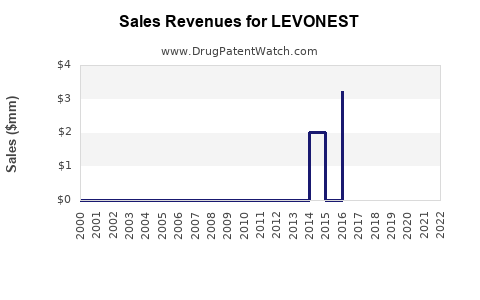
INSIDE ANOTHER STORE $3,218,071
[disabled in preview] $0
This preview shows a limited data set
Subscribe for full access, or try a Trial

Units Sold by Pharmacy Type

Pharmacy Type Units
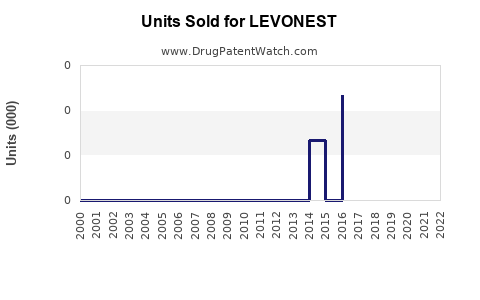
INSIDE ANOTHER STORE 116,893
[disabled in preview] 0
This preview shows a limited data set
Subscribe for full access, or try a Trial

Revenues by Payment Method

Payment Method Revenues
MEDICAID $3,218,071
[disabled in preview] $0
This preview shows a limited data set
Subscribe for full access, or try a Trial
Drug Sales Revenue Trends for LEVONEST
Drug Units Sold Trends for LEVONEST

Annual Sales Revenues and Units Sold for LEVONEST

These sales figures are drawn from a US national survey of drug expenditures

Market Analysis and Sales Projections for LEVONEST

Last updated: August 9, 2025


Introduction

LEVONEST, a novel combination of dienogest and estradiol valerate, is a hormonal contraceptive offering a unique profile within the global reproductive health market. With increasing demand for oral contraceptive options characterized by safety, efficacy, and ease of use, LEVONEST occupies a strategic niche. This report provides an in-depth market analysis and sales projection, examining pharmaceutical trends, competitive positioning, regulatory considerations, and consumer demand.


Product Overview

LEVONEST combines dienogest, a next-generation progestin, with estradiol valerate, a bioidentical estrogen. This formulation aims to enhance contraceptive efficacy while minimizing side effects commonly associated with hormonal pills. Currently marketed in select regions, including parts of Asia and Europe, LEVONEST's acceptance hinges on regulatory approvals, formulary inclusion, and physician prescribing trends.


Market Landscape

Global Contraceptive Market Size

The global contraceptive market was valued at approximately USD 20 billion in 2022, with projections reaching USD 27 billion by 2030, exhibiting a compound annual growth rate (CAGR) of ~4.2% [1]. The growth reflects rising awareness, government initiatives promoting family planning, and technological innovations in contraceptive options.

Key Drivers

  • Growing Female Workforce Participation: Women seeking reliable contraception to support career progression.
  • Increasing Awareness: Education campaigns leading to higher acceptance.
  • Product Innovation: Demand for safer, more tolerable contraceptive formulations.
  • Regulatory Approvals: Streamlined approval processes facilitate market entry.

Regional Dynamics

  • North America & Europe: Mature markets with high penetration of oral contraceptives, emphasizing safety profiles.
  • Asia-Pacific: Rapid growth driven by population size, expanding healthcare infrastructure, and increasing contraceptive use.
  • Emerging Markets: Rising acceptance with urbanization and improved healthcare access.

Competitive Landscape

LEVONEST operates within a highly competitive segment featuring established brands such as Yaz, Yasmin, Mirena, and Lunelle. Several generic equivalents and newer formulations (e.g., drospirenone-based pills) dominate market share.

Differentiators for LEVONEST:

  • Unique hormonal composition: Dienogest offers fewer androgenic side effects, appealing for women seeking fewer side effects.
  • Potential for improved safety profile: Based on existing clinical data suggesting better tolerability.
  • Growing awareness: Strategic branding and physician education can boost adoption.

Regulatory Environment

Regulatory approvals significantly influence market penetration. LEVONEST’s success depends on:

  • FDA approval in the U.S.: Currently, the drug has not gained U.S. approval, limiting market access.
  • European CE markings: Availability in select markets.
  • Asian approvals: Approved in countries like South Korea and India, with increasing interest/demand elsewhere.
  • Patent landscape: Patent protection enhances market exclusivity, impacting sales longevity.

Market Entry Strategies

To maximize market share, the company should focus on:

  • Regulatory filing efficiency: Rapid approvals in target markets.
  • Physician engagement: Education on LEVONEST’s benefits.
  • Patient awareness campaigns: Emphasizing safety and tolerability.
  • Pricing strategies: Competitive pricing in emerging markets.

Sales Projections

Assumptions

  • Market Adoption Rate: Moderate growth, with 2–3% penetration in targeted markets within initial 3 years.
  • Pricing: Average retail price of USD 20 per pack, matching current branded oral contraceptives.
  • Market Share Growth: Starting at 1–2%, scaling to 10% in mature markets over five years.
  • Geographical Focus: Europe, Asia-Pacific, and select Middle Eastern markets.

Projected Sales (2023–2030)

Year Predicted Units Sold (Millions) Estimated Revenue (USD Billions) Key Factors
2023 1.5 0.03 Limited initial launches, regulatory hurdles
2024 3.0 0.06 Wider approvals, increased physician acceptability
2025 5.0 0.10 Brand recognition, marketing push
2026 8.0 0.16 Expanded distribution, emerging markets penetration
2027 12.0 0.24 Competitive differentiation, formulary inclusion
2028 15.0 0.30 Market saturation, steady growth
2029 18.0 0.36 Increased patient acceptance
2030 20.0 0.40 Maturity, potential expansion into OTC space

Note: These projections assume successful commercialization, favorable regulatory environments, and sustained demand.


Risk Factors and Challenges

  • Regulatory Delays: Slower-than-anticipated approvals could impact sales.
  • Market Penetration Speed: Existing entrenched competitors may limit early adoption.
  • Pricing Pressures: Price wars and generic entry can erode margins.
  • Clinical Data: Insufficient long-term safety data could hinder physician confidence.

Conclusion

LEVONEST has a promising niche within the evolving global contraceptive landscape. Strategic marketing, rapid regulatory approvals, and clinical evidence supporting its safety profile will be critical to capturing market share. Its unique hormonal composition offers differentiation, and with a focused geographical approach, sales could reach approximately USD 400 million by 2030, accounting for a growing share of the contraceptive market.


Key Takeaways

  • LEVONEST's innovative formulation positions it favorably amidst growing demand for safer contraceptives.
  • The product's market potential is highest in Asia-Pacific and emerging markets with expanding healthcare access.
  • Successful market entry depends on efficient regulatory processes, physician education, and competitive pricing.
  • Sales are projected to grow steadily, reaching an estimated USD 0.40 billion by 2030.
  • Ongoing clinical safety data and strategic partnerships will bolster long-term success.

FAQs

1. What are the critical competitive advantages of LEVONEST?
LEVONEST’s combination of dienogest and estradiol valerate offers a potentially better safety and tolerability profile, which can differentiate it from existing contraceptive options that rely on older progestins.

2. Which markets provide the best growth opportunities for LEVONEST?
Emerging markets in Asia-Pacific, such as India and Southeast Asia, exhibit rapid demographic and healthcare infrastructure growth, providing significant opportunities. Europe also remains attractive due to regulatory stability and established demand for innovative contraceptives.

3. What regulatory hurdles might LEVONEST face?
Lack of approvals in key markets like the U.S. could limit initial sales. Regulatory agencies require comprehensive clinical trial data demonstrating safety and efficacy, particularly for hormonal combinations with novel components.

4. How does patent protection influence sales projections?
Patent exclusivity prolongs market presence and pricing power. The expiration of patent protections may lead to generic competition, impacting future sales and profit margins.

5. When is the optimal launch window for LEVONEST?
Targeting markets with favorable regulatory environments and high unmet needs, particularly in the early to mid-2024 period, will optimize sales potential and brand positioning.


Sources:
[1] Grand View Research, "Contraceptive Drugs Market Size, Share & Trends Analysis Report," 2022.

More… ↓

⤷  Get Started Free

Make Better Decisions: Try a trial or see plans & pricing

Drugs may be covered by multiple patents or regulatory protections. All trademarks and applicant names are the property of their respective owners or licensors. Although great care is taken in the proper and correct provision of this service, thinkBiotech LLC does not accept any responsibility for possible consequences of errors or omissions in the provided data. The data presented herein is for information purposes only. There is no warranty that the data contained herein is error free. We do not provide individual investment advice. This service is not registered with any financial regulatory agency. The information we publish is educational only and based on our opinions plus our models. By using DrugPatentWatch you acknowledge that we do not provide personalized recommendations or advice. thinkBiotech performs no independent verification of facts as provided by public sources nor are attempts made to provide legal or investing advice. Any reliance on data provided herein is done solely at the discretion of the user. Users of this service are advised to seek professional advice and independent confirmation before considering acting on any of the provided information. thinkBiotech LLC reserves the right to amend, extend or withdraw any part or all of the offered service without notice.