Drug Sales Trends for IBANDRONATE
Payment Methods and Pharmacy Types for IBANDRONATE (2016)
Revenues by Pharmacy Type
Units Sold by Pharmacy Type
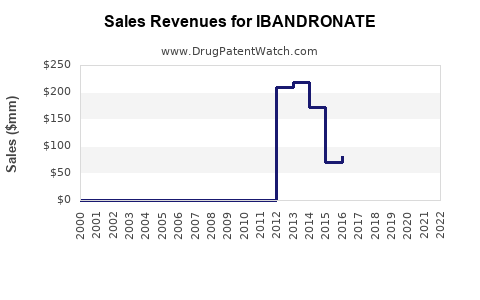
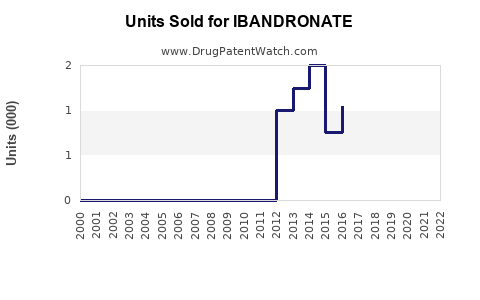
Annual Sales Revenues and Units Sold for IBANDRONATE
| Drug Name | Revenues (USD) | Units | Year |
|---|---|---|---|
| IBANDRONATE | ⤷ Start Trial | ⤷ Start Trial | 2022 |
| IBANDRONATE | ⤷ Start Trial | ⤷ Start Trial | 2021 |
| IBANDRONATE | ⤷ Start Trial | ⤷ Start Trial | 2020 |
| IBANDRONATE | ⤷ Start Trial | ⤷ Start Trial | 2019 |
| IBANDRONATE | ⤷ Start Trial | ⤷ Start Trial | 2018 |
| IBANDRONATE | ⤷ Start Trial | ⤷ Start Trial | 2017 |
| >Drug Name | >Revenues (USD) | >Units | >Year |
Ibandronate Market Analysis, Sales Forecast, Patent Status, and Competitive Outlook
Ibandronate is a mature bisphosphonate used mainly for postmenopausal osteoporosis. The market is almost entirely generic, with oral 150 mg monthly tablets and intravenous 3 mg quarterly injections as the main commercial forms. Global demand is declining slowly because physicians increasingly use denosumab, zoledronic acid, alendronate, risedronate, and anabolic osteoporosis therapies. Ibandronate remains commercially viable in price-sensitive markets and for patients who need a quarterly infusion but do not require the broader fracture-protection profile associated with some competing drugs.
A reasonable base-case estimate places global ibandronate product sales in the range of $150 million to $250 million in 2025, with a likely decline to $110 million to $180 million by 2030. The market is primarily a volume business. New branded entrants face limited pricing power, while manufacturers with low-cost active pharmaceutical ingredient supply, reliable sterile injectable production, and broad geographic registrations have the strongest positions.
What is ibandronate and how is it used?
Ibandronate sodium is a nitrogen-containing bisphosphonate that inhibits osteoclast-mediated bone resorption. In the United States, the approved products include oral tablets and intravenous injection for postmenopausal osteoporosis [1].
| Product characteristic | Oral ibandronate | Intravenous ibandronate |
|---|---|---|
| Common strength | 150 mg tablet | 3 mg/3 mL injection |
| Typical schedule | Once monthly | Once every three months |
| Administration | Fasting, with water; patient must remain upright | Administered by a healthcare professional |
| Principal use | Postmenopausal osteoporosis | Postmenopausal osteoporosis |
| Commercial status | Generic | Generic in several markets |
| Main sales driver | Low acquisition cost and monthly dosing | Adherence and infrequent dosing |
| Main limitation | Gastrointestinal administration requirements | Injection-center access and renal monitoring |
The drug has a narrower commercial position than zoledronic acid and denosumab. Ibandronate is generally associated with vertebral-fracture reduction, whereas competing agents have stronger positioning for hip and nonvertebral fracture prevention in many treatment guidelines [2].
How large is the ibandronate market?
No major originator currently reports standalone worldwide ibandronate revenue. The product is sold by multiple generic manufacturers, and public company filings usually combine it with broader osteoporosis or generic portfolios. Market estimates therefore require a bottom-up model based on prescription volume, tender activity, formulation mix, and realized generic prices.
Estimated global market size
| Year | Low case | Base case | High case | Market condition |
|---|---|---|---|---|
| 2024 | $160 million | $220 million | $300 million | Mature generic market |
| 2025 | $150 million | $210 million | $285 million | Continued price pressure |
| 2026 | $140 million | $200 million | $270 million | Volume stable, prices lower |
| 2027 | $130 million | $190 million | $255 million | Gradual substitution |
| 2028 | $122 million | $180 million | $240 million | Injectable demand supports value |
| 2029 | $115 million | $170 million | $225 million | Further generic erosion |
| 2030 | $108 million | $160 million | $210 million | Mature, declining market |
These are analyst-model estimates rather than reported industry totals. The model assumes relatively stable treated-patient volume in emerging markets, a 3% to 6% annual decline in developed-market volume, and a 2% to 5% annual decline in average selling prices.
The quarterly injectable product should retain a higher revenue contribution per patient than monthly tablets. Its share of global value is likely to be approximately 30% to 45%, despite representing a smaller share of total treatment units. The precise mix varies by reimbursement system and the availability of infusion services.
What are the main ibandronate sales drivers?
Generic price and reimbursement
Ibandronate has limited differentiation at the molecule level. Payers therefore favor products with low acquisition cost, stable supply, and approved local packaging. In the United States, pharmacy benefit substitution has reduced branded price premiums. Hospital and clinic buyers often purchase the injectable version through contracts or group purchasing arrangements.
Dosing convenience
Monthly oral administration is more convenient than daily bisphosphonate dosing. Quarterly intravenous administration can improve persistence for patients who cannot comply with oral fasting and upright-position requirements. These advantages support continued use even when alternative medicines have stronger clinical positioning.
Aging populations
The number of older women at risk of osteoporosis supports baseline demand. Population aging is most favorable in Japan, South Korea, China, Western Europe, and the United States. Demographics alone are not sufficient to offset the loss of branded pricing or substitution by denosumab and zoledronic acid.
Generic availability
Generic supply expands prescribing access and supports unit growth in lower-income markets. It also compresses revenue. A market with increasing generic volume can therefore show stable patient demand while producing lower manufacturer sales.
How does ibandronate compare with competing osteoporosis drugs?
| Drug | Standard administration | Competitive position | Commercial risk to ibandronate |
|---|---|---|---|
| Alendronate | Weekly oral | Low-cost first-line bisphosphonate | High |
| Risedronate | Weekly or monthly oral | Oral alternative with broad use | High |
| Zoledronic acid | Annual IV infusion | Strong adherence and fracture-prevention profile | High |
| Denosumab | Six-month injection | Strong physician adoption and convenience | High |
| Teriparatide and abaloparatide | Daily injection | Anabolic therapy for high-risk patients | Moderate |
| Romosozumab | Monthly injection | High-risk osteoporosis segment | Moderate |
| Ibandronate | Monthly oral or quarterly IV | Low-cost option with convenient dosing | Niche to moderate |
Ibandronate’s strongest competitive segment is patients who need an inexpensive monthly or quarterly option and who are not being escalated to anabolic therapy. Its weakest segment is patients with high hip-fracture risk, severe osteoporosis, or prior treatment failure.
Clinical positioning
The FDA label reports vertebral-fracture efficacy for oral ibandronate, but treatment selection depends on total fracture risk, renal function, gastrointestinal tolerance, adherence, and prior therapy [1]. The absence of a dominant once-yearly or six-monthly positioning limits ibandronate’s ability to defend share against zoledronic acid and denosumab.
What is the FDA regulatory status of ibandronate?
Ibandronate is FDA-approved for the treatment and prevention of postmenopausal osteoporosis. Boniva tablets were approved in 2003, and the intravenous injection was approved in 2006 [3]. Generic applications can be submitted under the Abbreviated New Drug Application pathway because the products have established reference standards and do not require new efficacy trials equivalent to those for an innovative drug.
FDA product considerations
Manufacturers must demonstrate:
- Pharmaceutical equivalence to the reference product.
- Bioequivalence for oral tablets.
- Sterility, particulate control, and container-closure integrity for injection.
- Adequate labeling for renal impairment and administration instructions.
- Compliance with current good manufacturing practice requirements.
The injection has greater technical and regulatory complexity than tablets. Sterile manufacturing failures, particulate contamination, extractables and leachables, and supply interruptions can materially affect market share.
What is the Orange Book status of ibandronate?
The original Boniva intellectual-property estate no longer provides a meaningful commercial barrier to ordinary generic entry in the United States. The product has been exposed to generic competition for years, and the market should be evaluated as off-patent unless a specific later patent is listed for a particular formulation, device, or method of use.
| Exclusivity category | Current commercial relevance |
|---|---|
| Original compound protection | Expired |
| Original oral product protection | Expired or commercially exhausted |
| Original injectable product protection | No meaningful barrier to standard generic competition |
| Pediatric exclusivity | Not a current barrier |
| Regulatory exclusivity | No material remaining exclusivity for the mature products |
| Formulation or device claims | Must be checked against current Orange Book listings and litigation records |
The Orange Book identifies patents and exclusivity associated with approved products, but it does not capture every patent that could be asserted against a generic manufacturer. A generic entrant must also review formulation, manufacturing, salt, polymorph, packaging, and method-of-use patents outside the listed product record [4].
When did ibandronate lose exclusivity?
The principal commercial loss of exclusivity occurred in the early 2010s, when generic oral ibandronate entered the U.S. market. Generic competition subsequently expanded across European and other regulated markets. The practical result was a sharp reduction in branded Boniva pricing and a shift from branded revenue to multi-supplier generic volume.
The relevant exclusivity timeline is:
| Milestone | Approximate timing |
|---|---|
| First U.S. approval of oral Boniva | 2003 |
| U.S. approval of intravenous Boniva | 2006 |
| First U.S. generic oral competition | Early 2010s |
| Broad international generic availability | 2010s |
| Current market position | Mature generic |
What patent litigation and Paragraph IV risks affect ibandronate?
The risk of a new Paragraph IV event against the original ibandronate products is low because the key products are already genericized. Paragraph IV litigation is more relevant to:
- A new extended-release tablet.
- A differentiated injectable presentation.
- A fixed-dose combination.
- A novel dosing regimen.
- A new indication supported by proprietary clinical data.
- A manufacturing process that produces a distinct solid form or impurity profile.
A generic company launching standard ibandronate would primarily face ordinary ANDA litigation risk, regulatory deficiencies, and supply-chain challenges rather than a major originator patent blockade. The commercial exposure from a patent suit is limited unless the product relies on a later-added formulation or use claim.
What formulations are protected or commercially differentiated?
The standard products are immediate-release oral tablets and ready-to-use intravenous injection. Commercial differentiation is more likely to come from manufacturing and delivery attributes than from strong residual patent protection.
Potentially valuable formulation opportunities include:
- Lower-pill-burden oral dosing.
- Improved gastrointestinal tolerability.
- Ready-to-administer prefilled syringes.
- Longer shelf-life injectable presentations.
- Reduced administration time.
- Lower-volume intravenous packaging.
- Hospital-friendly unit-dose packaging.
The business case for these products is constrained by the size of the remaining market. A formulation investment would need to achieve a price premium, secure procurement preference, or reduce administration costs. A simple line extension without reimbursement differentiation is unlikely to produce durable returns.
Which companies compete in the ibandronate market?
Competition is fragmented. The market includes generic manufacturers, regional pharmaceutical companies, and distributors that source ibandronate from third-party manufacturers.
Competitive groups include:
- Large global generic companies with regulated-market registrations.
- European and Japanese generic manufacturers.
- Indian manufacturers supplying active pharmaceutical ingredient and finished doses.
- Chinese manufacturers serving domestic and selected export markets.
- Regional companies selling branded generics in Latin America, the Middle East, and Asia.
The strongest suppliers are those that combine FDA, European, Japanese, or other stringent regulatory approvals with dependable sterile capacity. A low tablet price alone does not ensure durable market share.
What manufacturing and intellectual-property barriers exist?
The active ingredient is commercially mature, and chemical synthesis is not expected to create a major barrier for qualified suppliers. The more significant barriers are operational:
- Consistent control of bisphosphonate-related impurities.
- Reliable sourcing of ibandronic acid or ibandronate sodium.
- Sterile injectable production.
- Long-term stability data.
- Validated aseptic processes.
- Pharmacopoeial compliance.
- Regulatory registration in each target jurisdiction.
- Product serialization and local packaging requirements.
The injectable market is more defensible than the tablet market because fewer manufacturers maintain compliant sterile production. This creates periodic shortages and allows suppliers with reliable inventory to capture temporary share.
How strong is the ibandronate patent estate?
The original ibandronate patent estate is weak as a current commercial defense. The core molecule and standard dosage forms are mature. Residual value may exist in specific country-level patents, manufacturing claims, formulations, or proprietary delivery systems, but these claims are unlikely to protect the standard global market.
| Patent-estate factor | Assessment |
|---|---|
| Core compound protection | Low current value |
| Standard tablet protection | Low |
| Standard injection protection | Low to moderate, depending on jurisdiction and presentation |
| Manufacturing know-how | Moderate |
| Sterile production capability | Moderate to high |
| New formulation potential | Moderate but commercially uncertain |
| Barrier to ordinary generic entry | Low |
The most valuable protection is likely to be know-how, regulatory approvals, manufacturing reliability, and procurement relationships rather than classic composition-of-matter patents.
What are the likely ibandronate launch scenarios for new generic entrants?
Base-case launch
A new supplier launches standard 150 mg tablets in selected markets, wins a limited share through price competition, and achieves modest revenue. This scenario is viable when the manufacturer already has osteoporosis sales infrastructure.
Injectable-focused launch
A manufacturer enters with 3 mg/3 mL injection and targets hospitals, clinics, and specialty distributors. This approach requires higher quality investment but can support better pricing and less crowded competition.
Regional branded-generic launch
A company sells ibandronate under a local brand in markets where physicians prescribe branded generics. This strategy can produce higher unit prices than unbranded commodity supply but requires promotion and local registration expenditure.
Reformulation launch
A company introduces a differentiated formulation or device. This has the greatest potential price premium but also the highest regulatory, clinical, and patent risk. The addressable market is unlikely to justify large development spending unless the product solves a specific administration or adherence problem.
What sales growth can investors expect through 2030?
The base case is a declining-value market with stable-to-declining unit demand.
| Driver through 2030 | Expected direction |
|---|---|
| Global patient need | Up |
| Oral ibandronate volume | Flat to down |
| Injectable ibandronate volume | Flat in selected markets |
| Average selling price | Down |
| Generic manufacturer count | Stable to up |
| Branded premium | Down |
| Regulatory scrutiny | Stable |
| Revenue pool | Down |
A reasonable base-case revenue decline is 4% to 6% annually. The high case assumes stronger growth in emerging markets, supply shortages among competitors, and continued demand for quarterly injection. The low case assumes faster switching to denosumab and zoledronic acid, lower generic prices, and reduced use of bisphosphonates among newly diagnosed patients.
Key Takeaways
- Ibandronate is a mature, predominantly generic osteoporosis product.
- Estimated global product sales are approximately $150 million to $250 million in 2025.
- Base-case sales are likely to decline to about $160 million by 2030.
- Oral tablets face intense price competition from alendronate, risedronate, and generic ibandronate suppliers.
- The 3 mg quarterly injection has stronger commercial defensibility because sterile production and clinic distribution are more difficult.
- Core patent protection no longer provides a meaningful barrier to standard generic entry.
- The main business risks are substitution by denosumab and zoledronic acid, price erosion, and declining branded utilization.
- The strongest investment case is a low-cost, reliable injectable or a regional branded-generic platform, not a conventional tablet-only launch.
FAQs
Is ibandronate still commercially profitable?
Yes, but profitability depends on manufacturing cost, market access, and formulation. Tablet margins are generally compressed. Injectable products can produce better economics where sterile capacity is limited.
Is ibandronate a biosimilar opportunity?
No. Ibandronate is a chemically synthesized small molecule, not a biologic. The relevant pathway is generic drug approval, typically through an ANDA or comparable national procedure.
Can a company launch a new branded ibandronate product?
Yes, if the product has a differentiated formulation, device, dosing schedule, or clinical claim. A standard tablet would face limited pricing power and immediate generic competition.
Which ibandronate formulation has the best growth potential?
The quarterly intravenous formulation has the strongest relative potential because it addresses adherence and oral-administration limitations. Its absolute growth remains constrained by competition from annual zoledronic acid and six-monthly denosumab.
Does ibandronate have meaningful revenue exposure for major pharmaceutical companies?
Usually not as a standalone growth asset. For diversified generic companies, ibandronate can contribute recurring revenue, but it is unlikely to materially affect total corporate performance unless the product is part of a broader osteoporosis portfolio or benefits from a temporary supply shortage.
References
- U.S. Food and Drug Administration. (2024). Boniva (ibandronate sodium) tablets and injection prescribing information.
- Camacho, P. M., Petak, S. M., Binkley, N., et al. (2020). American Association of Clinical Endocrinologists and American College of Endocrinology clinical practice guideline for the diagnosis and treatment of postmenopausal osteoporosis. Endocrine Practice, 26(Suppl. 1), 1-46.
- U.S. Food and Drug Administration. (2003, 2006). Drugs@FDA: Boniva approval history.
- U.S. Food and Drug Administration. (2024). Approved drug products with therapeutic equivalence evaluations, Orange Book.
More… ↓
