Share This Page
Drug Sales Trends for DUREZOL
✉ Email this page to a colleague
Payment Methods and Pharmacy Types for DUREZOL (2016)
Revenues by Pharmacy Type
Units Sold by Pharmacy Type
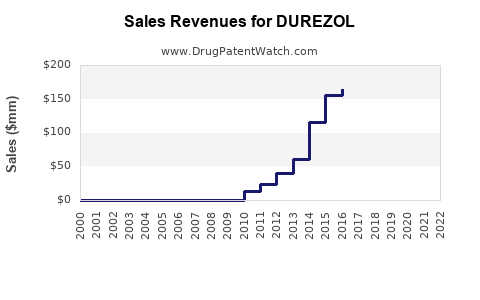
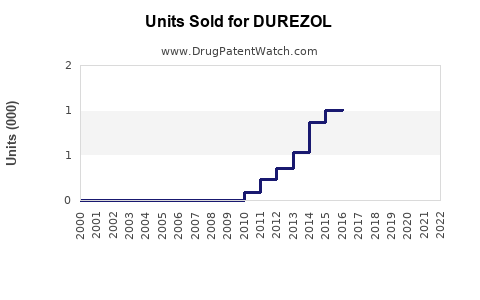
Annual Sales Revenues and Units Sold for DUREZOL
| Drug Name | Revenues (USD) | Units | Year |
|---|---|---|---|
| DUREZOL | ⤷ Start Trial | ⤷ Start Trial | 2022 |
| DUREZOL | ⤷ Start Trial | ⤷ Start Trial | 2021 |
| DUREZOL | ⤷ Start Trial | ⤷ Start Trial | 2020 |
| DUREZOL | ⤷ Start Trial | ⤷ Start Trial | 2019 |
| DUREZOL | ⤷ Start Trial | ⤷ Start Trial | 2018 |
| DUREZOL | ⤷ Start Trial | ⤷ Start Trial | 2017 |
| >Drug Name | >Revenues (USD) | >Units | >Year |
Durezol Market Analysis and Sales Projections: Difluprednate Ophthalmic Emulsion
Durezol is a mature ophthalmic corticosteroid with declining brand economics and continuing clinical demand. The product contains difluprednate 0.05% and is approved in the United States for postoperative ocular inflammation and pain, and for endogenous anterior uveitis. Its commercial opportunity is limited by generic competition, low treatment duration, and substitution from prednisolone acetate, loteprednol, and other ophthalmic steroids.
The base-case forecast estimates global Durezol and difluprednate-related sales of approximately $45 million to $60 million in 2025, declining to $30 million to $45 million by 2030. The branded product is expected to contract faster than the total difluprednate market as generic availability expands.
What is Durezol and how large is its addressable market?
Durezol is a topical ophthalmic emulsion containing difluprednate 0.05%, a fluorinated corticosteroid. It is administered after ocular surgery and in selected inflammatory eye conditions.
| Metric | Durezol profile |
|---|---|
| Active ingredient | Difluprednate |
| Strength | 0.05% ophthalmic emulsion |
| Dosage form | Topical eye drop emulsion |
| Initial U.S. approval | 2008 |
| Primary indications | Postoperative ocular inflammation and pain; endogenous anterior uveitis |
| Prescription status | Prescription medicine |
| Key markets | United States, Japan, selected international markets |
| Main substitutes | Prednisolone acetate, loteprednol etabonate, dexamethasone, nepafenac, bromfenac |
| Market maturity | Mature, post-generic |
| Current commercial risk | Generic price erosion and formulary substitution |
Durezol competes in two adjacent markets:
- Ophthalmic corticosteroids used after cataract, corneal, and other eye surgeries.
- Anti-inflammatory therapy for anterior uveitis and other inflammatory eye conditions.
The postoperative market is larger but more price-sensitive. Uveitis provides a smaller volume opportunity with stronger physician preference for high-potency treatment in selected patients.
What are the main clinical and commercial advantages of Durezol?
Durezol’s commercial positioning depends on potency, dosing convenience, and formulation characteristics.
Difluprednate is a prodrug converted in ocular tissue to active difluoroprednisolone butyrate. The product’s emulsion formulation supports ocular surface retention and permits a relatively concentrated corticosteroid dose. Its labeled postoperative regimen is typically four times daily, with more frequent dosing in severe inflammation where clinically appropriate. Treatment periods are generally short.
Compared with prednisolone acetate 1%, Durezol is commonly positioned as a potent alternative with an emulsion formulation. Compared with loteprednol, Durezol is generally viewed as a stronger anti-inflammatory option but with greater concern regarding intraocular pressure elevation and steroid-related adverse effects.
These characteristics create a clinically defensible niche but do not create strong pricing power. Most postoperative patients use topical steroids for days or weeks rather than months, limiting annual revenue per patient.
What is the FDA regulatory status of Durezol?
Durezol received FDA approval in 2008 under a new drug application for difluprednate ophthalmic emulsion 0.05%. The product is approved for:
- Treatment of inflammation and pain associated with ocular surgery.
- Treatment of endogenous anterior uveitis.
The FDA label identifies increased intraocular pressure, delayed wound healing, cataract formation, and infection-related risks associated with ophthalmic corticosteroids. The product requires monitoring in patients with glaucoma risk and is not designed for unrestricted long-term use.[1]
Durezol is not a biologic. Biosimilar regulation therefore does not apply. Competition occurs through abbreviated new drug applications, branded generics, and therapeutic substitution.
When does Durezol lose exclusivity?
Durezol has already lost meaningful U.S. market exclusivity.
The product’s initial regulatory exclusivity period expired years ago. Any relevant composition, formulation, or manufacturing patents associated with the original product are also no longer expected to provide commercially meaningful exclusivity in the United States. The Orange Book should be treated as the controlling source for current listed patents and exclusivity status.[2]
| Exclusivity issue | Current assessment |
|---|---|
| New chemical entity exclusivity | Expired |
| Pediatric exclusivity | No current commercial effect |
| Original formulation protection | Expired or commercially ineffective |
| Orange Book blocking patent | No known active blocking position of material duration |
| Generic entry | Established |
| Biosimilar exposure | Not applicable |
The relevant commercial question is no longer whether generic entry is legally permitted. It is how many manufacturers are active, how aggressively they discount, and whether payers prefer generic difluprednate over lower-cost corticosteroid alternatives.
What patents protect Durezol?
Durezol’s historical patent estate covered difluprednate chemistry, ophthalmic formulations, and related corticosteroid use. The principal patent families associated with difluprednate were filed well before product launch and have reached the end of their ordinary commercial life.
Patent protection historically addressed:
- Difluorinated corticosteroid compounds.
- Ophthalmic emulsion formulations.
- Therapeutic use in ocular inflammation.
- Manufacturing and formulation stability.
No active U.S. patent position is expected to prevent generic difluprednate ophthalmic emulsion from competing in the current market. Any remaining foreign rights would have limited value because major revenue concentration is in the United States and because product-level patent life has already run out.
How strong is the Durezol patent estate?
The current patent estate is weak from a market-exclusion perspective.
| Patent-estate factor | Assessment |
|---|---|
| Composition-of-matter protection | Expired |
| Formulation protection | Expired or nonblocking |
| Method-of-use protection | Limited commercial effect |
| Manufacturing barriers | Low to moderate |
| Litigation leverage | Low |
| Generic launch deterrence | Low |
| Lifecycle-management potential | Limited |
A generic manufacturer does not face the same development burden as the original sponsor. It must demonstrate pharmaceutical equivalence and bioequivalence or satisfy the applicable FDA requirements for the ophthalmic product, but it does not need to recreate the original clinical development program.
Which companies are challenging Durezol?
Generic competition is the primary challenge to Durezol. Manufacturers that have received or pursued approval for difluprednate ophthalmic emulsion have included companies such as Dr. Reddy’s Laboratories, Lupin, and other generic ophthalmic suppliers, depending on product availability and FDA approval status.
The competitive field can change because ophthalmic products are frequently affected by:
- Product discontinuations.
- Supply interruptions.
- Manufacturer consolidations.
- Authorized-generic arrangements.
- Pharmacy benefit manager contracting.
- Hospital and ambulatory-surgery-center purchasing.
A generic launch does not automatically eliminate the brand. Durezol can retain prescriptions where physicians value familiarity, where pharmacies experience generic shortages, or where patients are stabilized on the branded product. The economic effect is still substantial because payers and pharmacies generally use generic availability to reduce reimbursement.
What is the Orange Book status of Durezol?
Durezol’s Orange Book position should be considered nonblocking for current commercial planning. The Orange Book remains the authoritative source for any active listed patents, pediatric exclusivity, and reference-product information.[2]
For market forecasting, the relevant assumptions are:
- No active patent expected to delay ordinary generic entry.
- No remaining regulatory exclusivity expected to support premium pricing.
- Paragraph IV litigation is not a central current risk.
- Generic manufacturers can compete on price and distribution.
What Paragraph IV challenges and litigation affect Durezol?
Durezol is not currently defined by a major ongoing Paragraph IV litigation campaign. Earlier generic filings may have included certification disputes or patent challenges, but the commercial significance of those disputes has diminished as the original exclusivity period expired.
The absence of a current blocking dispute reduces legal uncertainty for generic suppliers. It also removes a potential defense for the brand against price erosion.
| Litigation category | Current commercial impact |
|---|---|
| Paragraph IV patent challenge | Low |
| Patent-infringement injunction risk | Low |
| Antitrust or settlement risk | Low |
| Product-liability exposure | Standard ophthalmic-steroid risk |
| Manufacturing litigation | Potential but not central |
| Settlement-driven delayed entry | Not a primary forecast assumption |
No major settlement agreement is included in the base-case forecast. A settlement would matter only if it imposed a delayed generic launch or restricted the number of entrants, neither of which is a necessary assumption for current modeling.
What are Durezol sales and revenue projections?
Durezol-specific revenue is not generally disclosed as a standalone line item by the commercial rights holder. The forecast below is therefore a market estimate based on product maturity, generic entry, ophthalmic corticosteroid demand, short treatment duration, and expected price erosion.
Base-case global sales forecast
| Year | Estimated Durezol brand sales | Estimated total difluprednate market | Key driver |
|---|---|---|---|
| 2024 | $20 million-$30 million | $55 million-$70 million | Mature brand and established generics |
| 2025 | $17 million-$26 million | $45 million-$60 million | Generic substitution |
| 2026 | $14 million-$22 million | $41 million-$55 million | Price compression |
| 2027 | $12 million-$19 million | $38 million-$51 million | More payer substitution |
| 2028 | $10 million-$17 million | $36 million-$48 million | Stable clinical demand |
| 2029 | $9 million-$15 million | $34 million-$46 million | Mature generic market |
| 2030 | $8 million-$14 million | $32 million-$44 million | Low growth, lower pricing |
The base case implies approximately 3% to 6% annual contraction in the total difluprednate market and approximately 8% to 12% annual contraction in branded Durezol sales.
Scenario analysis
| Scenario | 2030 total difluprednate sales | Assumptions |
|---|---|---|
| Bull case | $50 million-$65 million | Generic supply constraints, sustained surgeon preference, stable reimbursement |
| Base case | $32 million-$44 million | Normal generic competition and continued procedure growth |
| Bear case | $20 million-$30 million | Multiple low-cost entrants, broad substitution to prednisolone, brand delisting |
The bull case depends on supply-side limitations rather than strong underlying product growth. The strongest durable demand driver is the volume of cataract and other ocular surgeries, but procedure growth is unlikely to offset generic price erosion fully.
What is the revenue exposure for the brand owner?
Durezol is unlikely to be a material group-level revenue driver for a diversified ophthalmology company. Its financial value is greater as a cash-generating mature product than as a growth asset.
Revenue exposure is concentrated in:
- U.S. ophthalmology prescriptions.
- Cataract and other ocular-surgery channels.
- Specialty pharmacies and retail pharmacies.
- International markets where generic competition is less developed.
- Institutional accounts that experience generic supply gaps.
A potential acquirer would value Durezol primarily on cash flow, manufacturing efficiency, distribution reach, and the ability to bundle it with other ophthalmic products. A strategic transaction based solely on high growth would be difficult to support.
How does Durezol compare with competing ophthalmic steroids?
| Product | Active ingredient | Main commercial advantage | Main limitation |
|---|---|---|---|
| Durezol | Difluprednate 0.05% | High potency and established surgical use | Generic erosion and pressure-related safety concerns |
| Pred Forte | Prednisolone acetate 1% | Low-cost, familiar standard of care | Frequent dosing and suspension handling |
| Lotemax | Loteprednol etabonate | Lower perceived steroid-risk profile | Higher cost and potentially lower potency |
| Maxidex | Dexamethasone | Broad availability and low cost | Generic competition and safety monitoring |
| Nevanac | Nepafenac | Nonsteroidal anti-inflammatory positioning | Higher cost and different clinical role |
| Prolensa | Bromfenac | Convenient dosing in postoperative care | NSAID class limitations and competition |
Durezol has the strongest positioning where rapid anti-inflammatory activity matters and the prescriber accepts steroid-monitoring requirements. Prednisolone acetate remains the main economic competitor because it is inexpensive, familiar, and widely available.
What generic launch risks exist for Durezol?
The principal generic risks are price and channel substitution rather than patent litigation.
Generic launch impact
A single generic entrant can reduce brand net pricing through pharmacy substitution. Multiple entrants can reduce generic prices sharply and compress manufacturer margins. The impact is amplified because Durezol is a short-course product with limited patient persistence.
Supply-chain risk
Ophthalmic manufacturing requires sterile filling, container-closure integrity, and validated preservative or aseptic processes. These requirements create modest manufacturing barriers. They can support temporary price stability if manufacturers experience shortages, but they do not create durable exclusivity.
Therapeutic substitution risk
Even if difluprednate demand remains stable, prescriptions can migrate to:
- Prednisolone acetate.
- Loteprednol.
- Dexamethasone.
- NSAID ophthalmic products in postoperative protocols.
This makes the total corticosteroid market more relevant than the difluprednate molecule market alone.
What licensing deals affect Durezol?
Durezol originated with Sirion Therapeutics and was commercialized through larger ophthalmology platforms. The product’s commercial history has been associated with the Alcon and Novartis ophthalmology businesses, although product-label ownership and distribution arrangements can vary by country and over time.
No new licensing transaction is required for the base-case forecast. Future value would most likely arise from:
- Regional distribution rights.
- Authorized-generic supply agreements.
- Portfolio bundling with surgical ophthalmology products.
- Manufacturing or supply contracts.
A licensing deal would have limited strategic value unless it included a differentiated formulation, a new delivery system, or a protected indication.
What geographic markets offer the strongest opportunity?
The United States remains the most commercially important market because of procedure volume, specialist prescribing, and established reimbursement infrastructure. Its downside is rapid generic substitution.
Japan and selected Asian markets may retain stronger branded pricing or slower generic penetration, but regulatory and distribution requirements reduce the value of a standalone product. European markets are fragmented and generally more price-sensitive.
| Region | Opportunity | Risk |
|---|---|---|
| United States | High procedure volume and specialist demand | Fast generic substitution |
| Japan | Potentially stronger brand retention | Local regulatory and pricing controls |
| Western Europe | Established ophthalmic market | Tendering and reimbursement pressure |
| China | Large procedure base | Local competition and pricing controls |
| Latin America | Growing surgical demand | Currency, access, and distribution risk |
What is the likely generic launch scenario?
The most likely scenario is continued generic availability with gradual brand contraction rather than an abrupt loss of all branded sales.
A typical sequence is:
- Generic difluprednate gains pharmacy substitution.
- Brand reimbursement becomes restricted or requires higher patient cost sharing.
- Surgeons continue prescribing the molecule but lose control over product selection.
- The brand retains a smaller cash-pay, specialty, or supply-constrained segment.
- Total molecule sales stabilize at a lower price point.
The product could outperform the base case if generic supply remains unreliable or if a manufacturer develops a differentiated preservative-free, lower-frequency, or better-tolerated formulation. Existing Durezol alone does not provide a strong basis for premium growth.
Key Takeaways
- Durezol is a mature difluprednate ophthalmic emulsion with established use in postoperative inflammation and anterior uveitis.
- U.S. exclusivity and meaningful patent protection have expired.
- Generic competition, not Paragraph IV litigation, is the main commercial risk.
- Estimated global Durezol and difluprednate sales are $45 million to $60 million in 2025.
- Base-case total market sales decline to $32 million to $44 million by 2030.
- Branded Durezol sales are projected to decline faster than total molecule sales.
- Prednisolone acetate is the main low-cost competitor; loteprednol is the main premium steroid alternative.
- The product remains commercially viable as a mature ophthalmology asset but has limited standalone growth potential.
- Manufacturing complexity can cause temporary supply advantages but does not create durable market exclusivity.
- A differentiated formulation or delivery system would be required to materially improve the long-term outlook.
FAQs
Is Durezol still under patent protection?
No meaningful U.S. patent protection is expected to block generic difluprednate ophthalmic emulsion. Current Orange Book records control the definitive patent and exclusivity position.
Is difluprednate the same as Durezol?
Difluprednate is the active ingredient. Durezol is the original branded product containing difluprednate 0.05% ophthalmic emulsion.
Does Durezol have biosimilar competition?
No. Durezol is a small-molecule ophthalmic drug, so competition occurs through generic drug applications rather than the biosimilar pathway.
Can Durezol sales grow despite generic competition?
Short-term growth is possible if ocular-surgery volumes increase, generic supply is disrupted, or the brand retains surgeon preference. Sustained revenue growth is unlikely without a new formulation or protected indication.
What would make Durezol more valuable to an acquirer?
The strongest value drivers would be stable generic-free regional markets, efficient sterile manufacturing, hospital distribution contracts, and an improved formulation with differentiated dosing or tolerability.
References
-
U.S. Food and Drug Administration. (2023). Durezol (difluprednate ophthalmic emulsion) 0.05% prescribing information. FDA.
-
U.S. Food and Drug Administration. (2024). Approved drug products with therapeutic equivalence evaluations: Orange Book. FDA.
-
National Library of Medicine. (2024). DailyMed: Difluprednate ophthalmic emulsion labeling. U.S. National Library of Medicine.
-
U.S. Food and Drug Administration. (2008). Drugs@FDA: Durezol approval history. FDA.
More… ↓
