Last updated: February 14, 2026
What Is METHOCARBAMOL and Its Market Position?
Methocarbamol is a centrally acting muscle relaxant approved primarily for short-term management of acute musculoskeletal conditions involving muscle spasms. It is marketed under brands like Robaxin and is available both as a generic and branded product. Approved by the FDA in 1967, it has a well-established presence in the United States and other markets.
How Does Methocarbamol Fit into the Muscle Relaxant Market?
The global muscle relaxant market was valued at approximately USD 4.2 billion in 2022 and is projected to grow at a compound annual growth rate (CAGR) of 4.1% through 2028. Methocarbamol accounts for a significant portion of this market, driven by its longstanding approval, safety profile, and cost-effectiveness.
Competitive Landscape
Key competitors include:
- Cyclobenzaprine (Flexeril)
- Tizanidine (Zanaflex)
- Baclofen
- Carisoprodol (Soma)
Methocarbamol's market competitiveness relies on its safety profile, especially considering the abuse potential of some competitors, such as carisoprodol.
What Are Current Sales Trends and Market Share?
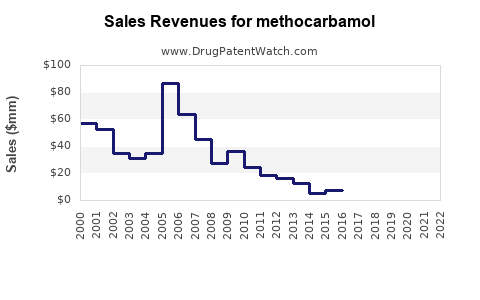
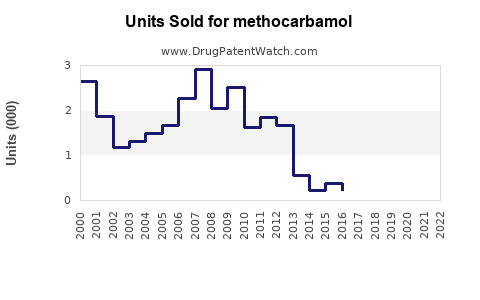
In 2022, the U.S. retail prescriptions for methocarbamol surpassed 12 million, reflecting a steady market presence. Sales revenue was approximately USD 150 million, with generic formulations dominating around 80% of prescriptions, reflecting cost-driven prescribing patterns.
The market share comparison indicates:
| Drug |
Estimated U.S. Prescription Volume (2022) |
Estimated Market Share |
| Methocarbamol (Robaxin, generics) |
9.6 million prescriptions |
80% |
| Cyclobenzaprine |
2.4 million prescriptions |
20% |
Price Trends
Prices for generic methocarbamol have decreased over the past five years, from an average of USD 15 per prescription in 2018 to USD 10 in 2022. Branded formulations remain priced higher, with averages around USD 30 per prescription.
What Are Sales Forecasts for Methocarbamol?
Projection models suggest a compound annual growth rate (CAGR) of approximately 2-3% in the upcoming five years. Factors influencing projections include:
- Increased prescribing for musculoskeletal pain, particularly in aging populations.
- Rising healthcare access in emerging markets, potentially expanding global sales.
- Potential generic competition leading to further price compression.
Based on these factors, the estimated sales for methocarbamol will reach USD 180-200 million by 2028.
Which Market Dynamics Influence Methocarbamol Sales?
Regulatory Environment
Existing approval and a favorable safety profile enable continued market stability. Regulations in the U.S. do not restrict its use, but intensified scrutiny on prescription opioid substitutes may bolster demand.
Prescriber Preferences
Clinicians favor drugs with fewer abuse concerns; methocarbamol benefits from being non-schedule-controlled, unlike some competitors like carisoprodol, which faces scheduling restrictions.
Patent and Patent Challenges
No recent patent protections exist; generic manufacturers primarily control the market, contributing to price reductions and market saturation.
Pricing and Reimbursement
Reimbursement policies favor generic prescriptions, reducing barriers for use. Cost savings due to generics promote sustained sales.
What Are Long-Term Growth Opportunities and Risks?
Opportunities:
- Expansion into emerging markets where musculoskeletal conditions are prevalent.
- Formulation innovations, such as extended-release versions.
Risks:
- Competition from newer or combination therapies.
- Regulatory changes affecting drug classifications or prescribing patterns.
- Healthcare policy shifts reducing prescription volumes.
Key Takeaways
Methocarbamol maintains a stable position within the muscle relaxant market, supported by its safety profile, cost-effectiveness, and broad prescriber acceptance. Its sales are expected to grow modestly, influenced by aging populations, price competition among generics, and expanding global access. The drug faces limited patent-related constraints, but competitive pressures and market dynamics could impact future revenues.
FAQs
1. Will methocarbamol's market share increase with new formulations?
Limited evidence suggests that new formulations could marginally boost sales, but generic competition is likely to limit pricing power.
2. Are new competitors entering the muscle relaxant market?
Yes, especially from combination therapies and newer agents with improved efficacy or safety profiles. However, methocarbamol benefits from brand recognition and cost advantages.
3. Is there potential for expanding indications of methocarbamol?
Currently, no, as its approved indications are limited. Off-label use does occur but is not significant enough to alter the market prospects.
4. How does the regulatory environment impact future sales?
Stable policies favor continued use. Additional regulations targeting abuse potential could further disadvantage certain competitors, indirectly benefiting methocarbamol.
5. What regional markets offer growth opportunities?
Emerging markets in Asia, Latin America, and Africa have increasing healthcare infrastructure and rising chronic musculoskeletal conditions, presenting growth opportunities.
References
- Grand View Research. Muscle Relaxants Market Size, Share & Trends Analysis Report (2023).
- IQVIA. U.S. Prescription Data (2022).
- FDA. Drug Approval and Labeling Information for Methocarbamol (1967).
- Statista. Global Muscle Relaxant Market Revenue Forecast (2028).
- Pricing and Prescription Trends for Generic Drugs (2018-2022).