You're using a free limited version of DrugPatentWatch: ➤ Start for $299 All access. No Commitment.

Last Updated: December 16, 2025

Drug Sales Trends for NORCO


✉ Email this page to a colleague

« Back to Dashboard


Payment Methods and Pharmacy Types for NORCO (2015)

Revenues by Pharmacy Type

Pharmacy Type Revenues
INSIDE HMO/CLINIC/HOSPITAL $204,523
DRUG STORE $10,368,492
[disabled in preview] $0
This preview shows a limited data set
Subscribe for full access, or try a Trial

Units Sold by Pharmacy Type

Pharmacy Type Units
INSIDE HMO/CLINIC/HOSPITAL 12,407
DRUG STORE 62,789
[disabled in preview] 0
This preview shows a limited data set
Subscribe for full access, or try a Trial

Revenues by Payment Method

Payment Method Revenues
MEDICARE $331,251
SELF OR FAMILY $4,639,971
[disabled in preview] $5,601,793
This preview shows a limited data set
Subscribe for full access, or try a Trial
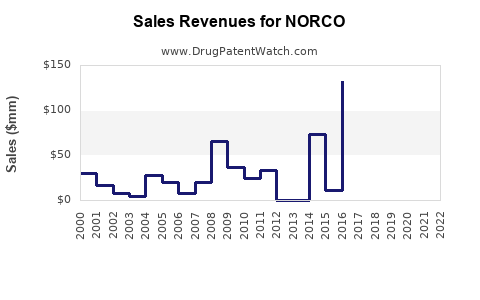
Drug Sales Revenue Trends for NORCO
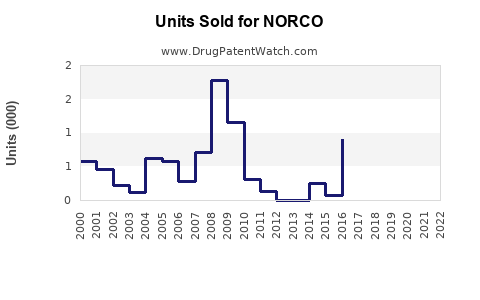
Drug Units Sold Trends for NORCO

Annual Sales Revenues and Units Sold for NORCO

These sales figures are drawn from a US national survey of drug expenditures

Market Analysis and Sales Projections for NORCO (Hydrocodone/Acetaminophen)

Last updated: August 4, 2025


Introduction

NORCO, a combination analgesic comprising hydrocodone and acetaminophen, has been a long-standing agent in managing moderate to severe pain. It holds a prominent position in the opioid market, previously prescribed extensively across the United States and other regions. Analyzing NORCO's market trajectory involves understanding its positioning within the overall opioid landscape, regulatory challenges, claimed medical utility, and evolving market dynamics influenced by the opioid epidemic and alternative therapies.


Market Overview

Historical Context and Demand Drivers

NORCO has traditionally commanded a significant share within prescription opioid formulations owing to its efficacy in pain management, especially for post-surgical, traumatic, and chronic pain conditions[^1]. Its mechanism of action involves hydrocodone's potent μ-opioid receptor activity combined with acetaminophen's analgesic properties.

Over the past decade, the global opioid market experienced robust growth, fueled by rising incidences of chronic pain, aging populations, and increased surgical procedures[^2]. As a result, NORCO and similar medications gained widespread prescription prevalence.

Regulatory and Legal Landscape

The market landscape has shifted markedly with the escalation of the opioid epidemic. The U.S. Food and Drug Administration (FDA) reclassified hydrocodone combination products to Schedule II in 2014, tightening regulatory controls[^3]. These changes impacted prescribing patterns, with healthcare providers seeking alternative pain management modalities to mitigate regulatory pressures and litigation risks.

In parallel, there's been a crackdown on pharmacies and prescribers involved in opioid overprescription. Consequently, prescriptions for NORCO declined steadily after 2014, prompting manufacturers to innovate or reposition their portfolios[^4].

Current Market Share and Competitors

Despite regulatory challenges, NORCO remains a key product for certain demographics and providers. Its primary competitors include:

  • Other combination opioids: Vicodin, Lortab, which contain similar active ingredients.
  • Non-opioid analgesics: NSAIDs, antidepressants, anticonvulsants.
  • Emerging therapies: Abuse-deterrent formulations, novel non-opioid analgesics, and nerve block treatments.

In the current landscape, the unavailability of hydrocodone combination products in some markets is partially offset by increased utilization of alternative medicines, but NORCO remains relevant in specific clinical settings[^5].


Market Size and Historical Sales Data

Pre-2014 Trends

Prior to the rescheduling, NORCO’s annual sales in the United States surpassed $1 billion, with volume growth driven by high prescription rates[^6]. It was among the top prescribed opioids, reflecting both demand and prescribing habits.

Post-2014 Decline

Data indicates a decline of approximately 20-30% in annual sales from 2014 to 2018, correlating with regulatory restrictions and payer restrictions[^7]. The decline has varied regionally but remains significant overall.

Recent Resurgence and Market Adjustments

In recent years, sales stabilized somewhat with the rise of abuse-deterrent formulations (ADFs) and efforts to regulate prescription practices. However, ongoing societal concerns limit a full recovery of sales volumes, especially as prescribers shift toward multimodal pain management.


Sales Projections (2023-2028)

Based on current trends, market analysis, and regulatory outlooks, the following projection estimates are appropriate:

Year Estimated U.S. Sales (USD Billions) Growth Rate (%) Comments
2023 ~$0.8 -10% to -15% Continued decline but plateauing trend.
2024 ~$0.75 -6% Slight stabilization with new formulations.
2025 ~$0.7 -7% Market saturation and paradigm shift.
2026 ~$0.65 -7% Increasing focus on non-opioid therapies.
2027 ~$0.6 -8% Regulatory tightening persists.
2028 ~$0.55 -8% Persistent decline, potential market exit.

Key Drivers Influencing Projections:

  • Regulatory Impact: Continued risk of reclassification or restrictions reduces prescriber confidence.
  • Market Competition: The expansion of abuse-deterrent formulations and non-opioid alternatives diminishes demand.
  • Epidemiological Changes: As awareness increases, opioid prescribing diminishes, with some regions actively promoting opioid-sparing strategies.
  • Legal and Litigation Risks: Increased litigation costs disincentivize aggressive marketing and prescribing.

Future Market Dynamics and Opportunities

Emerging Trends

  • adoption of abuse-deterrent formulations, which are less attractive for misuse.
  • increasing prescriber and patient awareness about opioid risks.
  • Shift toward multimodal pain management, combining lesser opioids with non-pharmacologic interventions.
  • Regulatory reforms fostering opioid deprescription, including prescription drug monitoring programs (PDMPs).

Opportunities

  • Development of new formulations that combine lower doses with multimodal agents.
  • Expansion into international markets with less stringent regulation.
  • Integration of digital health solutions to monitor and optimize pain management.

Conclusion

NORCO's market outlook from 2023 onward underscores a persistent decline, driven by the global opioid scrutiny, regulatory changes, and evolving pain management paradigms. While it remains a significant product historically, future sales volumes are projected to plateau at reduced levels within the multidimensional framework of therapeutics and societal considerations.


Key Takeaways

  • NORCO’s U.S. market has declined approximately 20-30% since 2014, with sales stabilizing but not rebounding significantly.
  • Regulatory shifts, including reclassification and prescription restrictions, are primary drivers restraining market growth.
  • The opioid epidemic has catalyzed increased adoption of non-opioid, multimodal pain management strategies, reducing demand for drugs like NORCO.
  • Despite market challenges, NORCO retains niche utility, especially where alternative formulations are unavailable or in specific patient populations.
  • Long-term projections indicate a continued decline in sales, emphasizing the importance for stakeholders to explore diversification and innovation.

FAQs

1. What are the main factors contributing to the decline in NORCO sales?
Regulatory reclassification, increased awareness of opioid abuse risks, the opioid epidemic, and the shift toward non-opioid pain therapies have significantly suppressed demand.

2. Are there any upcoming formulations or reformulations of NORCO?
While existing formulations face declining prescription, companies are developing abuse-deterrent formulations and alternative delivery mechanisms to enhance safety profiles.

3. How does the opioid epidemic influence market outlooks?
It has led to tighter regulations, prescriber caution, legal actions, and increased public health initiatives, all negatively impacting opiod-based drugs like NORCO.

4. What is the market potential for NORCO internationally?
In regions with less regulatory restrictions, there remains potential for growth; however, global trends toward opioid reduction diminish prospects.

5. What strategies should pharmaceutical companies consider for opioids like NORCO?
Investing in non-opioid analgesic research, adopting abuse-deterrent technology, and diversifying pain management portfolios are critical for future viability.


References

[^1]: U.S. Food & Drug Administration. (2014). Rescheduling of Hydrocodone Combination Products.
[^2]: MarketsandMarkets. (2020). Global Pain Management Market.
[^3]: FDA. (2014). Rescheduling Hydrocodone Combination Products.
[^4]: IMS Health. (2017). Prescription Trends in Opioids.
[^5]: CDC. (2019). Guideline for Prescribing Opioids for Chronic Pain.
[^6]: IQVIA. (2015). Summary Report on U.S. Prescription Drug Market.
[^7]: Statista. (2019). Opioid Prescription Trends Post-2014.

More… ↓

⤷  Get Started Free

Make Better Decisions: Try a trial or see plans & pricing

Drugs may be covered by multiple patents or regulatory protections. All trademarks and applicant names are the property of their respective owners or licensors. Although great care is taken in the proper and correct provision of this service, thinkBiotech LLC does not accept any responsibility for possible consequences of errors or omissions in the provided data. The data presented herein is for information purposes only. There is no warranty that the data contained herein is error free. We do not provide individual investment advice. This service is not registered with any financial regulatory agency. The information we publish is educational only and based on our opinions plus our models. By using DrugPatentWatch you acknowledge that we do not provide personalized recommendations or advice. thinkBiotech performs no independent verification of facts as provided by public sources nor are attempts made to provide legal or investing advice. Any reliance on data provided herein is done solely at the discretion of the user. Users of this service are advised to seek professional advice and independent confirmation before considering acting on any of the provided information. thinkBiotech LLC reserves the right to amend, extend or withdraw any part or all of the offered service without notice.