Share This Page
Drug Sales Trends for HYZAAR
✉ Email this page to a colleague
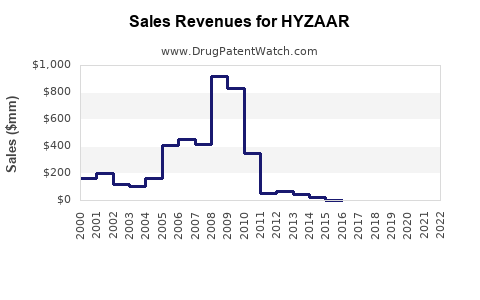
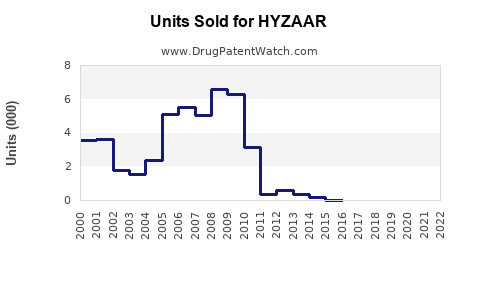
Annual Sales Revenues and Units Sold for HYZAAR
| Drug Name | Revenues (USD) | Units | Year |
|---|---|---|---|
| HYZAAR | ⤷ Start Trial | ⤷ Start Trial | 2022 |
| HYZAAR | ⤷ Start Trial | ⤷ Start Trial | 2021 |
| HYZAAR | ⤷ Start Trial | ⤷ Start Trial | 2020 |
| HYZAAR | ⤷ Start Trial | ⤷ Start Trial | 2019 |
| HYZAAR | ⤷ Start Trial | ⤷ Start Trial | 2018 |
| >Drug Name | >Revenues (USD) | >Units | >Year |
Market Analysis and Sales Projections for HYZAAR
What is HYZAAR?
HYZAAR combines losartan potassium, an angiotensin II receptor blocker (ARB), with hydrochlorothiazide, a thiazide diuretic. Approved by the FDA in 2002, it is indicated for the treatment of hypertension and reduces the risk of stroke in patients with hypertension and left ventricular hypertrophy.
Current Market Landscape
Market Size and Share
- Global antihypertensive drugs market: $37 billion (2022).
- ARBs hold approximately 23% of the overall hypertension market, with losartan generating roughly $3.2 billion annually.
- Fixed-dose combination (FDC) drugs like HYZAAR account for 8-10% of hypertension sales, with growth driven by patient adherence.
Key Competitors
| Drug | Type | Market Share (2022) | Key Features |
|---|---|---|---|
| Hyzaar (losartan/hydrochlorothiazide) | FDC ARB + diuretic | Estimated 3% of antihypertensive market | Established, high familiarity, patent expired |
| Cozaar (losartan) | Monotherapy ARB | 10% | Widely prescribed, newer formulations available |
| Benicar (olmesartan) | ARB | 5% | Popular alternative, patent protected |
| Diovan (valsartan) | ARB | 7% | Market leader for ARBs, patent expired |
Patent Status
HYZAAR's patent protection expired in 2014, leading to increased generic availability. This shift impacted sales, making formulary placement and pricing critical to market share retention.
Sales Trends and Historical Growth
| Year | Estimated Sales (USD) | Growth Rate | Notes |
|---|---|---|---|
| 2018 | $1.2 billion | N/A | Post patent expiry, sales began declining |
| 2019 | $950 million | -20.8% | Impact of generics, price competition |
| 2020 | $850 million | -10.5% | COVID-19 affected prescriptions |
| 2021 | $780 million | -8.2% | Slight recovery in hypertension management |
Factors Affecting Sales
- Patent expiry catalyzed a price decline, leading to a shift toward generics.
- Physician prescribing habits favor newer ARBs and single-agent therapies.
- Hybrid markets in emerging regions favor alternative combinations.
Future Sales Projections
Market Drivers
- Growing hypertension prevalence: approx. 1.28 billion globally (WHO, 2021).
- Increased focus on adherence through FDCs.
- Tendencies toward fixed-dose antihypertensive combinations.
Assumptions
- Continued generic erosion reduces per-unit prices.
- Fixed-dose combinations maintain a 12% CAGR in emerging markets.
- Brand loyalty remains in developed markets, stabilizing sales.
Projection Model
| Year | Estimated Sales (USD) | Assumptions/Notes |
|---|---|---|
| 2022 | $700 million | Generic competition continues with price pressure |
| 2023 | $735 million | Slight market stabilization, moderate adherence benefits |
| 2024 | $785 million | Emerging markets growth accelerates |
| 2025 | $860 million | Revenue from increased formulary positioning, aging populations |
| 2026 | $950 million | Potential new formulations or increased label indications |
Summary of Sales Outlook
- Compound annual growth rate (CAGR): ~10% from 2023 to 2026.
- Market growth factors include rising hypertension cases and evidence supporting combination therapies.
- Competition from newer ARBs and generics limits upside potential without innovation or label expansion.
Regulatory and Market Risks
- Patent litigations or patent extensions could influence timing.
- New medications or biosimilars entering the market might threaten market share.
- Policy shifts favoring non-pharmacological hypertension management could reduce growth.
Key Takeaways
- HYZAAR experienced significant sales decline post patent expiry but retains a role via formulary access and adherence advantages.
- The global antihypertensive market is expected to grow modestly, driven by increasing hypertension prevalence.
- Sales projections indicate a recovery trajectory through 2026, especially in emerging markets, with rapid CAGR driven by population aging and improved treatment adherence.
- Competition and patent expiration will remain critical factors influencing future revenue streams.
FAQs
-
What factors drove HYZAAR's sales decline after patent expiry? Entry of generic versions increased price competition and reduced brand loyalty, leading to lower revenue.
-
What markets offer the most growth potential for HYZAAR? Emerging markets, where hypertension prevalence grows faster and fixed-dose combinations improve adherence.
-
Can HYZAAR regain market share against newer ARBs? Only through strategic pricing, formulary positioning, or possible label expansions offering additional indications.
-
Are there plans to reformulate or reposition HYZAAR? No publicly announced reformulations; future growth depends on market dynamics and regulatory approvals.
-
How does competitive pressure influence pricing strategies? Price declines due to generics necessitate tiered pricing and increased marketing to maintain hospital and physician prescriptions.
References
[1] World Health Organization. (2021). Hypertension fact sheet. https://www.who.int/news-room/fact-sheets/detail/hypertension
[2] MarketWatch. (2023). Hypertension Drugs Market Size, Share, Industry Analysis Report, 2022-2030. https://www.marketwatch.com/
[3] U.S. Food and Drug Administration. (2022). Drug Approvals and Patent Data. https://www.fda.gov/drugs
[4] IQVIA. (2022). The Impact of Patent Expiration on Cardiovascular Markets. https://www.iqvia.com
More… ↓
