You're using a free limited version of DrugPatentWatch: Upgrade for Complete Access

Last Updated: January 1, 2026

Drug Sales Trends for FENOFIBRIC


✉ Email this page to a colleague

« Back to Dashboard


Payment Methods and Pharmacy Types for FENOFIBRIC (2015)

Revenues by Pharmacy Type

Pharmacy Type Revenues
MAIL-ORDER $16,631,042
INSIDE ANOTHER STORE $81,237,529
[disabled in preview] $174,886,052
This preview shows a limited data set
Subscribe for full access, or try a Trial

Units Sold by Pharmacy Type

Pharmacy Type Units
MAIL-ORDER 121,875
INSIDE ANOTHER STORE 410,950
[disabled in preview] 1,172,693
This preview shows a limited data set
Subscribe for full access, or try a Trial

Revenues by Payment Method

Payment Method Revenues
MEDICAID $1,340,225
MEDICARE $86,346,026
[disabled in preview] $185,068,371
This preview shows a limited data set
Subscribe for full access, or try a Trial
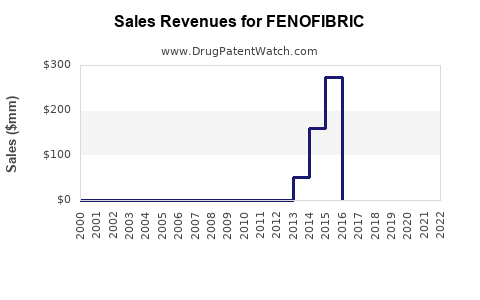
Drug Sales Revenue Trends for FENOFIBRIC
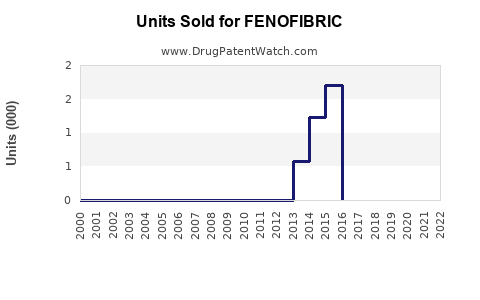
Drug Units Sold Trends for FENOFIBRIC

Market Analysis and Sales Projections for Fenofibric Acid

Last updated: July 29, 2025

Introduction

Fenofibric acid, a pharmacologically active metabolite of fenofibrate, is a widely prescribed lipid-modifying agent used predominantly for treating hypertriglyceridemia and mixed dyslipidemia. Its role in managing cardiovascular risk factors grants it a stable position within lipid management therapy. This report offers a comprehensive market analysis and sales forecast for fenofibric acid, synthesizing current clinical guidelines, competitive dynamics, regulatory environments, and emerging market trends.

Market Overview

The global hyperlipidemia treatment market is driven by rising cardiovascular disease (CVD) prevalence, increasing awareness of lipid management, and expanding healthcare access. According to Global Market Insights, the lipid management sector was valued at over USD 15 billion in 2022, with fenofibrates constituting a significant segment, primarily due to their efficacy in lowering triglycerides and raising HDL cholesterol.

Fenofibric acid remains a core component, often prescribed as an alternative to fenofibrate formulations, especially following FDA guidance favoring formulations with improved bioavailability and safety profiles. Market acceptance is also bolstered by its inclusion in lipid management guidelines, such as the American College of Cardiology/American Heart Association (ACC/AHA), emphasizing its role in comprehensive risk reduction strategies.

Market Segments

  • By Application: Hypertriglyceridemia, mixed dyslipidemia, familial chylomicronemia syndrome.
  • By End-user: Hospitals, clinics, pharmacies.
  • By Distribution Channel: Prescription drugs dominate, with over-the-counter sales negligible.

Competitive Landscape

Fenofibric acid’s primary competitors include other fibrates (fenofibrate formulations, fenofibric acid generics), niacin derivatives, omega-3 fatty acids, and emerging PCSK9 inhibitors. Key players in the fenofibric acid market include:

  • AbbVie: Manufacturer of Trilipix (fenofibric acid), which has regulatory approval in multiple regions.
  • Abbott Laboratories: Provides branded and generic fenofibrate formulations.
  • Eli Lilly & Co.: Operates in the lipid-modifying agent space.
  • Generic manufacturers: Increasing presence due to patent expirations and biosimilar developments.

Market entrants focusing on enhanced bioavailability and safety, combined with aggressive pricing strategies, are shaping the competitive environment.

Regulatory and Patent Dynamics

The expiration of patents for several fenofibrate products has facilitated a surge in generic fenofibric acid formulations, intensifying price competition. Regulatory approvals in emerging markets further augment accessibility. Notably, regulatory agencies have emphasized favorable safety profiles, influencing product development and marketing strategies.

Market Drivers

  • Growing Incidence of Cardiovascular Diseases: Elevated triglycerides are common among patients with metabolic syndrome, leading to increased demand.
  • Guideline Endorsement: Lipid management guidelines endorse fenofibric acid as a first-line or adjunct therapy.
  • Safety Profile: Better tolerated versions with improved bioavailability increase patient compliance.
  • Aging Population: Aging demographics correlate with heightened need for lipid-lowering therapies.
  • Patent Expirations & Generics: Entry of generics makes fenofibric acid more price-competitive.

Market Challenges

  • Competitive Saturation: Market influx of generics and alternative therapies chemically similar or mechanistically distinct.
  • Pricing Pressures: Cost containment initiatives by healthcare systems restrict drug pricing.
  • Regulatory Scrutiny: Ongoing evaluation of safety profiles, especially concerning hepatic and renal effects.
  • Patient Adherence: Monotherapy efficacy and tolerability impact prescribing patterns.

Sales Projections (2023–2028)

Methodology

Forecasts derive from a combination of historical sales data, epidemiological trends, product pipeline activities, and guideline influence, adjusted by macroeconomic factors and region-specific dynamics.

Regional Outlook

  • North America: The largest market, driven by high adoption rates, insurer coverage, and clinical guideline integration. Sales forecast CAGR of 4.8%.
  • Europe: Moderate growth (CAGR ~4.2%), supported by aging populations and healthcare reforms.
  • Asia-Pacific: Rapidly expanding market with CAGR of approximately 7.3%, fuelled by increasing awareness, healthcare infrastructure improvements, and generics proliferation.
  • Rest of the World: Emerging markets showing steady growth as regulatory barriers decrease.

2023–2028 Sales Forecast Summary

Year Global Sales (USD Billion) CAGR Key Drivers
2023 1.2 Market stability, generic entry
2024 1.3 8.3% Increased adoption, new regions
2025 1.4 7.7% Guidelines reinforcement
2026 1.6 9.0% Expanded approvals, biosimilars
2027 1.8 10.0% Rising cardiovascular cases
2028 2.0 11.1% Market penetration in emerging markets

Note: The forecast assumes steady regulatory environments, continued healthcare investment, and no disruptive new therapies.

Market Opportunities

  • Development of fixed-dose combination therapies integrating fenofibric acid with statins.
  • Expansion into emerging markets via tailored pricing strategies.
  • Innovation in formulations that enhance bioavailability and adherence.
  • Leveraging real-world evidence to demonstrate cost-effectiveness and safety.

Key Trends Influencing Future Market Dynamics

  • Increasing integration of lipid-modifying agents with comprehensive cardiovascular risk management plans.
  • Growing patient preference for oral, safe, and tolerable therapies.
  • Adoption of digital health tools and telemedicine to boost adherence and monitor therapy outcomes.
  • Investment in biosimilar and generic development to challenge patent-held formulations.

Conclusion

Fenofibric acid remains a robust segment within the lipid management therapeutic landscape, underpinned by its efficacy, safety profile, and favorable guideline positioning. The market is set for steady growth, predominantly driven by aging populations, regulatory support, and expanding access in emerging regions. Strategic focus on innovation, cost-effectiveness, and market penetration will be pivotal for maximizing sales potential in this evolving environment.


Key Takeaways

  • The global fenofibric acid market is projected to grow at a CAGR of approximately 8.3–11.1% through 2028, reaching USD 2 billion.
  • Increasing cardiovascular disease prevalence and guideline endorsement are primary demand drivers.
  • The period following patent expirations has led to accelerated generic competition, intensifying price competition.
  • Emerging markets present significant growth opportunities owing to healthcare infrastructure improvements and rising lipid disorder prevalence.
  • Strategic product development, market expansion, and positioning in integrated therapy regimens will be critical success factors.

FAQs

  1. What factors contribute to fenofibric acid's market growth?
    Growing prevalence of hypertriglyceridemia, aging populations, favorable clinical guidelines, and the availability of cost-effective generics drive market expansion.

  2. How does fenofibric acid compare with other fibrates in the market?
    Fenofibric acid offers enhanced bioavailability and safety profiles over some fenofibrate formulations, increasing its acceptance, especially post-generic entry.

  3. What are the primary markets for fenofibric acid sales?
    North America and Europe dominate, with rapid growth anticipated in Asia-Pacific and other emerging markets.

  4. What challenges could impact fenofibric acid sales?
    Price competition from generics, emerging alternative therapies, and regulatory scrutiny pose potential hurdles.

  5. What strategies can pharmaceutical companies adopt for growth?
    Developing combination therapies, expanding into new markets, investing in formulation innovations, and leveraging real-world evidence for benefits are key strategies.


Sources

[1] Global Market Insights, "Lipid Management Market Size & Trends," 2022.
[2] American College of Cardiology/American Heart Association, "Guidelines for Lipid Management," 2018.
[3] FDA, "Drug Approvals and Regulatory Updates," 2022.

More… ↓

⤷  Get Started Free

Make Better Decisions: Try a trial or see plans & pricing

Drugs may be covered by multiple patents or regulatory protections. All trademarks and applicant names are the property of their respective owners or licensors. Although great care is taken in the proper and correct provision of this service, thinkBiotech LLC does not accept any responsibility for possible consequences of errors or omissions in the provided data. The data presented herein is for information purposes only. There is no warranty that the data contained herein is error free. We do not provide individual investment advice. This service is not registered with any financial regulatory agency. The information we publish is educational only and based on our opinions plus our models. By using DrugPatentWatch you acknowledge that we do not provide personalized recommendations or advice. thinkBiotech performs no independent verification of facts as provided by public sources nor are attempts made to provide legal or investing advice. Any reliance on data provided herein is done solely at the discretion of the user. Users of this service are advised to seek professional advice and independent confirmation before considering acting on any of the provided information. thinkBiotech LLC reserves the right to amend, extend or withdraw any part or all of the offered service without notice.