Drug Sales Trends for DICLEGIS
Payment Methods and Pharmacy Types for DICLEGIS (2015)
Revenues by Pharmacy Type
Units Sold by Pharmacy Type
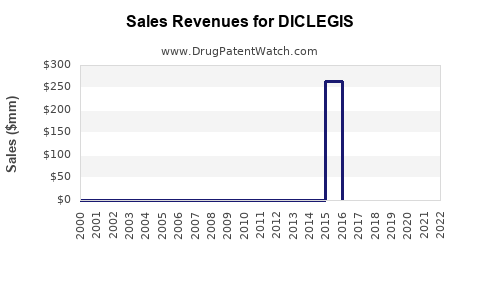
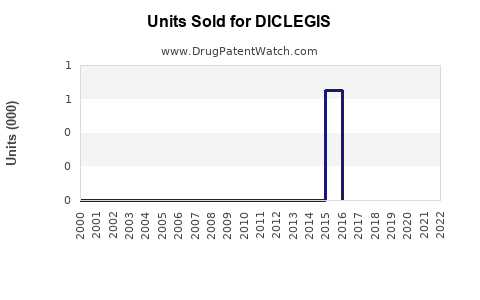
Annual Sales Revenues and Units Sold for DICLEGIS
| Drug Name | Revenues (USD) | Units | Year |
|---|---|---|---|
| DICLEGIS | ⤷ Start Trial | ⤷ Start Trial | 2022 |
| DICLEGIS | ⤷ Start Trial | ⤷ Start Trial | 2021 |
| DICLEGIS | ⤷ Start Trial | ⤷ Start Trial | 2020 |
| >Drug Name | >Revenues (USD) | >Units | >Year |
Diclegis Market Analysis, Sales Projections, Patent Position, and Competitive Outlook
Diclegis is a prescription delayed-release combination of doxylamine succinate and pyridoxine hydrochloride for nausea and vomiting of pregnancy. The product was approved by the FDA in 2013 and is marketed in the United States by Duchesnay USA. Its commercial opportunity is supported by a large pregnancy population and persistent use of pharmacologic treatment for morning sickness. Revenue visibility is limited because Duchesnay is privately held and does not publish product-level sales.
The principal commercial risks are generic substitution, low treatment duration, competition from low-cost immediate-release doxylamine-pyridoxine, and limited differentiation outside the delayed-release delivery system.
What is Diclegis and how large is its addressable market?
Diclegis contains 10 mg of doxylamine succinate and 10 mg of pyridoxine hydrochloride per delayed-release tablet. The labeled starting regimen is two tablets at bedtime, with escalation to a maximum of four tablets daily if symptoms persist (FDA, 2023).
The market is tied to the number of pregnancies, the prevalence of nausea and vomiting, physician prescribing behavior, and payer coverage.
| Market variable | U.S. planning assumption |
|---|---|
| Annual live births | Approximately 3.6 million |
| Pregnancies with nausea or vomiting | About 50% to 80% |
| Pregnancies receiving prescription treatment | Approximately 20% to 40% of affected pregnancies |
| Potential treated pregnancies | Roughly 360,000 to 1.15 million |
| Typical treatment duration | Several weeks, varying by symptom persistence |
| Primary prescribers | Obstetricians, family physicians, and midwives |
The American College of Obstetricians and Gynecologists identifies pyridoxine, with or without doxylamine, as a standard pharmacologic option for nausea and vomiting of pregnancy (ACOG, 2018). That clinical positioning supports demand but also makes low-cost generic combinations a direct substitute.
What is Diclegis’s FDA regulatory status?
Diclegis is approved under FDA New Drug Application 021876 for the treatment of nausea and vomiting of pregnancy in women who do not respond to conservative management. It is an oral delayed-release tablet and is not a biologic, injectable product, or hospital-administered therapy.
FDA product characteristics
| Attribute | Diclegis |
|---|---|
| Active ingredients | Doxylamine succinate and pyridoxine hydrochloride |
| Strength | 10 mg/10 mg per tablet |
| Dosage form | Delayed-release oral tablet |
| FDA approval | 2013 |
| NDA | 021876 |
| Indication | Nausea and vomiting of pregnancy |
| Sponsor/marketer | Duchesnay USA |
| Prescription status | Prescription drug |
| Primary alternatives | Generic doxylamine-pyridoxine, Bonjesta, separate immediate-release products |
The product’s clinical value is linked to the delayed-release formulation and bedtime dosing. The active ingredients themselves are old, inexpensive compounds with broad generic availability.
What patents protect Diclegis?
Diclegis’s protection is primarily formulation-based rather than based on new chemical entities. Doxylamine and pyridoxine are established active ingredients. The relevant intellectual-property strategy therefore focuses on delayed release, dosing, formulation design, and the combination of the two ingredients.
What formulations are protected by Diclegis patents?
The commercially important formulation characteristics include:
- Delayed release of doxylamine and pyridoxine.
- Oral tablet delivery.
- A dosing schedule beginning with two tablets at bedtime.
- Escalation to three or four tablets daily.
- Combination use for nausea and vomiting of pregnancy.
The Orange Book is the controlling source for current patent listings, pediatric exclusivity, and FDA-recognized patent information for NDA 021876. Patent expiration dates should not be inferred from the product launch date because listed patents may have different filing dates, patent-term adjustments, terminal disclaimers, or regulatory extensions (FDA, n.d.-a).
How strong is the Diclegis patent estate?
The estate is commercially narrower than the estate for a novel chemical entity. Its strengths are:
- A specific delayed-release product design.
- A pregnancy-specific indication.
- Physician familiarity and established prescribing behavior.
- Potential difficulty for an ANDA applicant seeking to duplicate the formulation while avoiding listed claims.
Its weaknesses are:
- The active ingredients are old and widely available.
- Immediate-release doxylamine and pyridoxine can be prescribed separately.
- Physicians can use non-branded combinations where cost is more important than convenience.
- Formulation patents generally provide less durable protection than composition-of-matter patents.
A generic applicant may challenge listed patents through a Paragraph IV certification or may seek approval with a Paragraph III certification after patent expiration. The actual timing depends on the current Orange Book listing and any litigation or settlement agreement.
When does Diclegis lose exclusivity?
Diclegis’s FDA exclusivity and patent exclusivity are separate concepts. FDA regulatory exclusivity associated with the original approval is distinct from patent protection. The product’s commercial exclusivity depends primarily on the remaining enforceable formulation and method-of-use claims and on whether an ANDA applicant obtains approval.
A reliable launch date cannot be assigned solely from the 2013 approval date. Generic entry may occur through:
- Patent expiration.
- A successful Paragraph IV challenge.
- A settlement allowing an earlier launch.
- A non-infringing product that avoids listed claims.
- A court decision invalidating or limiting asserted claims.
What is the Orange Book status of Diclegis?
Diclegis is an FDA-approved prescription product identified by NDA 021876. The FDA Orange Book remains the authoritative source for current patent and exclusivity listings. Because Orange Book listings can change through patent delisting, expiration, certification changes, or regulatory updates, commercial forecasts should use a date-stamped Orange Book extract rather than an undated secondary source (FDA, n.d.-a).
Which companies are challenging Diclegis?
Potential ANDA competition is most likely to come from generic manufacturers with experience in oral solid dosage forms. Generic doxylamine-pyridoxine products may compete without reproducing the Diclegis brand, although the regulatory pathway and formulation requirements depend on the proposed product.
The competitive field includes:
| Competitor | Competitive position |
|---|---|
| Generic doxylamine-pyridoxine | Lowest-cost direct substitute |
| Separate generic doxylamine and pyridoxine | Flexible, low-cost alternative |
| Bonjesta | Branded extended-release alternative with a higher-strength tablet |
| Diclectin | Related product marketed in Canada and other markets |
| Ondansetron and other antiemetics | Alternative therapy, generally used according to clinical circumstances |
No current Paragraph IV challenger, litigation outcome, or settlement date should be treated as established without a live review of FDA records and federal court dockets.
How does Diclegis compare with Bonjesta?
Bonjesta is another Duchesnay product containing doxylamine and pyridoxine. Its 20 mg/20 mg strength permits a different tablet burden than Diclegis.
| Factor | Diclegis | Bonjesta |
|---|---|---|
| Dose per tablet | 10 mg/10 mg | 20 mg/20 mg |
| Delivery | Delayed release | Extended/delayed-release product |
| Commercial role | Established brand | Line extension and higher-strength alternative |
| Main advantage | Familiarity and broad historical use | Fewer tablets for some patients |
| Main risk | Generic substitution | Same active-ingredient and payer pressure |
The two products are more complementary than therapeutically distinct. Bonjesta can protect prescribing relationships and provide a higher-strength option, but it does not eliminate generic competition against the underlying ingredients.
What are Diclegis sales and revenue projections?
Duchesnay is privately held, and audited product-level Diclegis revenue is not routinely disclosed in public company filings. Market reports often provide estimates, but those figures differ based on whether they measure gross sales, net sales, U.S. sales, global sales, prescriptions, or pharmacy claims.
The following model is an addressable-revenue scenario, not company guidance. It assumes U.S. sales, stable birth volumes, continued use in pregnancy, and a branded net revenue per treated pregnancy that varies with payer mix and generic penetration.
| Scenario | Treated pregnancies using branded Diclegis | Net revenue per treated pregnancy | Implied annual sales |
|---|---|---|---|
| Low | 300,000 | $100 | $30 million |
| Base | 600,000 | $175 | $105 million |
| High | 900,000 | $250 | $225 million |
Five-year projection scenarios
| Year | Low case | Base case | High case |
|---|---|---|---|
| 2025 | $30 million | $105 million | $225 million |
| 2026 | $29 million | $103 million | $225 million |
| 2027 | $27 million | $99 million | $219 million |
| 2028 | $24 million | $90 million | $205 million |
| 2029 | $20 million | $80 million | $185 million |
The base case assumes modest erosion from generic substitution and payer pressure. The high case assumes continued brand preference, limited generic penetration, and sustained reimbursement. The low case assumes broad generic availability and increased use of separate immediate-release ingredients.
The most important revenue variable is not the number of pregnancies. It is the percentage of treated patients who receive branded delayed-release therapy rather than low-cost alternatives.
What generic entry risks exist for Diclegis?
Generic entry could reduce Diclegis revenue through three channels:
- Direct substitution at the pharmacy.
- Payer formulary preference for lower-cost products.
- Physician migration to separate doxylamine and pyridoxine prescriptions.
Generic entry may not eliminate all brand demand. Some physicians and patients may continue to prefer the branded delayed-release formulation because of dosing convenience, established labeling, or perceived tolerability. The retained share will depend on copay differences and the extent to which the generic product matches the branded release profile.
What licensing deals affect Diclegis?
Duchesnay has commercialized Diclegis through its own U.S. organization rather than through a widely disclosed public-company licensing structure. No material current licensing transaction can be quantified from the core FDA and clinical sources cited here.
Outside the United States, related doxylamine-pyridoxine products, including Diclectin, may involve different rights holders, trademarks, formulations, and regulatory approvals. International revenue should not be combined with U.S. Diclegis sales without confirming territorial rights.
What patent litigation affects Diclegis?
Patent litigation risk is concentrated in ANDA litigation involving delayed-release formulation claims and the scope of any listed method-of-use claims. A litigation assessment should distinguish:
- The patent asserted.
- The ANDA applicant.
- Whether the case was dismissed, settled, or tried.
- Whether an agreed generic launch date exists.
- Whether the settlement includes a license, supply agreement, or acceleration clause.
The absence of a publicly verified litigation outcome in the cited sources prevents assigning a specific generic launch date. Patent risk remains moderate because the active ingredients are commoditized, while the formulation may remain commercially defensible if listed claims survive challenge.
What is Diclegis’s commercial outlook?
Diclegis has a stable but structurally constrained market. The product benefits from a large recurring patient population, guideline recognition, and a pregnancy-specific FDA indication. Its commercial ceiling is limited by short treatment duration, generic ingredient competition, and the absence of composition-of-matter protection.
The most probable long-term pattern is gradual revenue erosion rather than an immediate collapse. A sharp decline would follow successful generic approval with favorable payer placement. A slower decline would occur if the generic product has limited formulary access or if Duchesnay preserves brand preference through contracting and physician promotion.
Key Takeaways
- Diclegis is a delayed-release doxylamine-pyridoxine product approved by the FDA in 2013.
- Its market is large in patient volume but limited in duration and pricing power.
- The principal intellectual-property value is in formulation and dosing, not the active ingredients.
- Generic doxylamine-pyridoxine and separate immediate-release products are the largest competitive threats.
- Public sources do not provide audited, product-level Duchesnay revenue.
- A scenario-based U.S. revenue range is approximately $30 million to $225 million annually, with a base case near $105 million before full generic erosion.
- The Orange Book and federal court records are required to establish current patent listings, Paragraph IV challenges, settlements, and generic launch dates.
FAQs
Is Diclegis still FDA approved?
Yes. Diclegis is approved under NDA 021876 for nausea and vomiting of pregnancy in women who do not respond to conservative treatment.
Is Diclegis the same as over-the-counter Unisom and vitamin B6?
The active ingredients are related, but Diclegis is an FDA-approved delayed-release prescription formulation with defined manufacturing, labeling, dosing, and quality specifications. Over-the-counter products may use different strengths, release characteristics, and labeling.
Does Diclegis have biosimilar risk?
No. Diclegis is a small-molecule oral drug, not a biologic. Its principal competitive risk is from generic drugs and alternative formulations, not biosimilars.
Can a generic company copy Diclegis’s delayed-release formulation?
A generic applicant must satisfy FDA requirements for pharmaceutical equivalence and bioequivalence and must address relevant listed patents. The applicant may challenge patents through Paragraph IV certification or design a product that avoids protected claims.
What drives Diclegis prescription demand?
Demand is driven by pregnancy volume, nausea and vomiting prevalence, physician awareness, payer coverage, patient tolerance, and the perceived convenience of delayed-release dosing.
References
-
American College of Obstetricians and Gynecologists. (2018). ACOG practice bulletin no. 189: Nausea and vomiting of pregnancy. Obstetrics & Gynecology, 131(1), e15-e30.
-
U.S. Food and Drug Administration. (2023). Diclegis prescribing information. FDA.
-
U.S. Food and Drug Administration. (n.d.-a). Approved drug products with therapeutic equivalence evaluations: Orange Book. FDA.
-
U.S. Food and Drug Administration. (n.d.-b). Drugs@FDA: Diclegis, NDA 021876. FDA.
-
Centers for Disease Control and Prevention. (n.d.). National vital statistics reports: Births and fertility rates. U.S. Department of Health and Human Services.
More… ↓
