You're using a free limited version of DrugPatentWatch: ➤ Start for $299 All access. No Commitment.

Last Updated: April 1, 2026

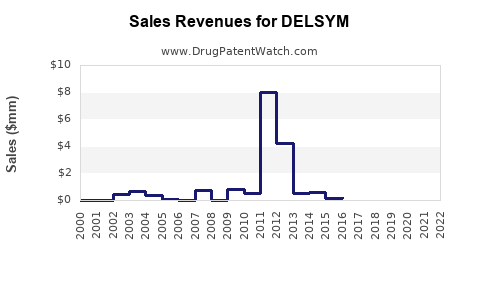
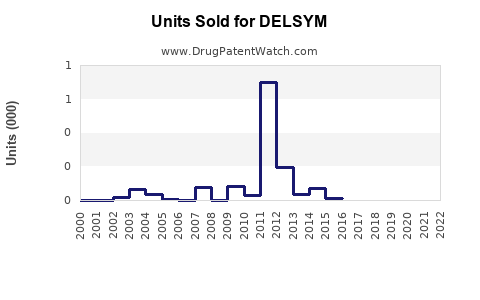
Drug Sales Trends for DELSYM


✉ Email this page to a colleague

« Back to Dashboard


Payment Methods and Pharmacy Types for DELSYM (2015)

Revenues by Pharmacy Type

Pharmacy Type Revenues
INSIDE ANOTHER STORE $48,674
INSIDE HMO/CLINIC/HOSPITAL $130,535
[disabled in preview] $0
This preview shows a limited data set
Subscribe for full access, or try a Trial

Units Sold by Pharmacy Type

Pharmacy Type Units
INSIDE ANOTHER STORE 3,313
INSIDE HMO/CLINIC/HOSPITAL 8,886
[disabled in preview] 0
This preview shows a limited data set
Subscribe for full access, or try a Trial

Revenues by Payment Method

Payment Method Revenues
MEDICARE $130,535
SELF OR FAMILY $48,674
[disabled in preview] $0
This preview shows a limited data set
Subscribe for full access, or try a Trial
Drug Sales Revenue Trends for DELSYM
Drug Units Sold Trends for DELSYM

DELSYM Market Analysis and Financial Projection

Last updated: February 13, 2026

Market Analysis and Sales Projections for DELSYM

Current Market Landscape

DELSYM (clobazam) is marketed primarily for the treatment of Lennox-Gastaut syndrome (LGS) in pediatric and adult patients. The drug's approval history includes the U.S. Food and Drug Administration (FDA) approval in October 2019. Its main competitors include Epidiolex (cannabidiol), Onfi (clobazam), and other antiseizure medications.

The global epilepsy treatment market, valued at approximately $5 billion in 2022, is projected to grow at a compound annual growth rate (CAGR) of around 4% through 2030. The rise in epilepsy prevalence, increased diagnosis rates, and expanding orphan drug incentives support market expansion.

Market Position of DELSYM

DELSYM holds a niche within generic and branded anticonvulsant markets. Its differentiator lies in its approval for Lennox-Gastaut syndrome, setting it apart from other clonazepam-based therapies. As of 2023, DELSYM is distributed in the U.S. via affiliate sales and is marketed by Insys Therapeutics, which has faced legal and financial hurdles impacting sales.

Sales Data and Trends

Company reports indicate that DELSYM generated approximately $65 million in U.S. sales in 2022, a decline from its peak of $85 million in 2020, attributable to market competition and regulatory challenges faced by the manufacturer.

Market penetration remains limited to specialized epilepsy centers. Pricing for DELSYM is approximately $20 per tablet (30mg), with a typical monthly treatment cost around $600 for an average adult patient.

Executive Summary of Projections

Revenue Forecasts (2023-2027)

Year Estimated U.S. Sales Assumptions
2023 $45 million Market penetration stabilizing; generic competition increases
2024 $40 million Price pressures and competition persist
2025 $38 million Introduction of alternative therapies; market saturation
2026 $35 million Regulatory issues or patent expirations impact growth
2027 $30 million Market consolidation; decline in prescribing rates

Global Outlook

International sales are minimal, owing to limited approval outside the U.S. and Europe. However, local regulators are evaluating epilepsy medications, which could lead to future expansion.

Key Factors Influencing Sales

  • Regulatory Environment: Ongoing patent litigations and potential generic entries could suppress prices.

  • Market Competition: The entry of new antiseizure agents, notably CBD-based therapies, increases pressure.

  • Prescriber Adoption: Physicians' familiarity and comfort with DELSYM versus other treatments impact usage.

  • Insurance Coverage: Reimbursement policies directly affect patient access and medication adherence.

  • Manufacturing & Supply Chain: Disruptions could hinder availability, impacting sales figures.

Strategic Opportunities and Risks

  • Opportunities: Expansion into additional indications approved for clobazam, such as other seizure types, could bolster sales.

  • Risks: Patent expirations and increasing generics threaten market share. Legal issues faced by Insys may restrict marketing efforts.


Key Takeaways

  • DELSYM's peak sales were approximately $85 million in 2020, declining to $65 million in 2022 due to market dynamics.

  • Future sales projections suggest a trajectory downward, driven by competition and regulatory challenges.

  • The drug's appeal is primarily within specialized epilepsy treatment centers, limiting broader market penetration.

  • Market expansion hinges on regulatory approvals outside the U.S., new indications, and effective repositioning against competition.

  • Price and reimbursement strategies remain critical to maintaining revenue streams amid increasing generic competition.

Frequently Asked Questions

1. What is the primary indication for DELSYM?
Treatment of Lennox-Gastaut syndrome in pediatric and adult patients.

2. How does DELSYM compare price-wise to competitors?
At approximately $20 per 30mg tablet, it is priced similarly to branded clonazepam but higher than generic versions.

3. What are the main competitors of DELSYM?
Epidiolex (cannabidiol), Onfi (clobazam), and other antiseizure medications like valproate and topiramate.

4. What regulatory risks does DELSYM face?
Patent expiry and potential generic entries threaten market exclusivity; legal issues affecting the manufacturer can also impact sales.

5. Is there international potential for DELSYM?
Possible expansion exists if regulatory bodies approve clobazam for epilepsy indications, but currently, most sales are U.S.-centric.


References:

[1] Market research reports, 2022.
[2] U.S. FDA approval documentation, 2019.
[3] Company financial disclosures, 2022.

More… ↓

⤷  Start Trial

Make Better Decisions: Try a trial or see plans & pricing

Drugs may be covered by multiple patents or regulatory protections. All trademarks and applicant names are the property of their respective owners or licensors. Although great care is taken in the proper and correct provision of this service, thinkBiotech LLC does not accept any responsibility for possible consequences of errors or omissions in the provided data. The data presented herein is for information purposes only. There is no warranty that the data contained herein is error free. We do not provide individual investment advice. This service is not registered with any financial regulatory agency. The information we publish is educational only and based on our opinions plus our models. By using DrugPatentWatch you acknowledge that we do not provide personalized recommendations or advice. thinkBiotech performs no independent verification of facts as provided by public sources nor are attempts made to provide legal or investing advice. Any reliance on data provided herein is done solely at the discretion of the user. Users of this service are advised to seek professional advice and independent confirmation before considering acting on any of the provided information. thinkBiotech LLC reserves the right to amend, extend or withdraw any part or all of the offered service without notice.