Last updated: February 14, 2026
What is Cyanocobalamin?
Cyanocobalamin is a synthetic form of vitamin B12 used primarily to treat or prevent vitamin B12 deficiency. It is available both as an injectable and oral supplement. The compound is included in multiple over-the-counter (OTC) and prescription products worldwide.
Global Market Size
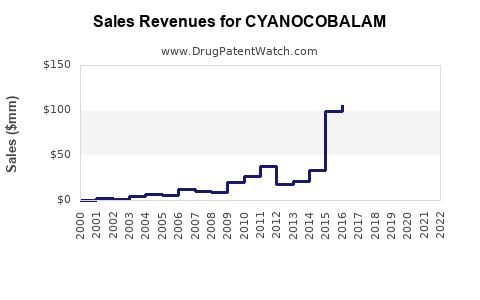
The global vitamin B12 market was valued at approximately USD 750 million in 2022. Cyanocobalamin represents an estimated 70-80% of this market due to its widespread acceptance as a non-folate B12 form, especially in North America, Europe, and Asia-Pacific.
Key Drivers
- Rising prevalence of vitamin B12 deficiency related to vegan diets, aging, and gastrointestinal disorders.
- Expanded use in anemia treatment.
- Growing awareness of B12's role in neurological functions and energy metabolism.
- Increased adoption of OTC supplements for preventive health.
Market Segments
| Segment |
Share (2022) |
Description |
| Prescription (Rx) products |
60% |
Used mainly for diagnosed deficiency; includes injectable forms |
| Over-the-counter (OTC) supplements |
40% |
Oral tablets, sublingual formulations; larger consumer base |
Regional Outlook
| Region |
Market Share (2022) |
Key Factors |
| North America |
45% |
High healthcare awareness, aging population |
| Europe |
25% |
Strict supplement regulations, widespread OTC use |
| Asia-Pacific |
20% |
Growing healthcare infrastructure, increasing health awareness |
| Rest of World |
10% |
Emerging markets, rising demand for nutritional supplements |
Competitive Landscape
Major suppliers include Pfizer, Novartis, Teva, and local generic manufacturers. These companies produce both branded and generic cyanocobalamin products, with generics dominating the market due to lower costs.
Sales Projections (2023-2028)
| Year |
Estimated Market Value (USD millions) |
Growth Rate (CAGR) |
Commentary |
| 2023 |
800 |
— |
Continued demand driven by aging population and diagnosis rates |
| 2024 |
880 |
10% |
Expansion into new geographic markets |
| 2025 |
968 |
10% |
Increased OTC sales; new formulations gaining popularity |
| 2026 |
1,065 |
10% |
Rising prevalence of vegan and vegetarian diets |
| 2027 |
1,172 |
10% |
Greater integration into wellness and preventive health programs |
| 2028 |
1,289 |
10% |
Patent expirations lead to further generic proliferation |
Market Opportunities and Risks
Opportunities:
- Launch of higher-dose formulations for deficiency correction.
- Expansion into emerging markets.
- Development of innovative delivery mechanisms, e.g., nasal sprays or sublingual films.
Risks:
- Regulatory challenges, especially regarding supplement health claims.
- Competition from alternative B12 forms such as methylcobalamin and hydroxocobalamin.
- Price erosion due to increasing generic options.
Key Takeaways
- Cyanocobalamin maintains dominance due to cost-effectiveness and established safety profile.
- The market is expected to grow at a CAGR of approximately 10% through 2028.
- Asia-Pacific and emerging markets present significant growth opportunities.
- Increased consumer interest in preventive health sustains OTC segment growth.
FAQs
1. What are the primary uses of cyanocobalamin?
Treatment of vitamin B12 deficiency, anemia, neurological disorders, and as a supplement to improve energy levels.
2. How does cyanocobalamin compare to other forms of B12?
It is the most stable and cost-effective form, with widespread prescription and OTC use. Methylcobalamin and hydroxocobalamin are also used but are generally more expensive.
3. What are the main markets for cyanocobalamin?
North America, Europe, and Asia-Pacific lead the market, driven by aging populations and increasing health awareness.
4. Which companies dominate the cyanocobalamin market?
Pfizer, Novartis, and Teva hold significant shares, primarily through generics and branded products.
5. What future innovations could influence the market?
New delivery systems and formulations, as well as expanding use in wellness and preventive medicine, could induce further growth.
References
- Statista. (2022). Global vitamin B12 market size and forecast.
- MarketsandMarkets. (2022). Vitamin B12 market report.
- Industry reports and company disclosures.