Drug Sales Trends for ACTIVELLA
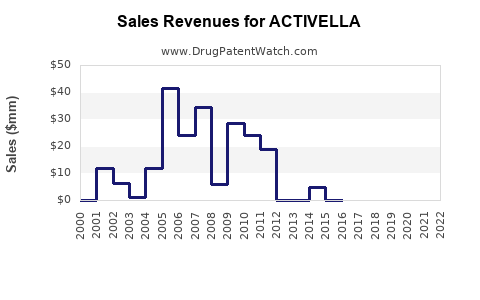
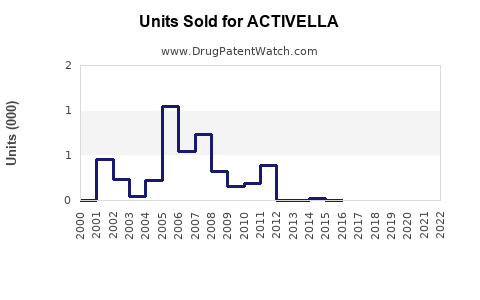
Annual Sales Revenues and Units Sold for ACTIVELLA
| Drug Name | Revenues (USD) | Units | Year |
|---|---|---|---|
| ACTIVELLA | ⤷ Start Trial | ⤷ Start Trial | 2022 |
| ACTIVELLA | ⤷ Start Trial | ⤷ Start Trial | 2021 |
| ACTIVELLA | ⤷ Start Trial | ⤷ Start Trial | 2020 |
| >Drug Name | >Revenues (USD) | >Units | >Year |
Activella Market Analysis and Sales Projections, 2025-2029
Activella is a mature menopausal hormone therapy containing estradiol and norethindrone acetate. Its commercial opportunity is constrained by long-established generic competition, limited brand differentiation, and the absence of separately reported product revenue. The U.S. Activella brand is likely a small, declining product, while the broader estradiol/norethindrone acetate market has a more durable base in menopause symptom treatment and osteoporosis prevention.
The base-case estimate for U.S. Activella brand sales is $7 million to $13 million in 2025, declining to $4 million to $8 million by 2029. Combined U.S. sales of Activella and generic equivalents are estimated at approximately $90 million to $150 million in 2025, with low-single-digit annual erosion from generic price pressure partially offset by stable menopause-treatment demand. These are analyst estimates, not company guidance.
What is Activella and how is it used?
Activella is an oral, fixed-dose combination of estradiol and norethindrone acetate. The product is approved for postmenopausal women with:
- Moderate to severe vasomotor symptoms, including hot flashes
- Moderate to severe symptoms of vulvar and vaginal atrophy
- Prevention of postmenopausal osteoporosis
The U.S. product has been marketed in two principal strengths:
| Product | Estradiol | Norethindrone acetate | Primary commercial role |
|---|---|---|---|
| Activella low dose | 0.5 mg | 0.1 mg | Lower-dose continuous combined therapy |
| Activella standard dose | 1 mg | 0.5 mg | Standard systemic hormone replacement therapy |
Activella is a continuous combined regimen. The progestin component reduces endometrial hyperplasia risk associated with unopposed systemic estrogen in women with an intact uterus. The product is administered orally once daily under the U.S. prescribing information.[1]
What is the Activella market size?
The relevant market has three layers:
- The branded Activella product.
- Generic estradiol and norethindrone acetate tablets.
- Competing systemic menopausal hormone therapies, including estradiol-only products, conjugated estrogens, estrogen patches, estrogen gels, and other combination products.
Public company filings do not separately report Activella revenue. Novo Nordisk reports product sales at broader portfolio levels, and Activella is not generally presented as a material individual revenue contributor.[2]
The branded product therefore has limited visibility in public financial data. Market size must be estimated through prescription volume, payer mix, generic penetration, and average net selling price.
Estimated U.S. market structure, 2025
| Segment | Estimated 2025 sales | Market position |
|---|---|---|
| Activella brand | $7 million-$13 million | Small and declining |
| Generic estradiol/norethindrone acetate | $80 million-$135 million | Primary volume market |
| Combined Activella-equivalent market | $90 million-$150 million | Mature, genericized |
| Broader systemic menopausal hormone therapy | More than $1 billion | Includes non-equivalent products |
The broader hormone therapy market is substantially larger than the Activella-equivalent segment because it includes transdermal estradiol, oral estradiol, conjugated estrogens, vaginal products, and testosterone-related products. Activella competes most directly with oral estradiol/progestin combinations rather than with all menopause therapies.
When does Activella lose exclusivity?
Activella has already lost practical market exclusivity in the United States. The product was approved decades ago, and generic estradiol/norethindrone acetate products are available through the abbreviated new drug application pathway.
The commercial implications are significant:
- Brand-level pricing power is limited.
- Payers commonly prefer generic equivalents.
- Pharmacy substitution reduces brand retention.
- Any remaining brand prescriptions are concentrated among physicians or patients with product familiarity, formulary exceptions, or prescribing inertia.
- New product differentiation would require a delivery, dosing, adherence, or safety advantage.
The relevant regulatory pathway for generic competitors is an ANDA referencing the listed drug. Because Activella is a small-molecule combination tablet, it does not face the biosimilar framework used for biologics.[3]
What is the Orange Book status of Activella?
The FDA Orange Book is the controlling source for current listed-drug, patent, and exclusivity information. Activella’s original regulatory exclusivity has expired, and the product is not dependent on an active new chemical entity exclusivity period.
A current Orange Book assessment should distinguish between:
- The Activella reference listed drug
- The 0.5 mg/0.1 mg and 1 mg/0.5 mg strengths
- Approved generic equivalents
- Any residual listed patent or regulatory-exclusivity entries
The commercial conclusion is clear even without a residual patent claim: generic competition has already removed the product’s practical exclusivity.
What patents protect Activella?
No active, material U.S. composition-of-matter patent is expected to protect Activella at this stage. The active ingredients, estradiol and norethindrone acetate, are long-established molecules. Any historical product, formulation, or use patents would have reached the end of their ordinary patent terms or would have limited remaining commercial relevance.
Potentially relevant IP categories include:
| IP category | Current commercial relevance |
|---|---|
| Estradiol composition patent | Expired |
| Norethindrone acetate composition patent | Expired |
| Fixed-dose combination formulation | Historical or expired |
| Continuous dosing method | Limited after generic entry |
| Manufacturing process | Potentially confidential, but not a meaningful market barrier |
| Device or delivery-system IP | Not central to the oral Activella tablet |
The principal barrier to competition is no longer patent protection. It is regulatory approval, manufacturing economics, distribution access, and payer contracting.
Are there Paragraph IV challenges to Activella?
Paragraph IV litigation is not a major current commercial risk for the Activella brand because generic entry has already occurred. Paragraph IV certifications matter most before the first generic competitor enters or when a new patent creates a meaningful launch barrier.
For Activella, the competitive sequence has moved beyond the initial patent-challenge phase:
- Original brand approval and market development
- Expiration of primary exclusivity
- ANDA approvals
- Pharmacy substitution and payer preference
- Ongoing generic price erosion
Any newly filed Paragraph IV case would require a currently listed and commercially meaningful patent. No such active litigation is identified in the public company disclosures cited here.[2]
What formulations are protected by Activella?
Activella’s formulation is a fixed-dose oral tablet with estradiol and norethindrone acetate. The formulation has practical advantages but limited defensibility:
- Once-daily oral administration
- Continuous combined estrogen-progestin dosing
- Two dose strengths
- Established prescribing familiarity
- No need for a separate progestin prescription
Its weaknesses are equally important:
- Oral estrogen is subject to hepatic first-pass metabolism.
- The product does not provide the transdermal delivery profile preferred by some physicians.
- It is less differentiated than newer patches, gels, sprays, and vaginal products.
- Generic tablets can replicate the core clinical use.
The formulation may support brand persistence but does not create a strong barrier against ANDA competition.
How does Activella compare with competing menopause therapies?
| Therapy | Main advantage | Main limitation versus Activella |
|---|---|---|
| Generic oral estradiol plus progestin | Low cost and flexible dosing | Requires separate prescriptions |
| Activella | Single-tablet continuous combination | Brand price premium and generic substitution |
| Transdermal estradiol plus progestin | Avoids first-pass hepatic exposure; flexible delivery | Often requires two products |
| Conjugated estrogens | Long prescribing history | Different estrogen composition and higher cost in some channels |
| Vaginal estrogen | Strong local symptom treatment | Does not replace systemic therapy for hot flashes |
| Oral micronized progesterone plus estradiol | Broad physician adoption | Separate administration and dosing complexity |
Activella’s strongest commercial feature is convenience. Its weakest feature is the inability to sustain a meaningful price premium against generic equivalents.
What is the Activella sales outlook through 2029?
The following forecast applies a mature-brand model to U.S. sales. It assumes no new indication, no major supply disruption, no product relaunch, and continued generic substitution.
U.S. Activella brand sales projection
| Year | Bear case | Base case | Bull case |
|---|---|---|---|
| 2025 | $5 million | $10 million | $15 million |
| 2026 | $4 million | $9 million | $14 million |
| 2027 | $3 million | $8 million | $13 million |
| 2028 | $3 million | $7 million | $12 million |
| 2029 | $2 million | $6 million | $11 million |
Combined Activella-equivalent market projection
| Year | Estimated U.S. sales |
|---|---|
| 2025 | $90 million-$150 million |
| 2026 | $87 million-$147 million |
| 2027 | $84 million-$145 million |
| 2028 | $82 million-$143 million |
| 2029 | $80 million-$141 million |
The brand forecast assumes annual erosion of approximately 8% to 12%. The combined-market forecast assumes lower erosion because total demand remains supported by the persistent need for systemic menopausal hormone therapy.
What factors could increase Activella sales?
Upside depends on demand and channel execution rather than patent protection. The main potential drivers are:
- Greater physician and patient acceptance of menopausal hormone therapy
- Increased treatment of vasomotor symptoms
- Improved education regarding individualized hormone therapy
- Reduced stigma associated with menopause treatment
- Better pharmacy availability of the brand
- Contracting with employers, managed-care plans, or cash-pay channels
- A brand relaunch emphasizing single-tablet convenience
The upside case remains limited because generics can capture most incremental prescriptions.
What factors could reduce Activella sales?
The main downside risks are:
- Continued generic substitution
- Payer exclusion of the branded product
- Lower reimbursement and higher patient copays
- Supply interruptions affecting retail availability
- Physician migration to transdermal estradiol
- Increased use of nonhormonal therapies
- Safety concerns affecting systemic hormone therapy demand
- Product discontinuation or reduced commercial support
The Women’s Health Initiative continues to influence prescribing behavior, even though treatment decisions are now more individualized and generally reflect dose, duration, age, route of administration, and patient risk factors.[4]
What is the litigation and licensing status of Activella?
No material current Activella-specific patent litigation, settlement agreement, or licensing transaction is identified in the public corporate materials reviewed for this analysis. Novo Nordisk’s reporting does not present Activella as a material litigation or licensing driver.[2]
Any historical generic settlement would have limited current value unless it imposed a continuing supply, authorized-generic, or launch restriction. Given the product’s mature generic status, ongoing litigation exposure is more likely to involve ordinary product liability, manufacturing, labeling, or regulatory matters than exclusionary patent litigation.
How strong is the Activella patent estate?
The Activella patent estate is weak from a current commercial perspective.
| Factor | Assessment |
|---|---|
| Composition-of-matter protection | Expired |
| Regulatory exclusivity | Expired |
| Formulation protection | Limited or expired |
| Method-of-use protection | Limited commercial value |
| Generic substitution risk | High |
| Biosimilar risk | None; Activella is a small molecule |
| Manufacturing barrier | Low to moderate |
| Litigation leverage | Low |
| Brand durability | Low without commercial investment |
The product can continue generating cash flow, but its value is primarily operational. It does not have a credible long-duration exclusivity profile.
Key Takeaways
- Activella is a mature oral estradiol/norethindrone acetate product with no meaningful remaining exclusivity.
- Estimated U.S. branded sales are $7 million to $13 million in 2025.
- Base-case brand sales decline to approximately $6 million by 2029.
- The combined brand and generic equivalent market is estimated at $90 million to $150 million in 2025.
- Generic substitution, payer preference, and price erosion are the dominant commercial forces.
- Activella’s principal product advantage is single-tablet convenience.
- The patent estate is commercially weak, and biosimilar risk does not apply.
- No material current patent litigation, licensing transaction, or settlement is identified in the cited public sources.
- The broader menopause hormone therapy market is substantially larger than the Activella-equivalent segment.
FAQs About Activella Market Sales and Exclusivity
Is Activella still sold in the United States?
Activella has been marketed as an oral estradiol and norethindrone acetate product, but current availability and manufacturer status should be evaluated through FDA drug listings and commercial pharmacy data.
Does Activella have generic competition?
Yes. Generic estradiol and norethindrone acetate tablets compete directly with Activella through the ANDA pathway.
Is Activella covered by Medicare Part D?
Coverage depends on the specific plan, formulary tier, and whether the prescription is written for the brand or a generic equivalent. Generic products generally receive more favorable formulary treatment.
Can Activella sales grow despite generic competition?
Only modestly. Growth in menopause hormone therapy could increase total prescriptions, but most incremental volume is likely to accrue to generic products rather than the Activella brand.
Is Activella a biologic requiring biosimilar competition analysis?
No. Activella is a small-molecule oral combination product. Its competitive risk comes from generic drugs, not biosimilars.
References
- U.S. Food and Drug Administration. (n.d.). Activella prescribing information: Estradiol and norethindrone acetate tablets.
- Novo Nordisk A/S. (2024). Annual report 2023.
- U.S. Food and Drug Administration. (n.d.). Abbreviated new drug application (ANDA) process for generic drugs.
- North American Menopause Society. (2022). The 2022 hormone therapy position statement of The North American Menopause Society. Menopause, 29(7), 767-794.
More… ↓
