Drug Sales Trends for SKLICE
Payment Methods and Pharmacy Types for SKLICE (2014)
Revenues by Pharmacy Type
Units Sold by Pharmacy Type
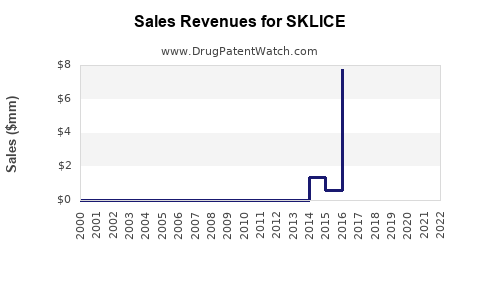
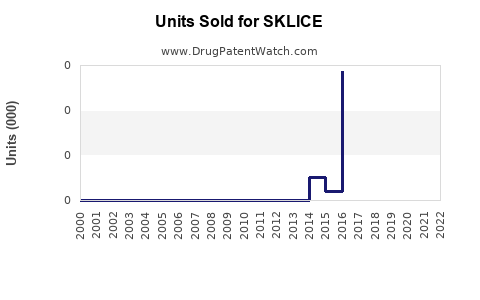
Annual Sales Revenues and Units Sold for SKLICE
| Drug Name | Revenues (USD) | Units | Year |
|---|---|---|---|
| SKLICE | ⤷ Start Trial | ⤷ Start Trial | 2022 |
| SKLICE | ⤷ Start Trial | ⤷ Start Trial | 2021 |
| SKLICE | ⤷ Start Trial | ⤷ Start Trial | 2020 |
| SKLICE | ⤷ Start Trial | ⤷ Start Trial | 2019 |
| >Drug Name | >Revenues (USD) | >Units | >Year |
Sklice Market Analysis, Sales Forecast, Patent Risk, and Competitive Outlook
Sklice, the branded ivermectin 0.5% topical lotion for head lice, is a mature prescription product facing substantial generic and over-the-counter competition. Its commercial opportunity is limited by the low-cost treatment category, intermittent use, generic substitution, and the availability of permethrin, pyrethrin, spinosad, malathion, benzyl alcohol, and mechanical lice-removal products. A reasonable U.S. net-sales forecast for the branded product is approximately $3 million to $8 million annually through 2029, with downside risk if generic ivermectin lotion expands formulary coverage.
No audited, current Sklice revenue figure is publicly disclosed by the product’s commercial owners. The projections below are modeled estimates based on prescription volume, net realized price, market share, and generic substitution rather than reported company guidance.
What is Sklice and how does it work?
Sklice is ivermectin lotion, 0.5%, approved by the U.S. Food and Drug Administration for the topical treatment of head lice infestation in patients six months of age and older. The product is applied to dry hair and scalp, left in place for 10 minutes, and then rinsed with water. The FDA label states that nit combing is not required and that treatment is intended for single application use under the approved regimen (FDA, 2012).
Ivermectin is a macrocyclic lactone that acts on ligand-gated chloride channels in parasites. The topical formulation is designed to produce local activity against lice while limiting systemic exposure.
Key product facts
| Attribute | Sklice |
|---|---|
| Active ingredient | Ivermectin |
| Strength | 0.5% lotion |
| Dosage form | Topical lotion |
| Indication | Head lice infestation |
| FDA approval | 2012 |
| NDA | 022483 |
| U.S. prescription status | Prescription drug |
| Patient population | Adults and pediatric patients 6 months and older |
| Administration | Single 10-minute topical application |
| Primary competitors | Permethrin, pyrethrin, spinosad, malathion, benzyl alcohol, nonprescription lice treatments |
| Biosimilar exposure | None; ivermectin is a small-molecule drug |
What is the U.S. market size for head-lice treatments?
The U.S. head-lice treatment market is a high-volume but low-value pharmaceutical segment. The Centers for Disease Control and Prevention estimates that 6 million to 12 million infestations occur annually in U.S. children ages 3 to 11, although not every infestation results in a prescription or pharmacy purchase (CDC, 2024).
The total economic market includes:
- Prescription lice medicines.
- Over-the-counter permethrin and pyrethrin products.
- Prescription and nonprescription mechanical removal devices.
- Professional lice-removal services.
- Household cleaning and prevention products.
Only a fraction of the epidemiological case count converts into branded prescription sales. Many families use OTC products, school-based recommendations, home remedies, or professional removal services. Reimbursement also varies by payer and state Medicaid program.
A reasonable U.S. prescription-product market estimate is approximately $100 million to $250 million in annual gross product value, with the broader consumer head-lice-treatment market materially larger. The estimate is sensitive to whether professional services and devices are included.
Market structure
| Segment | Commercial characteristics | Effect on Sklice |
|---|---|---|
| OTC permethrin and pyrethrin | Low price, wide retail distribution | Strong price pressure |
| Prescription ivermectin lotion | Convenient single application and no nit-combing requirement | Supports differentiation |
| Spinosad topical suspension | Prescription product with strong efficacy positioning | Direct branded competition |
| Malathion lotion | Prescription option, older product profile | Limited but relevant competition |
| Benzyl alcohol lotion | Prescription treatment without ovicidal activity | Alternative for selected patients |
| Mechanical removal | Device and service-based competition | Reduces drug-only market size |
What are Sklice sales projections through 2029?
The most defensible forecast is a scenario range rather than a single point estimate because Sklice’s current net sales, prescription volume, payer mix, and brand-to-generic substitution rate are not publicly reported.
U.S. Sklice net-sales forecast
| Year | Bear case | Base case | Bull case |
|---|---|---|---|
| 2025 | $2.0 million | $5.0 million | $8.0 million |
| 2026 | $1.7 million | $4.8 million | $8.2 million |
| 2027 | $1.4 million | $4.6 million | $8.4 million |
| 2028 | $1.2 million | $4.4 million | $8.6 million |
| 2029 | $1.0 million | $4.2 million | $8.8 million |
These figures represent modeled U.S. net product sales for the branded product, not total ivermectin-lotion market revenue.
Forecast assumptions
The bear case assumes:
- Rapid generic substitution.
- Reduced brand formulary coverage.
- Stable or declining prescription volume.
- Net price erosion of 4% to 7% annually.
- Continued consumer preference for low-cost OTC products.
The base case assumes:
- Brand prescription volume remains relatively stable.
- The product retains a niche based on single-application convenience.
- Generic substitution increases gradually.
- Net realized price declines by approximately 2% to 4% annually.
- Specialty pediatric and dermatology prescribing remains intact.
The bull case assumes:
- Sklice retains preferred coverage in selected commercial and Medicaid plans.
- Parents and clinicians continue to value no nit-combing requirements.
- Competitor shortages or resistance concerns support prescription demand.
- The brand maintains premium pricing in cash-pay and specialty pharmacy channels.
Revenue sensitivity
A simple revenue model is:
Revenue = treated prescriptions × net revenue per prescription
For example, 100,000 annual prescriptions at an average net revenue of $50 would produce $5 million in annual sales. At $75 per prescription, the same volume would produce $7.5 million. The major forecast variable is not epidemiological incidence. It is the share of treated patients who receive a prescription product and the extent to which pharmacies substitute a generic equivalent.
What is the FDA regulatory status of Sklice?
Sklice was approved by FDA in 2012 under NDA 022483. Its approved indication covers head lice in patients six months of age and older. The approved label allows a single application and does not require nit combing, which remains one of the product’s principal commercial differentiators (FDA, 2012).
The product is not a biologic and does not face biosimilar competition. Its principal regulatory exposure is abbreviated new drug application competition under the Hatch-Waxman framework.
Regulatory advantages
Sklice has several practical advantages over older lice products:
- Broad pediatric labeling beginning at six months.
- Single-application regimen.
- No required nit combing.
- Prescription positioning for patients who fail OTC treatment.
- Topical administration with limited systemic exposure under labeled use.
Its disadvantages include prescription access requirements, higher potential out-of-pocket cost, and competition from inexpensive OTC products.
What is the Orange Book status of Sklice?
The Orange Book is the controlling FDA source for approved drug products, therapeutic equivalence evaluations, listed patents, and regulatory exclusivity information (FDA, 2024).
Sklice’s commercial patent analysis should distinguish among:
- Patents covering the ivermectin lotion composition.
- Patents covering treatment methods.
- Patents covering manufacturing or formulation processes.
- Pediatric exclusivity or other FDA-granted exclusivity.
- Patent certifications filed by generic applicants.
For a mature topical product, formulation and method-of-use claims may have more commercial value than the basic ivermectin molecule, which has been known for decades. However, formulation patents do not necessarily prevent all generic competition. A generic applicant may challenge listed patents, design around unasserted claims, or wait for expiration.
A current patent-by-patent conclusion requires the live Orange Book listing and USPTO records. The forecast therefore treats generic substitution as an existing commercial risk rather than assigning value to an unverified blocking patent term.
When does Sklice lose exclusivity?
Sklice’s practical loss of exclusivity is determined by the interaction of patent expiry, FDA regulatory exclusivity, ANDA approvals, Paragraph IV litigation, settlements, and state-level substitution rules.
The relevant event is not necessarily the nominal expiration date of the last patent. Generic competition can begin earlier if:
- A generic applicant files a Paragraph IV certification.
- The patent holder does not sue within the statutory period.
- Litigation ends in a judgment favorable to the generic applicant.
- The parties settle on an authorized-generic or agreed-entry date.
- The generic product is approved without an enforceable blocking patent.
Conversely, a patent expiration date may not generate immediate large-scale erosion if only one supplier has approval or if payer contracts continue to favor the brand.
Exclusivity timeline
| Event | Commercial effect |
|---|---|
| FDA approval in 2012 | Established prescription market |
| End of initial regulatory exclusivity | Enabled potential ANDA development, subject to patents |
| Generic ANDA filing | Increased future substitution risk |
| Paragraph IV notice | Created potential litigation and 30-month stay |
| First generic approval | Usually produces rapid price and volume erosion |
| Multiple generic approvals | Can reduce brand share and net price materially |
| Post-exclusivity maturity | Brand survives mainly through convenience, coverage, or patient loyalty |
What patent litigation and Paragraph IV risks affect Sklice?
The central litigation issue is whether any listed formulation or method-of-use patent remains enforceable against an ANDA applicant. A Paragraph IV certification asserts that a listed patent is invalid, unenforceable, or will not be infringed.
For Sklice, generic litigation risk is generally more important than biosimilar risk because the product is a small-molecule topical drug. The most commercially relevant outcomes are:
- Early generic launch after a noninfringement or invalidity judgment.
- A settlement allowing entry before the final patent expiration date.
- Authorized-generic competition by the brand owner.
- Delayed generic launch caused by a court injunction or statutory stay.
- Limited litigation where remaining patents do not materially restrict approval.
A settlement can preserve some brand revenue by delaying generic entry, but it usually converts an uncertain litigation outcome into a known erosion date. Without verified current docket and Orange Book data, no specific settlement or pending Paragraph IV case should be assigned to the forecast.
What formulation patents protect ivermectin lotion?
Formulation protection can cover:
- Ivermectin concentration and particle size.
- Lotion vehicles and excipient systems.
- Dispersion or solubilization methods.
- Stability characteristics.
- Packaging and dose-delivery systems.
- Topical application methods.
- Treatment regimens that avoid nit combing or repeat dosing.
Formulation patents are commercially relevant because topical products can be difficult to replicate consistently. Generic manufacturers must demonstrate pharmaceutical equivalence and bioequivalence or meet the FDA’s applicable alternative standards for topical products. Manufacturing complexity can slow entry, but it rarely provides durable protection once multiple manufacturers establish an approved formulation.
How strong is the Sklice patent estate?
The estate is best characterized as moderate from a commercial perspective and weaker than the estate of a novel systemic drug.
Strengths
- Topical formulation claims can create technical development barriers.
- Single-application treatment supports method-of-use differentiation.
- Pediatric labeling increases the value of successful generic substitution.
- Manufacturing know-how may be difficult to reproduce immediately.
Weaknesses
- Ivermectin is an old and widely characterized active ingredient.
- Head lice treatment has numerous alternative products.
- The market is price-sensitive.
- Generic applicants can target the product through formulation, labeling, or patent challenges.
- A small market limits the economic incentive for prolonged litigation.
The patent estate may delay competition, but it is unlikely to support a long-duration premium comparable to a novel molecular entity.
Which companies compete with Sklice?
Sklice competes with prescription products, OTC medicines, and nonpharmaceutical treatments.
| Competitor | Active ingredient or approach | Position versus Sklice |
|---|---|---|
| Natroba | Spinosad topical suspension | Direct prescription competitor |
| Ovide | Malathion lotion | Older prescription alternative |
| Ulesfia | Benzyl alcohol lotion | Prescription alternative |
| Permethrin products | Permethrin 1% | Low-cost OTC first-line option |
| Pyrethrin products | Pyrethrins with piperonyl butoxide | OTC alternative |
| Mechanical devices | Heated-air or combing systems | Drug-free treatment option |
| Professional services | Manual removal | Premium non-drug alternative |
Resistance to pyrethroids and treatment failure can shift patients toward prescription products. Clinical selection still depends on age, infestation severity, prior treatment, payer coverage, and physician preference.
What generic launch scenarios exist for Sklice?
Scenario 1: Single generic entrant
A single approved generic may produce an initial 20% to 35% reduction in brand volume, with slower price erosion if pharmacies do not substitute automatically or if payer coverage remains brand-favorable.
Scenario 2: Multiple generic entrants
Two or more generic suppliers could reduce brand volume by 50% to 80% within 12 to 24 months. Net brand pricing would likely decline as insurers and pharmacy benefit managers increase substitution pressure.
Scenario 3: Authorized generic
An authorized generic could preserve supply-chain control for the brand owner while transferring volume away from the branded package. This strategy generally protects total product franchise revenue better than unplanned generic entry but reduces branded sales.
Scenario 4: Delayed generic entry
Patent litigation or manufacturing requirements could delay broad availability. The brand could retain a larger share during the delay, but the ultimate market erosion would still depend on the number of generic approvals.
What are the licensing and commercial partnership implications?
Sklice is a relatively small product for large pharmaceutical companies. Its most likely commercial transaction structures are:
- Brand acquisition by a specialty pharmaceutical company.
- Regional licensing to a dermatology or pediatric company.
- Co-promotion through a specialty pharmacy network.
- Authorized-generic licensing.
- Portfolio sale with other mature topical products.
The product’s value is more likely to depend on cash flow, sales-force fit, payer access, and manufacturing reliability than on pipeline synergies. A buyer would also examine whether the brand owner controls the approved formulation, has an authorized-generic strategy, and holds enforceable formulation or method-of-use rights.
What is the commercial outlook for Sklice?
Sklice is likely to remain a niche prescription treatment rather than a major growth product. Its commercial durability depends on convenience and clinical positioning, not market expansion.
The strongest revenue-supporting factors are:
- Single-use administration.
- No required nit combing.
- Pediatric use from six months.
- Continued treatment failures with OTC products.
- Prescriber preference for a prescription alternative.
The largest risks are:
- Generic ivermectin-lotion approval.
- Pharmacy-level substitution.
- Low-cost OTC competition.
- Limited repeat use because head-lice treatment is episodic.
- Payer restrictions and high patient copayments.
- Declining brand awareness after loss of exclusivity.
Key Takeaways
- Sklice is FDA-approved ivermectin 0.5% lotion for head lice in patients six months and older.
- The product competes in a mature, price-sensitive market dominated by OTC treatments.
- No audited current Sklice sales figure is publicly disclosed.
- Modeled U.S. branded net sales are approximately $3 million to $8 million annually through 2029.
- Generic substitution is the primary commercial threat; biosimilar risk does not apply.
- The product’s strongest differentiators are single-use administration and no required nit combing.
- Formulation and method-of-use patents may delay competition, but ivermectin’s old active-ingredient status limits long-term exclusivity strength.
- A first generic could reduce brand volume by 20% to 35%; multiple generics could reduce it by 50% to 80%.
- Sklice is more attractive as a cash-generating specialty product or authorized-generic platform than as a high-growth pharmaceutical asset.
FAQs
Is Sklice available without a prescription?
No. Sklice is an FDA-approved prescription lotion. OTC lice treatments such as permethrin and pyrethrin products are separate products and do not convert Sklice into an OTC medicine.
Is ivermectin lotion the same as oral ivermectin?
No. Sklice is a topical ivermectin formulation approved for head lice. Oral ivermectin has different dosing, systemic exposure, labeling, and safety considerations.
Does Sklice kill lice eggs?
Sklice is effective against live lice, and the approved regimen does not require nit combing. The product’s labeling and clinical use should not be interpreted as universal eradication of every egg in every infestation.
Can a generic replace Sklice automatically?
Automatic substitution depends on FDA therapeutic-equivalence determinations, state pharmacy law, payer policy, and the specific generic product approved. A pharmacist may substitute an FDA-rated equivalent where legally permitted.
What would increase Sklice’s valuation?
The main valuation drivers would be verified branded prescription volume, durable payer coverage, enforceable formulation patents, limited generic competition, manufacturing control, and an authorized-generic strategy that preserves total ivermectin-lotion revenue.
References
-
Centers for Disease Control and Prevention. (2024). About head lice. https://www.cdc.gov/lice/about/index.html
-
U.S. Food and Drug Administration. (2012). Sklice (ivermectin) lotion, 0.5% prescribing information. https://www.accessdata.fda.gov
-
U.S. Food and Drug Administration. (2024). Approved drug products with therapeutic equivalence evaluations: Orange Book. https://www.fda.gov/drugs/drug-approvals-and-databases/approved-drug-products-therapeutic-equivalence-evaluations-orange-book
-
U.S. Food and Drug Administration. (2024). Drugs@FDA: FDA-approved drugs. https://www.accessdata.fda.gov/scripts/cder/daf/
More… ↓
