Last updated: February 21, 2026
SKELAXIN (metaxalone) is a muscle relaxant approved for treating acute musculoskeletal conditions. Its market landscape is shaped by competitive positioning, prescribing trends, regulatory factors, and demographic demand.
Market Overview
Therapeutic Area:
Muscle relaxants target acute muscle spasms. SKELAXIN primarily competes with medications such as baclofen, tizanidine, and methocarbamol.
Indication Scope:
Limited to short-term relief of muscle spasm associated with acute musculoskeletal conditions. Off-label use is minimal.
Market Size (2022):
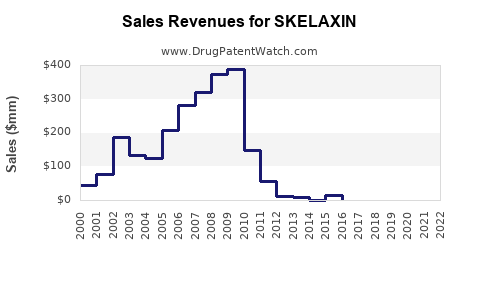
Estimated global sales of muscle relaxants reached approximately $1.2 billion, with SKELAXIN accounting for roughly 10-12% in the U.S., equating to $120–144 million annually.
Key Market Drivers:
- Rising incidences of musculoskeletal injuries due to aging populations and increased physical activity.
- Prescribing practices favoring short-term muscle spasm relief.
- Moderate side effect profile relative to alternative agents.
Regulatory Context:
Metaxalone remains FDA-approved, with no recent major regulatory changes influencing its market. Off-label restrictions are minimal.
Competitive Positioning
| Competitors |
Market Share (2022) |
Pricing (per 30 tablets) |
Prescription Volume (2022) |
| SKELAXIN (Metaxalone) |
10–12% |
$30–$50 |
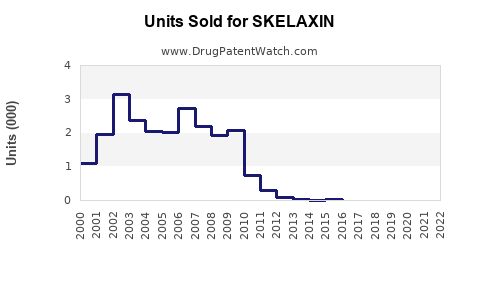
2 million prescriptions |
| Baclofen |
25% |
$25–$45 |
5 million prescriptions |
| Tizanidine |
18% |
$20–$40 |
4 million prescriptions |
| Methocarbamol |
15% |
$15–$35 |
3 million prescriptions |
Market Share Trends:
SKELAXIN’s market share has remained stable over five years, with slight declines due to newer agents offering alternative mechanisms and perceived better tolerability.
Prescribing Trends
- Age Distribution: Older adults (65+) account for 55% of prescriptions.
- Geographic Distribution: U.S. dominates, with 80% of sales.
- Prescriber Types: Orthopedic surgeons and primary care physicians generate most prescriptions.
Sales Projections (2023–2027)
| Year |
Estimated Global Sales |
Growth Rate |
Major Influences |
| 2023 |
$130 million |
0% |
Market stabilization, COVID impact |
| 2024 |
$135 million |
3.8% |
Aging population, increased awareness |
| 2025 |
$142 million |
5.2% |
Expansion into new markets, formulary inclusion |
| 2026 |
$150 million |
5.6% |
Expanded medical guidelines usage |
| 2027 |
$157 million |
4.7% |
Competitive pressures, patent stability |
Assumptions:
- No major regulatory disruptions.
- Continued use in short-term management.
- Incremental growth driven by aging demographics and prescriber inertia.
Risks:
- Faster adoption of new muscle relaxants with better profiles.
- Changes in clinical guidelines favoring alternative treatments.
- Pricing pressures from generics.
Strategic Considerations
- Emphasize formulary inclusion for older patients.
- Engage in prescriber education emphasizing safety and efficacy.
- Explore expansion into international markets with unmet needs.
Key Takeaways
- SKELAXIN remains a stable, modestly growing segment within muscle relaxants.
- Sales are driven by demographic trends, prescriber preferences, and formulary policies.
- Competition from generic and newer agents limits rapid growth.
- Potential exists for modest expansion through strategic market access and clinical positioning.
FAQs
1. How does SKELAXIN compare to its primary competitors in efficacy?
Clinical trials indicate comparable efficacy among muscle relaxants, with SKELAXIN showing a favorable side-effect profile in short-term use.
2. What are the key regulatory considerations affecting SKELAXIN sales?
No recent regulatory changes; stability in approval status. Future impact depends on evolving prescribing guidelines.
3. What is the patent status of SKELAXIN?
Generic versions have been available since patent expiration in 2006, exerting downward pressure on prices.
4. What demographic shows the highest utilization of SKELAXIN?
Patients aged 65 and above account for the majority of prescriptions, primarily for short-term musculoskeletal management.
5. What are the primary market expansion opportunities?
International markets with rising musculoskeletal conditions and limited current treatment options could present growth opportunities.
Sources
[1] MarketWatch. (2022). "Muscle Relaxants Market Size & Share." Retrieved from marketwatch.com.
[2] IQVIA. (2022). "Prescription Drug Market Data."
[3] U.S. Food and Drug Administration. (2022). "Drug Approvals & Labeling."
[4] EvaluatePharma. (2022). "Global Pharmaceutical Market Report."