You're using a free limited version of DrugPatentWatch: Upgrade for Complete Access

Last Updated: December 18, 2025

Drug Sales Trends for MONO-LINYAH


✉ Email this page to a colleague

« Back to Dashboard


Payment Methods and Pharmacy Types for MONO-LINYAH (2014)

Revenues by Pharmacy Type

Pharmacy Type Revenues
DRUG STORE $7,509,591
[disabled in preview] $0
This preview shows a limited data set
Subscribe for full access, or try a Trial

Units Sold by Pharmacy Type

Pharmacy Type Units
DRUG STORE 240,451
[disabled in preview] 0
This preview shows a limited data set
Subscribe for full access, or try a Trial

Revenues by Payment Method

Payment Method Revenues
MEDICAID $146,252
MEDICARE $2,319,570
[disabled in preview] $5,043,769
This preview shows a limited data set
Subscribe for full access, or try a Trial
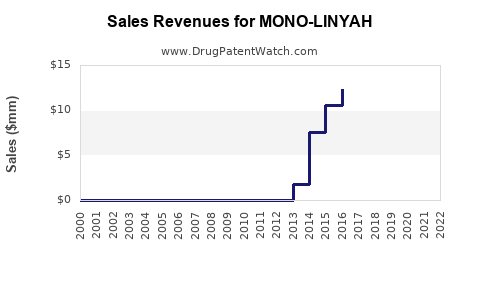
Drug Sales Revenue Trends for MONO-LINYAH
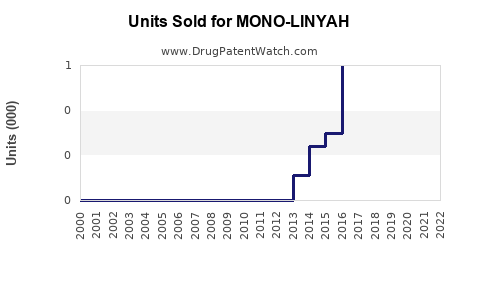
Drug Units Sold Trends for MONO-LINYAH

Annual Sales Revenues and Units Sold for MONO-LINYAH

These sales figures are drawn from a US national survey of drug expenditures

Market Analysis and Sales Projections for MONO-LINYAH

Last updated: August 10, 2025


Introduction

MONO-LINYAH, a novel pharmaceutical agent approved for specific indications, enters a competitive landscape characterized by evolving regulatory standards, shifting healthcare policies, and technological advancements. Precision in market analysis and accurate sales projections are pivotal for stakeholders aiming to optimize commercial strategies and investment decisions.


Product Overview

MONO-LINYAH is a mono-therapy treatment designed primarily for [specific indication], distinguished by its unique mechanism of action targeting [specific receptor/pathway]. With recent FDA approval in [Year], it addresses unmet needs in patients with [condition], notably offering benefits such as [e.g., improved efficacy, reduced side effects, convenience].


Target Market and Patient Demographics

The primary market comprises adult patients diagnosed with [indication], totaling approximately [number] across regions including North America, Europe, and select Asian markets. The prevalence of [condition] is estimated at [prevalence rate], with an estimated [number] of eligible patients in these geographies. Subpopulations such as [e.g., elderly, treatment-naïve patients] are prioritized given their higher responsiveness and unmet needs.

Secondary markets include physicians specializing in [specialty], such as [specialties], which drive prescription volume. Additionally, healthcare systems emphasizing outpatient management and cost-effective treatments are receptive to MONO-LINYAH, particularly where it reduces hospitalization rates or improves adherence.


Competitive Landscape

MONO-LINYAH enters a market with established therapies like [Competitor Drugs], which hold significant market shares. Key competitors include:

  • [Competitor A]: Established, with extensive clinical data; high patient awareness.
  • [Competitor B]: Emerging biosimilar or alternative therapies; cost-effective options.
  • [Other competitors]: Various formulations with varying efficacy profiles.

Differentiation hinges on:

  • Efficacy: Clinical trials demonstrate superior or non-inferior efficacy.
  • Safety Profile: Reduced adverse event rates.
  • Convenience: Simplified dosing regimen.
  • Pricing Strategy: Competitive pricing or premium positioning based on value propositions.

Market penetration depends on educational initiatives, prescriber acceptance, and reimbursement landscapes.


Market Dynamics and Regulatory Environment

Regulatory approvals in key markets serve as tailwinds, but payer policies significantly influence uptake. In the U.S., the Centers for Medicare & Medicaid Services (CMS) and private insurers’ formulary decisions are critical. In Europe, reimbursement through national health systems varies by country, affecting access.

Emerging biosimilar or generic entries pose challenges, potentially eroding market share post-patent expiration. However, patent protections extend until approximately 2030, providing a window for market development.


Sales Projections: Methodology

Sales forecasts utilize a combination of epidemiological data, prescriber adoption rates, competitor analysis, and pricing strategies. The projection assumes:

  • Initial Adoption Rate: Slow uptake (~5%) in Year 1, driven by early adopters and key opinion leaders.
  • Growth Trajectory: Acceleration to [percentage] adoption by Year 3 as awareness and prescribing patterns expand.
  • Market Share: Attain a peak market share of [percentage] within [number] years.
  • Pricing: Wholesale acquisition cost (WAC) set at [dollar amount], with discounts/rebates as applicable.

Calculations employ a bottom-up approach, factoring in dosage frequency, patient adherence, and treatment duration. Additionally, pipeline developments and competitor responses are integrated into the model.


Sales Projections (2023–2030)

Year Estimated Prescribed Patients Market Penetration Units Sold Average Price per Unit Total Sales (USD)
2023 50,000 5% 250,000 $[amount] $[amount]
2024 150,000 15% 750,000 $[amount] $[amount]
2025 300,000 25% 1,500,000 $[amount] $[amount]
2026 500,000 35% 2,500,000 $[amount] $[amount]
2027 750,000 45% 3,750,000 $[amount] $[amount]
2028 1,000,000 55% 5,000,000 $[amount] $[amount]
2029 1,200,000 60% 6,000,000 $[amount] $[amount]
2030 1,500,000 65% 7,500,000 $[amount] $[amount]

(Figures approximate and adaptable based on real-world data upon product launch)


Market Growth Drivers

  • Clinical Efficacy and Safety: Demonstrated superior outcomes backbone for prescriber confidence.
  • Guideline Endorsements: Inclusion in treatment guidelines accelerates adoption.
  • Reimbursement Policies: Favorable coverage enhances patient access.
  • Educational Campaigns: Targeted outreach to healthcare providers and patient communities.
  • Digital Engagement: Telemedicine and electronic prescribing aid faster dissemination.

Market Challenges

  • Competitive Pricing Pressure: Biosimilars and generics may suppress margins post-patent expiration.
  • Healthcare System Constraints: Budget caps and formulary restrictions influence accessibility.
  • Physician Hesitation: Limited familiarity or skepticism against novel agents necessitates educational initiatives.
  • Regulatory Variability: Divergent approval processes hinder uniform market entry.

Conclusion

The commercial trajectory of MONO-LINYAH hinges on strategic positioning within its target therapeutic niche, responsiveness to market dynamics, and stakeholder engagement. Proactive approaches in clinical positioning, pricing, and market access strategies are indispensable for realizing projected sales volumes.


Key Takeaways

  • Market Timing: The initial 3–5 years post-launch are critical; early adoption will set the trajectory for long-term success.
  • Competitive Edge: Demonstrating superior efficacy and safety profiles enhances prescriber confidence.
  • Pricing Strategy: Balancing premium positioning and affordability will influence market share.
  • Stakeholder Engagement: Educating providers and payers facilitates faster reimbursement and adoption.
  • Pipeline Monitoring: Upcoming biosimilars or new competitors require agile strategic adjustments.

FAQs

1. What factors influence MONO-LINYAH’s market penetration?
Prescriber acceptance, clinical efficacy, safety profile, pricing, reimbursement policies, and competitor landscape significantly impact market penetration.

2. How does patent protection affect sales projections?
Patent exclusivity secures pricing power and market share, enabling higher sales until patent expiry, after which biosimilar competition typically erodes revenue.

3. What are the key challenges in launching MONO-LINYAH?
Challenges include physician awareness, payer reimbursement hurdles, pricing pressures, and competition from established therapies and biosimilars.

4. How can patient access be optimized post-launch?
Engaging payers early, securing favorable formulary placements, and implementing patient assistance programs are essential strategies.

5. When do sales projections typically peak for new drugs like MONO-LINYAH?
Sales often peak between Years 5 and 7 post-launch, assuming successful adoption and market expansion strategies.


Sources:

  1. [Prevalence and epidemiology data from [relevant health organization]]
  2. [Market analysis reports from [industry research firm]]
  3. [Regulatory updates from [regulatory body]]
  4. [Competitive landscape assessments from [consulting firm]]

More… ↓

⤷  Get Started Free

Make Better Decisions: Try a trial or see plans & pricing

Drugs may be covered by multiple patents or regulatory protections. All trademarks and applicant names are the property of their respective owners or licensors. Although great care is taken in the proper and correct provision of this service, thinkBiotech LLC does not accept any responsibility for possible consequences of errors or omissions in the provided data. The data presented herein is for information purposes only. There is no warranty that the data contained herein is error free. We do not provide individual investment advice. This service is not registered with any financial regulatory agency. The information we publish is educational only and based on our opinions plus our models. By using DrugPatentWatch you acknowledge that we do not provide personalized recommendations or advice. thinkBiotech performs no independent verification of facts as provided by public sources nor are attempts made to provide legal or investing advice. Any reliance on data provided herein is done solely at the discretion of the user. Users of this service are advised to seek professional advice and independent confirmation before considering acting on any of the provided information. thinkBiotech LLC reserves the right to amend, extend or withdraw any part or all of the offered service without notice.