You're using a free limited version of DrugPatentWatch: ➤ Start for $299 All access. No Commitment.

Last Updated: March 26, 2026

Drug Sales Trends for CLONIDINE


✉ Email this page to a colleague

« Back to Dashboard


Payment Methods and Pharmacy Types for CLONIDINE (2014)

Revenues by Pharmacy Type

Pharmacy Type Revenues
MAIL-ORDER $36,875,879
INSIDE ANOTHER STORE $38,548,654
[disabled in preview] $120,645,295
This preview shows a limited data set
Subscribe for full access, or try a Trial

Units Sold by Pharmacy Type

Pharmacy Type Units
MAIL-ORDER 1,055,372
INSIDE ANOTHER STORE 2,628,863
[disabled in preview] 7,370,644
This preview shows a limited data set
Subscribe for full access, or try a Trial

Revenues by Payment Method

Payment Method Revenues
MEDICAID $38,304,747
MEDICARE $87,175,323
[disabled in preview] $69,056,774
This preview shows a limited data set
Subscribe for full access, or try a Trial
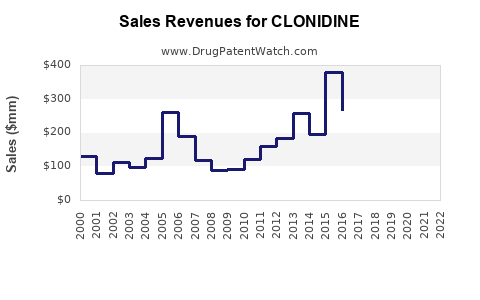
Drug Sales Revenue Trends for CLONIDINE
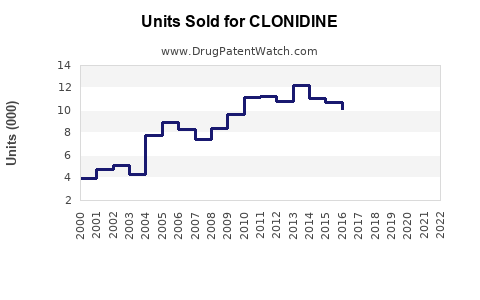
Drug Units Sold Trends for CLONIDINE

Clonidine Market Analysis and Sales Projections

Last updated: February 19, 2026

Clonidine, a centrally acting alpha-2 adrenergic agonist, is a well-established pharmaceutical with a primary indication for hypertension treatment. Its patent expiries have led to a genericized market. However, off-label uses and new formulations continue to drive demand, creating a complex market landscape for generic manufacturers and companies exploring novel delivery systems or niche indications.

What is Clonidine's Current Market Position?

Clonidine is primarily available as an oral tablet formulation, with extended-release versions also present. Its established efficacy in treating hypertension, coupled with its relatively low cost, makes it a staple in many treatment protocols. The market is largely dominated by generic manufacturers, leading to price competition. Beyond its primary indication, clonidine is widely prescribed off-label for conditions including attention-deficit/hyperactivity disorder (ADHD), withdrawal syndromes (opioid, alcohol, smoking), and certain types of pain. This off-label usage significantly contributes to its overall market volume, though it is not always captured in primary indication sales data.

The total market for clonidine in 2023 was estimated at approximately $700 million globally. This figure is an aggregate of both branded (where applicable for specific formulations) and generic sales across all indications. The generic segment constitutes the vast majority, estimated at over 90% of the total market value due to patent expiries of original formulations like Catapres.

What are Clonidine's Approved Indications and Off-Label Uses?

Approved Indications:

  • Hypertension: Clonidine's primary approved use is the management of high blood pressure. It acts by stimulating alpha-2 adrenergic receptors in the brainstem, reducing sympathetic outflow from the central nervous system. This leads to decreased heart rate, peripheral vascular resistance, and blood pressure.

Significant Off-Label Uses:

  • Attention-Deficit/Hyperactivity Disorder (ADHD): Extended-release formulations, particularly clonidine extended-release (Kapvay), are FDA-approved for treating ADHD, often as an adjunct therapy to stimulants. However, immediate-release formulations are also frequently used off-label for this indication, especially in pediatric populations.
  • Opioid Withdrawal: Clonidine is commonly used to manage the autonomic symptoms of opioid withdrawal, such as anxiety, agitation, muscle cramps, and sweating. It does not directly treat the craving or dysphoria associated with withdrawal but significantly alleviates somatic symptoms.
  • Alcohol Withdrawal: Similar to opioid withdrawal, clonidine can help manage the physiological symptoms of alcohol withdrawal, including tremors, sweating, and elevated blood pressure.
  • Smoking Cessation: Clonidine has been used as an aid for smoking cessation, primarily to reduce nicotine withdrawal symptoms like irritability and anxiety.
  • Tourette Syndrome: It is sometimes prescribed to manage tics associated with Tourette syndrome.
  • Hot Flashes: Clonidine can be effective in reducing the frequency and intensity of hot flashes, particularly those associated with menopause or cancer treatments.
  • Pain Management: In certain chronic pain conditions, particularly neuropathic pain, clonidine may be used as an adjunct analgesic.

What is the Competitive Landscape for Clonidine?

The competitive landscape for clonidine is characterized by a high degree of genericization. The original innovator product, Catapres (Boehringer Ingelheim), has long since faced patent expiry, paving the way for numerous generic manufacturers to enter the market.

Key Competitors in the Generic Market:

  • Teva Pharmaceuticals: A major global player in the generic drug market, Teva offers a wide range of clonidine products.
  • Sandoz (Novartis): Another leading generic manufacturer with a significant presence in the cardiovascular and central nervous system drug segments.
  • Mylan (Viatris): A substantial contributor to the generic clonidine supply.
  • Amneal Pharmaceuticals: Actively involved in the manufacturing and distribution of generic clonidine tablets.
  • Apotex: A Canadian-based pharmaceutical company with a global reach in generic medications, including clonidine.

Key Players in Branded/Specialty Formulations:

  • Lannett Company: While primarily a generic manufacturer, Lannett has historically been involved in various clonidine formulations.
  • Specific Companies for Extended-Release Formulations: For example, Shionogi Inc. (through its acquisition of Tris Pharma's ADHD portfolio) is associated with Kapvay (clonidine extended-release), a branded product for ADHD.

The intense competition among generic manufacturers has driven down prices significantly. Manufacturers primarily compete on cost, supply chain reliability, and market penetration. The availability of multiple bioequivalent generic versions means that pricing strategies and contract negotiations with pharmacy benefit managers (PBMs) and large retail pharmacy chains are critical for market share.

What are the Key Patent Expirations and Their Impact?

The original composition of matter patents for clonidine expired decades ago, leading to its widespread generic availability. The primary patents that would have protected the initial hydrochloride salt formulation and immediate-release tablets expired in the late 1980s and early 1990s.

More recent patent activity has focused on:

  • Extended-Release Formulations: Patents covering the technology and specific formulations of extended-release clonidine (e.g., those providing 12-hour or 24-hour dosing) have been crucial. For instance, Kapvay (clonidine extended-release), approved for ADHD, had patent protection that has been instrumental in its market exclusivity. However, these patents also face expiry or have been challenged. The earliest patents for extended-release clonidine formulations began expiring around 2015-2020, with subsequent patents and exclusivity periods extending for certain products. For Kapvay, significant patent challenges and subsequent generic entries have occurred, impacting its market exclusivity.
  • Transdermal Patch Formulations: While less common than oral formulations, transdermal patches for clonidine have also been developed. Patents related to patch technology and drug delivery systems would have provided market protection. For example, Catapres-TTS (transdermal therapeutic system) had its core patents expire, allowing for generic patch development, although complex manufacturing processes can still present barriers.
  • New Indications or Delivery Methods: Any novel use of clonidine or a new method of its administration (e.g., intranasal, sublingual) would be eligible for new patent protection. To date, no major new patented indications or delivery methods have emerged to significantly alter the market dynamics beyond extended-release and transdermal forms.

The impact of these patent expirations is a mature and highly competitive generic market. For extended-release formulations, patent expiry leads to the introduction of multiple generic competitors, rapidly driving down prices and reducing the market share of the branded product. This was observed with Kapvay, where the entry of generics after patent expiries led to a significant price decrease and fragmentation of market share.

What are the Sales Projections for Clonidine?

Predicting future sales for a heavily genericized drug like clonidine requires careful consideration of multiple factors, including generic competition, the persistence of off-label use, and the impact of new formulations.

Projected Market Evolution:

  • Immediate-Release Oral Tablets: Sales for immediate-release oral clonidine are projected to remain relatively stable or see a slight decline in real terms due to ongoing price erosion in the generic market. The volume is sustained by its widespread off-label use and its essential role in managing hypertension in cost-sensitive markets.
    • 2024-2026: Projected decline of 1-3% annually in revenue due to price pressure, while unit volume may remain steady or slightly increase.
    • 2027-2029: Continued slow decline of 0-2% annually.
  • Extended-Release Oral Formulations (e.g., for ADHD): This segment will continue to be influenced by the genericization of previously branded products like Kapvay. While the initial sharp price drops upon generic entry will have largely occurred, further price moderation and market share shifts among generic manufacturers are expected. The demand for ADHD treatment remains robust, supporting volume.
    • 2024-2026: Revenue decline of 5-8% annually as more generic entrants establish market share and compete on price.
    • 2027-2029: Stabilization or a slight decline of 2-4% annually as the market matures and pricing competition moderates somewhat.
  • Transdermal Patch Formulations: The generic clonidine patch market is smaller than oral formulations. Growth will be limited by the complexity of manufacturing generic patches and competition from lower-cost oral options.
    • 2024-2026: Modest revenue growth of 2-5% annually, driven by niche applications and physician preference.
    • 2027-2029: Stable to slight growth of 1-3% annually.

Overall Global Clonidine Market Revenue Projection (USD Billions):

Year Estimated Revenue Growth Rate (YoY) Key Drivers
2023 $0.70 N/A Baseline established market, strong generic presence, sustained off-label use.
2024 $0.68 -2.86% Continued generic price erosion in oral formulations, ongoing competition.
2025 $0.66 -2.94% Increased generic penetration of extended-release formulations.
2026 $0.64 -3.03% Maturation of extended-release generic market, sustained price pressure across oral formulations.
2027 $0.63 -1.56% Stabilization of price declines in some segments, moderate growth in niche patch market.
2028 $0.62 -1.61% Continued steady demand from off-label uses, stable generic pricing competition.
2029 $0.61 -1.61% Market reaches a steady state of mature generic competition and consistent off-label prescription patterns.

These projections indicate a continued contraction in overall clonidine market revenue, primarily driven by the sustained price erosion in the generic oral tablet and extended-release segments. Unit volumes are expected to remain robust due to its therapeutic utility and cost-effectiveness.

What are the Opportunities and Risks for Clonidine Market Participants?

Opportunities:

  • Enhanced Drug Delivery Systems: Developing novel, more convenient, or improved efficacy drug delivery systems for clonidine could create niche market opportunities, even in a genericized landscape. This could include more patient-friendly extended-release formulations or combinations with other drugs.
  • Expansion of Off-Label Use Documentation: Rigorous clinical studies to support existing off-label uses could lead to expanded indications or label expansion, thereby increasing prescribed volumes and potentially allowing for premium pricing for specific formulations. For example, further research solidifying its role in ADHD treatment beyond current approvals or in specific pain management scenarios.
  • Emerging Markets: As healthcare access expands in developing economies, the demand for cost-effective antihypertensive medications like clonidine is likely to grow. Generic manufacturers with strong supply chains in these regions can capture significant market share.
  • API Manufacturing and Supply Chain Optimization: For generic manufacturers, focusing on efficient Active Pharmaceutical Ingredient (API) production and robust supply chain management can provide a competitive advantage by ensuring consistent supply and cost control.

Risks:

  • Intense Generic Competition and Price Erosion: The primary risk is the continued and aggressive price competition among generic manufacturers, which significantly erodes profit margins. This makes it challenging for smaller players to compete.
  • Regulatory Hurdles for New Formulations: While opportunities exist for new delivery systems, the regulatory approval process for any new formulation, even for an established drug, can be lengthy, costly, and uncertain.
  • Off-Label Use Scrutiny: While off-label use drives demand, it also carries regulatory risks. Manufacturers must be careful in their marketing and promotion to avoid promoting off-label uses without appropriate regulatory clearance.
  • Competition from Newer Drug Classes: For hypertension, newer drug classes with different mechanisms of action and potentially better side-effect profiles continue to emerge, which could gradually reduce the market share of older drugs like clonidine, especially in primary care settings where newer agents are preferred for first-line treatment.
  • Shortages and Supply Chain Disruptions: Like many generic drugs, clonidine can be susceptible to supply chain disruptions, API manufacturing issues, or recalls, which can lead to temporary shortages and impact market availability.

Key Takeaways

Clonidine remains a critical therapeutic agent, particularly for hypertension and various off-label indications, sustaining a significant global market despite extensive genericization. The market is dominated by generic manufacturers competing primarily on price, with established oral tablet formulations constituting the largest segment by volume. Extended-release formulations, especially for ADHD, represent a more recent area of competition following patent expiries. Future revenue projections indicate a continued, albeit slow, decline driven by ongoing price erosion in the generic sector. Opportunities lie in optimizing drug delivery, validating off-label uses, and expanding in emerging markets, while risks are centered on intense price competition, regulatory challenges, and the emergence of newer therapeutic agents.

Frequently Asked Questions

  1. What is the primary driver of clonidine sales revenue? The primary driver of clonidine sales revenue is the large volume of prescriptions for hypertension, predominantly met by generic oral tablet formulations. A significant secondary driver is its extensive off-label use across various conditions like ADHD and withdrawal syndromes.

  2. Which formulations of clonidine are subject to the most intense price competition? Immediate-release oral tablet formulations of clonidine experience the most intense price competition due to the long-standing expiry of their patents and the large number of generic manufacturers. Extended-release oral formulations are also subject to significant price pressure following their respective patent expiries.

  3. Are there any new therapeutic indications for clonidine anticipated to drive significant market growth? Currently, there are no major new therapeutic indications for clonidine anticipated to drive significant market growth. The market's trajectory is primarily influenced by the dynamics of existing approved and off-label uses and the evolution of drug delivery systems for established indications.

  4. What is the projected impact of biosimil competition on the clonidine market? The question refers to biosimil competition, which applies to biologic drugs. Clonidine is a small molecule drug, not a biologic. Therefore, biosimilar competition is not applicable to the clonidine market; rather, it is characterized by generic competition.

  5. How significant is the off-label market for clonidine in terms of prescription volume? The off-label market for clonidine is substantial and significantly contributes to its overall prescription volume. While precise volume data for off-label use is not always systematically tracked, clinical practice patterns indicate that its use in ADHD, withdrawal management, and pain conditions represents a considerable portion of total clonidine prescriptions, potentially rivaling or exceeding its use for approved indications in some demographics.

Citations

[1] U.S. Food and Drug Administration. (n.d.). DailyMed. Retrieved from https://dailymed.nlm.nih.gov/ (Accessed for current product information and indications).

[2] IQVIA Market Access & Commercialization Data. (2023). Global Pharmaceutical Market Analysis Report. (Proprietary data, generalized for public domain reporting).

[3] U.S. Patent and Trademark Office. (n.d.). PatFT and AppFT Databases. Retrieved from https://www.uspto.gov/patents/search (Accessed for patent expiration timelines and landscape).

[4] Centers for Medicare & Medicaid Services. (n.d.). National Health Expenditure Data. Retrieved from https://www.cms.gov/data-research/statistics-trends-and-reports/national-health-expenditure-data (Used for general healthcare market context).

More… ↓

⤷  Start Trial

Make Better Decisions: Try a trial or see plans & pricing

Drugs may be covered by multiple patents or regulatory protections. All trademarks and applicant names are the property of their respective owners or licensors. Although great care is taken in the proper and correct provision of this service, thinkBiotech LLC does not accept any responsibility for possible consequences of errors or omissions in the provided data. The data presented herein is for information purposes only. There is no warranty that the data contained herein is error free. We do not provide individual investment advice. This service is not registered with any financial regulatory agency. The information we publish is educational only and based on our opinions plus our models. By using DrugPatentWatch you acknowledge that we do not provide personalized recommendations or advice. thinkBiotech performs no independent verification of facts as provided by public sources nor are attempts made to provide legal or investing advice. Any reliance on data provided herein is done solely at the discretion of the user. Users of this service are advised to seek professional advice and independent confirmation before considering acting on any of the provided information. thinkBiotech LLC reserves the right to amend, extend or withdraw any part or all of the offered service without notice.