Share This Page
Drug Sales Trends for CEFTIN
✉ Email this page to a colleague
Payment Methods and Pharmacy Types for CEFTIN (2014)
Revenues by Pharmacy Type
Units Sold by Pharmacy Type
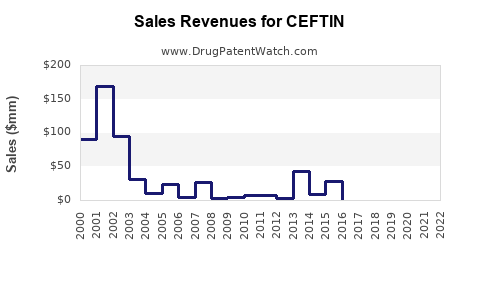
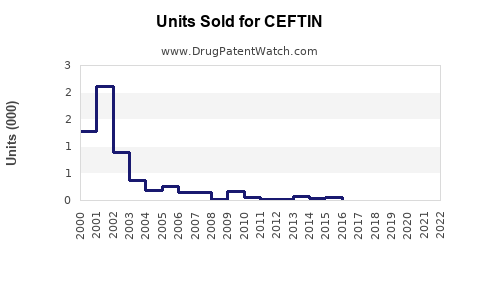
Annual Sales Revenues and Units Sold for CEFTIN
| Drug Name | Revenues (USD) | Units | Year |
|---|---|---|---|
| CEFTIN | ⤷ Start Trial | ⤷ Start Trial | 2022 |
| CEFTIN | ⤷ Start Trial | ⤷ Start Trial | 2021 |
| CEFTIN | ⤷ Start Trial | ⤷ Start Trial | 2020 |
| CEFTIN | ⤷ Start Trial | ⤷ Start Trial | 2019 |
| CEFTIN | ⤷ Start Trial | ⤷ Start Trial | 2018 |
| >Drug Name | >Revenues (USD) | >Units | >Year |
Ceftin Market Analysis, Sales Projections, Patent Status, and Generic Competition
Ceftin is the branded oral formulation of cefuroxime axetil, a second-generation cephalosporin antibiotic marketed by GlaxoSmithKline and now largely displaced by generic cefuroxime. Its U.S. market has low commercial attractiveness because core patent protection and regulatory exclusivity expired years ago, multiple generic manufacturers compete on price, and oral antibiotic prescribing is concentrated in low-cost retail channels.
A realistic commercial view is:
- Ceftin brand sales are no longer a material growth asset.
- Generic cefuroxime retains a recurring market in respiratory, urinary, skin, and selected sexually transmitted infections.
- Revenue growth will depend on prescription volume, supply continuity, contracting, and geographic expansion rather than patent exclusivity.
- The main risks are substitution by amoxicillin-clavulanate, doxycycline, cephalexin, azithromycin, and other cephalosporins; antimicrobial stewardship; and generic price compression.
What is Ceftin and how large is its addressable market?
Ceftin is an oral prodrug that converts to cefuroxime after absorption. It is available principally as tablets and an oral suspension. The product has been used for acute bacterial sinusitis, acute bacterial exacerbations of chronic bronchitis, uncomplicated skin and skin-structure infections, uncomplicated urinary tract infections, early Lyme disease, and pharyngitis or tonsillitis caused by susceptible organisms. The FDA label includes pediatric and adult dosing for several indications.[1]
Ceftin competes in the oral beta-lactam antibiotic market rather than in a protected specialty pharmaceutical segment. Its principal clinical advantages are broad activity against selected respiratory pathogens, established physician familiarity, and availability in both tablet and liquid forms. Its disadvantages include twice-daily dosing in many indications, gastrointestinal adverse effects, tablet-swallowing limitations, and broad substitution by cheaper oral antibiotics.
Ceftin product and market profile
| Attribute | Ceftin market position |
|---|---|
| Active ingredient | Cefuroxime axetil |
| Drug class | Second-generation cephalosporin |
| Primary dosage forms | Tablets; oral suspension |
| Original innovator | GlaxoSmithKline and predecessor companies |
| U.S. regulatory status | Approved small-molecule prescription drug |
| Exclusivity status | Expired |
| Core patent status | Expired |
| Current market structure | Generic-dominated |
| Main channels | Retail pharmacy, health systems, government purchasing |
| Commercial category | Mature, low-growth antibiotic |
The addressable market is better measured by prescriptions and treated infections than by brand revenue. Ceftin is used in a crowded segment where prescribers can select among several low-cost alternatives. As a result, clinical demand does not translate directly into pricing power.
What are Ceftin sales and revenue trends?
Public-company disclosures generally do not report current Ceftin revenue as a separate material line item. GlaxoSmithKline historically reported Ceftin within broader product portfolios, but the brand no longer has the disclosure profile of a major commercial product. Current U.S. cefuroxime demand is primarily captured by generic manufacturers and wholesalers rather than the original brand owner.
The appropriate conclusion is that branded Ceftin revenue is commercially immaterial relative to the generic cefuroxime market. Any analysis that presents a large current Ceftin brand-sales figure without a company filing, prescription audit, or verified channel dataset should be treated cautiously.
Revenue drivers
Generic cefuroxime revenue is driven by:
- Prescription volume for respiratory, urinary, skin, and Lyme disease indications.
- Generic average selling prices, which are usually low and decline as suppliers enter.
- Tablet-versus-suspension mix.
- Hospital and pharmacy purchasing contracts.
- Temporary shortages affecting competitor supply.
- Country-specific reimbursement and procurement rules.
The oral suspension segment can have better pricing than standard tablets because manufacturing, reconstitution stability, packaging, and pediatric distribution create greater operational complexity. That advantage is limited by the small size of the segment and the availability of alternative pediatric antibiotics.
What are the projected Ceftin and generic cefuroxime sales?
A precise market-wide forecast requires paid prescription, price, and geographic sales data that are not disclosed in public regulatory records. A defensible projection therefore uses a scenario model rather than a single unsupported point estimate.
U.S. generic cefuroxime scenario model
The following model illustrates potential annual U.S. retail revenue for generic cefuroxime:
| Scenario | Annual prescriptions | Average net revenue per prescription | Implied annual market revenue |
|---|---|---|---|
| Low | 1.0 million | $12 | $12 million |
| Base | 2.0 million | $18 | $36 million |
| High | 3.0 million | $25 | $75 million |
These are analytical scenarios, not reported market totals. They exclude institutional purchasing, international sales, rebates, wholesaler margins, and any residual branded Ceftin revenue.
Five-year projection framework
| Year | Low case | Base case | High case | Main assumption |
|---|---|---|---|---|
| Year 1 | $12m | $36m | $75m | Stable demand and competition |
| Year 2 | $11m | $35m | $76m | Unit decline offset partly by price |
| Year 3 | $10m | $34m | $75m | Continued generic erosion |
| Year 4 | $9m | $33m | $74m | Substitution and stewardship pressure |
| Year 5 | $8m | $32m | $73m | Mature market with periodic shortages |
The base case implies a low-single-digit annual decline in market value. Unit demand may remain more stable than revenue because generic pricing tends to fall as suppliers compete. A supply disruption, manufacturing exit, or shortage could temporarily increase prices and revenue, but those gains would not represent durable market expansion.
What could change the forecast?
The upside case would require one or more of the following:
- Persistent shortages among competing oral antibiotics.
- Increased cefuroxime use in pediatric or respiratory care.
- Expansion in markets where cefuroxime has stronger reimbursement.
- A supplier obtaining favorable hospital or government contracts.
- Product differentiation through pediatric packaging or reliable suspension supply.
The downside case would follow from:
- Additional generic entrants.
- Lower reimbursement or formulary exclusion.
- Greater use of doxycycline, amoxicillin-clavulanate, cephalexin, or macrolides.
- More restrictive antibiotic stewardship protocols.
- Manufacturing failures involving cefuroxime axetil or the suspension product.
When did Ceftin lose exclusivity?
Ceftin lost meaningful U.S. exclusivity years ago. The original small-molecule patent estate expired before the current generic market developed, and no current regulatory exclusivity protects the brand from substitution.
| Protection type | Ceftin status | Commercial effect |
|---|---|---|
| New chemical entity exclusivity | Expired | No remaining NCE barrier |
| Core composition or compound patents | Expired | Generic entry permitted |
| Product-specific patents | Expired or no longer commercially blocking | No durable brand protection |
| Pediatric exclusivity | Expired, if previously granted | No current barrier |
| Orphan exclusivity | Not applicable | No orphan monopoly |
| Data exclusivity | Expired | ANDA competition available |
Ceftin’s original patent protection was associated with cefuroxime derivatives and the cefuroxime axetil prodrug technology. Historical patent records identify U.S. Patent No. 4,562,181 among the relevant early cefuroxime derivative patents. That protection does not create a current barrier to generic entry.[2]
What is the Orange Book status of Ceftin?
Ceftin is an FDA-approved small-molecule product, and its tablets and suspension have been subject to the abbreviated new drug application pathway. FDA Orange Book listings for a mature product such as Ceftin are relevant primarily for therapeutic equivalence and reference-product status, not for an active brand monopoly.[3]
Orange Book and generic substitution
The commercial questions are:
- Whether a generic cefuroxime product is rated therapeutically equivalent to the listed reference product.
- Whether the dosage form and strength match the prescribed product.
- Whether state pharmacy law permits automatic substitution.
- Whether the product is available from the wholesaler or pharmacy.
- Whether the formulation has operational differences, especially for oral suspension.
An AB-rated generic can generally be substituted under applicable state law and payer rules. Substitution risk is highest for standard tablets. The oral suspension has greater execution risk because pharmacies must manage reconstitution, storage, expiration after mixing, and pediatric dosing.
Which companies are challenging Ceftin through generic competition?
Ceftin is not facing a new wave of Paragraph IV litigation comparable to a recently launched branded medicine. The relevant competitive challenge occurred through ordinary generic entry after patent and exclusivity expiration.
Generic competition has historically included major U.S. and international suppliers such as:
- Teva Pharmaceuticals
- Sandoz
- Lupin
- Aurobindo
- Hikma
- Amneal
- Rising Pharmaceuticals
- Other ANDA holders and contract manufacturers
The supplier set varies by dosage form, strength, manufacturing status, and current FDA approval or marketing activity. A company can hold an approved ANDA without maintaining continuous commercial supply.
What is the current Paragraph IV risk?
The current Paragraph IV risk to Ceftin is low because the central intellectual-property barriers have already expired. Paragraph IV certifications matter most when a generic applicant seeks entry before listed patents expire. For a mature product with established generic supply, future litigation is more likely to concern:
- A reformulated cefuroxime product.
- A differentiated suspension or delivery system.
- A manufacturing process patent.
- A new combination or fixed-dose product.
- A regulatory dispute involving ANDA approval or labeling.
What formulations are protected by Ceftin patents?
The commercially relevant Ceftin formulations are tablets and oral suspension. The original formulation and manufacturing patents no longer provide durable exclusivity in the United States.
Tablet formulation
Tablet competition is intense because:
- The dosage form is technically established.
- Generic manufacturers can use conventional oral solid-dose manufacturing.
- Payers typically treat products as interchangeable when therapeutically equivalent.
- Pricing is transparent and contract-driven.
A tablet manufacturer may still protect internal formulation parameters, process controls, particle-size specifications, or manufacturing know-how as trade secrets. These measures can improve yield and quality but generally do not restore brand-level market exclusivity.
Oral suspension
The suspension has greater operational complexity. Relevant barriers include:
- Active pharmaceutical ingredient particle characteristics.
- Taste masking.
- Reconstitution behavior.
- Stability after mixing.
- Bottle and dosing-device design.
- Pediatric acceptability.
- Microbiological control.
These factors can produce a modest commercial premium, particularly during supply interruptions. They are not equivalent to a durable patent moat unless supported by an unexpired, enforceable formulation or process patent.
What patent litigation and settlement agreements affect Ceftin?
Ceftin’s major patent-litigation phase was associated with the historical transition from innovator supply to generic cefuroxime. The product does not have a prominent current litigation profile comparable to high-value medicines with active Orange Book patents.
No current settlement agreement should be assumed to restrict generic entry absent a verified court docket, FDA patent-listing record, or company disclosure. Historical settlements involving mature antibiotics may have included licensed entry dates, authorized generic arrangements, or commercial supply provisions, but those terms do not necessarily control current market access.
The practical litigation risk is therefore low. The more relevant legal issues are product liability, manufacturing compliance, ANDA disputes, and potential antitrust scrutiny if suppliers coordinate around shortages or market allocation.
How strong is the Ceftin patent estate?
The patent estate is weak as a current commercial asset.
| Patent-estate factor | Assessment |
|---|---|
| Core composition protection | Expired |
| Formulation protection | No material current barrier identified |
| Method-of-use protection | Expired or clinically narrow |
| Manufacturing patents | Potentially relevant to individual suppliers, not the brand |
| Regulatory exclusivity | Expired |
| Freedom to launch a standard generic | Generally favorable |
| Ability to support premium pricing | Low |
| Litigation leverage | Low |
Ceftin’s remaining value is commercial and operational, not exclusionary. A supplier can create value through dependable manufacturing, broad wholesaler coverage, pediatric supply, and competitive contracting.
What FDA regulatory status applies to Ceftin?
FDA approved Ceftin as an oral cefuroxime axetil product. The FDA label specifies indications, dosing, contraindications, warnings, drug interactions, adverse reactions, and administration instructions.[1]
The regulatory risks are typical for an established oral antibiotic:
- Beta-lactam hypersensitivity and cross-reactivity.
- Clostridioides difficile-associated diarrhea.
- Inadequate dosing or inappropriate antibiotic selection.
- Pediatric suspension stability and administration errors.
- Manufacturing deviations affecting potency or dissolution.
- Supply interruptions affecting approved strengths or dosage forms.
The regulatory pathway for a new generic supplier is generally an ANDA demonstrating pharmaceutical equivalence and bioequivalence to the reference product. A new clinical development program is not normally required for a standard generic entry.
How does Ceftin compare with competing antibiotics?
| Drug | Competitive position versus cefuroxime |
|---|---|
| Amoxicillin-clavulanate | Strong respiratory and sinusitis competitor; broad primary-care use |
| Doxycycline | Strong adult respiratory competitor; low cost and convenient dosing |
| Cephalexin | Strong skin and urinary competitor; often lower cost |
| Azithromycin | Alternative for selected respiratory infections, although resistance limits use |
| Cefdinir | Pediatric and respiratory competitor with similar outpatient positioning |
| Cefpodoxime | Similar oral cephalosporin segment but generally smaller |
| Fluoroquinolones | More restricted because of safety concerns and stewardship policies |
Cefuroxime has an established role but lacks a distinctive commercial advantage sufficient to command a branded premium. Prescribers often select based on local resistance patterns, allergy history, formulation availability, payer coverage, and prior patient response.
What generic launch scenarios exist?
Base launch scenario
A new entrant launches a standard tablet product into an already competitive market. Expected outcomes include low initial market share, price discounts to secure wholesaler access, and limited long-term profitability.
Shortage-driven scenario
A supplier enters during a competitor shortage. Volume and pricing can rise quickly, particularly for oral suspension. The benefit may reverse when competing supply returns.
Differentiated formulation scenario
A supplier offers improved suspension packaging, dosing convenience, or reliable pediatric supply. This can support modest share gains, but regulatory and manufacturing costs reduce the value of differentiation.
International scenario
Markets outside the United States may offer greater opportunity where cefuroxime has stronger physician adoption or reimbursement. Risks include country-specific registration, tender pricing, local manufacturing requirements, currency volatility, and procurement concentration.
What geographic markets offer the best opportunity?
The United States is a mature, low-margin generic market. Europe and selected emerging markets may offer more volume, but pricing is often controlled through tenders and national reimbursement systems.
Commercial opportunity is most attractive where:
- Cefuroxime is included in national treatment guidelines.
- Pediatric suspension supply is unreliable.
- Local competitors have limited capacity.
- Antibiotic procurement is fragmented.
- The supplier has established regulatory registrations and distribution.
The main geographic barrier is not patent coverage. It is market access, manufacturing authorization, pricing, and reliable supply.
What manufacturing and intellectual-property barriers remain?
Manufacturing barriers include:
- Dependable cefuroxime axetil API supply.
- Control of polymorph and particle-size characteristics.
- Dissolution and bioequivalence performance.
- Tablet stability and packaging.
- Suspension reconstitution and shelf-life control.
- Compliance with current good manufacturing practice requirements.
Intellectual-property barriers are secondary. A company may have process know-how or confidential specifications that improve manufacturing economics, but those advantages are difficult to defend against a capable generic competitor unless protected by a valid patent or regulatory exclusivity.
Key Takeaways
- Ceftin is the branded cefuroxime axetil product and has no meaningful remaining U.S. exclusivity.
- The commercial market is generic-dominated and price-sensitive.
- Current branded Ceftin revenue is not publicly reported as a material standalone business.
- A reasonable analytical range for U.S. generic cefuroxime revenue is approximately $12 million to $75 million annually under low, base, and high prescription-price scenarios.
- The base case assumes a mature market with gradual revenue erosion.
- Tablets face intense generic competition; oral suspension has more operational complexity and intermittent shortage-driven pricing opportunity.
- Paragraph IV and Orange Book risks are low for the mature core product.
- The main commercial levers are supply reliability, contract access, pediatric formulation execution, and international registration.
- The principal competitive threats are amoxicillin-clavulanate, doxycycline, cephalexin, cefdinir, and other low-cost outpatient antibiotics.
- Ceftin has residual market value as a reliable generic product, not as a patent-protected branded asset.
FAQs
Is Ceftin still sold in the United States?
Cefuroxime axetil remains available primarily through generic products. Brand availability and pharmacy inventory can vary by dosage form and supplier.
Is cefuroxime a high-value generic drug?
No. Standard cefuroxime tablets are generally a low-margin generic opportunity. Oral suspension can offer better economics during supply shortages or where pediatric competition is limited.
Does Ceftin have an active patent?
The core Ceftin patent estate is expired. Any current patent issue would more likely concern a specific supplier’s formulation, process, or newly developed delivery system.
Can pharmacies substitute generic cefuroxime for Ceftin?
Substitution is generally possible when the generic is therapeutically equivalent and state law, payer rules, and the prescription permit substitution.
Is cefuroxime exposed to biosimilar competition?
No. Cefuroxime is a chemically synthesized small molecule, not a biologic. Competition occurs through generic ANDA products rather than biosimilar applications.
References
- U.S. Food and Drug Administration. (2023). Ceftin (cefuroxime axetil) tablets and oral suspension prescribing information. FDA.
- U.S. Patent and Trademark Office. (1985). U.S. Patent No. 4,562,181: Cephalosporin derivatives. USPTO.
- U.S. Food and Drug Administration. (2024). Approved drug products with therapeutic equivalence evaluations: Orange Book. FDA.
- U.S. Food and Drug Administration. (2024). Drugs@FDA: FDA-approved drugs database. FDA.
- GlaxoSmithKline plc. (2000). Annual report and accounts. GSK.
More… ↓
